 Vietnamnet.vn

 Podcast



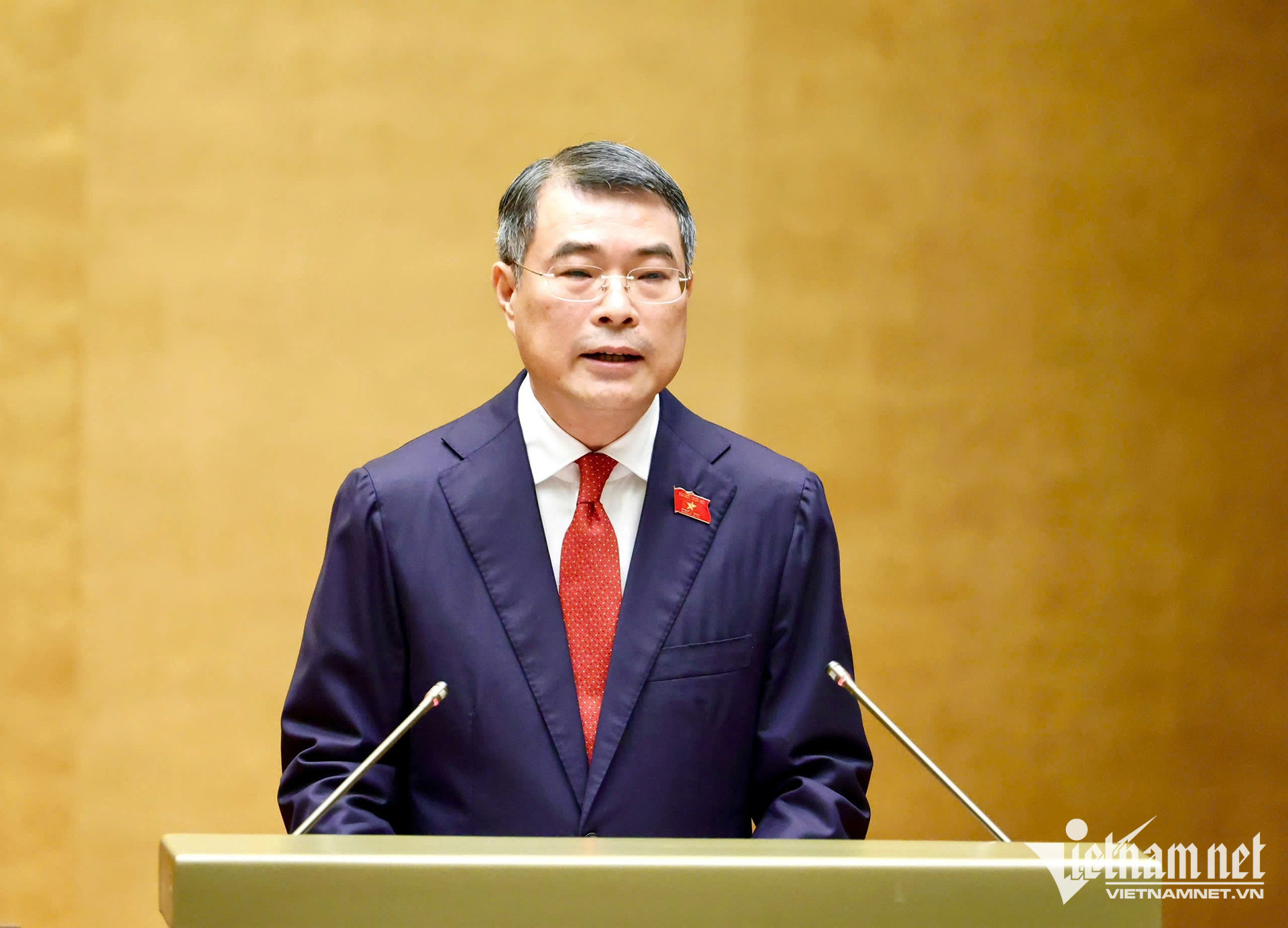
On April 21, at the National Assembly, Prime Minister Hung said: “The Government will certainly raise the tax threshold for business households.” He added that the revenue level exempt from tax for business households is expected to increase to VND1 billion per year, double the current threshold.
“I believe that applying policies in a timely way will be effective for business households, and small and medium enterprises, and will encourage business households to convert into enterprises.”
At that time, he had been in office as Prime Minister for less than two weeks.
During working sessions in late April, Hung emphasized that cutting administrative procedures and business conditions is the “fastest and shortest path” to improve the business environment: fast because it does not require new resources, and short because the impact goes directly into the costs and time of enterprises.
That message materialized through a time-bound and responsible way of working: a clear deadline, a direct requirement for ministers, and enforcement pressure so that reform does not exist only on paper.
Here, an important change in management thinking can be seen, from managing by the quantity of conditions to looking at the costs those conditions create for the economy.
What caught attention was not only the tax rate but also the processing speed. Despite involving many tax laws just amended by the National Assembly less than four months ago, the Government still quickly resubmitted the laws that caused bottlenecks for business households.
National Assembly delegate Nguyen Van Than, who initiated calls to revise tax laws with a passionate speech before the legislature, described it as a rapid and practical policy response.
“The Government’s policy response wins the hearts and minds of the people,” he said.
Only a few days earlier, the new Government launched a large-scale review of long-standing stagnant projects across the country, where a huge amount of assets of the economy are being “frozen”.
According to the Government report submitted to the National Assembly, the whole country currently has more than 2,200 stagnant projects with total capital of nearly VND5.9 quadrillion, equivalent to about $235 billion and about 347,000 hectares of land being “frozen”.
The processing speed, once again, was like a “rocket”. In just over 10 days, from the Government's first review meeting to the conclusion of the Politburo and the resolution of the National Assembly, a mechanism to remove obstacles for stagnant projects was formed.
In meetings, the Prime Minister repeatedly emphasized the need to “unblock resources for growth”, not letting assets continue to lie idle due to procedures and the psychological fear of responsibility.
The way of handling this time is also quite different from before: not legalizing violations, but allowing for both handling responsibility and removing obstacles so that projects can continue to move instead of being “frozen” for many more years.
These two stories - one involving millions of small household businesses, the other involving hundreds of billions of dollars trapped in stalled projects - partly illustrate the governing style emerging under Prime Minister Le Minh Hung: urgency, multiple deadlines, and above all, a refusal to let the economy wait too long because of procedural bottlenecks.
Government of many deadlines
Looking back at the first month on the ‘hot seat’, the most notable feature of Hung’s leadership may not lie in statements about double-digit growth, but rather in efforts to make the apparatus run faster.
At one working session, he said: “Institutions are like a road, creating an open corridor for Vietnam’s economic vehicle to move forward.”
That statement partly reflects the governing philosophy emerging under the new Government. If the “institutional road” remains filled with bottlenecks, then no matter how powerful the growth engine is, the economy cannot move quickly.
It is clear that the new Government appears to be targeting the three largest bottlenecks of the economy: institutions, resources, and markets.
After many years in which the economy operated on businesses’ ability to “endure procedures,” pressure for double-digit growth is now forcing the state apparatus to change its pace.
An economy aiming for very rapid growth cannot continue operating at the pace of dossiers sitting idle for years.
One of the biggest bottlenecks over recent years has not been a lack of policy, but rather systemic delays: laws waiting for decrees, decrees waiting for circulars, local authorities waiting for guidance, and businesses waiting for approvals.
Tu Giang
.svg)
