 Vietnamnet.vn

 Podcast



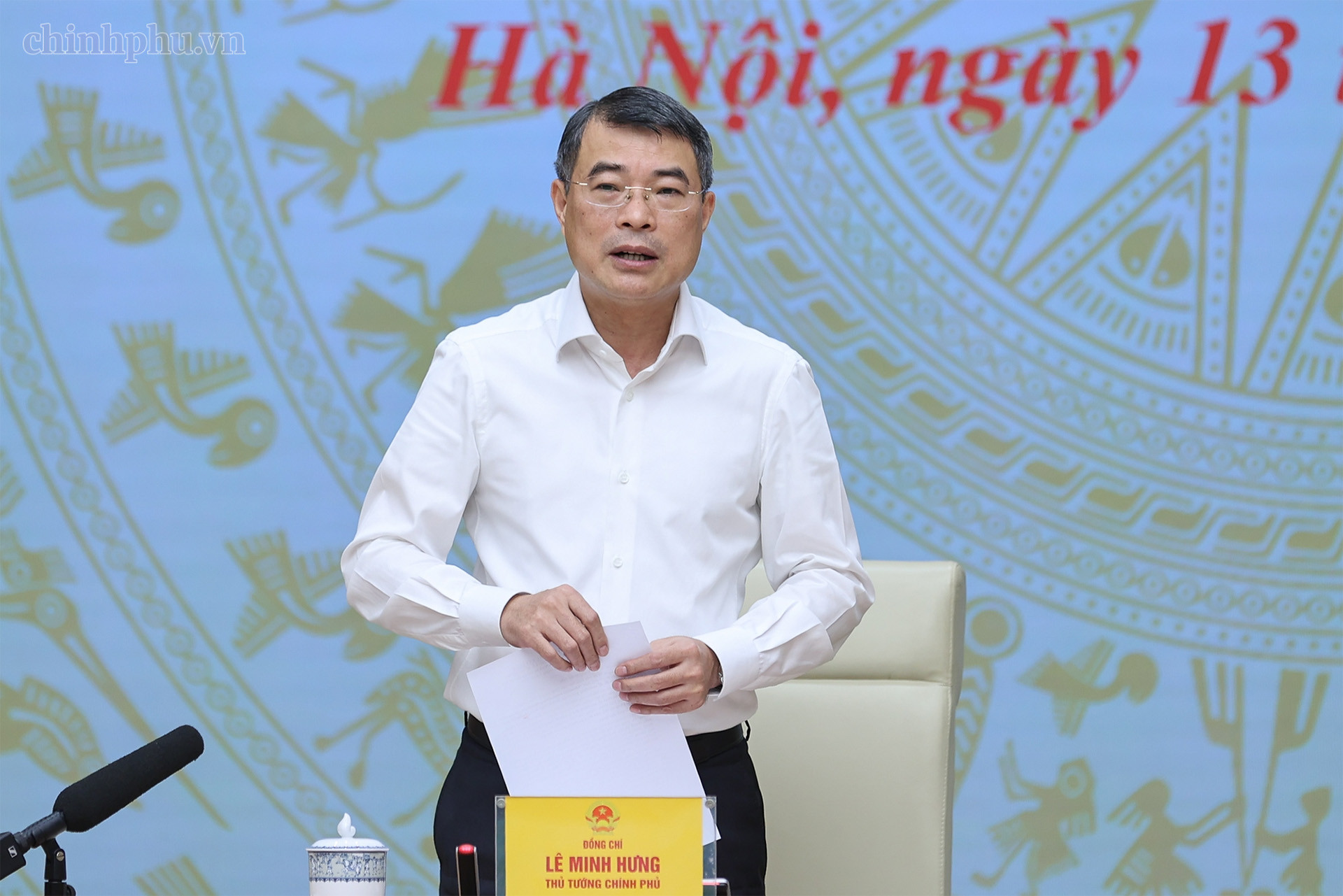
At a meeting with the State Bank of Vietnam and credit institutions on August 13, Prime Minister Le Minh Hung said monetary policy must remain firmly focused on controlling inflation, maintaining macroeconomic stability, safeguarding the economy’s major balances and the safety of the financial system, while supporting and promoting double-digit economic growth.
Policy decisions should be based on accurate assessments, forecasts and data, backed by specific scenarios and policy tools, he said.
The prime minister instructed authorities to quantify and regularly assess the “balance point” between inflation control and growth support.
Management measures should be continuously updated through monetary policy tools including interest rates, exchange rates, money supply, liquidity and credit, with specific scenarios and warning thresholds.
Authorities should proactively adjust the intensity, scale and timing of policy tools within their jurisdiction to maximize their effectiveness and work toward achieving the government’s targets.
On interest rates, the prime minister called for policy rates to continue to be managed proactively and flexibly, alongside increased liquidity provision to the market to help credit institutions access capital at reasonable costs.
The SBV was instructed to direct credit institutions to continue reducing costs, stabilize overall interest rate levels and lower lending rates. It should also take appropriate action, within its authority and in accordance with regulations, against institutions that fail to comply with its directives.
On exchange rates, the prime minister asked the central bank to manage the currency in line with market developments while closely monitoring foreign currency supply and demand across the economy.
Authorities should prepare proactive and flexible scenarios to maintain market stability and study regulations and mechanisms for providing products and services that hedge against exchange-rate fluctuations, supporting the development of Vietnam’s capital and securities markets.
For credit, the SBV should manage credit growth in line with established targets but should not regard those targets as a “hard ceiling” at all times.
Credit management needs to remain flexible in response to actual economic conditions, ensuring that capital reaches the right sectors, at the right time, for the right borrowers and purposes, and at reasonable costs.
Faster action sought on SCB collateral assets
The prime minister also instructed the SBV to work closely with the Ministry of Finance and other relevant agencies to flexibly manage State Treasury deposits and deposits at commercial banks according to conditions at different points in time, with the aim of increasing liquidity in the economy.
The criteria and standards governing these measures must be clearly defined and made public in a transparent manner.
The government also called for the urgent completion of a project to further modernize the banking system, address weak credit institutions and improve businesses’ access to capital, particularly for small and medium-sized enterprises.
Notably, the prime minister called for stronger supervision and control of weak credit institutions currently under special control, while pushing for the definitive resolution of troubled banks.
The SBV was instructed to coordinate with the Ministry of Justice, Ministry of Public Security, Supreme People’s Court and Supreme People’s Procuracy to accelerate implementation of the plan for handling collateral assets associated with SCB.
The prime minister also stressed the need to improve the effectiveness of inspections, examinations and supervision of credit institutions, as well as measures to prevent and combat money laundering.
Authorities should strengthen early-warning mechanisms and supervision so that risks can be identified remotely and at an early stage, before serious consequences arise.
State-owned enterprise restructuring to be accelerated
For the Ministry of Finance, the prime minister called for the continued effective implementation of policies providing exemptions, reductions and extensions for taxes, fees, charges and land rents in 2026, as well as measures related to value-added tax refunds, to support individuals and businesses.
Tax and customs procedures should be simplified, while oversight and efforts to accelerate public investment disbursement should be strengthened to ensure that 100% of the planned 2026 allocation is disbursed.
Ministries, government agencies, local authorities and associations were also instructed to urgently finalize plans to accelerate the restructuring, equitization and divestment of enterprises with state capital.
These efforts must be carried out effectively and in accordance with assigned responsibilities, while preventing losses and waste of state assets.
Tran Thuong
.svg)
