 Vietnamnet.vn

 Podcast



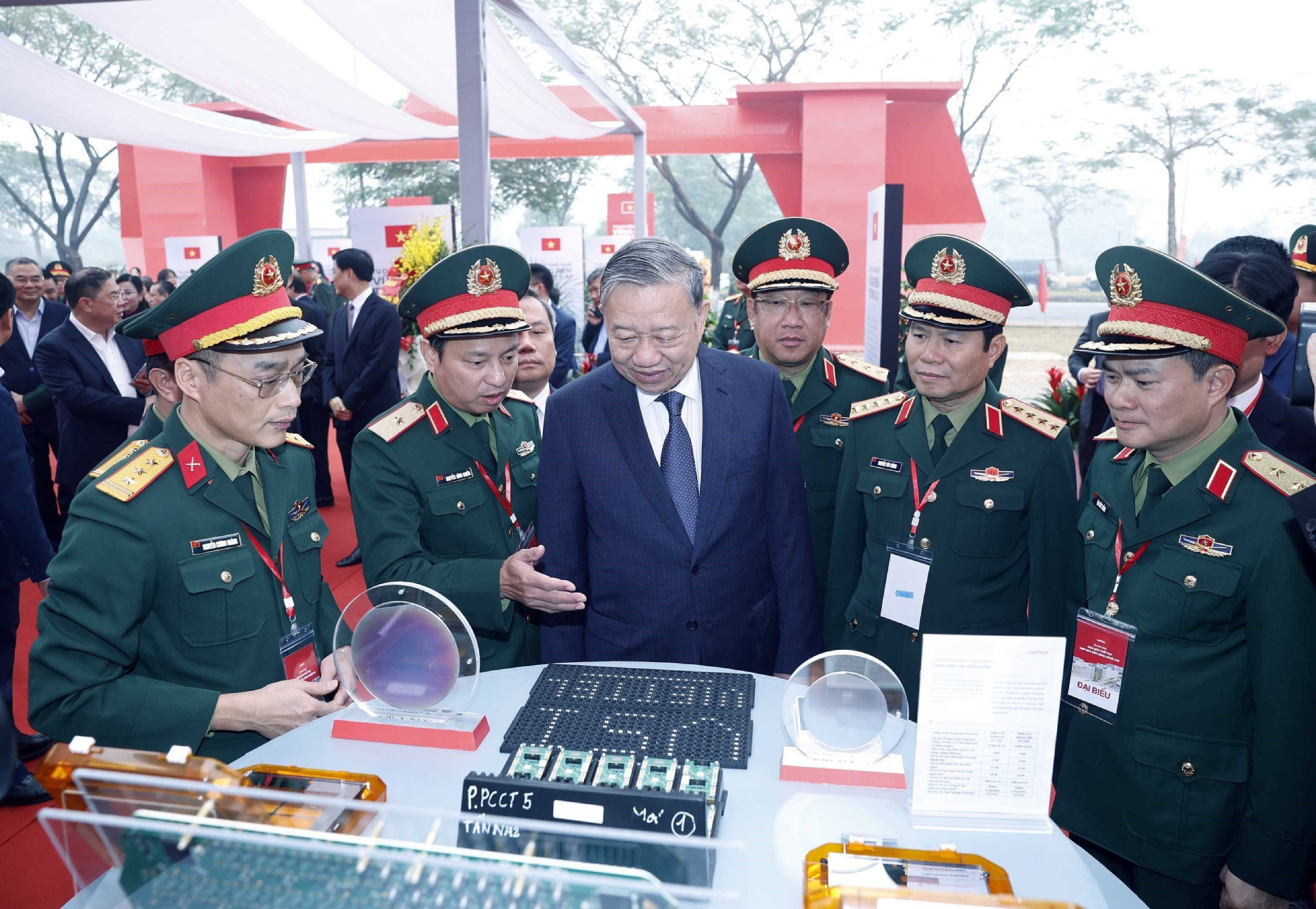
The Politburo acknowledged that Vietnam's materials industry has steadily developed in recent years, largely meeting domestic demand for a wide range of industrial materials and production inputs. The sector has made significant contributions to economic growth, infrastructure development, job creation, state budget revenue and exports.
However, the Politburo noted that the industry's development has yet to match its potential and advantages. It said insufficient attention has been paid to deep processing, mastery of core and high technologies, and recycling. Material production remains heavily dependent on resource extraction, is energy-intensive, generates relatively low added value, produces high emissions and contributes to environmental pollution.
The Politburo emphasized the viewpoint that "developing the materials industry is a strategic national task, contributing significantly to driving fast and sustainable national development, and building an independent, self-reliant, and resilient economy." Developing the materials industry requires focus and key priorities rather than fragmented or scattered investments, concentrating resources on pivotal, foundational links and sectors capable of creating spillover effects and leading other industries and domains.
The Politburo mandates unified and strict management of strategic minerals along the entire value chain, from exploration, basic surveys, planning, extraction, and refining to applied materials production, recycling, and strategic stockpiling. It requests minimizing raw mineral exports to ensure the frugal, efficient, and sustainable utilization of national resources.
Regarding specific tasks, the Politburo directs the research and issuance of special, breakthrough mechanisms and policies within authorized jurisdictions to master production technologies for strategic materials, high-value materials, materials for the semiconductor industry, new energy, defense, security, dual-use applications, and future industries.
In 2026, the Politburo requires the formulation and promulgation of the National Strategy for Materials Industry Development through 2030, with a vision toward 2045, and the study of establishing a unified national coordination mechanism for materials industry development.
The Politburo's Conclusion outlines the task of forming closed-loop material industry chains, from extraction, processing, and deep processing to final application products, for rare earths; battery materials, magnets, and magnetic materials; electronic and semiconductor materials; aluminum, steel, titanium, non-ferrous metals, and special alloys; chemical materials, fertilizers, carbon, dual-use materials, and related items.
The Politburo instructs all levels, sectors, and localities to conduct comprehensive and objective assessments of the current status of resources, reserves, extraction conditions (including deep-sea and offshore areas), processing technologies, and market demand.
Localization rate for key strategic materials
A key requirement is to establish a national database on the materials industry by 2027 while completing and interconnecting geological and mineral data systems. By 2028, the country aims to establish at least three to five national material research centers. By 2030, Vietnam seeks to master selected deep processing technologies for rare earths, semiconductor materials, and battery materials, striving to achieve a 50 percent localization rate for key strategic materials.
The Politburo noted the need to prioritize stable, long-term resource allocations for basic research on strategic and future materials; enhance national strategic stockpiling capacity for key minerals; and ensure the security of material supply chains to significantly reduce import dependency for essential materials.
Notably, the Politburo outlined a synchronized approach to developing the materials industry across three core groups: basic materials, strategic materials, and future materials. Within this framework, it mandates maintaining production capacity, stabilizing supply, and enhancing quality, efficiency, and competitiveness for basic materials.
The Politburo requires the effective mobilization and utilization of state resources alongside strongly attracting private sector and foreign investment. This effort aims to progressively access and master technologies and supply chains for strategic materials, including semiconductor materials, electronic materials, rare earths, battery and energy storage materials, magnetic materials, special alloys, defense and security materials, renewable energy materials, aerospace materials, and other high-tech industrial inputs.
Agencies and units are urged to conduct early, long-term research on future materials aligned with emerging global technological trends, creating a solid foundation for the country's long-term development.
For the period leading up to 2030, the Politburo directs focus toward perfecting mechanisms and policies while prioritizing resources to develop key strategic material groups. Priority focus will center on semiconductor materials, rare earth materials, battery and energy storage materials, advanced new materials, and specialized dual-use materials serving high technology, defense, security, renewable energy, and digital transformation.
Another vital task is to urgently formulate and implement special mechanisms and policies to attract, deploy, and reward domestic talents, overseas Vietnamese, international experts, and global technology corporations, establishing strong, dedicated research teams.
Tran Thuong
.svg)
