 Vietnamnet.vn

 Podcast



Professor Mary Claire King, who has dedicated her life to decoding genetic mutations that cause cancer, believes that artificial intelligence is still not mature enough for clinical application.
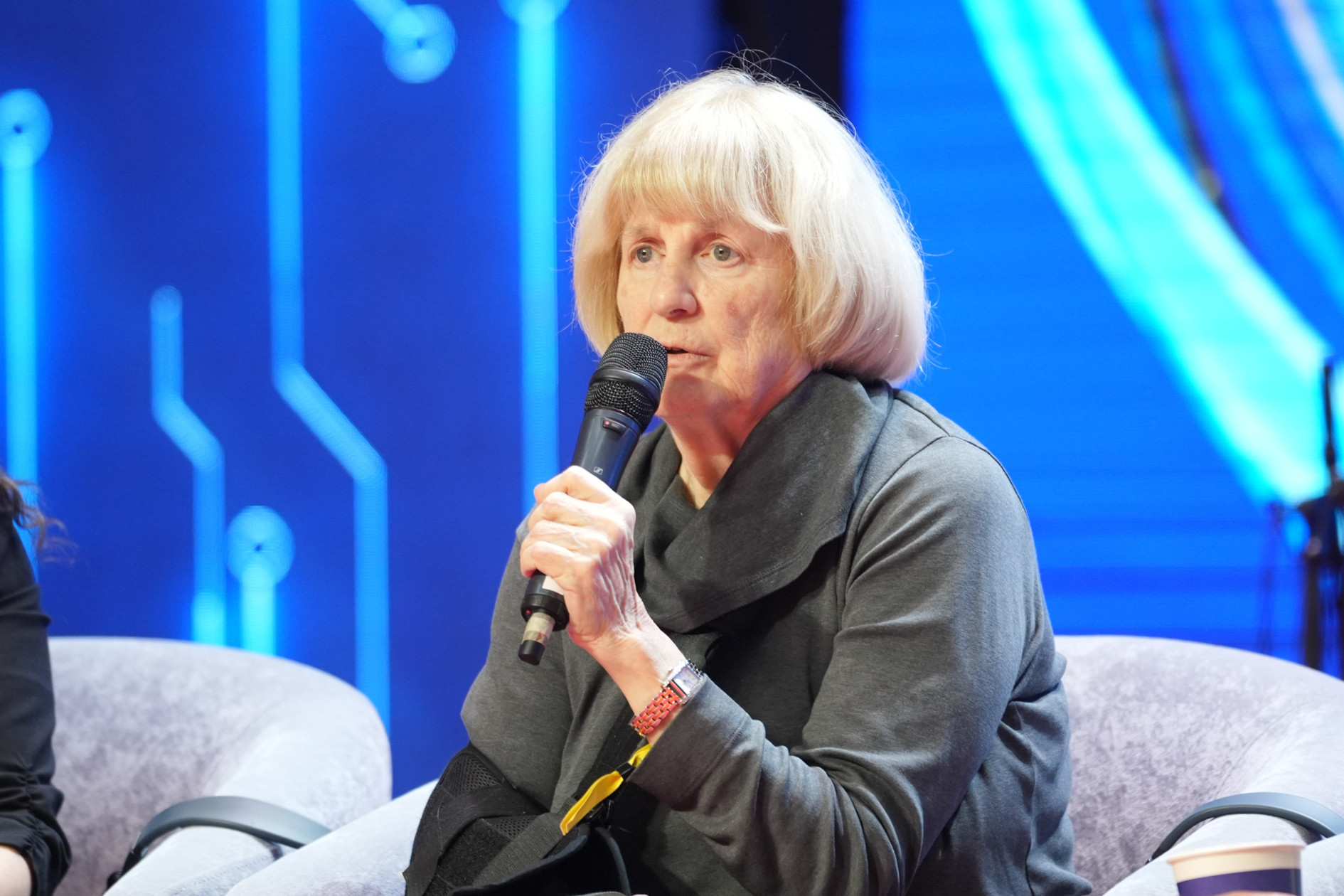
Professor Mary Claire King, who discovered the BRCA1 gene - paving the way for life-saving genetic testing for millions of women. Photo: TT
The VinFuture 2025 Grand Prize for Female Scientists has been awarded to Professor Mary Claire King, the scientist who discovered the BRCA1 gene - a discovery that laid the foundation for genetic testing and has helped millions of women worldwide reduce their risk of dying from breast and ovarian cancer.
Speaking with VietNamNet during her visit to Hanoi to receive what she calls an "unthinkable honor," Professor King shared her views on the use of AI in genetics research and her deeply emotional connection to Vietnam.
AI is full of promise - but still immature for clinical practice
Across life sciences, AI is accelerating research timelines from years to mere weeks. However, for Professor King - whose life's work has focused on decoding cancer-causing gene mutations - AI’s role in clinical settings still requires caution.
She has experimented with AI in her own research, but real-world results have made her cautious. Current AI systems can make two dangerous types of errors: falsely identifying a gene as disease-causing or incorrectly dismissing one with well-established links to illness. In medicine, such errors can lead to disastrous treatment decisions.
Her concerns are not theoretical, but based on decades of experience. She frequently tests AI models using patient cases she has studied over many years - cases that are well-validated by the global scientific community. Yet, AI still often returns inaccurate results. “In my field, AI is not yet reliable enough for diagnostics or clinical use,” she affirms.
That said, Professor King is not pessimistic. In fact, she sees tremendous potential for AI in basic science. She cites Prof. David Baker, a Nobel Prize winner in protein design, who has used AI to create entirely new protein structures.
She believes genetics will evolve in two parallel AI tracks: one for scientific discovery, which is advancing rapidly, and one for clinical care, which demands absolute accuracy and transparent decision-making. “I believe AI will play a critical role in medicine. But we must ensure it is truly ready before applying it to patient care,” she emphasizes.
‘Vietnam now masters a technology once reserved for a few nations’
During her return to Vietnam, Prof. King expressed admiration for the local community of doctors and researchers, especially in the field of genome decoding. Back in 2017, she had to bring a Vietnamese child’s DNA sample to the US for testing. Today, the entire analysis is done in Hanoi.
“Vietnam now fully owns a technology that used to be in the hands of only a few countries,” she says.
The only remaining global challenge, she notes, is data interpretation - a task that demands experience, constant knowledge updates, and collaboration among many disciplines. Still, she believes that Vietnamese doctors’ dedication and competence will propel the field forward, especially in cancer screening for breast and ovarian cancers.
She underscores Vietnam’s top priority: expanding access to genetic testing for women. Carriers of BRCA1 or BRCA2 mutations, she explains, can be prescribed PARP inhibitors - a class of drugs that have saved countless lives worldwide.
‘I’ve never seen such dedication to pediatric patients’
Prof. King recalls her first visit to Vietnam in 2017, vividly remembering the evening she stepped into the National Children’s Hospital in Hanoi.
She still sees the images of parents arriving with critically ill children, and the intense focus of the young Vietnamese doctors who gathered around computer screens, painstakingly analyzing every clinical detail in search of a diagnosis.
“What struck me most was their deep, unwavering commitment to the patients,” she shares. “I’ve never been to any place in the world where people cared so deeply for sick children.” Perhaps, she reflects, Vietnam’s own history of loss has made every young life particularly precious.
‘I am happy - truly happy to be in Vietnam’
When asked about her feelings at the VinFuture 2025 awards ceremony, Professor King smiled, visibly moved.
She said she never imagined standing on a stage in Vietnam to receive a major scientific prize - not just because of the honor, but because of a memory from the past.
“Fifty-three years ago,” she recalls, “I led a protest against the US war in Vietnam. The next year, I led another. And another the year after that.” With emotion, she adds, “On the 50th year, you won. I never imagined a day like today would come.”
Standing on the VinFuture stage, she felt a beautiful closure to history, and the opening of a new future of scientific collaboration between the two countries. She calls it “a great honor,” and says Vietnam is “an extraordinary country with so much to be proud of.”
The prize for female scientists, she notes, carries special meaning. It gave her a chance to send a message to young girls: “Come into science. Ask the big questions. Women belong here. We can lead groundbreaking discoveries for humanity.”
As the conversation ends, Professor King says her visit is more than a business trip or awards event. It’s a reunion - between history, science, and the values she cherishes most: human kindness and the transformative power of knowledge.
To her, VinFuture is not just a prize. It’s a reminder that science can connect people who once stood on opposite sides, and together, they can forge new paths toward a better life for all.
Thai Khang
.svg)
