 Vietnamnet.vn

 Podcast



At a discussion during the first session of the 16th National Assembly, one delegate proposed a mechanism that would impose land-use fees based on the efficiency and timing of land utilization.
Under the proposal, projects delayed for more than 24 months would face progressively increasing charges over time.
Meanwhile, second homes or additional properties left unused or not rented out could also be subject to escalating taxes and fees.
Economists say the proposal reflects growing concern over land speculation and the large number of dormant projects across Vietnam.
Speaking to VietNamNet, economist Le Ba Chi Nhan described the idea as both practical and theoretically feasible in the context of Vietnam’s increasingly distorted real estate market.
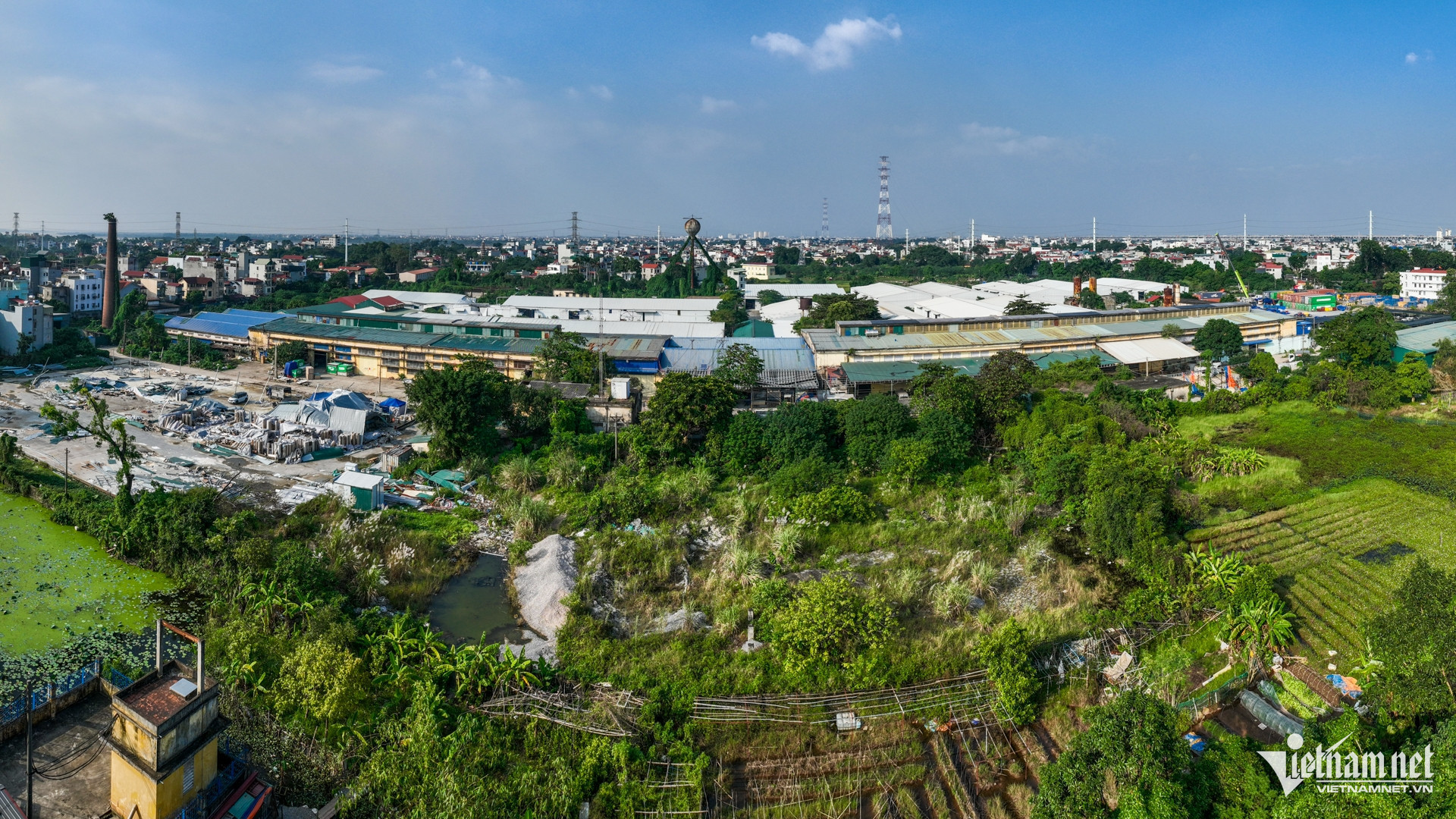
According to him, when land is frozen for speculative purposes or projects remain stalled for years, society bears significant opportunity costs.
Housing supply becomes artificially scarce, surrounding infrastructure investments fail to generate expected economic value and property prices are pushed higher by speculative behavior rather than real demand.
“Progressive fees are not designed to maximize revenue collection, but to create economic pressure that forces idle assets back into productive use,” Nhan said.
Many countries around the world have already adopted high taxes or fees on abandoned property, he added.
“If designed appropriately, such a policy could be implemented in Vietnam through a legal framework approved by the National Assembly and enforced by the Government, using increasingly complete digital databases on land management, residency and electronic transactions,” he said.
Experts believe the policy could immediately reshape behavior in the property market.
First, rising holding costs would reduce incentives for speculative land accumulation.
Instead of waiting indefinitely for prices to rise, investors would face pressure to either lease, develop or transfer their assets.
That could help increase actual housing supply, especially in urban areas facing shortages.
Second, progressive fees would place greater pressure on developers to complete projects on schedule.
Land banking for years in anticipation of future price increases would no longer be an effective strategy.
The market, experts say, would gradually shift from a “hold land and wait” mentality toward actual project development.
Third, economists argue the policy could help cool property prices more sustainably through market mechanisms rather than administrative intervention.
However, experts also warn that implementation would require transparent data systems and careful classification.
Authorities would need to distinguish between speculative behavior and legitimate cases such as inheritance disputes, financial hardship or legal complications.
“If implemented properly, this could become an important lever for creating a healthier, more efficient and fairer property market in the long term,” Nhan noted.
Nguyen Quang Huy, CEO of the Faculty of Finance and Banking at Nguyen Trai University, shared a similar view.
He said the proposal would only be effective if built upon transparent and verifiable data systems.
Once ownership, usage and legal information are fully connected, authorities would be able to accurately identify which assets should be regulated, reducing ambiguity during enforcement.
According to Huy, a well-designed policy could gradually reduce incentives to hold unused assets while encouraging properties to return to circulation.
Over time, this could help the market move closer to real value and real demand.
Still, he stressed the need for caution to avoid unintended consequences.
Some unused assets may result from legitimate long-term plans or unavoidable circumstances rather than speculation.
Without proper classification, the policy could place unnecessary pressure on property owners and negatively affect market sentiment.
Experts therefore recommend shifting away from simply counting the number of properties owned and instead focusing on the actual status of usage.
Indicators could include residency registration, rental contracts and levels of electricity or water consumption over a defined period rather than relying on a single criterion.
For delayed projects, analysts suggest distinguishing between subjective and objective causes before applying penalties.
Huy proposed a phased approach in which fees gradually increase over time, functioning more as behavioral signals than sudden policy shocks.
Conditional exemptions should also be included for special cases, while regular reviews would help ensure fairness and maintain public consensus.
He also recommended piloting the policy in selected localities before nationwide implementation.
Such an approach would allow authorities to monitor impacts, refine regulations and reduce policy risks while optimizing land-use efficiency.
Nhan emphasized that the success of any progressive tax system would depend not only on the fee level itself but also on how “non-use” and “project delays” are clearly defined and measured using quantitative digital data rather than subjective administrative assessments.
Under his proposal, the first year of non-use could carry only a symbolic fee as a warning.
From the second year onward, charges should rise rapidly, potentially at exponential rates, until the cost of holding idle assets outweighs speculative gains.
“This approach creates a reasonable policy transition period while generating clear economic pressure against long-term land hoarding,” he said.
To identify unused property, Nhan suggested using interconnected databases that track residency registration, minimum utility consumption, declared rental contracts and tax-related transactions linked to property use.
Once tax authorities, electricity providers, water suppliers and residency databases are integrated, determining whether a property is genuinely unused would become far more objective and difficult to manipulate.
For delayed real estate projects, the 24-month threshold should only serve as an initial trigger.
More importantly, authorities should monitor actual progress against commitments made in land allocation decisions, including site clearance, infrastructure construction and building permits.
If projects fail to meet minimum progress benchmarks after two years, progressive fees could then automatically take effect.
According to Nhan, the legal framework for such supervision could be coordinated by the Government through integrated land and tax databases managed by the Ministry of Agriculture and Environment and the Ministry of Finance.
At the same time, experts say exemptions or temporary delays should remain available in force majeure cases involving legal disputes, inheritance procedures or documented financial hardship.
With transparent criteria, digital monitoring and clear enforcement mechanisms, economists believe the policy could become a powerful tool to discourage speculation and push land resources back into productive use across Vietnam’s economy.
Nguyen Le
.svg)
