 Vietnamnet.vn

 Podcast



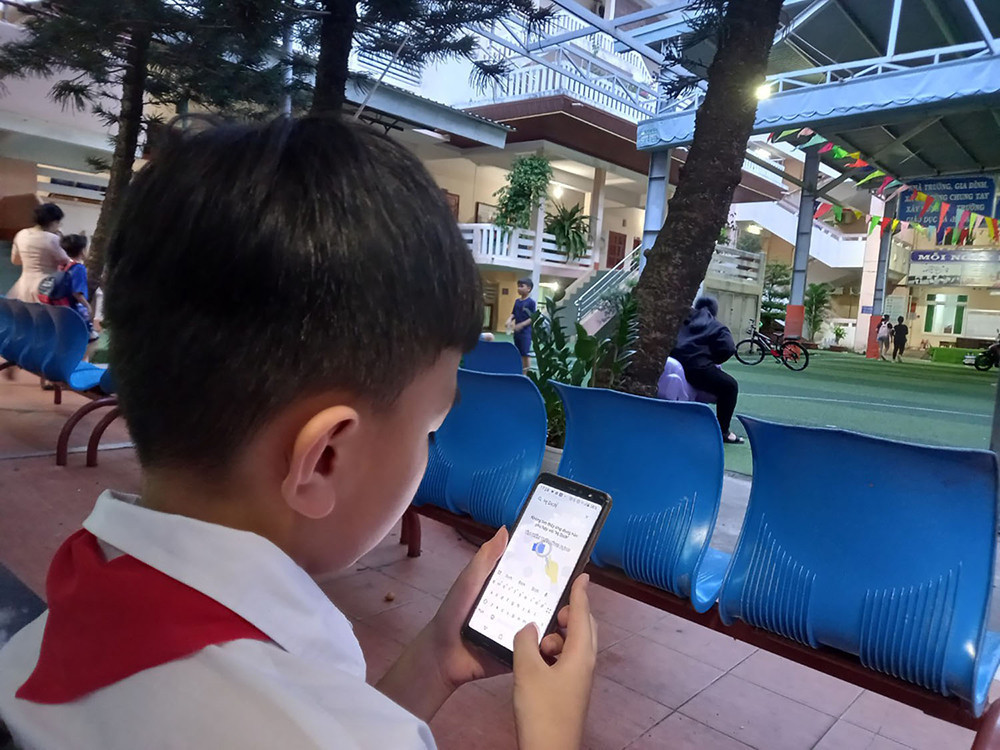
When shifting from the goal of protection to solutions based on prohibition, we face a fundamental question of effectiveness. Is banning truly the right path, or merely a reactive response to concerns that have not been addressed at their root?
In reality, the core issue does not lie in social media itself. It is like a sharp knife: it can be used to prepare food, but also to cause harm. If children face risks online, it is not just the fault of algorithms, but also a result of lacking skills, insufficient guidance from families, and ineffective regulatory mechanisms.
A ban, in essence, is a “scratching the surface” approach. Without addressing root causes and awareness and responsibility among stakeholders, problems will not disappear but instead shift into more complex and harder-to-control forms.
An uneven battle with technology
One reason why bans are impractical is feasibility. Today’s children access the Internet early and view it as a natural environment for learning and entertainment.
How can a child be banned from social media when schoolwork itself often requires communication through platforms like Zalo or Facebook? Even if formally prohibited, children can easily bypass restrictions using anonymous accounts, friends’ devices, or emulation tools.
Moreover, most platforms operate across borders. Age verification systems still have loopholes that tech-savvy children can bypass in just a few clicks.
If a policy is enacted that families and schools are not equipped to implement, it will soon become a "law on paper." This not only invalidates management efforts but also erodes social trust in the integrity of the law.
Consequences of extreme isolation
We need to be frank. Social media is not just "trash." It is a massive treasure trove of knowledge, a place where children learn foreign languages, join creative communities, and practice global connection skills. If completely isolated, children risk having their opportunities for comprehensive development limited amid the powerful digital transformation currently taking place.
More dangerous is the psychology of resistance. At an age where they want to assert themselves, excessive prohibition will stimulate curiosity and a habit of "skirting the law," forming a dishonest lifestyle. When children use the network in "dark zones", without supervision or guidance, the risk of abuse is many times higher than using it publicly under the regulation of adults.
Creating "artificial immunity" through prohibition is like locking a child in a glass cage to avoid bacteria. By the time they step out into the world, that child will lack the digital "immune system" to protect themselves against waves of toxic information.
Education is the foundation
Internationally, many advanced nations do not choose absolute bans. Instead, they apply a multi-layered strategy:
Legally, they set minimum age requirements alongside strict accountability for platforms in protecting children’s data.
Integrating "digital competence" into the official curriculum is also done. Children are taught how to identify fake news, how to behave civilly in cyberspace, and how to seek help when bullied.
And parents act as companions, not "police."
This approach not only minimizes risks but also empowers children, helping them turn social media into a tool for their future.
Responsibility shared by all
Protecting children online cannot be placed solely on their young shoulders. This is a collective game involving three parties: The State – Schools/Families – Businesses.
Tech giants need to take greater responsibility. They cannot merely collect profits from advertising while neglecting young users. Algorithms need to be designed to prioritize educational content and automatically block toxic access behaviors.
On the family side, instead of "throwing" an iPad at a child to free up their own hands, or conversely, banning it entirely, parents need to learn how to step into the digital world with their children. An open conversation about what a child sees online will have more protective value than a thousand bans.
To build an effective policy, we need to change our mindset from "prevention" to "empowerment." Instead of a total ban, consider more flexible and realistic solutions:
First, substantive identity verification. Applying AI technology to verify the age of social media users more accurately.
Second, establishing "safe zones". Encouraging children to use age-specific app versions (such as YouTube Kids) with controlled time and content.
Third, universalizing digital skills. Schools need to consider online safety skills as an essential survival skill in the 21st century.
Fourth, strict sanctions. Heavily penalizing platforms that allow toxic content targeting children to slip through.
To Van Truong
.svg)
