 Vietnamnet.vn

 Podcast



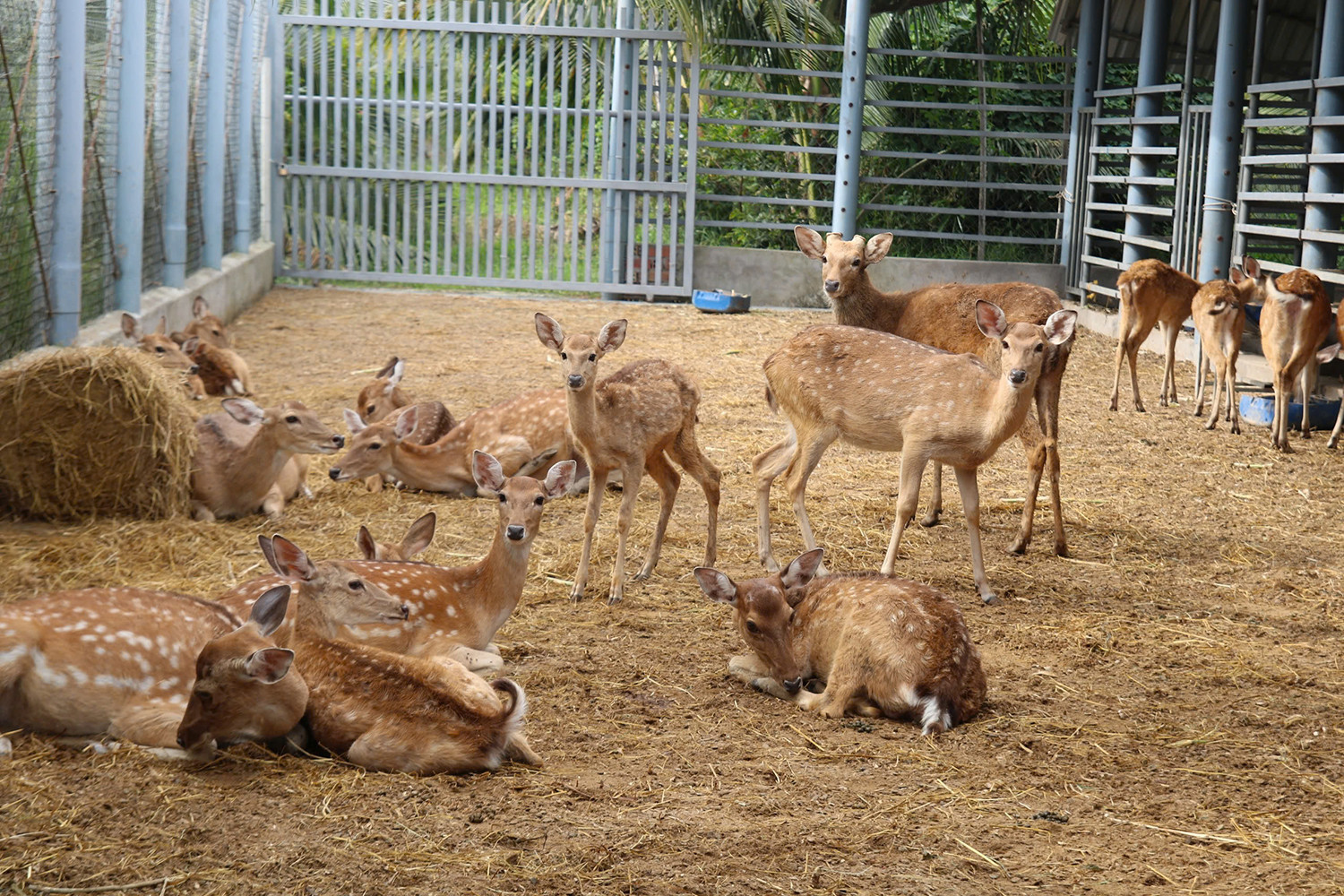
From his traditional livestock model, Thoi Van Thao, 49, living in Nhon My Commune in An Giang Province, decided to pivot to sika deer farming and built a farm covering about 500 square meters.
His family currently owns a herd of 50 deer, generating an annual income of roughly 300 million dong.
This is considered a new and highly effective livestock model with favorable market demand and growing interest from local authorities.
According to Nhon My Commune leaders, the locality is helping Thao standardize his velvet antler products toward OCOP certification while studying how to expand the model across the area.
Sharing how he came to the profession, Thao said velvet antler is often called a “miracle tonic” because it contains many beneficial nutrients, boosts vitality and helps the body recover quickly after illness.
In traditional medicine, velvet antler is classified among the “four supreme tonics,” valued highly for its medicinal and nutritional properties.
Before launching his business, he spent considerable time studying through books, newspapers, social media and by visiting large-scale deer farms across provinces from south to north.
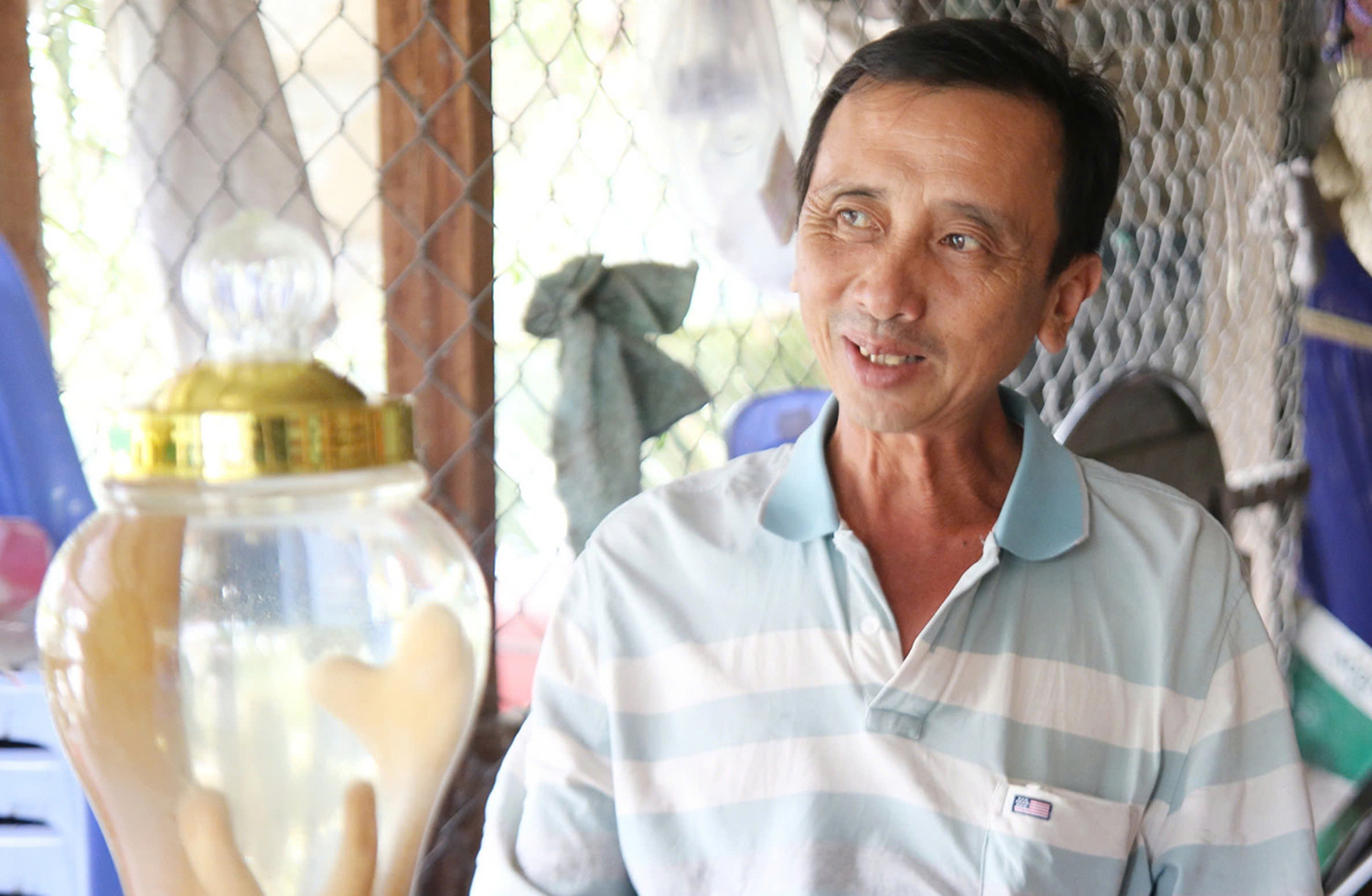
After gathering enough knowledge and technical skills, he decided to sell his cattle herd and renovate the old barn to create a safe, airy deer-raising facility.
In early 2023, he officially began with 12 breeding deer, including both young and mature animals, priced from 25 to 35 million dong each.
His initial investment in the barn, breeding stock and other expenses totaled more than 500 million dong.
Thao said sika deer are easy to raise, have strong resistance and are well suited to An Giang’s climate.
However, because they retain a degree of wild instinct, raising them in captivity requires strict adherence to technical and hygiene standards.
“Deer must have clean food, clean water and a clean living space. Every day, I monitor the herd one or two times to quickly detect any abnormal signs and take early action,” he said.
To keep the barn dry and reduce odors, he uses a biological bedding technique by mixing rice-husk ash with coconut fiber.
This bedding layer only needs to be replaced every five to six months.
Collected deer manure is used to fertilize fruit trees, contributing to a circular agricultural model and reducing costs.
Deer feed mainly includes grasses, tree leaves and banana stems - ingredients readily available locally.
Deer in breeding season or producing velvet receive extra starchy foods and fresh fruits or root vegetables.
Thanks to proper technique, Thao’s deer herd grows steadily.
According to him, male deer begin producing velvet at about three years of age; with good care, each pair weighs 0.5 to 1 kilogram and can be harvested twice a year, generating high economic value.
A stable reproductive cycle ensures continuous income for the farm.
Six-month-old fawns are sold as breeding stock, while older deer - such as 18-month-old animals, two-year-old females and two-year-old males producing velvet - have high market value, ranging from 18 to 35 million dong each.
Fresh velvet is sold for about 25 million dong per kilogram, while dried velvet sells for around 20 million dong per kilogram.
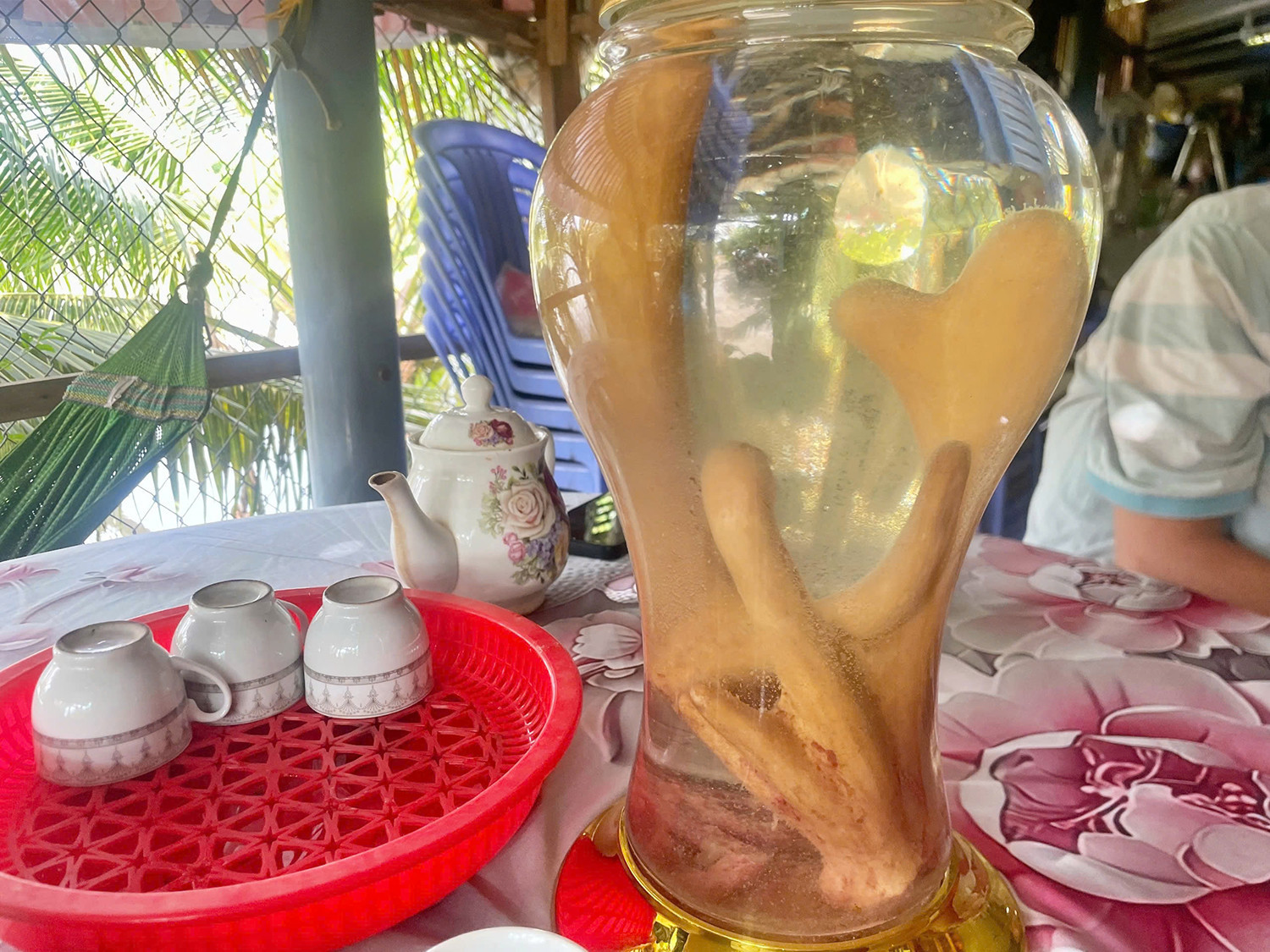
The farm is also testing products such as velvet soaked in honey and velvet infused in liquor, gradually diversifying its output and increasing economic returns.
Tran Tuyen
.svg)
