 Vietnamnet.vn

 Podcast



Some scientists never stand on award stages.
They appear as humble individuals, bearing physical pain, mental pressure, and years of uncertainty - all for one pursuit: knowledge that truly benefits their nation.
In every country’s history of development, science is measured not just by the number of published papers or prizes won, but by the individuals who quietly dedicate their entire lives to the hardest, most enduring path, creating tangible value for society.
This was the storytelling approach of Reflected Light, a program aired on December 21, 2025, produced by Vietnam Television in collaboration with the Ministry of Science and Technology. Rather than glorify fame or metrics, it focused on journeys. It celebrated determination over decoration.
In that light, the featured scientists emerged not as icons of success, but as steadfast souls - people who gave up comfort and certainty, choosing instead the painful road of building scientific knowledge for their homeland.
Choosing the hardest road to put Vietnamese rice on the world map
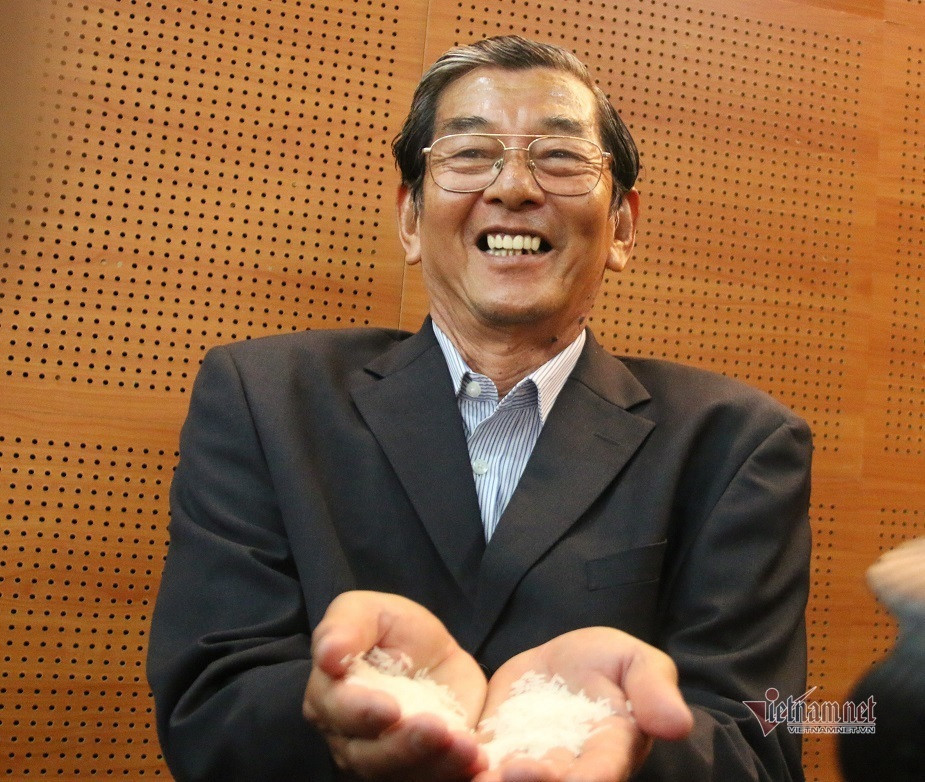
For more than 40 years, Ho Quang Cua devoted his life to rice cultivation. He chose not the safer path of a lab or research institute, but started from the bottom - by his own admission, as an amateur - at a time when Vietnam felt deeply inferior to rice powerhouses like Thailand.
He chose the hardest road: to develop a rice variety that could fairly compete on the global market.
Without a strong starting point or major institutional backing, Cua and his team advanced slowly and patiently, improving generation after generation of rice - learning by doing, step by step, over two decades.
Even now, as degenerative spine disease prevents him from standing upright, he refuses to leave his chosen path. What has kept him going, he says, is not fame or awards, but his responsibility to farmers and his dream of seeing Vietnamese rice respected on the global stage.
He drew inspiration from Professor Luong Dinh Cua and learned how to create rice varieties with regional identity from north to south. From Thailand, he studied how to build brand value and protect intellectual property to survive global competition. None of this came from books - it came from the brutal realities of the international marketplace.
The turning point came when his ST25 rice was recognized globally. From “think rice, think Thailand,” the world began to associate high-quality rice with Vietnam. For Ho Quang Cua, this wasn’t just a product breakthrough - it was the realization of a dream that had stretched over decades for millions of Vietnamese farmers.
Strikingly, most of his breakthroughs came after retirement. It wasn’t until he was 66, 67, and then 72 years old that he was formally recognized internationally, including by the FAO. Success came late, but as he says, when the path is right and perseverance is strong, no effort is ever wasted.
A lighthouse lit by the tears of children
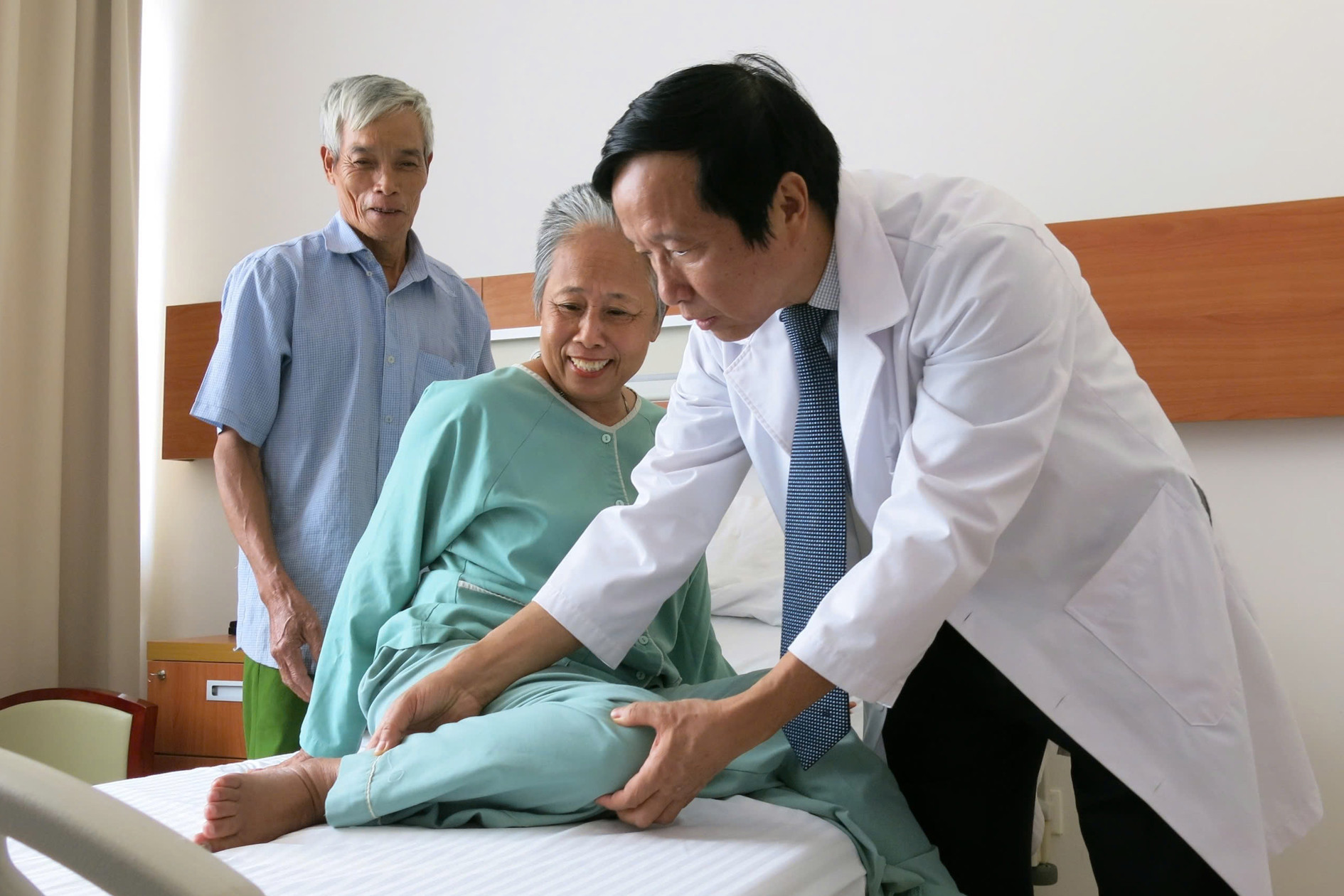
While engineer Ho Quang Cua’s journey was rooted in rice fields, Professor Nguyen Thanh Liem’s began in hospital wards - where he confronted the suffering of sick children and their families.
As the pioneer of pediatric endoscopic surgery in Vietnam and one of the world’s top 2% most influential scientists, Nguyen Thanh Liem understands the brutal distance between scientific glory and the harsh realities of biomedical research.
He points out that society often sees only the final result of success - rarely the storms that preceded it.
His biggest challenge came when researching cell therapy for children with cerebral palsy and autism - a highly sensitive, controversial, and risky field. Alongside technical difficulties, he faced intense backlash, particularly online. The criticism and suspicion led to sleepless nights, and at times, he questioned whether he should give up.
But what kept him going, he said, wasn’t scientific ambition - it was the look in the eyes of disabled children, and the cries of parents begging: “Please save my child.” Those images became his lighthouse, pushing him to risk personal safety and continue the research.
After 11 years, his work began to show results. Some children once completely unresponsive were now able to attend school. Others progressed slowly, but a single word - “Mom” - spoken after years of silence could bring families to tears.
To him, science may not always produce miracles, but it gives hope. And that hope alone is enough to keep people moving forward.
When science enters the marketplace and becomes national strength
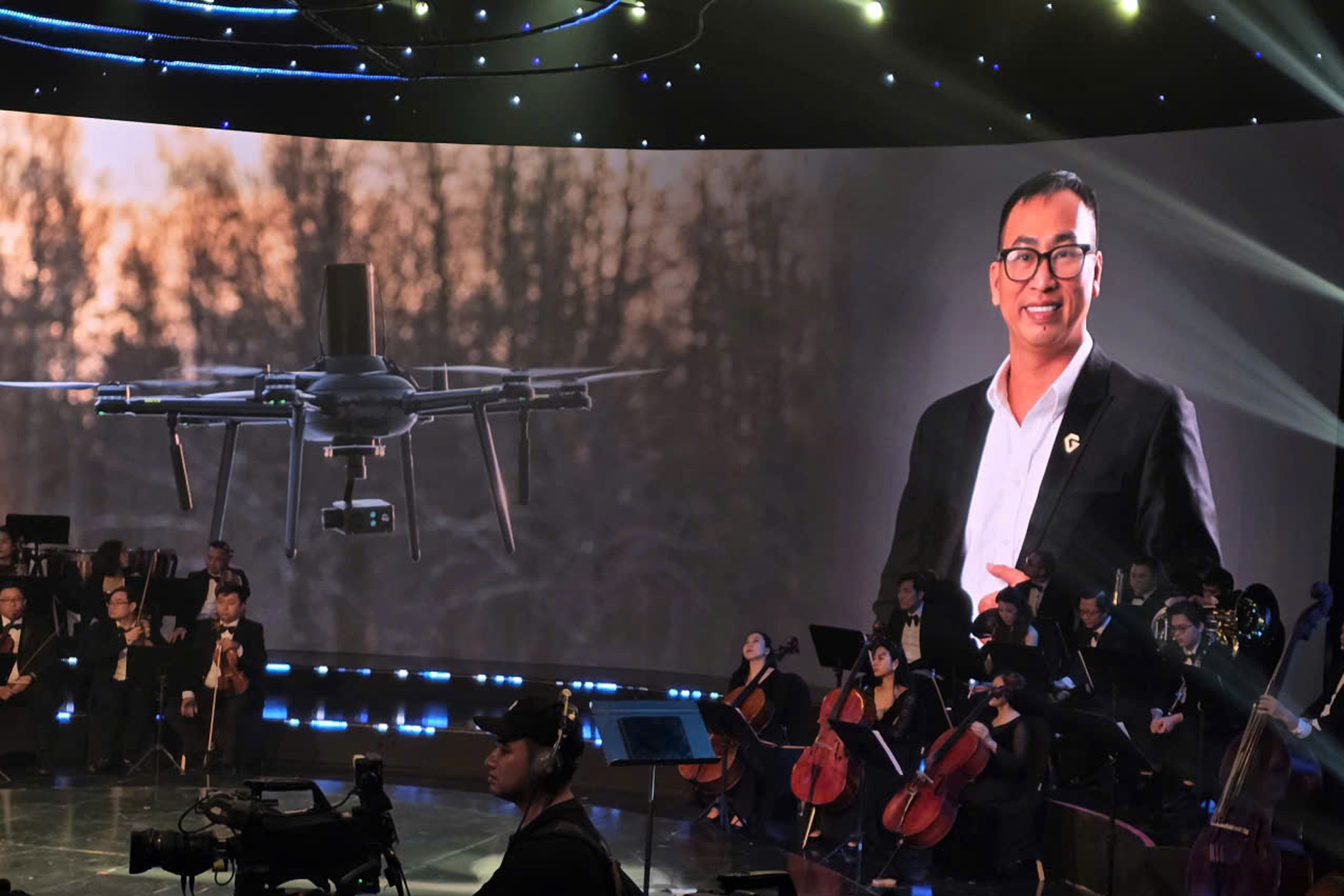
What set Reflected Light apart was its portrayal of not just past pioneers, but also a new generation - those extending the value chain of science into practical markets, turning knowledge into competitiveness.
One such figure is Associate Professor Nguyen Minh Tan, known for her applied agricultural research. She represents a generation of scientists bringing lab results into real production - improving agricultural value and creating sustainable livelihoods.
With her Jeva technology in smart agricultural processing, Minh Tan helped preserve the flavor and quality of fruits and vegetables to meet export standards - significantly increasing economic value. She sees her research into Vietnam’s “fruit map” not just as science, but as a promise - a reminder of a scientist’s responsibility to society.
“There are still many localities, many farmers desperately seeking safe, effective agricultural processing solutions,” she said. Her greatest aspiration is to integrate green technology into agriculture - so that Vietnam’s produce can reach the world while preserving its unique flavor and quality.
Beyond her research, she also focuses on training the next generation of engineers. She believes that the youth - better educated and more globally minded - will surpass the current generation in advancing sustainable development.
Also featured in the program was Huy Pham, a high-tech engineer and entrepreneur, founder and CTO of Gremsy. He represents the Vietnamese tech generation mastering core UAV technology, with gimbal and payload products now recognized in global markets.
Pham’s journey wasn’t easy. He left a U.S. company in 2011 to start Gremsy with just a few engineers in a small lab. By the end of 2013, the company shipped its first product to the U.S., making a dream come true: high-tech products “Make in Vietnam” reaching global markets.
At times, fierce competition from Chinese firms brought Gremsy to the brink of collapse. Financial pressure collided with his creative passion. He recalled a saying: “Be passionate, be foolish.” And over time, that passion bore fruit.
“I want to build a tech unicorn by 2030,” he said. “And I want to tell young people: when you hold fast to your will, that will becomes your lighthouse - guiding you to compete on the global stage.”
Pham’s story reflects a new face of Vietnamese science - when knowledge evolves into products, brands, and national competitiveness.
From rice to medicine to technology, science becomes duty
From grains of rice to hospital wards to cutting-edge factories, each “lighthouse” profiled in this program shared one trait: treating science as a national duty. Their journeys were long and lonely, but their unwavering commitment brought lasting value to Vietnam.
As Vietnam puts science, technology, and innovation at the heart of its national development strategy, their stories serve not only as inspiration - but as a reminder: when nurtured with perseverance and a spirit of service, knowledge will always find its path, no matter how unpaved that road may be.
Thai Khang
.svg)
