 Vietnamnet.vn

 Podcast



The Ministry of Industry and Trade is considering removing automobile manufacturing, assembly, and import from the list of conditional business sectors.
At first glance, the proposal aligns with ongoing administrative reforms aimed at reducing business conditions. Yet behind it lies a deeper development choice: does Vietnam still intend to build a domestic automotive industry, or is it prepared to become primarily a consumption market for the world?
A policy misalignment
From a policy perspective, grouping manufacturing, assembly, and import into a single conditional business category has never been entirely appropriate, as these are fundamentally different activities.
Importing is essentially a commercial activity, which can be regulated through tariffs, technical standards, and quality control. Manufacturing and assembly, by contrast, are industrial activities tied to technological development, supporting industries, and domestic production capacity.
For this reason, the two should be separated into distinct categories, each governed by appropriate policy tools.
A carefully considered decision in the past
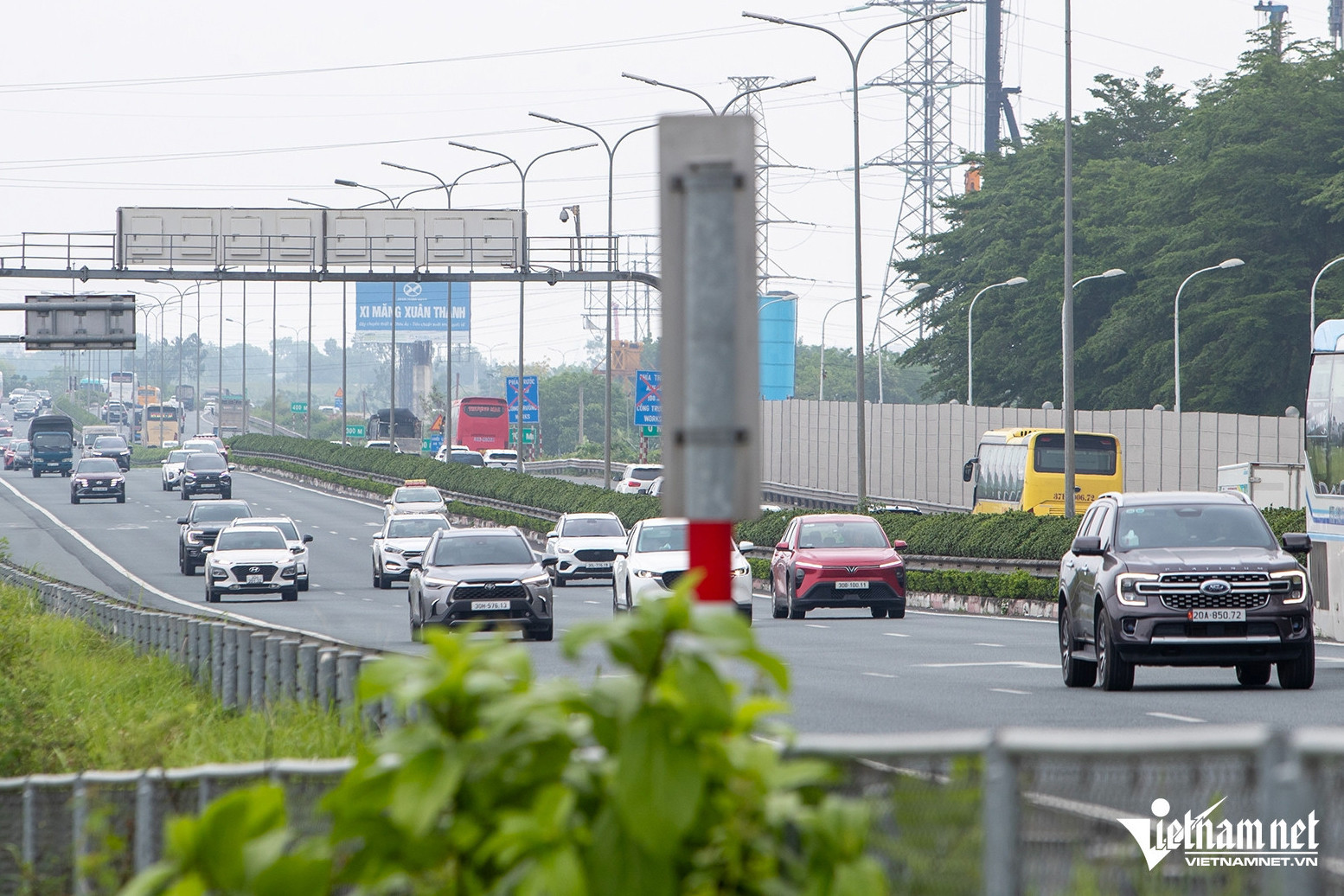
Looking back, since Toyota Motor Vietnam entered Vietnam in 1995, the auto industry has developed under a deliberately protective policy framework, aligned with the country’s broader integration process.
In 2011, the Ministry of Industry and Trade issued Circular 20, creating barriers for imported vehicles in an effort to support foreign-invested assembly enterprises and increase localization rates. However, after more than two decades of protection, localization remained at only a few percent, far below expectations.
By early 2016, at the start of a new government and National Assembly term (2016-2021), a major policy debate emerged: should Vietnam fully open its market or continue protecting its auto industry?
One side argued for removing administrative barriers and letting the market decide, given that prolonged protection had yet to produce a fully developed domestic industry.
The other viewed the issue as one of industrial security: opening too early could turn Vietnam into a pure consumption market, even a destination for outdated vehicle models.
Ultimately, both the government and the National Assembly chose the latter approach. Manufacturing, assembly, and import of automobiles were placed on the list of conditional business sectors under the Investment Law.
The message was clear: this was an industry to be deliberately protected for development.
An industry taking shape
Since 2017, following that decision, a genuine wave of investment has taken place.
VinFast has emerged as the largest project, with total investment estimated in the billions of US dollars, establishing production complexes in Hai Phong and Ha Tinh, bringing domestic capacity to around 450,000-500,000 vehicles per year.
THACO has expanded its Chu Lai complex, with accumulated investment of several billion US dollars and total capacity of approximately 250,000-300,000 vehicles annually, including both passenger and commercial vehicles. Meanwhile, Hyundai Thanh Cong has increased capacity to around 180,000 vehicles per year.
More recently, new projects and joint ventures such as Skoda Auto, Geely, and Chery are adding several hundred thousand units of capacity.
In total, ongoing and planned projects are bringing industry-wide production capacity to approximately 1.2-1.4 million vehicles per year, with cumulative investment estimated at US$13-15 billion.
The scale of investment and production capability has changed significantly, forming the foundation of an industrial sector - albeit still with notable limitations - as a result of targeted protection.
Capacity still lags behind demand
Alongside investment, Vietnam’s auto market has expanded rapidly, reaching a scale sufficient to support industrial development. In 2024, total sales approached 500,000 units, and in 2025, exceeded 600,000 units.
However, imports have grown at a similar pace, rising from over 173,000 vehicles in 2024 to more than 205,000 in 2025, with total import value nearing US$5 billion.
This reveals a clear paradox: the market is large enough, but domestic production capacity still falls short of demand.
Vietnam remains both a fast-growing market and one significantly dependent on external supply.
Yet another question arises: without domestic production - which accounts for roughly two-thirds of consumption - where would Vietnam find the tens of billions of US dollars needed to import fully built vehicles?
A tightening global context
While Vietnam considers loosening regulations, major economies are moving in the opposite direction.
The US does not ban imports, but imposes high tariffs and offers strong incentives for domestic production, effectively requiring manufacturers to establish local plants.
The EU maintains tariffs, strict technical barriers, and provides tens of billions of euros in subsidies for electric vehicles and batteries.
China, after decades of protection, now produces over 30 million vehicles annually, exports more than 7 million, and faces systemic overcapacity.
By the end of 2025, inventory at Chinese dealerships was estimated at around 3 million vehicles. Manufacturers have been forced to cut prices and even export “zero-kilometer” cars to clear stock.
Compared to China’s production capacity of over 50 million vehicles per year, Vietnam’s 1.2-1.4 million units remain modest and vulnerable to competitive shocks.
Opening the market, weakening the base?
If automobiles are removed from the list of conditional business sectors, the market would open fully, with entry barriers nearly eliminated.
In the short term, consumers could benefit from lower prices, while importers gain more room to expand.
However, in a capital-intensive industry like automotive manufacturing, new investment would likely flow more toward trade and imports than domestic production.
Large-scale industrial projects could struggle to achieve optimal scale, while the already fragile supporting industries would lose further momentum. The market might expand, but the industrial foundation could weaken.
The greatest cost lies not in short-term benefits, but in the potential loss of an opportunity to build a robust domestic supply chain.
In this context, business conditions are not merely administrative barriers, but policy tools to screen investors, guide production scale, and align industry development with supporting sectors.
Removing these tools without effective alternatives would reduce the state’s ability to shape the industry, allowing market dynamics to favor short-term commercial gains over long-term industrial investment.
Reform without abandonment
Reform is necessary, but it does not mean relinquishing strategic direction.
The issue is not whether to maintain or remove business conditions, but how to redesign them - making them more transparent, less costly, yet still aligned with industrial development goals.
Once the market is fully opened and the industry structure tilts toward trade, the opportunity to rebuild a domestic automotive industry from scratch would be extremely difficult to recover.
The choice, therefore, is not simply administrative - it is strategic, and its consequences will extend far beyond the immediate horizon.
Tu Giang
.svg)
