 Vietnamnet.vn

 Podcast



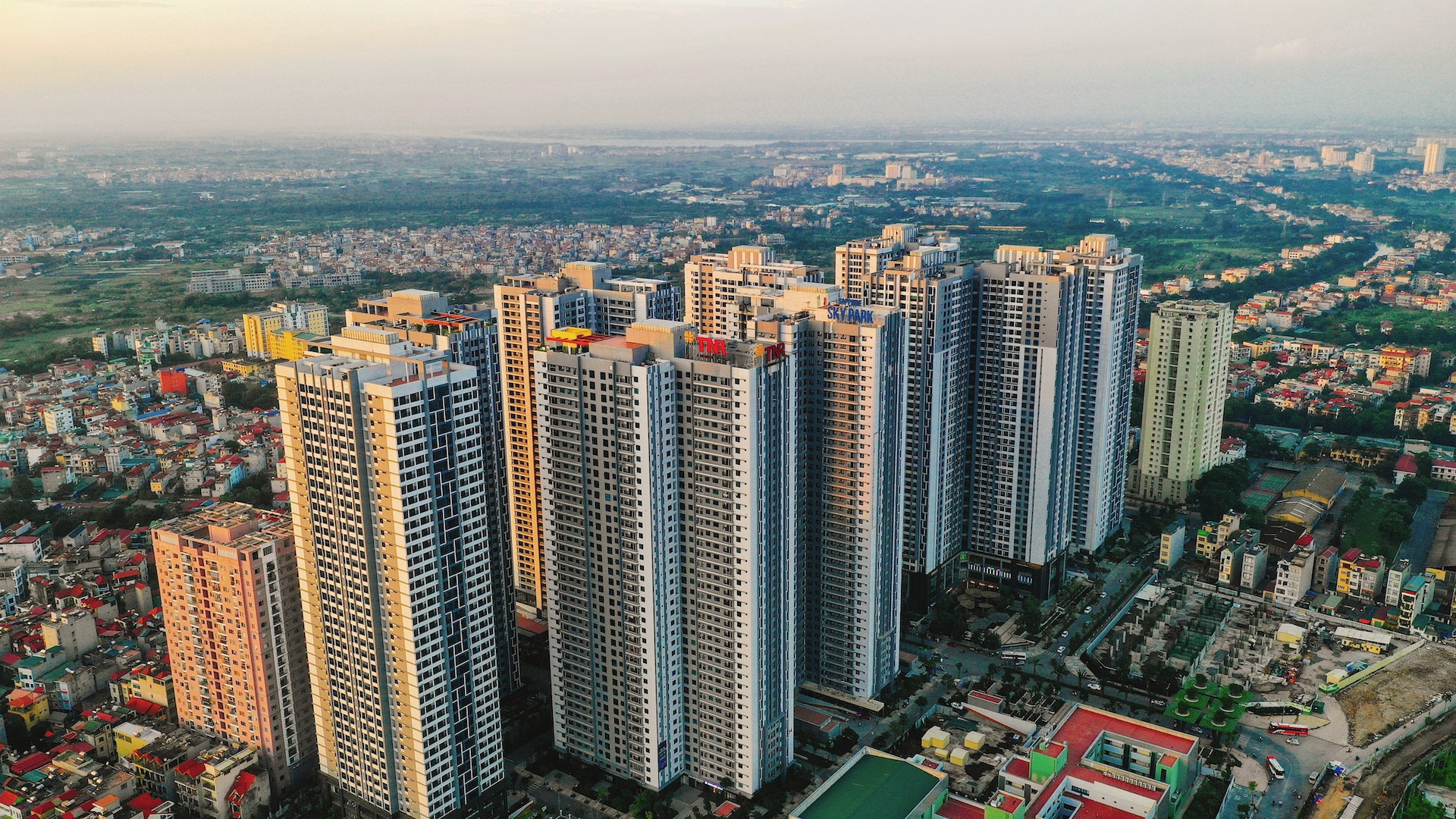
Hanoi is currently home to nearly 2 million people living in boarding houses, mini apartments, and other forms of rental housing built by private individuals. The figure was released at a recent meeting between the Hanoi Mayor and workers in the capita city.
With Hanoi's population approaching 9 million, this group accounts for more than 20 percent of the city's residents. In other words, roughly one in every four to five people living in Hanoi is renting a room, a mini apartment, or another type of leased accommodation.
These tenants may include young teachers, supermarket employees, security guards, drivers, construction workers, or service staff who have yet to secure stable housing.
Of course, these people, along with many others in the middle class, remain far from being able to buy a home, especially when Vietnam's price-to-income ratio (PIR) currently ranges from 23.7 to 30, according to figures presented at the Vietnam Real Estate Forum in early June 2026.
This means housing prices have risen far faster than workers' incomes. The dream of owning a home, once considered the foundation of a ‘secure and prosperous life’ philosophy, is becoming increasingly out of reach for many young families.
Vietnam's homeownership rate is among the highest in the world, at around 90 percent. However, this is largely the result of previous generations.
For today's young workforce and migrant workers, the situation is very different. Over the past five years alone, housing prices in Vietnam have increased by 59 percent, according to calculations by real estate consulting firms.
In Hai Phong, an industrial hub, which has more than 370,000 workers, demand for rental housing is estimated at 33,000 units, while the current supply meets only about 12 percent of that need, according to local authorities.
Rental housing shortages are also occurring in Bac Ninh, Hung Yen, and many other industrial provinces.
Most workers continue to live in self-built rental compounds developed by households, many of which pose significant risks related to fire safety, living conditions, and service quality.
The role of stakeholders
For many years, the most rational choice for real estate developers was to build and sell. Once a project was completed and units were sold, capital could be recovered quickly, and developers no longer had to manage the asset for years afterward.
Rental housing, by contrast, requires substantial upfront investment, long payback periods, and operational management that can last for decades.
The cause does not entirely lie with the enterprises.
The current mechanism requires enterprises to pay land use fees with a very large cost right from the start. Meanwhile, the market lacks long-term capital sources such as Real Estate Investment Trusts (REITs) to support projects with long payback periods.
The problem is even more difficult when the rental yield in Vietnam is currently only about 2 to 4 percent per year, much lower than many markets in the region and even less attractive than bank savings deposits. This leaves many enterprises unenthusiastic about this segment.
To change the choice of enterprises, the State cannot merely appeal through administrative orders. What is more important is creating mechanisms that are attractive enough for enterprises to develop rental housing.
Many countries do not view rental housing merely as a real estate product. They view it as a part of urban infrastructure, similar to transportation, schools, or hospitals.
With that approach, a new policy framework is gradually forming in the direction of clearly defining four groups: commercial housing, rental housing, official public housing, and social housing.
What is the solution?
Instead of only clearing land and building anew, regulatory agencies are considering a mechanism that allows enterprises to buy back existing commercial housing or social housing projects to convert them into rental models.
In parallel with that is the use of a portion of state-owned housing funds within commercial projects to expand the supply.
To compensate for the low rental profit margin, enterprises can be helped to exploit commercial and service activities to generate additional revenue streams. Preferential credit and tax policies are also being studied to attract long-term investment capital flows.
Renters also need to be better protected by the law. The biggest anxiety for many renters is not just the rental price, but the risk of sudden price hikes, unexpected contract terminations, or facing difficulties when accessing basic public services like schools for their children.
Tu Giang
.svg)
