 Vietnamnet.vn

 Podcast



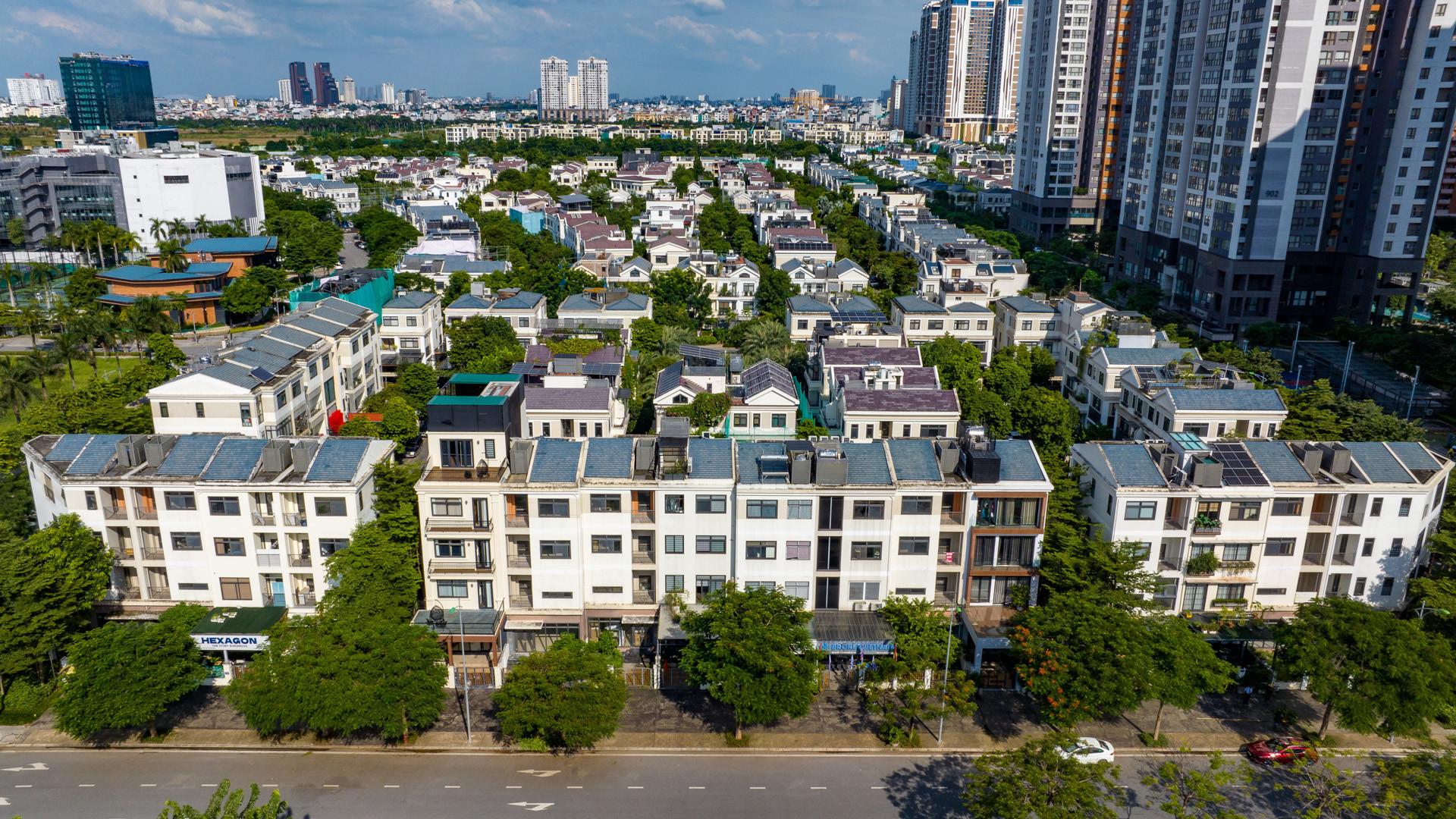
Most rental housing supply comes from small household landlords,. It includes workers' boarding houses, student rentals, or mini apartments in residential neighborhoods.
A large share of housing demand from middle- and lower-income groups is being met through social resources rather than large-scale real estate projects.
So, what the Government is aiming for is not the creation of a new market, but the formal integration of an existing market that has long operated in the shadows.
The question is why developers have not been particularly enthusiastic about developing housing for rent.
Suppose a developer builds a 300-unit apartment building in Hanoi. If the apartments are sold at around VND100 million per sqm, the developer could earn VND2.1 trillion in revenue and complete the project cycle within a few years.
However, if they rent the apartment building, the situation changes completely. At current rental rates, the developer may need 20-30 years to recover its investment, not including operating costs, maintenance expenses, and market risks throughout that period.
In other words, one option offers profits that can be realized within one chief executive officer’s employment timeline. The other is a long-term undertaking that spans multiple generations of management.
It is understandable why most developers will opt to sell. For-profit companies aim to make profit revenue, not necessarily solve social problems on behalf of the State.
Vietnam has spent many years attempting to address housing needs through social housing-for-sale schemes. However, implementation has progressed more slowly than expected, partly because profit margins are low while procedures are complex and project timelines are lengthy.
Even in the social housing segment, the market struggles to function effectively if the incentives are not properly aligned.
Meanwhile, millions of renters have to wait. They need stable housing at prices that do not exceed their ability to pay.
Gov’t can’t do the private sector's job
The state's role is not to substitute for market participants, but to shape the conditions under which the market operates.
That is also the spirit behind Prime Minister Le Minh Hung's recent directive calling for the development of rental housing without full state subsidization, while also avoiding a complete reliance on market forces.
From an economic perspective, the most valuable resource the State can contribute to the rental housing market is not money, but land.
If developers must acquire land at market prices and then build rental housing, most projects will be difficult to make financially viable.
But when the State participates in the market with land, infrastructure and institutions, the economic equation alters completely.
Who will provide 30-year capital?
Land is only half of the story. The remaining half is capital.
Ultimately, it is very difficult to use capital mobilized for only a few months or a few years to finance an asset that takes several decades to recover its costs.
This means that to develop a large-scale rental housing market, Vietnam will have to secure corresponding long-term capital sources.
In many developed countries, citizens can accept renting a house for life because they still have other safety nets for the future, such as pension funds, social insurance, or public welfare programs.
Meanwhile, in Vietnam, a house is often the largest asset of a family, or for old age, or the most crucial insurance cushion against life's contingencies.
The rental housing story ultimately does not rely solely on the construction industry or the real estate market. It also depends on the pace of income growth, job quality, and the maturity of the social security system.
A win-win policy
Who will build those places to stay? The success of the rental housing market does not depend on a single entity, but hinges on whether Vietnam can design a mechanism where all parties see their own benefits.
But at the end of the day, the destination of every policy remains the people.
A rental housing market is only truly successful when ordinary workers can find a stable place to live, work, and raise their children in the city. No business builds houses out of pure kindness.
Yet, no metropolis can achieve sustainable development if the very people who generate value for it can no longer afford to stay.
Tu Giang
.svg)
