 Vietnamnet.vn

 Podcast


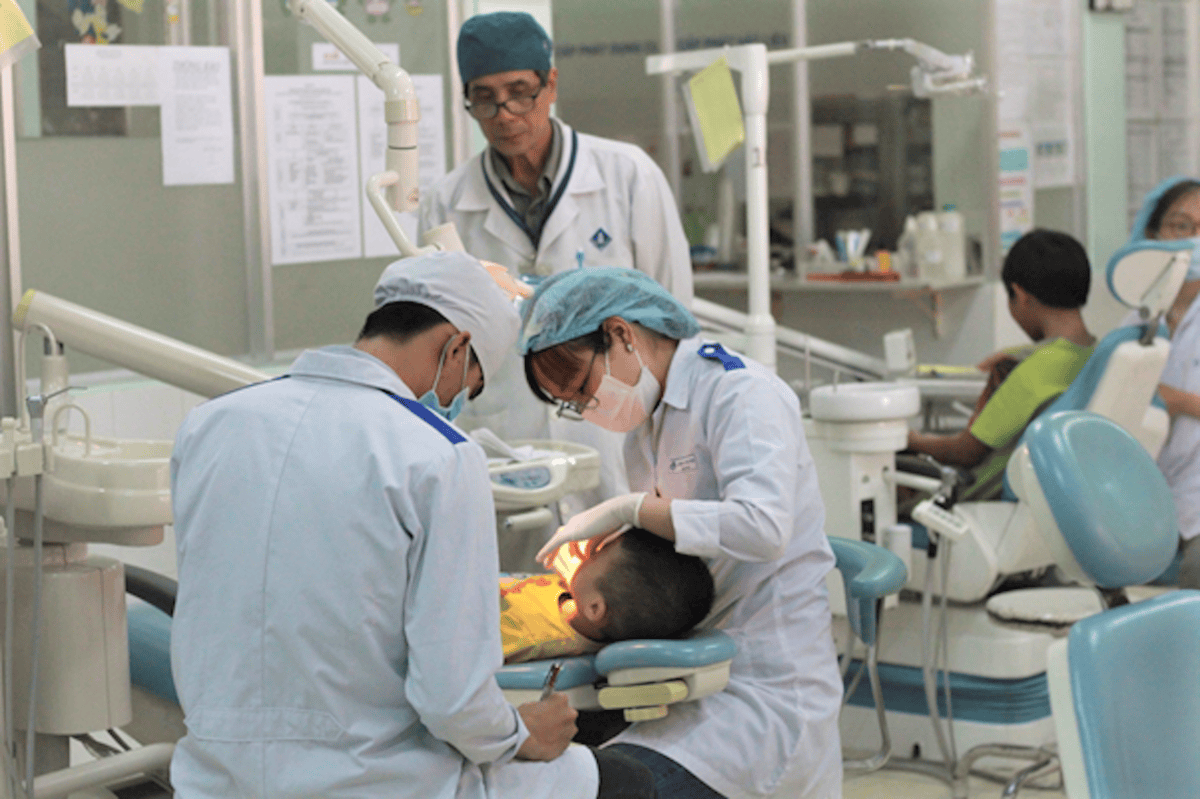
On September 4, the National Medical Council issued an official dispatch to health training institutions, announcing the plan to organize the assessment of professional competency for medical examination and treatment for doctor titles in 2027.
The four doctor categories required to take the assessment are: General Medical Practitioners, Traditional Medicine Doctors, Odonto-Stomatologists, and Preventive Medicine Doctors.
In 2027, the Council will organize two exam sessions. The first will take place in March, with application submissions expected to open in January. The second will take place in December, with applications accepted starting in September.
Assoc. Prof. Dr. Luong Mai Anh, Head of the Office of the National Medical Council, said that this competency assessment is conducted in compliance with the 2023 Law on Medical Examination and Treatment.
"The exam in no way invalidates the quality of training or suggests that graduating doctors lack professional competence," Anh emphasized.
The key distinction lies in separating two concepts: evaluating academic results falls under the responsibility of educational institutions, whereas assessing a doctor's practice competency falls under the authority of the National Medical Council based on a unified national competency framework to issue practice licenses.
The assessment and evaluation of medical practice competency represent a critical milestone in refining the healthcare institutional framework. This process directly impacts the quality of healthcare human resources, patient safety, and the sustainable development of the overall healthcare system.
Experts emphasize that this evaluation is not merely a legal mandate, but a global trend aimed at standardizing medical practice quality and aligning with international professional standards and practices.
Standardizing quality, eliminating disparities
Vietnam has 40 health training institutions, spanning both public and private sectors. In practice, significant disparities exist among these institutions regarding curricula, teaching methodologies, clinical training conditions, and evaluation criteria.
Applying an independent and objective assessment framework ensures that every doctor entering practice meets the minimum required competency threshold, thereby protecting patient safety.
Notably, practice competency is not validated just once at the time of initial licensing. Practice licenses will have a 5-year validity period, requiring doctors to undergo Continuous Medical Education (CME) to maintain and renew their credentials.
Anh noted that the National Medical Council has established flexible assessment options to account for the unique characteristics of residency programs while safeguarding the legitimate rights of learners.
Accordingly, for resident doctors enrolled from 2027 onward: After completing their first year of training (which incorporates practical clinical work), doctors will sit for the competency assessment in one of four general practice scopes: General Medicine, Odonto-Stomatology, Traditional Medicine, or Preventive Medicine.
Upon passing and obtaining a practice license, doctors will continue their specialized residency training to expand their corresponding scope of practice.
For resident doctors enrolled before 2027, a transitional assessment plan will apply. Under this approach, assessment tools are tailored to specific medical specialties within the specialist doctor competency framework to serve as the foundation for granting specialized practice licenses.
Addressing concerns among medical trainees regarding exam burdens and the risk of universities "teaching to the test," the representative from the National Medical Council affirmed that the evaluation aims for a transparent, fair competency validation mechanism to ensure patient safety, rather than creating extra pressure or obstacles for young doctors.
Exams focus on clinical thinking
"The exam questions are designed to evaluate the application of clinical reasoning and real-world case management. This requires doctors to accumulate practical experience throughout their hospital training rather than relying on memorizing theory or short-term cramming," Anh stated.
The representative of the National Medical Council noted that essential competency lists and exam matrix structures for the four practice scopes have already been issued, with question banks currently undergoing standardization. Sample questions will be published to allow candidates to prepare proactively.
"The Council does not organize nor authorize any organization or individual to conduct exam preparation courses. Young doctors should remain vigilant against fraudulent websites claiming to offer test prep," Anh warned.
Currently, there are 40 health training institutions in the country, including Hanoi Medical University, Hai Phong University of Medicine and Pharmacy, Thai Binh University of Medicine and Pharmacy, Military Medical Academy, University of Medicine and Pharmacy - Hue University, Pham Ngoc Thach University of Medicine, University of Medicine and Pharmacy at HCMC, University of Health Sciences - Vietnam National University HCMC, and Can Tho University of Medicine and Pharmacy.
In addition, several multidisciplinary universities also offer health sciences training, such as Hanoi University of Business and Technology, Dai Nam University, and HCMC University of Technology (HUTECH).
Vo Thu

