 Vietnamnet.vn

 Podcast



After nearly four decades of opening its economy, Vietnam's success in attracting foreign direct investment (FDI) is difficult to dispute. The country has drawn nearly USD 550 billion in foreign investment, hosts more than 46,000 active projects, and records total trade equivalent to almost 200% of its GDP.
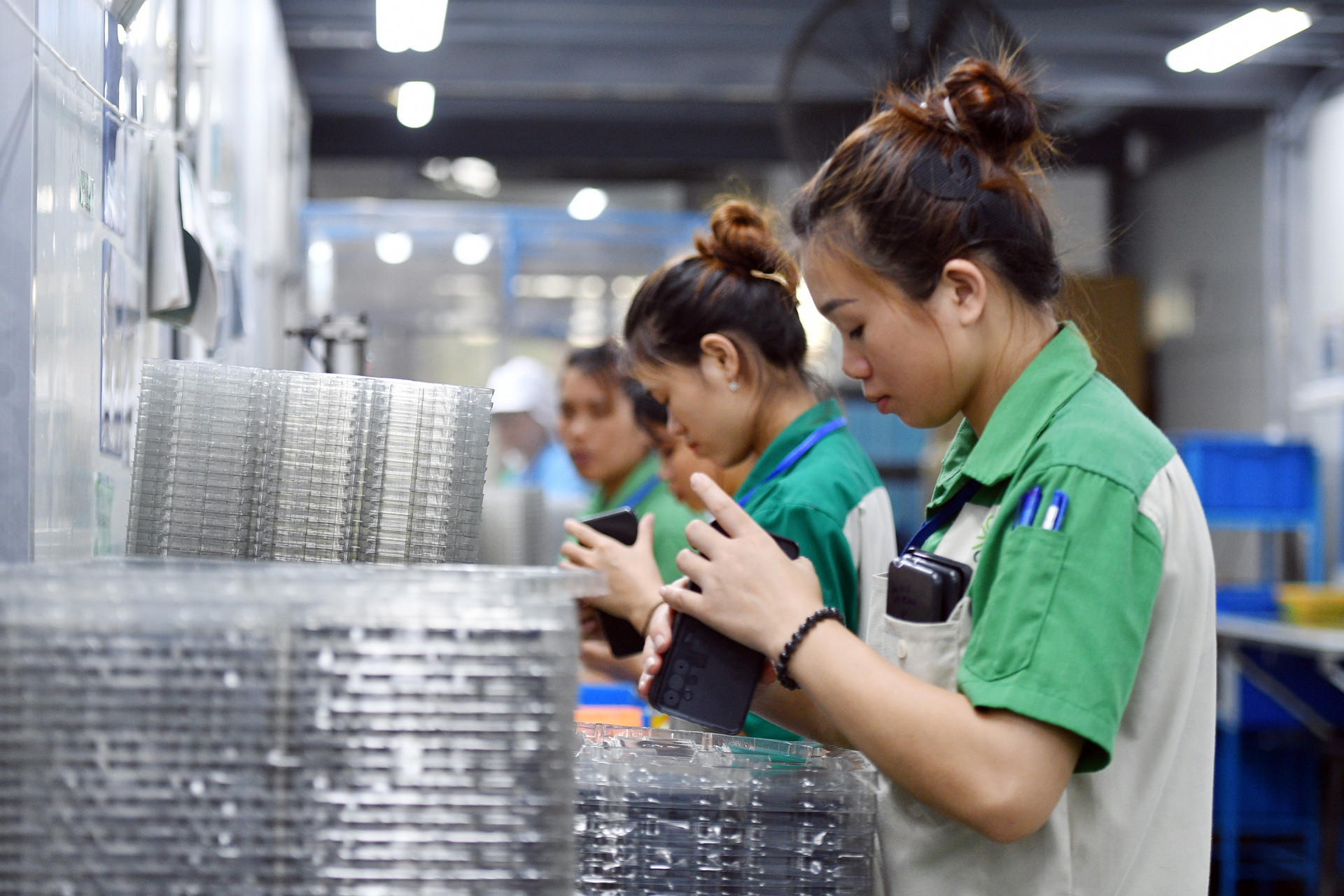
As investment inflows remain strong, however, a new question has emerged: How much has foreign capital strengthened Vietnam's own economy?
According to Fares Al-Hussami, Head of FDI Qualities & Impact at the Organisation for Economic Co-operation and Development (OECD), Vietnam's priority is no longer how many additional billions of dollars it can attract, but how much value FDI creates for the rest of the economy.
In other words, the benchmark for the country's next stage of development is no longer the size of investment inflows but the extent to which foreign-invested enterprises generate spillover benefits for domestic businesses.
OECD assessments suggest those spillover effects remain limited.
One major constraint is supply chain integration. Around 40% of inputs used by foreign-invested companies in Vietnam are still imported, while domestic private firms supply only about 25%.
As a result, many foreign manufacturers continue to import components, assemble products in Vietnam and export them, leaving local companies concentrated in lower value-added segments of the supply chain.
Technology transfer remains limited
Technology spillovers present another challenge.
According to Al-Hussami, foreign-invested enterprises in Vietnam spend relatively little on research and development (R&D), while higher-value activities such as research, product design and technology development remain modest.
This means the most valuable parts of global value chains - where intellectual property, technological innovation and higher profits are generated - largely remain outside Vietnam.
Limited local R&D also reduces opportunities for Vietnamese businesses to acquire technology, improve management capabilities and move into higher-value positions within global supply chains.
Another bottleneck is the economy's capacity to absorb new technologies.
At the 2026 Strategic Dialogue Forum hosted by Vietnam's Ministry of Foreign Affairs, international experts noted that foreign-invested companies continue to face shortages of skilled workers because education and training have not kept pace with technological change.
They also pointed to shortcomings in digital infrastructure, energy infrastructure and parts of Vietnam's regulatory framework, which remain insufficient for high-tech investments such as artificial intelligence and data centers.
Taken together, Vietnam's FDI success has largely been measured by manufacturing output and exports rather than by stronger domestic industrial capabilities.
Resolution No. 10 seeks to narrow that gap by transforming foreign investment into a catalyst for stronger domestic capacity, technological advancement and national competitiveness.
A changing global investment landscape
The OECD's assessment is one reason Vietnam is rethinking its FDI strategy. At the same time, global investment itself is entering a new phase.
According to Dr. Phan Huu Thang, former Director General of the Foreign Investment Agency under the former Ministry of Planning and Investment, the world is moving toward a period of "selective globalization," where technology, security and sustainability increasingly determine investment decisions.
As a result, low labor costs and tax incentives alone are no longer sufficient to attract international investors.
Over the coming decade, multinational corporations are expected to continue restructuring supply chains while expanding investment in semiconductors, artificial intelligence, data centers, renewable energy and other knowledge-intensive industries.
Competition among countries is therefore shifting from cost advantages to institutional quality, skilled human resources, infrastructure and innovation ecosystems.
From attracting capital to building capability
Against this backdrop, Resolution No. 10 represents an important evolution in Vietnam's development strategy.
Dr. Thang said that while the country's priority over the past four decades was opening its economy to attract international resources, the next phase is about using those resources effectively alongside domestic strengths to build new development capabilities, enhance technological capacity, improve competitiveness and strengthen economic resilience.
In a speech outlining the resolution, Permanent Deputy Prime Minister Pham Gia Tuc emphasized that Vietnam should use international resources more effectively in combination with domestic capabilities to create new drivers of national development.
Rather than measuring success primarily through investment value or the number of projects, Resolution 10 places greater emphasis on the quality of investment.
Its priorities include attracting capital from advanced economies, increasing local content, expanding the number of Vietnamese firms participating in foreign-invested supply chains, strengthening technology transfer and promoting innovation.
These objectives reflect a broader effort to integrate foreign-invested enterprises more closely with domestic businesses instead of allowing the two sectors to develop largely in parallel.
Raising the economy's capacity to benefit from FDI
The advantages that helped Vietnam succeed over the past four decades may not be enough for the decades ahead.
Competitive labor costs and investment incentives remain important, but multinational companies increasingly prioritize innovation ecosystems, access to highly skilled workers and the ability of local suppliers to participate in global value chains.
Without stronger domestic capacity, Vietnam may continue attracting foreign investment while missing opportunities to secure the highest value-added segments of global production.
International experts at the 2026 Strategic Dialogue Forum argued that Vietnam should shift its focus from investment incentives toward strengthening its ability to absorb high-quality investment.
That requires digital and energy infrastructure capable of supporting AI and data centers, workforce training aligned with industry demand, and stronger collaboration among foreign-invested companies, universities, research institutes and domestic enterprises to accelerate technology transfer and innovation.
Nearly 40 years after opening its economy, Vietnam is no longer searching for foreign capital.
The ultimate measure of Resolution 10's success will not be how many billions of dollars in FDI the country attracts, but how much new development capacity that investment creates. When Vietnamese businesses are able to move deeper into global value chains, foreign investment will have fulfilled its most significant role in supporting Vietnam's long-term economic development.
Lan Anh
.svg)
