 Vietnamnet.vn

 Podcast



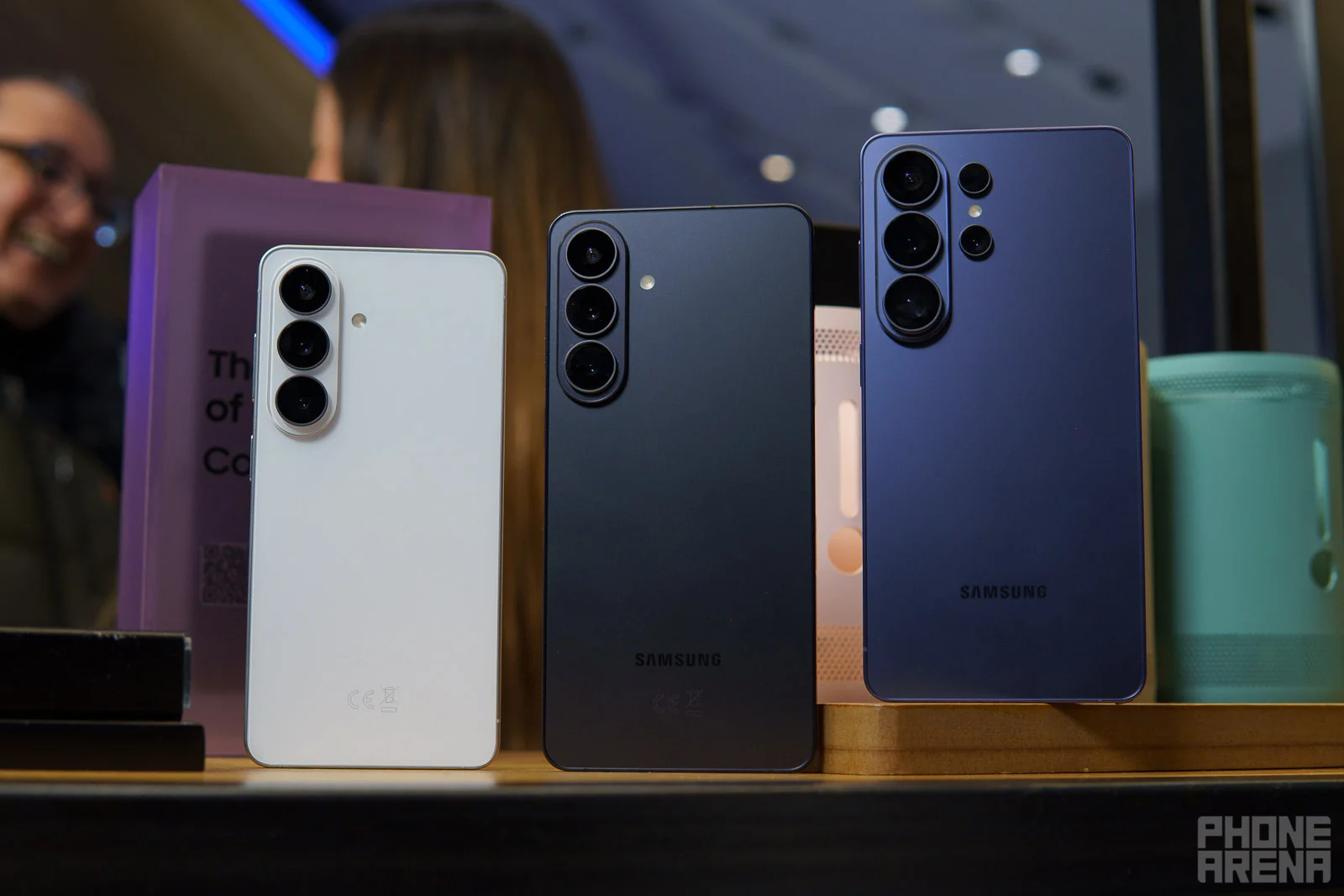
Following the official unveiling of its three foldable phones - the Galaxy Z Fold 8, Galaxy Z Fold 8 Ultra and Galaxy Z Flip 8 - attention in the technology world is quickly shifting to Samsung's next generation of premium smartphones, the Galaxy S27 series.
While rumors surrounding the Galaxy S26 FE continue to surface sporadically, the latest reports about the Galaxy S27 lineup are attracting particular attention, pointing to what could be Samsung's most surprising change in years.
According to leaks, the South Korean technology giant could completely rethink its camera strategy for its flagship models, including potentially using Sony-made sensors instead of continuing to rely on its own ISOCELL sensor lineup.
Entire Galaxy S27 lineup could receive major camera upgrades
According to a report from Galaxy Club, Samsung is considering equipping the Galaxy S27 and Galaxy S27 Plus with an entirely new 50MP Sony sensor for their main cameras.
If the report proves accurate, it would represent one of the biggest changes to the standard Galaxy S lineup since the Galaxy S22 debuted in 2022.
For the past three generations, Samsung has consistently used its own 50MP ISOCELL sensors for the main cameras on its premium Galaxy S models.
A switch to Sony would therefore represent more than simply changing component suppliers. It could also indicate that Samsung is seeking a significant leap in image quality as competition in the premium smartphone market becomes increasingly intense.
This would not, however, be the first time Samsung has worked with Sony on its flagship lineup.
In fact, the ultrawide cameras on Galaxy S models since the Galaxy S23 generation have used Sony's 12MP IMX564 sensor. The key difference this time is that a Sony sensor could take over the most important role in the camera system - the main camera.
Beyond the two standard models, earlier rumors suggest Samsung is preparing a series of notable camera upgrades across the Galaxy S27 lineup.
Several reputable sources have reported that the Galaxy S27 Pro and Galaxy S27 Ultra could feature an entirely new 16MP selfie camera.
If accurate, this would be the first time Samsung has upgraded the front camera hardware on the Galaxy S series since the Galaxy S23.
It remains unclear whether the Galaxy S27 and Galaxy S27 Plus will receive the same upgrade. Samsung could reserve the new feature for the two higher-end models to create clearer differentiation between product tiers.
The biggest changes, meanwhile, are likely to appear on the rear of the Galaxy S27 Ultra and could also be applied to the Galaxy S27 Pro.
Galaxy S27 Ultra could have fewer cameras but higher quality
One of the most surprising rumors is that the Galaxy S27 Ultra could abandon the four-camera system it has used for years in favor of a triple rear-camera setup.
According to leaked information, Samsung will retain the 200MP main sensor but remove one secondary camera, allowing it to focus more on quality rather than the number of cameras.
Alongside its ultra-high-resolution main camera, the Galaxy S27 Ultra is rumored to feature an entirely new 50MP ultrawide camera and a next-generation 50MP telephoto camera.
Although detailed specifications remain scarce, the sensors are expected to deliver significantly better image quality than recent generations of Galaxy S smartphones.
The strategy reflects a trend being adopted by a growing number of smartphone manufacturers. Rather than adding more lenses, companies are focusing on optimizing individual sensors to deliver better real-world photography.
In recent years, Samsung's premium Galaxy S models have often been seen as delivering only moderate improvements from one generation to the next.
Although their cameras remain among the best on the market, the differences between newer and older generations have become less pronounced.
In-depth reviews of the Galaxy S26 and Galaxy S26 Ultra have also indicated only modest improvements in image quality.
The most notable upgrade was the Ultra model's exposure performance, while the camera hardware itself remained largely unchanged.
Hai Phong
.svg)
