 Vietnamnet.vn

 Podcast



As soon as rumors about the devices surfaced, the tech world began asking the same question: how exactly will Samsung differentiate the Galaxy Z Fold 8 from the Galaxy Z Fold 8 Wide?
Screen size alone would clearly not be enough to justify two separate product lines.
According to multiple reliable leak sources, Samsung may be taking a familiar but effective approach - reducing camera specifications to lower the price.
Galaxy Z Fold 8 Wide could fall behind in camera hardware
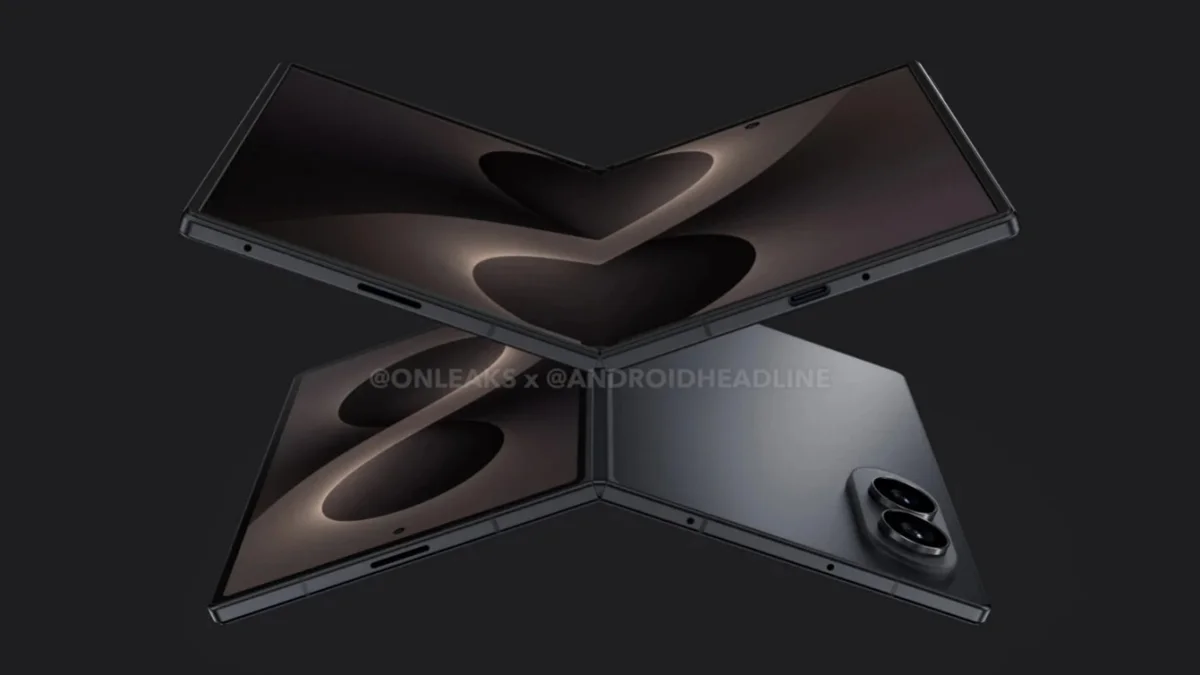
Galaxy Z Fold 8 Wide may use only a 50MP main camera. Photo: AndroidHeadlines
According to European leak sources, the standard Galaxy Z Fold 8 will likely continue using the same 200MP primary sensor seen on the Galaxy Z Fold 7 and flagship slab phones such as the Galaxy S25 Ultra and Galaxy S26 Ultra.
This would not come as a surprise, as Samsung is reportedly very satisfied with its premium 200MP camera system.
The sensor delivers exceptional detail while also improving digital zoom and low-light image processing.
The Galaxy Z Fold 8 Wide, however, could take a very different direction.
Rumors suggest the device may feature only a 50MP primary camera with an f/1.8 aperture, compared with the f/1.7 setup expected on the standard Fold 8 and Ultra flagship models.
That would represent a significant downgrade compared with its sibling.
Still, it does not necessarily mean the camera experience on the Z Fold 8 Wide would be disappointing.
Samsung currently uses a similar 50MP sensor on the Galaxy S26 and S26+, and those phones still deliver excellent photography performance for everyday use.
For most users, the difference between 50MP and 200MP cameras may only become noticeable in professional shooting scenarios or during long-range zooming.
Samsung may instead be aiming to create a foldable phone that is “easier to buy,” rather than turning every model into an ultra-premium and ultra-expensive device.
Z Fold 8 Wide still has major strengths
One particularly interesting detail is that the Galaxy Z Fold 8 Wide is rumored to include a 50MP ultra-wide camera with an f/1.9 aperture, equivalent to the sensor currently used on the Galaxy S26 Ultra.
That would be a major upgrade compared with the Galaxy Z Fold 7, which only features a 12MP ultra-wide camera with a weaker f/2.2 aperture.
This suggests Samsung is not turning the Z Fold 8 Wide into a “cheap” foldable in a negative sense.
Instead, the company may be optimizing the camera system to focus on the features users actually care about most.
If the leaks are accurate, the overall photography experience on the Z Fold 8 Wide could still remain firmly at flagship level.
That will be especially important if the device directly competes against Apple’s first foldable phone, which many rumors currently refer to as the iPhone Ultra.
Current predictions suggest Apple’s foldable device may feature only two 48MP rear cameras.
Of course, megapixel count alone does not determine image quality, but Samsung still appears to be preparing a very serious rival for Apple in the premium foldable segment.
Pricing could become Samsung’s biggest weapon
The most attractive aspect of the Galaxy Z Fold 8 Wide may ultimately not be the camera system, but the price.
Analysts believe Samsung is unlikely to price the device as low as $1,000 or even $1,200.
However, a launch price around $1,600 could become realistic if the company trims several hardware components.
That would still place the phone in premium territory, but noticeably below the expected price of Apple’s foldable iPhone Ultra.
To achieve a more accessible price point, Samsung is reportedly considering further adjustments involving battery capacity or display size.
Some recent rumors claim the Z Fold 8 Wide could use a slightly smaller battery than the standard Galaxy Z Fold 8.
Even so, both devices are expected to share many high-end specifications, including the Snapdragon 8 Elite Gen 5 processor, 12GB or 16GB of RAM and a 10MP selfie camera.
Display differences may spark debate
Beyond the camera setup, display design is another area where Samsung appears to be differentiating the two devices.
The standard Galaxy Z Fold 8 is rumored to feature an 8-inch main display and a 6.5-inch outer screen.
Meanwhile, the Z Fold 8 Wide may instead use a 7.6-inch inner display paired with a 5.4-inch cover screen.
The “Wide” branding initially led many people to assume the device would be physically larger.
In reality, Samsung may instead be experimenting with different aspect ratios rather than simply increasing screen size.
The move suggests the company is testing multiple approaches to discover the optimal formula for future foldable devices, as competition intensifies not only from Apple but also from rapidly advancing Chinese smartphone brands.
If Samsung truly manages to bring foldable phone pricing significantly below Apple’s offering, the Galaxy Z Fold 8 Wide could become one of the most compelling foldable smartphones of 2026.
Hai Phong
.svg)
