 Vietnamnet.vn

 Podcast



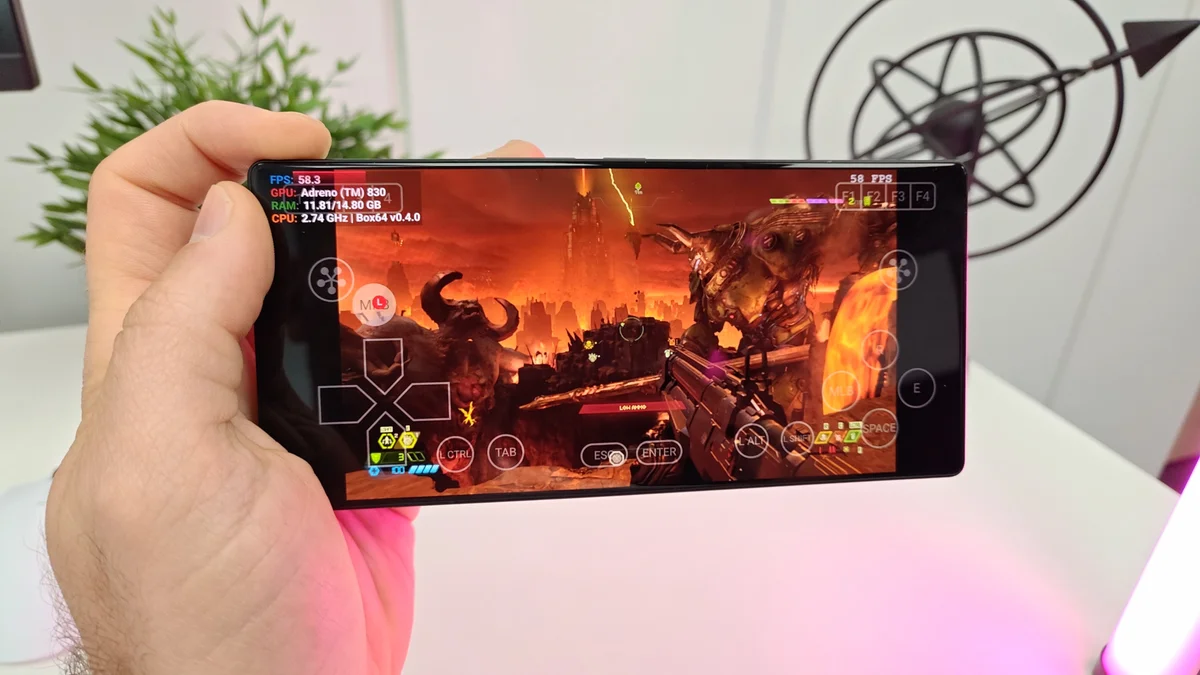
When users hold the phone horizontally for gaming, the touch-sensitive areas sit naturally beneath the index fingers, functioning similarly to trigger buttons on a console controller.
What makes the system especially compelling is that RedMagic did not stop at hardware alone.
The company’s software allows users to map those touch-sensitive zones to virtually any on-screen action, turning them into highly flexible controls across multiple game genres.
Even more impressive is how subtle the triggers are.
They sit flush with the phone’s frame and blend seamlessly into the overall design, almost as if they were always meant to be there.
For serious mobile gamers, the potential becomes obvious immediately.
And that is exactly why Samsung should seriously consider bringing the feature to the Galaxy S27 Ultra.
RedMagic understands gamers in ways bigger brands seem to overlook
One of the most interesting things about RedMagic is that the company has gradually moved away from the flashy and overly aggressive “gaming” aesthetic often associated with gaming phones.
Devices such as the RedMagic 11 Air prove that a gaming smartphone can still look sleek, modern and refined enough for everyday use.
The trigger buttons are nearly invisible during normal use.
Most users may never even notice they exist.
But the moment a game starts, the experience changes dramatically.
Their usefulness is no longer limited to traditional mobile games either.
With the rise of Android emulators and compatibility layers such as Winlator, PC gaming on smartphones is becoming increasingly common.
In that environment, physical trigger controls start feeling almost essential.
Shooter games, racing titles and action games all become significantly easier and more immersive when players gain additional physical inputs instead of relying entirely on touchscreen controls.
Gaming-focused brands like RedMagic and ASUS with its ROG lineup recognized this potential early and invested heavily in creating better gaming experiences on smartphones.
Is Samsung forgetting its most loyal users?
The reality is that Samsung has gradually been losing momentum against Apple.
Its current flagship strategy does not always generate enough excitement to maintain a clear advantage.
For years, the Galaxy S lineup has attempted to become the perfect flagship “for everyone,” balancing cameras, battery life, performance and AI features.
The problem is that Apple already dominates much of that territory.
What Samsung appears to be forgetting is that the company once held enormous appeal among tech enthusiasts - users who loved customization, raw performance and the most complete Android experience possible.
That audience has not disappeared.
In fact, the mobile gaming community is now larger and more mature than ever.
Smartphones are no longer simple casual gaming devices for killing time during a commute. For millions of users, they have become legitimate gaming platforms.
To Samsung’s credit, the company has already been catering to those users to some extent.
Recent Ultra models feature specially tuned Snapdragon “for Galaxy” chips alongside increasingly advanced vapor chamber cooling systems, clear investments aimed at improving gaming performance.
The question is why Samsung stops there.
Galaxy S27 Ultra could become the ultimate gaming flagship
On paper, the Galaxy S27 Ultra is already shaping up to be an extremely powerful device.
Rumors suggest the phone may use a custom version of the Snapdragon 8 Elite Gen 6 Pro built on a 2nm process, alongside major camera upgrades and the possible return of variable aperture technology first seen on the Galaxy S9 years ago.
Additional reports point to a new ISOCELL sensor featuring LOFIC technology for improved dynamic range, as well as a significantly larger battery.
All of that sounds impressive, but something still feels missing.
Cameras remain the single biggest selling point in smartphones today.
But with hardware like this, the Galaxy S27 Ultra is inevitably going to become a gaming monster whether Samsung officially acknowledges it or not.
The real question is whether Samsung is willing to embrace that identity and build meaningful features around it.
Apple already made its own decision with the Camera Control button on the iPhone 16 lineup, a feature specifically designed for mobile photography enthusiasts.
Samsung could take a similar approach, but aimed at gamers instead.
The company could even make capacitive triggers multifunctional, allowing them to double as physical camera shutter buttons when needed.
Gamers have long existed within Samsung’s ecosystem.
Many users already choose Ultra devices because of their large displays, top-tier performance and effective cooling systems.
But to truly transform the Galaxy S27 Ultra into a genuine gaming flagship, Samsung may need a bolder statement.
Subtle integrated trigger buttons could be exactly the kind of feature that finally gives the Ultra lineup a distinct identity.
RedMagic has already proven that the concept can work without sacrificing premium design or elegance.
Now the only question is whether Samsung is brave enough to step outside Apple’s shadow and create something unmistakably its own.
Hai Phong
.svg)
