 Vietnamnet.vn

 Podcast



Like many pioneering technologies, the innovation behind the Galaxy S26 Ultra comes with issues that both the manufacturer and early users may not have fully anticipated.
How the privacy display works
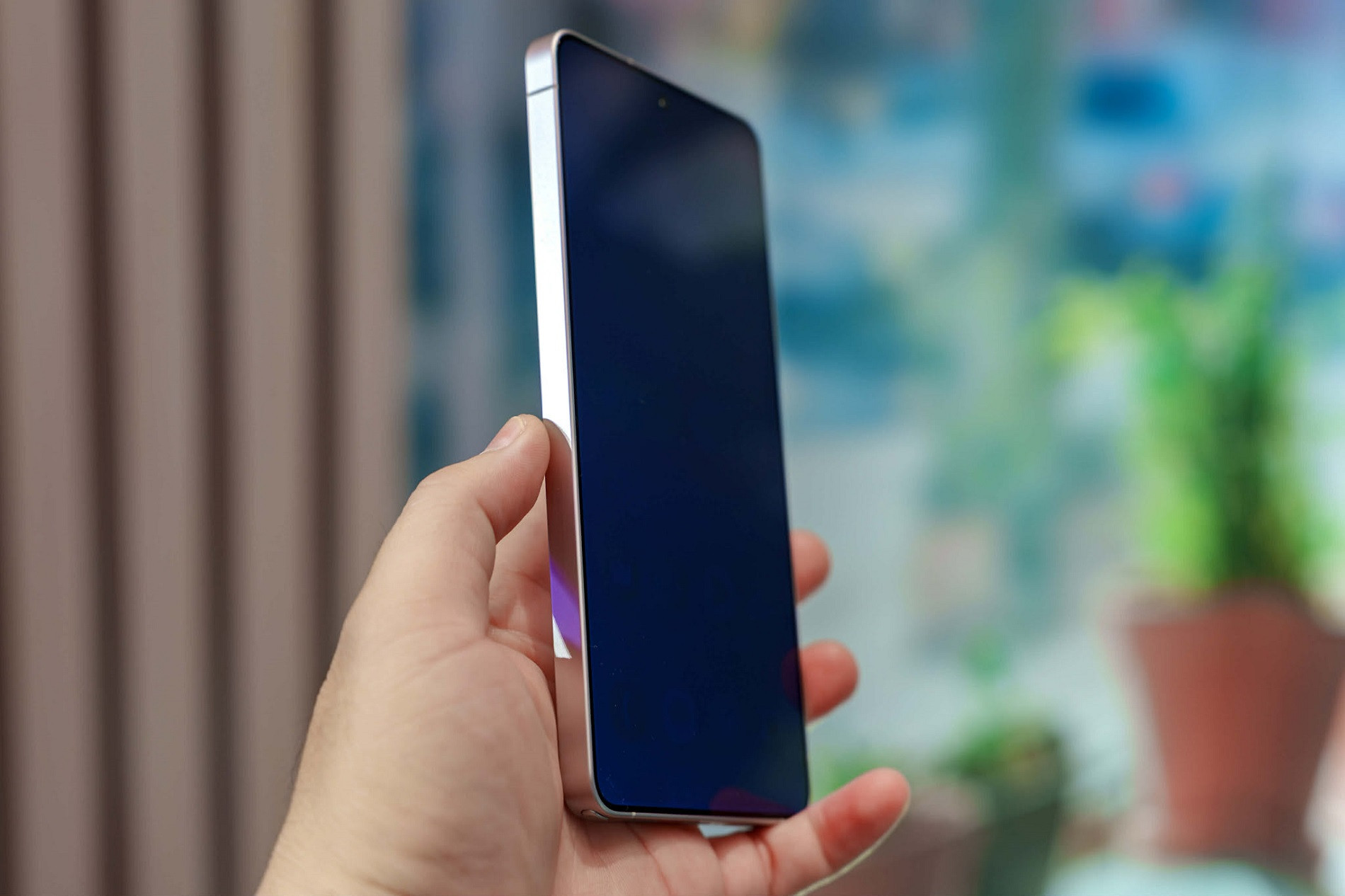
With the Galaxy S26 Ultra, Samsung has introduced a special screen that uses two different types of pixels.
The first type functions like a normal display pixel, emitting light in a wide cone so that the content can be seen clearly from multiple angles.
The second type is designed to focus light straight forward. This allows the light to travel primarily toward the person looking directly at the screen.
Thanks to this structure, the phone can activate a “privacy mode.” In this mode, only the forward-facing pixels are used, making it difficult for nearby people to see the screen unless they are looking directly at it.
Samsung has also added several intelligent settings for the feature. Users can configure the display to automatically switch to privacy mode when opening sensitive apps or performing important actions such as entering a PIN.
The screen can even hide only part of the content. For example, when notifications appear, the system can blur or conceal just the notification area while leaving the rest of the display unchanged. This is possible because the privacy control operates at the pixel level.
In theory, these capabilities sound impressive and represent a clear step forward from the incremental upgrades that have characterized many recent flagship smartphones.
However, real-world usage presents a more complicated picture.
Users report eye strain
Early reports from some users suggest the Galaxy S26 Ultra display may cause eye strain after relatively short periods of use. Notably, this issue appears even when the privacy mode is turned off.
Close-up images of the screen indicate that the panel may be less refined than the display on its predecessor, the Galaxy S25 Ultra.
Some users have reported that reading text or using the phone for extended periods makes their eyes feel tired more quickly than usual.
During initial hands-on experiences with the device, the issue was not clearly noticeable. More detailed reviews in the coming weeks may reveal whether the problem is widespread or limited to specific cases.
Privacy mode reduces image quality
Another major issue relates to image quality when privacy mode is activated.
When users enable the highest privacy level, the effective resolution - or sharpness of the displayed content - decreases noticeably. Fine details become less clear, making text and images appear softer.
Contrast is also affected. Colors appear more muted and less vibrant compared to the display’s normal mode.
As a result, maximum privacy mode may only be suitable in situations where screen confidentiality is essential, such as using a phone on a crowded bus or train.
Clearly, this is not a mode most users would want to keep enabled all the time.
In addition, the privacy protection itself may not be perfect. Although the concept is compelling, the viewing angles at which the screen becomes completely dark remain limited. In some cases, people standing nearby can still see much of the display.
Reduced anti-glare effectiveness
Another noticeable change concerns Samsung’s anti-reflective screen coating, a feature widely praised on recent flagship devices.
The coating significantly reduces reflections from ambient light, making the screen easier to read even in bright environments.
Its effectiveness has been so impressive that Apple reportedly improved its own display technology to achieve similar results on the iPhone 17 series.
However, on the Galaxy S26 Ultra, the anti-glare coating appears slightly less effective than on the Galaxy S25 Ultra.
While the feature still works well, the reduction in reflection is not quite as strong as before.
There has been no official confirmation that the change is caused by the new privacy display technology. Still, it is currently the most plausible explanation, since there would otherwise be little reason for Samsung to downgrade a feature that users widely appreciated.
A promising direction despite early issues
Despite these problems, Samsung’s decision to introduce a privacy display in the Galaxy S26 Ultra remains noteworthy.
This is the first time such technology has appeared in a smartphone, making it likely that future generations will significantly improve the concept.
Some reports also suggest several Chinese smartphone manufacturers are experimenting with their own versions of privacy display technology.
More importantly, Samsung’s willingness to experiment with new ideas may be preferable to continuing incremental updates each year. In recent years, the Galaxy flagship series has sometimes been criticized for lacking major innovations.
The introduction of the privacy display - along with other hardware upgrades - suggests Samsung may be returning to a stronger focus on technological experimentation.
If future generations can resolve the current issues, privacy displays could eventually become an important feature in the next era of smartphones.
Hai Phong
.svg)
