 Vietnamnet.vn

 Podcast



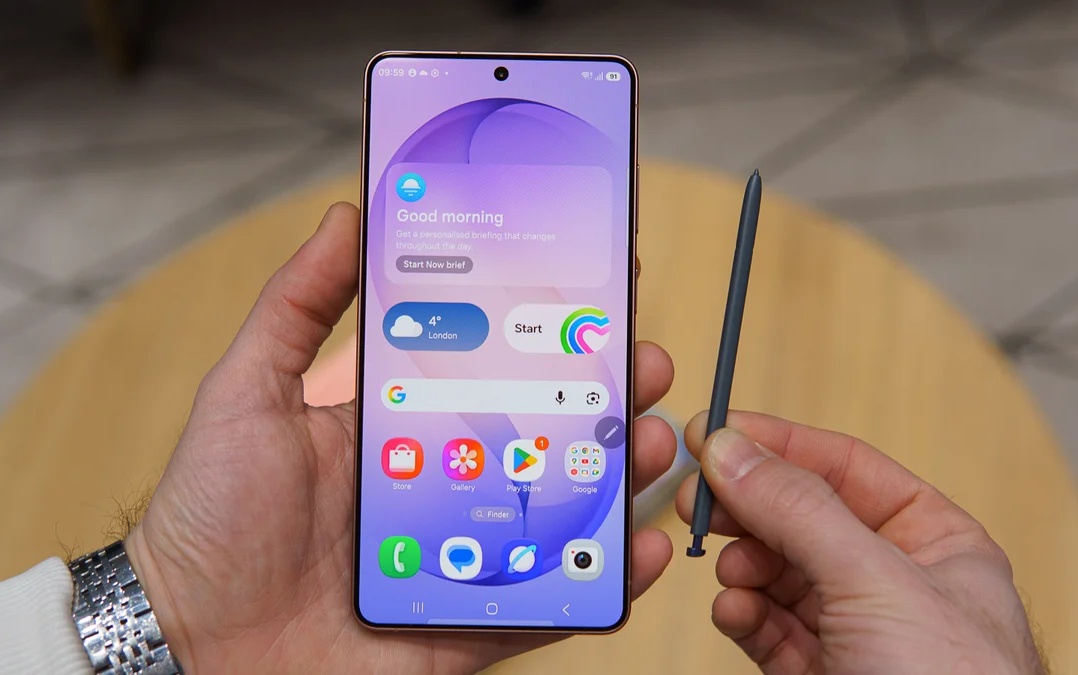
In this year’s lineup, Galaxy S26 Ultra clearly stands apart from its two siblings, Galaxy S26 and Galaxy S26+.
If you are hesitating between the standard Galaxy S26, the S26+ or the Ultra version, you may already be stepping into a strategy Samsung carefully mapped out from the beginning.
Historically, the highest-end Galaxy S model has accounted for a larger share of sales than the other variants. This year, however, the difference is even more pronounced. The S26 Ultra is not just marginally better - it creates a noticeable gap. And that may well be intentional.
Privacy Display: a premium feature exclusive to Ultra
Beyond the expected AI upgrades, the most eye-catching addition to the S26 Ultra is Privacy Display - an anti-peep screen technology.
This feature prevents others from viewing on-screen content from side angles, addressing a familiar concern for anyone who frequently uses their phone in public spaces.
Crucially, Privacy Display is available only on the Galaxy S26 Ultra. It is a hardware-based solution rather than a software feature, meaning it cannot simply be added later to the S26 or S26+ via an update.
At a time when users are increasingly conscious of personal data protection, Privacy Display stands out as one of the most practical innovations to appear on smartphones in recent years.
When viewed from the side, the screen appears dimmed or blurred, shielding sensitive information such as work emails, private messages or financial data.
According to multiple reports, major brands like Apple are also racing to develop similar solutions, suggesting that Samsung has gained an early lead in display privacy.
For users who regularly work in cafes, airports or on public transport and prefer not to worry about prying eyes, the Galaxy S26 Ultra is currently the only built-in solution - unless one opts for third-party privacy screen protectors that often compromise display quality.
Pricing strategy: narrowing the gap to push users upward
In terms of pricing, Galaxy S26 Ultra remains at US$1,299, unchanged from its predecessor. Meanwhile, the Galaxy S26 and S26+ start at US$899 and US$1,099 respectively, each US$100 higher than last year.
Notably, these increases are not accompanied by sufficiently significant upgrades to justify the added cost. The primary reason lies in rising memory component prices across the global supply chain.
In other words, Samsung appears to be passing part of the increased costs on to consumers, rather than dramatically enhancing product value.
Francisco Jeronimo, Vice President for Data and Analytics at IDC EMEA, suggests this could be a deliberate move.
By narrowing the price gap between the Ultra and the standard models, consumers may find it easier to “stretch a little further” for the top-tier version.
From a psychological standpoint, when the difference between US$1,099 and US$1,299 no longer feels substantial, choosing the Ultra - with its exclusive features - becomes far more compelling than paying nearly US$1,100 for a comparatively less distinctive device.
Long-term investment and resistance to obsolescence
With the memory market showing no clear signs of cooling, Samsung may find it challenging to maintain the US$1,299 price point for next year’s Galaxy S27 Ultra. That makes the S26 Ultra, at this moment, a relatively “safe” investment.
Equipped with top-tier specifications, a quad-camera system, S Pen support and a commitment to seven years of software updates, the Galaxy S26 Ultra is built to retain its usability and value over time.
Few future flagships are likely to combine stylus support with such a versatile camera system in a single device.
By contrast, while the Galaxy S26 and S26+ remain solid smartphones, their higher starting prices make them harder to recommend. When consumers spend close to US$900 or over US$1,000, expectations rise accordingly - and it is the Ultra model that most convincingly meets those expectations.
Taken as a whole, Galaxy S26 Ultra is not merely the most premium variant, but arguably the most rational choice within the S26 lineup this year.
From the exclusive Privacy Display and calculated pricing strategy to its long-term usability, every factor tilts in favor of the Ultra.
If Samsung’s goal was to encourage users to move up the ladder, the company appears to have succeeded. And given what the Galaxy S26 Ultra delivers, that decision may be a wise one.
Hai Phong
.svg)
