 Vietnamnet.vn

 Podcast



Samsung has officially announced a new 200MP camera sensor called ISOCELL HPC, equipped with a range of advanced imaging technologies designed to improve smartphone photography. The sensor has immediately drawn attention as the Galaxy S27 Ultra is widely rumored to remain one of Samsung’s most camera-focused flagship smartphones.
However, whether the ISOCELL HPC will actually serve as the Galaxy S27 Ultra’s main camera remains an open question. Recent leaks suggest Samsung may instead opt for a different sensor for its next-generation flagship.
ISOCELL HPC introduces an entirely new technology
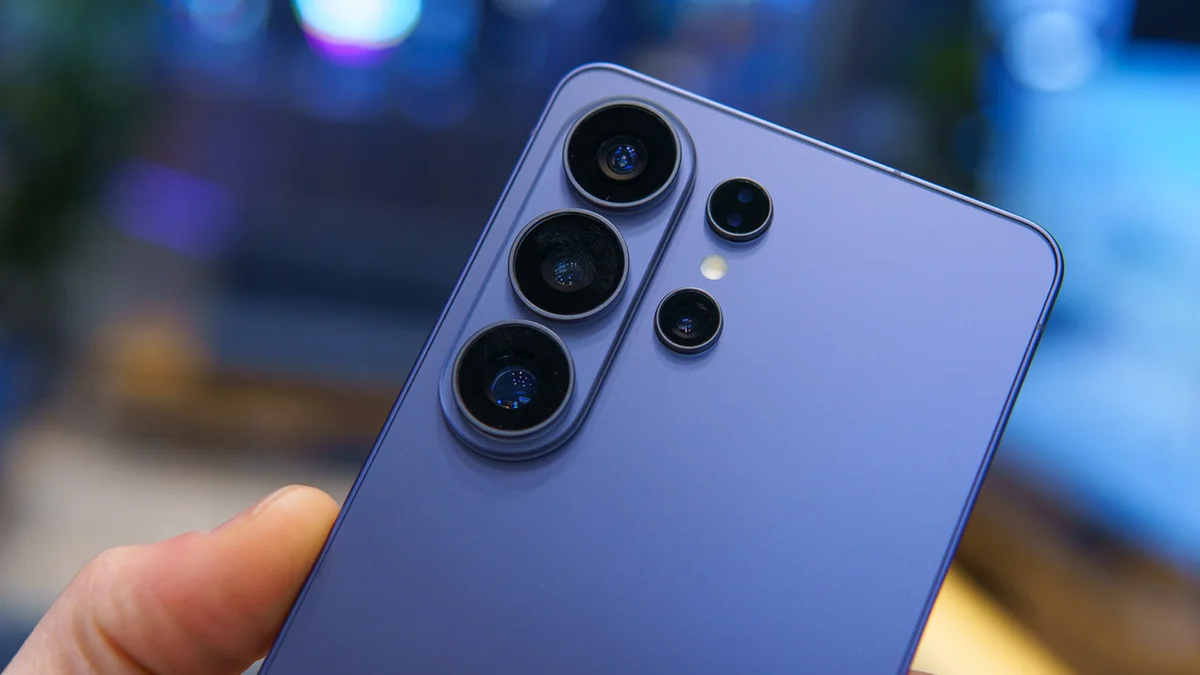
In terms of basic specifications, the ISOCELL HPC shares several similarities with Samsung’s previous high-end ISOCELL sensors. It features a 1/1.3-inch sensor with 0.6μm pixels. What makes it particularly noteworthy, however, is the range of new technologies Samsung has built into it.
The standout feature is DeepPix, which Samsung describes as an industry-first technology. According to the company, DeepPix builds on existing ISOCELL technology to improve light capture and enhance image quality at ultra-high resolutions.
Samsung says DeepPix can increase the photodiode’s light-handling capacity by up to 60%. This could allow the sensor to produce cleaner, more accurate photos and videos while significantly improving dynamic range. Both highlights and shadows are also expected to retain more detail.
This is particularly important for modern smartphone cameras, as users frequently take photos in challenging lighting conditions, such as scenes with intense sunlight, backlit subjects or frames containing both very bright and very dark areas.
How does DeepPix work?
To understand the benefits of DeepPix, it helps to first look at how a camera sensor captures light. When light passes through the lens and reaches each pixel on the sensor, it is focused onto a photodiode, which converts incoming photons into an electrical signal. That signal is then sent to the image signal processor, or ISP, to produce the final image.
Problems arise when there is too much light. A photodiode has a limit to the number of photons it can accommodate. Once that limit is exceeded, the signal can overflow, much like water spilling from an overfilled bucket. The result is blown-out highlights, lost detail and reduced dynamic range.
Samsung previously developed Floating Diffusion technology, which can be thought of as adding another “bucket” alongside the photodiode to accommodate excess signal. This approach allows the sensor to handle greater amounts of light more effectively and deliver more accurate information to the ISP.
Samsung later introduced Front Deep Trench Isolation, or FDTI. In simple terms, the technology works like building “higher walls” around each photodiode, helping it retain more photons while reducing signal interference between neighboring pixels.
DeepPix takes the concept further with Dual Vertical Transfer Gates, or D-VTG. These additional structures provide greater control over electrical charges and help prevent signal leakage into neighboring areas.
The combination of DeepPix, D-VTG and the Floating Diffusion structure is expected to improve charge handling directly at the pixel level. More importantly, Samsung can potentially enhance imaging performance without increasing the size of the photodiode or individual pixels.
That is a significant advantage for smartphones, where the physical dimensions of sensors and camera modules are always constrained by the limited space inside the device.
Better HDR across multiple zoom levels
Another notable feature of the ISOCELL HPC is support for single-frame HDR at multiple in-sensor zoom levels, including 1x, 1.5x, 2x, 3x and 4x.
This could offer significant benefits when users select zoom levels outside the camera’s actual optical zoom range. Smartphones normally have to crop part of the image captured by the main sensor to produce intermediate zoom levels. With the ISOCELL HPC, these cropped areas could still benefit from HDR processing across a wider range of magnifications.
The technology could be particularly useful for smartphones equipped with only one telephoto camera offering a relatively long optical zoom range. That is also one reason the ISOCELL HPC has attracted attention amid rumors surrounding the Galaxy S27 Ultra’s camera system.
Current leaks suggest the Galaxy S27 Ultra could drop its 3x telephoto camera and retain only a 5x periscope telephoto camera for longer-range zoom. If accurate, that would create a wider gap between the main and telephoto cameras, making image processing at intermediate zoom levels increasingly important.
The ISOCELL HPC is reportedly capable of shooting at 7.5 frames per second at its full 200MP resolution, 30fps at 50MP and up to 180fps at 12.5MP. The figures suggest Samsung is focusing not only on resolution but also on high-speed image processing.
Will the Galaxy S27 Ultra actually use ISOCELL HPC?
Despite the ISOCELL HPC’s impressive technologies, there is no guarantee that the sensor will appear in the Galaxy S27 Ultra.
The latest rumors instead point to another option, the ISOCELL HP6. The sensor has emerged as a potential candidate for the main camera on the Galaxy S27 Pro and Galaxy S27 Ultra.
The rumored ISOCELL HP6 is said to feature new technology designed to improve dynamic range, light capture and color accuracy while reducing image noise. One of its most notable technologies is reportedly LOFIC, or Lateral Overflow Integration Capacitor.
LOFIC itself is not an entirely unfamiliar technology. Sony has introduced a similar solution in one of its high-end sensors, the LYTIA L910, highlighting the increasingly intense competition between Samsung and Sony in image-sensor technology.
If Samsung ultimately chooses the ISOCELL HP6 instead of the HPC for the Galaxy S27 Ultra, the newly announced ISOCELL HPC may not be the direct preview of Samsung’s next flagship camera that some had expected.
A more likely scenario could see the ISOCELL HPC adopted by premium camera-focused smartphones from Chinese manufacturers.
Samsung says the new sensor has entered mass production and is expected to appear in suitable smartphones within the next few months. That opens the possibility that the ISOCELL HPC could feature in upcoming flagship devices from brands such as Vivo, Oppo or Xiaomi.
Hai Phong
.svg)
