 Vietnamnet.vn

 Podcast



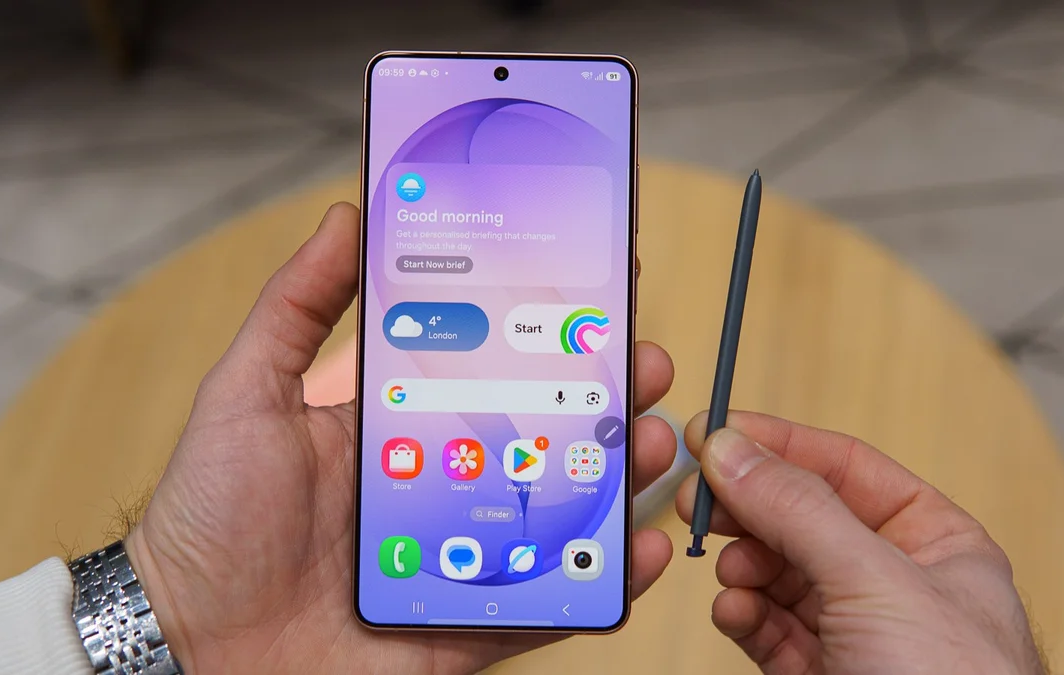
For years, battery life has remained one of the areas where Galaxy S Ultra users have most wanted to see meaningful improvements.
While Samsung has steadily upgraded cameras, processing power and AI capabilities, the battery capacity of its flagship smartphones has remained largely unchanged at 5,000mAh.
That could finally change.
Recent industry rumors suggest the Galaxy S27 Ultra may become Samsung's first flagship to adopt silicon-carbon (Si-C) battery technology, potentially allowing a significantly larger battery without increasing the phone's size.
However, adopting a new battery chemistry involves more than simply increasing capacity. Samsung would also need to balance battery life, device thickness, weight and long-term durability.
Is it time for Samsung to embrace silicon-carbon batteries?
Battery-related rumors consistently attract strong interest among smartphone enthusiasts, and the Galaxy S27 Ultra is no exception.
According to a recent user survey, more than 77% of respondents believe Samsung should finally adopt silicon-carbon batteries for its next flagship.
The technology has been embraced by several Chinese smartphone manufacturers because it offers a higher energy density than conventional lithium-ion batteries.
That allows manufacturers to fit larger batteries into the same physical space, extending battery life while maintaining slim designs.
For many consumers, that combination has become increasingly attractive.
Samsung still has reasons to be cautious
Despite the enthusiasm surrounding silicon-carbon batteries, Samsung and Apple have so far taken a more conservative approach.
Although the technology promises clear advantages, it remains relatively new in the smartphone industry, and long-term durability data is still limited compared with conventional lithium-ion batteries.
For companies shipping hundreds of millions of devices annually, reliability and product longevity remain critical considerations.
Reflecting those concerns, around 9.4% of survey participants said Samsung should avoid adopting the technology until it has been more thoroughly proven.
A larger lithium-ion battery remains an option
Not everyone believes Samsung needs entirely new battery technology.
Some users argue that simply increasing the capacity of its existing lithium-ion battery would provide meaningful improvements while minimizing manufacturing risks.
If recent rumors prove accurate, Samsung may ultimately choose a compromise.
Industry speculation suggests the Galaxy S27 Ultra could introduce silicon-carbon technology while increasing battery capacity by roughly 700mAh compared with the previous generation.
Although such an increase would not be revolutionary, the higher energy density of silicon-carbon batteries could allow Samsung to maintain - or even reduce - the phone's thickness and weight despite the larger battery.
By contrast, increasing capacity with traditional lithium-ion cells generally requires additional internal space, resulting in thicker and heavier devices.
Bigger isn't always better
Survey results also suggest battery capacity is not every user's top priority.
Approximately 13.3% of respondents said they would rather keep a comfortable, lightweight design than carry a heavier phone with a larger battery.
That view reflects a broader trend among premium smartphone buyers.
The current Galaxy S26 Ultra already features a 6.9-inch display and weighs around 214 grams, placing it among the largest flagship smartphones available.
Simply increasing battery size without changing battery technology could push thickness beyond 7.9mm while adding even more weight.
For users who spend hours each day holding their phones, that trade-off may not be worthwhile.
A defining decision for Samsung's next flagship
If Samsung introduces silicon-carbon batteries in the Galaxy S27 Ultra, it would represent one of the most significant hardware changes to the Galaxy S series in years.
The move could improve battery life while preserving the premium design that has become central to Samsung's flagship identity.
However, until Samsung officially unveils the device, all reported specifications remain based on industry rumors and supply-chain reports.
Whether the company chooses to take a technological leap or continue refining proven battery technology, the Galaxy S27 Ultra is shaping up to be one of Samsung's most closely watched smartphone launches.
Hai Phong
.svg)
