 Vietnamnet.vn

 Podcast



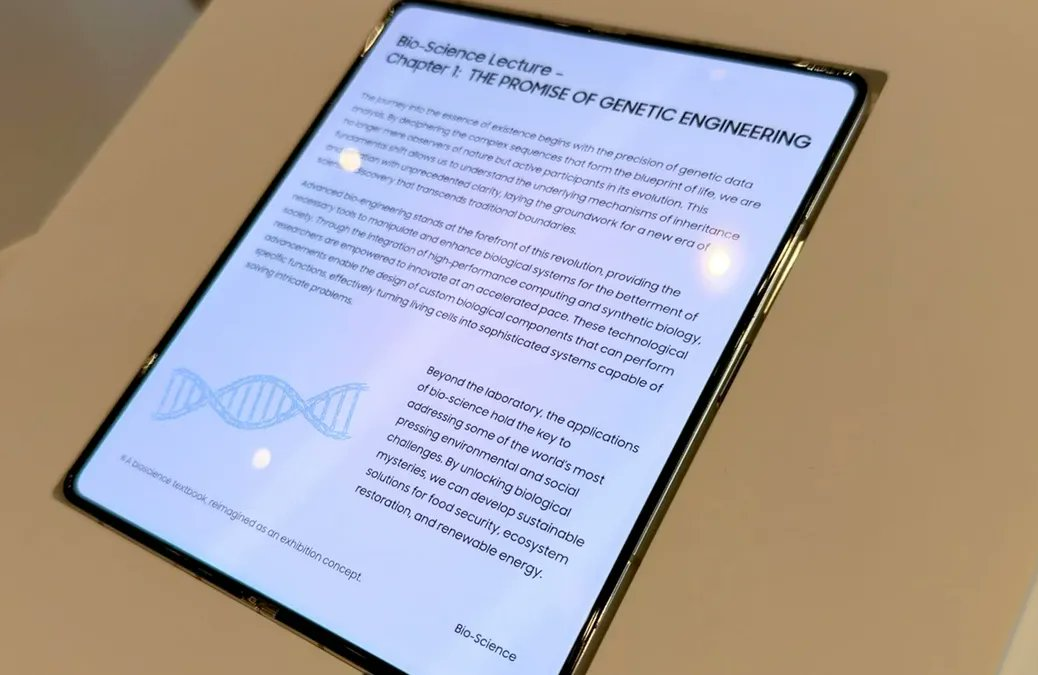
The new screen, showcased by Samsung, features an ultra-smooth fold with virtually no visible crease - solving one of the biggest pain points of current foldable phones. Tech insiders and analysts have speculated that this breakthrough could be adopted by Apple for the highly anticipated iPhone Fold.
Renowned industry source Ice Universe shared close-up images of the display, praising its “excellent” visual quality and highlighting the integration of under-display camera (UDC) technology. This allows for a truly seamless main screen experience and opens new possibilities in form factor design.
Apple and Samsung converge on crease-free future
According to multiple sources, the technology showcased by Samsung aligns closely with what Apple is believed to be targeting for its first foldable iPhone. Rumored to launch alongside the iPhone 18 Pro and iPhone Air 2 in September 2026, the iPhone Fold is said to feature a 5.5-inch external display and a 7.8-inch internal screen that folds open like a book.
Samsung’s new display panel, which reportedly uses a laser-drilled metal substructure, enables the screen to fold without forming a central dip - an engineering leap that could define the next generation of foldables.
Meanwhile, Apple is reportedly exploring a shift from Face ID to a Touch ID sensor embedded in the power button, similar to the design of iPad Air and iPad mini. This change would further simplify the front display, complementing the under-display camera approach.
Although Samsung could deploy this cutting-edge panel in its own Wide Fold lineup, sources note that internal debates within the Mobile Experience (MX) division may influence whether the company reserves this technology for its partners or brings it directly to market.
iPhone Fold: specs, design, and expected pricing
According to leaks, the iPhone Fold will feature a main internal screen reminiscent of an iPad mini, measuring 7.8 inches, and a 5.5-inch cover display. Battery capacity is expected to range from 5,400mAh to 5,800mAh - impressive for a foldable device.
The camera system will likely include a 24MP under-display camera on the internal screen, a hole-punch selfie camera on the outer screen, and a dual rear camera setup with 48MP sensors.
Analyst Ming-Chi Kuo from TF International predicts the iPhone Fold will be 9–9.5mm thick when folded and just 4.5–4.8mm when opened - thicker than the Galaxy Z Fold 7, but slimmer than Google’s Pixel 10 Pro Fold.
The projected retail price is around USD 2,400, making it one of the most expensive smartphones on the market. However, Apple’s focus on premium materials, refined durability, and a foldable display without a visible crease may justify the high price point among its target users.
Crease-free folding: a new frontier for smartphones
Samsung’s CES demonstration was more than a tech showcase - it was a bold signal of what’s to come. If this display technology makes its way into the iPhone Fold, it could mark a turning point for the entire foldable segment.
Apple's rumored entry into the foldable space, bolstered by Samsung's display innovation, sets the stage for a new era of high-end smartphone competition - one defined by elegance, engineering finesse, and seamless user experience.
Hai Phong
.svg)
