 Vietnamnet.vn

 Podcast



Vietnam is entering a period of urban development unlike anything in its history. New ring roads are opening up. Metro lines are taking shape. Mega urban developments, industrial zones, innovation hubs and new growth poles continue to emerge.
Yet at the same time, a growing paradox is becoming increasingly visible: while cities are expanding rapidly, the dream of stable housing is moving further out of reach for many citizens, especially young people and urban workers. In many major cities, housing prices are rising far faster than incomes. A large number of young people are forced to accept cramped rental accommodation, live far from their workplaces, spend a substantial share of their income on housing, or postpone plans to marry and have children.
This reality shows that housing is no longer merely a matter for the real estate market. It is becoming a national development issue.
The experiences of Singapore and Japan demonstrate that Asia's most successful nations do not view housing simply as a private asset. They regard it as a foundation for social stability and long-term national competitiveness.
Singapore: Housing as a nation-building strategy
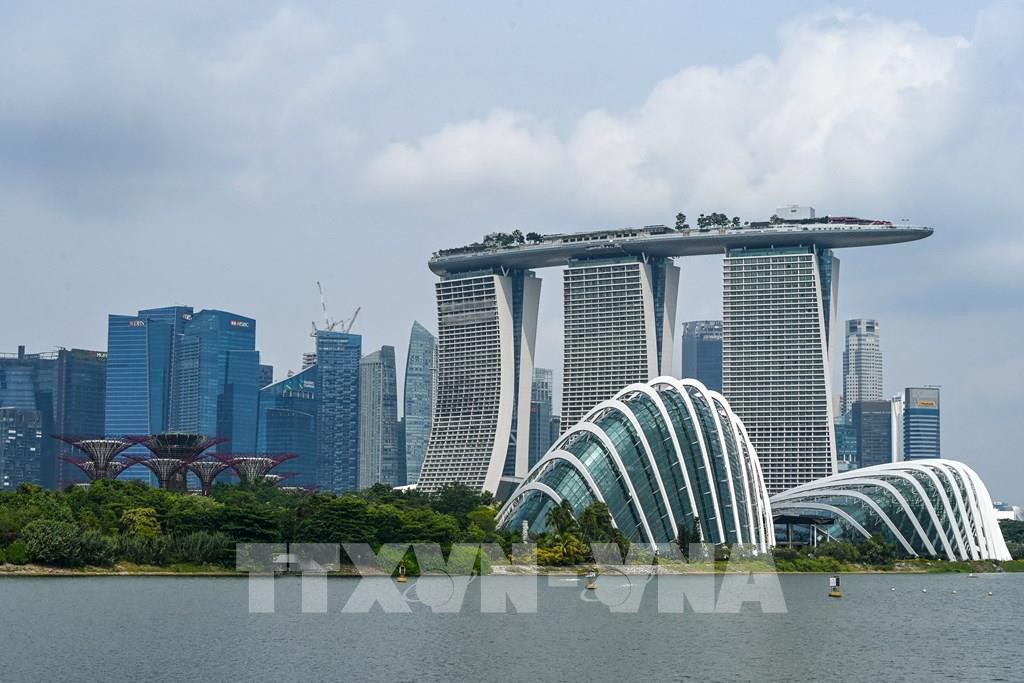
When Singapore separated from Malaysia in 1965, it was a resource-poor country with a dense population and difficult living conditions. One of its greatest challenges at the time was a severe housing shortage.
Rather than leaving the market to solve the problem on its own, Singapore treated housing as a national strategy. Through the Housing and Development Board (HDB), the country launched a large-scale public housing program. Today, more than 80% of Singapore's population lives in housing developed by the HDB.
What is particularly noteworthy is that Singapore did not create a traditional state-subsidized housing model. Instead, it built a "home-owning society." Citizens can purchase long-term housing at affordable prices, access preferential financing, use their Central Provident Fund (CPF) savings for mortgage payments, and obtain housing aligned with their income levels.
As a result, housing became more than a place to live. It became the foundation for the emergence of an urban middle class - the most important force in maintaining social stability and national confidence.
Singapore's deeper insight was its understanding that if the majority of citizens cannot achieve housing security, it becomes extremely difficult to sustain a stable society and a competitive economy over the long term.
At the same time, Singapore has never treated homeownership as the only solution. Alongside its ownership model, the country has developed a robust system of rental housing, public rental units, affordable rental options, transitional housing and accommodation for young people and lower-income groups.
Singapore recognizes that in a modern society, not everyone needs to own a home immediately, and not every stage of life requires the same housing model. A young professional may need convenient, affordable accommodation close to work with the flexibility to move. An elderly person may require a safe living environment, healthcare services and an appropriate community.
Housing is therefore viewed not simply as a real estate product, but as an ecosystem that supports quality of life. Perhaps Singapore's greatest lesson is that a modern nation is not one in which everyone owns a home, but one in which the vast majority of citizens can achieve housing security.
Japan: A modern society that does not idealize homeownership
If Singapore stands out for its public housing strategy, Japan is equally remarkable for its flexible and pragmatic approach to housing security.
Japan has a highly developed and professional rental market. For many Japanese citizens, long-term renting is entirely normal.
Their primary concern is not owning a home at any cost. Instead, they focus on quality of life, access to transportation, convenience for work and housing costs that match their income. This represents a significant contrast with the prevailing mindset in many Asian countries, including Vietnam.
In Japan, housing is viewed more as a "living service" than simply an asset for wealth accumulation. Rental properties are generally managed professionally, with integrated infrastructure, reliable services, clear standards and stable tenancy arrangements.
This has created a society with a high degree of labor mobility. Young people can relocate for work, move between cities, or choose living arrangements that suit different stages of life without feeling pressured to purchase a home immediately. This is one reason why Japan's labor market remains highly adaptable and flexible.
From a broader perspective, housing policy is therefore more than a social welfare policy. It is directly linked to labor productivity, demographic structure, national competitiveness and the quality of urban development.
When people are forced to devote too much of their income to housing, their ability to save declines, consumption weakens, investment in education falls, and even the motivation to have children can diminish. In other words, a housing crisis can ultimately become a development crisis.
Vietnam faces a major housing challenge
Vietnam today faces a troubling paradox: urbanization is advancing rapidly, but the ability of many citizens to secure stable housing has not kept pace.
In major cities, housing prices have risen sharply. The supply of homes suitable for middle-income households remains limited. High-quality long-term rental housing has not developed proportionately. Social housing continues to face supply constraints and administrative hurdles. Meanwhile, demand for stable housing among young workers continues to grow.
An economy that aims for rapid growth must attract talent, retain skilled workers and sustain a dynamic workforce. Yet this becomes difficult when housing costs exceed the means of a large share of the population.
Notably, in several recent speeches, General Secretary and President To Lam has repeatedly emphasized the need to expand social housing and rental housing for workers, young people and low- to middle-income urban residents. This is more than a social welfare measure. It reflects an important shift in policy thinking.
In a modern and rapidly urbanizing society, the key objective is not for everyone to own a home immediately. It is for everyone to have access to housing that is suitable, safe and affordable.
This is precisely the approach that Singapore and Japan embraced many years ago.
Key lessons for Vietnam
Drawing from the experiences of Singapore and Japan, Vietnam can perhaps take away several important lessons.
First, housing should be viewed as development infrastructure rather than merely a real estate market. No nation can achieve sustainable growth if most young people cannot envision a realistic path to stable housing.
Second, Vietnam should strongly develop a long-term rental housing market that offers affordable costs, a high quality of life, professional management and broad accessibility. Rental housing is not a temporary solution. It is an essential component of a modern urban economy.
Third, housing policy should place greater emphasis on young people, workers, urban laborers and the emerging middle class. These groups are the driving force behind economic vitality and national competitiveness.
Finally, housing security should be recognized as a dimension of national competitiveness. In the 21st century, competition among nations is no longer defined solely by technology, capital or infrastructure. It is also determined by a country's ability to help its citizens live stable lives, work productively, raise families and see a future for themselves within the nation's development journey.
Perhaps that is the most important lesson Singapore and Japan offer Vietnam today: a modern nation is not one where everyone owns a home, but one where every citizen has the ability to achieve housing security.
Nguyen Si Dung (Former Vice Chairman of the Office of the National Assembly)
.svg)
