 Vietnamnet.vn

 Podcast



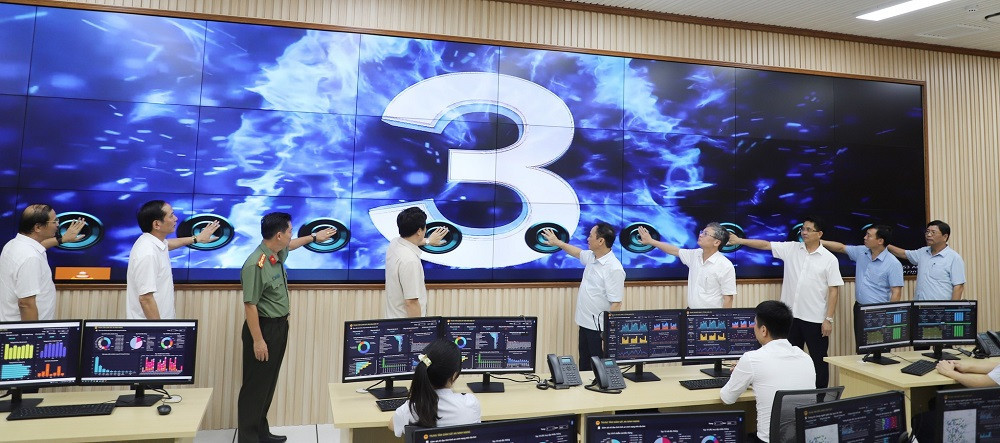
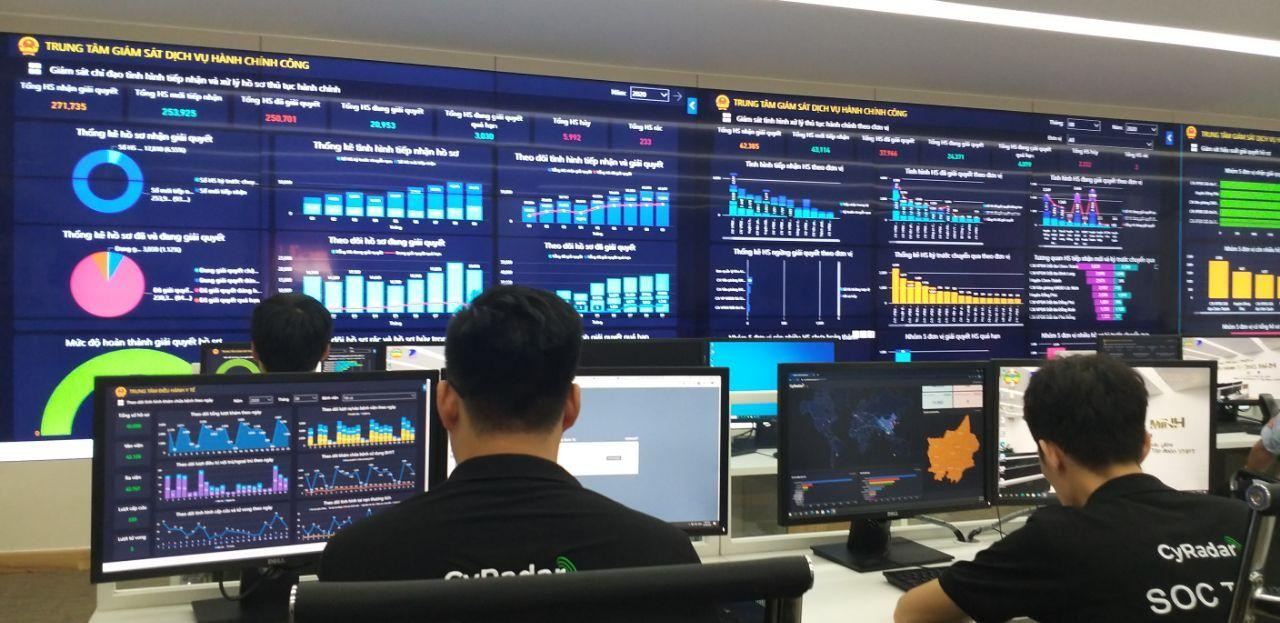
The explosion of data, the increasing pressure of modern urban management, and the rising expectations of citizens are forcing local governments to shift from traditional management to real-time, data-driven operations.
Many countries have successfully implemented intelligent operation center (IOC) models, becoming examples for others to follow. Despite different development levels, these successes share common principles: centralized data, cross-sector operations, long-term strategies, and strong community participation.
Singapore is a leading example of data-based governance. It built Virtual Singapore, a 3D digital model of the entire city that integrates traffic, climate, population, planning, and public safety data.
South Korea embraced the smart city concept early, focusing on AI-driven, automated management. Cities like Sejong and Songdo are real-world testbeds for new technologies. Songdo, for instance, uses dense sensor networks to monitor traffic, waste, air quality, and urban safety, supplying accurate, real-time data to its IOC.
Japan stands out with its human-centered smart city philosophy. Tokyo and Yokohama built IOCs not just to manage infrastructure but to improve quality of life. These cities integrate data on aging populations, public health, and energy into forecasting models to optimize services and reduce strain on healthcare systems. Notably, Japanese citizens contribute data via community apps, promoting transparency and public consensus.
From these global models, three decisive factors emerge. First, data must be centralized, clean, and high-quality. Second, governments need consistent long-term strategies to avoid fragmented or trend-driven investments. Third, IOCs only become effective when embedded within a smart city ecosystem where all sectors and citizens actively provide and use data. These are crucial lessons for Vietnam as localities begin to deploy smart operation centers.
Urbanization pressures and the need for real-time governance
Vietnam's urbanization is accelerating faster than predicted. In just a decade, urbanization jumped from over 30% to nearly 43%, increasing population density, vehicle numbers, demand for public services, and infrastructure load.
Traditional administrative models based on manual reports and sequential processing are showing clear limitations. Citizens now demand faster public services, businesses expect more transparency, and authorities need accurate decisions. Delays in information handling can lead to widespread consequences.
Take traffic, environment, healthcare, and urban order, for instance. A prolonged traffic jam can result in economic loss. A fire that goes undetected in time can be deadly. A downpour without real-time flood prediction can paralyze entire districts. Meanwhile, data from cameras, sensors, GIS, population databases, and public service systems is growing rapidly - but remains fragmented, unconnected, and underused.
Smart operation centers are designed to resolve these bottlenecks. Their ability to integrate cross-sector data, provide real-time analysis, and offer visual insights helps governments shift from reactive to proactive operations. Authorities no longer need to wait for written reports, verify information manually, or rely solely on human surveillance. It marks a shift from experience-based governance to data-driven governance—a defining feature of modern cities.
The smart operation center as a city's soft infrastructure
If a city's hard infrastructure includes roads, bridges, electricity, water, and telecom, its soft infrastructure is made up of data and operational systems.
A smart operation center serves as a connector, a brain, and a decision-making interface. It is not a standalone tech project but a core part of the national smart city strategy.
The IOC performs three essential functions. First, it aggregates and unifies data from various sources into a single urban picture. Surveillance cameras, traffic monitors, environmental sensors, population and land data, and citizen reports through digital platforms are all integrated into one system. This 360-degree view was previously unachievable.
Second, it analyzes data to support decision-making. As information on traffic, public security, air quality, and infrastructure status is updated continuously, algorithms can trigger early warnings, suggest solutions, or even initiate automated response scenarios. This allows for faster, more accurate decision-making, reducing response times and mitigating losses.
Third, it enables cross-sector coordination and supervision. The IOC allows police, transport, health, environmental, and district-level agencies to collaborate in real time. When an incident occurs, all relevant parties access the same data, avoiding overlaps, finger-pointing, or uncoordinated responses. This is foundational for building a modern, streamlined, and efficient government.
Together, these capabilities make the operation center an indispensable part of urban soft infrastructure. Without an IOC, cities cannot truly become smart. Urban digital development would remain at the level of "digitized processes" without achieving "intelligent operations" - a key requirement of national digital transformation.
From transparency to better public service experience
A major question for many local governments is: What tangible value does a smart operation center bring to citizens and businesses?
The answer lies in improved public service quality, enhanced transparency, and restored public trust.
An effectively functioning IOC offers visible improvements. Commuting becomes more convenient thanks to optimized traffic light timing, congestion alerts, and smart route suggestions. Security improves with AI-analyzed surveillance systems that detect unusual behavior and speed up emergency response. Real-time updates on air quality, noise levels, rainfall, and flooding help citizens plan their daily lives better.
Another key area is online public services. With data integrated and monitored through the IOC, delays, opaque procedures, and unresolved cases are reduced. Citizens can track their requests, report issues, and receive feedback via apps. Reports on lighting, sanitation, or traffic safety are resolved promptly, bringing the government closer and making it more efficient and trustworthy.
Businesses also benefit from open data, transparency, and a better investment climate. Public access to zoning, land use, traffic flows, population movement, and digital infrastructure conditions allows for more informed investment decisions. Licensing, support services, and dispute resolution become faster, more accurate, and less costly.
Moreover, a well-run IOC can attract foreign direct investment. Global corporations often assess urban operational readiness when choosing sites for factories or R&D centers. Cities that can manage risks, ensure safety, and maintain stable operations provide a strong foundation for economic development.
Conditions for building a practical and sustainable smart operation center
Despite the benefits, building an IOC must not be rushed or superficial. A truly effective center requires four key pillars: data infrastructure, integration standards, operational resources, and a sustainable development strategy.
Data infrastructure is the first and most crucial. Many cities have invested in IOCs, but due to incomplete or unconnected data, the centers fail to function effectively. For real value, data must be collected via modern sensors, updated in real time, and meet national data management standards. Data should also be open, where appropriate, to boost digital services and the digital economy.
Integration standards are equally vital. A city consists of multiple systems across sectors. Without common standards, each sector may use different platforms, data models, and connection methods - making integration impossible. Lessons from other countries show success depends on unified architecture, clear API protocols, security standards, compatibility guidelines, and interagency data-sharing frameworks.
Operational resources are the third factor. Technology is only part of the equation. Smart operations require skilled personnel who understand system functions and can translate IOC signals into real-world action. Many cities have modern centers but lack trained staff or coordination procedures. Building digital talent and interdepartmental workflows is key to unlocking an IOC's full potential.
A sustainable development strategy is the final component. The IOC is not a one-time project but a living platform with a long-term lifecycle. Technologies evolve rapidly, urban demands shift, and socio-economic models change. Thus, the IOC must be designed with an open model that allows for scaling, updating, and integration of new applications. Cities with long-term vision and clear roadmaps will avoid wasteful investments and maximize the center's value for years to come.
In the context of national digital transformation, smart urban development, and public sector modernization, smart operation centers are not a passing trend but a foundational requirement. They enable governments to operate based on data, enhance responsiveness, boost transparency, improve public services, and create better living conditions for citizens. This is a strategic step forward as Vietnamese cities move toward modern governance and a digital nation model.
Thai Khang
.svg)
