 Vietnamnet.vn

 Podcast



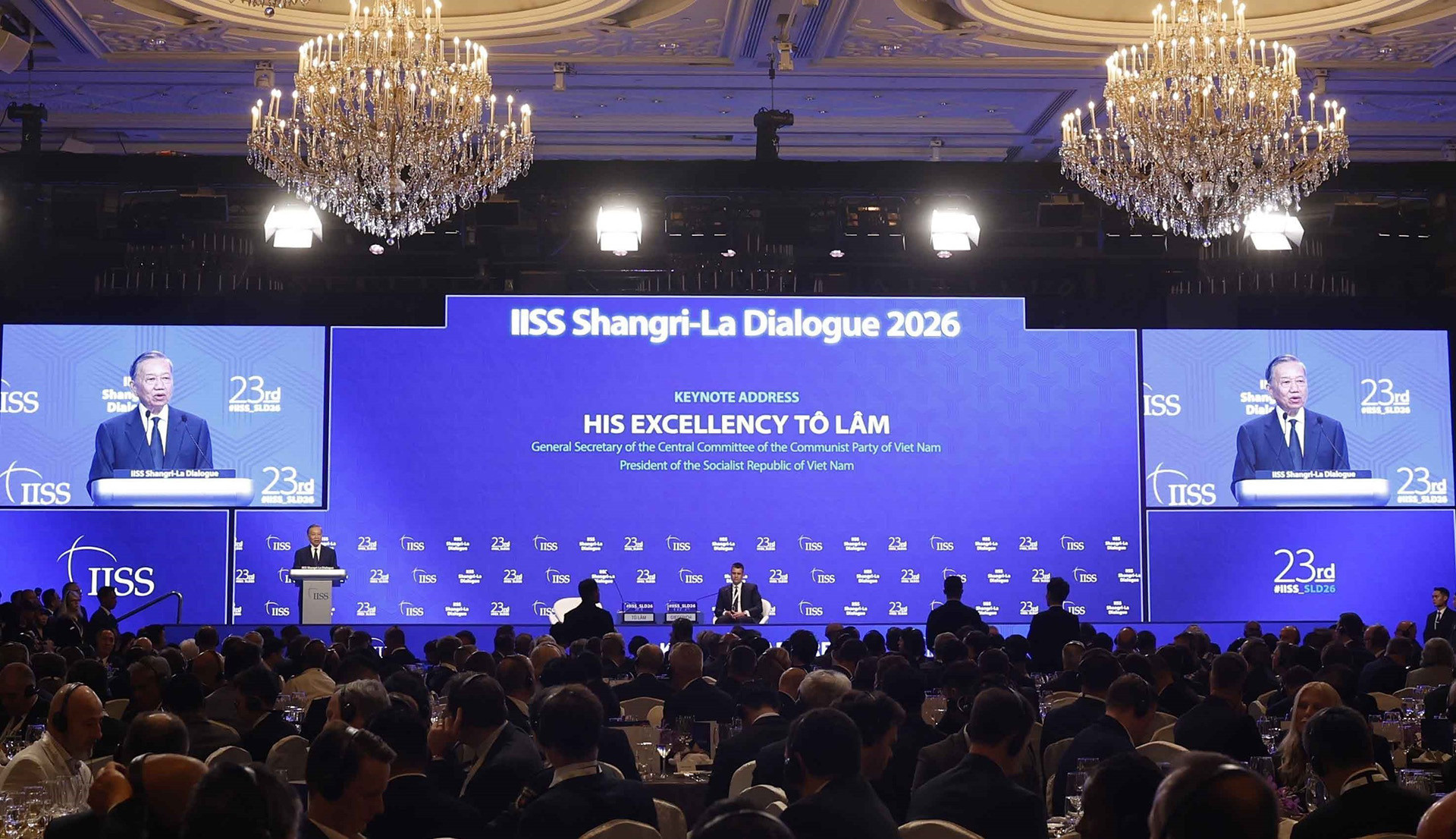
A key message delivered by To Lam was that the central issue is not that the world order is changing, but how the world manages that change.
For more than three decades, the global system has largely operated within a relatively stable power structure that emerged after the Cold War. Yet the rapid rise of China and many emerging economies is fundamentally altering the global balance of power.
History shows that every international order must adapt when the balance of power shifts. The greatest challenge is not the change itself, but the risk that the adjustment process unfolds through pressure, coercion and confrontation rather than through rules, dialogue and restraint.
This is why the General Secretary emphasized that a fair international order must be capable of adapting to the changes of the times, while ensuring that such adjustments take place within the framework of international law and commonly shared norms.
It is a perspective that is both realistic and constructive, carrying particular significance for small and medium-sized countries.
Second, the development model of the 20th century is gradually losing its effectiveness
If the first crisis concerns power, the second concerns the foundations of prosperity.
For decades, global growth has been driven by three major forces - globalization, the liberalization of trade and investment, and technological progress built on digitalization.
These drivers generated an unprecedented surge of development in human history.
Yet those same forces are now facing mounting pressures from geopolitics, geoeconomics, climate change, population aging and, most notably, the AI revolution.
Artificial intelligence is not simply another new technology. It is fundamentally reshaping traditional sources of competitive advantage. Climate change is forcing the world toward greener development models. Geoeconomic shifts are transforming the very logic of globalization.
In other words, the development model that powered strong global growth over the past three decades will no longer be sufficient to guarantee success over the next three.
Where competitive advantage once came largely from low-cost labor, natural resources and investment capital, it will increasingly stem from innovation, technology, data, learning capacity and institutional quality.
This helps explain why Vietnam is placing science and technology, innovation, artificial intelligence and digital transformation at the center of its national development strategy.
Third, the most dangerous crisis is the erosion of strategic trust
If the first two crises are relatively visible, the third is more subtle - yet potentially more dangerous.
In an increasingly interconnected world, countries are finding it harder to trust one another.
A defensive move may be interpreted as a threat.
A difference in interests can escalate into confrontation.
A minor incident can trigger a spiral of escalation when dialogue and crisis-management mechanisms are absent.
Importantly, the General Secretary highlighted a particularly new dimension of the challenge: the rapid development of artificial intelligence, big data, quantum technology, cyberspace and autonomous systems is increasing the risk of misunderstanding and miscalculation if rules, norms and governance capacities fail to keep pace.
This was among the most strategically significant warnings contained in the speech.
In the 21st century, many security risks no longer stem from insufficient military power but from a lack of trust, transparency and governance mechanisms suited to emerging technologies.
Not only identifying challenges, but also offering solutions
One of the speech’s most notable strengths was its constructive approach.
For the crisis of international order, the solution lies in rules, dialogue and conflict-prevention mechanisms.
For the crisis of the development model, the answer is inclusive and sustainable development, stronger resilience and a people-centered approach.
For the crisis of strategic trust, the solution is to build a new framework for trust through transparency, dialogue, information sharing, clear codes of conduct and accountability in the use of emerging technologies.
The message that “strategic trust is not about eliminating differences, but managing them within a rules-based framework” may stand as one of the speech’s most enduring contributions.
From Vietnam’s experience to the future of the region
Perhaps the most persuasive aspect of the speech is that these proposals are not merely theoretical.
They are rooted in Vietnam’s own historical experience. Vietnam understands the value of peace because it endured decades of devastating war and immense suffering.
Vietnam understands the value of development because nearly four decades of Doi Moi reforms have been built on confidence in the future and on collaborative partnerships with investors, businesses and global partners in creating value not only for Vietnam but also for the wider world.
Vietnam understands the value of integration because integration itself helped transform the country from one of the world’s poorest economies into one of Asia’s most dynamic.
For that reason, the speech carried considerable moral force in its vision of the future and its sense of responsibility toward the challenges of the age.
Its overarching message is that today’s turbulence is the inevitable consequence of a world changing at extraordinary speed. Yet crisis is not destiny.
If nations possess the courage to choose dialogue over confrontation, cooperation over division, and work together to build institutions suited to a new era, then the Asia-Pacific will not only be a region where challenges converge, but also a place where solutions for the future can emerge.
At a broader level, the speech also reflects Vietnam’s gradual transition toward a more proactive role in regional and global affairs - contributing ideas, promoting dialogue and helping shape initiatives that influence the future.
That may well be the deepest strategic significance of this address.
Prof. Vu Minh Khuong (National University of Singapore)
.svg)
