 Vietnamnet.vn

 Podcast



Hybrid gaining traction in Vietnam
The Vietnam Automobile Manufacturers' Association (VAMA) recorded a historic high in hybrid vehicle sales in 2025. Its members sold 14,171 hybrid units during the year, up 43.6 percent compared to 2024 and accounting for 6.5 percent of total passenger car sales. This marked the highest consumption level since hybrid models were introduced in Vietnam.
The market also shows that hybrid vehicles are occupying an increasingly large proportion in the sales structure of many brands, especially in the mid-sized SUV/crossover and MPV segments.
These segments typically attract younger customers with high vehicle usage frequency, often combining urban and highway driving. They prioritize stability, flexibility, and reasonable operating costs.
In 2025, numerous new hybrid models entered the market, ranging from European luxury brands to Japanese, Korean, and especially Chinese automakers. This trend reflects not merely a temporary wave but a clear strategic shift among carmakers in Vietnam.
In the mass segment, Japanese hybrid models continued to perform strongly. Established nameplates such as Toyota Innova Cross, Toyota Corolla Cross Hybrid, Toyota Camry Hybrid, Honda CR-V e:HEV, Honda HR-V e:HEV, and Suzuki XL7 Hybrid maintained solid sales thanks to low fuel consumption, durability, and smooth driving characteristics.
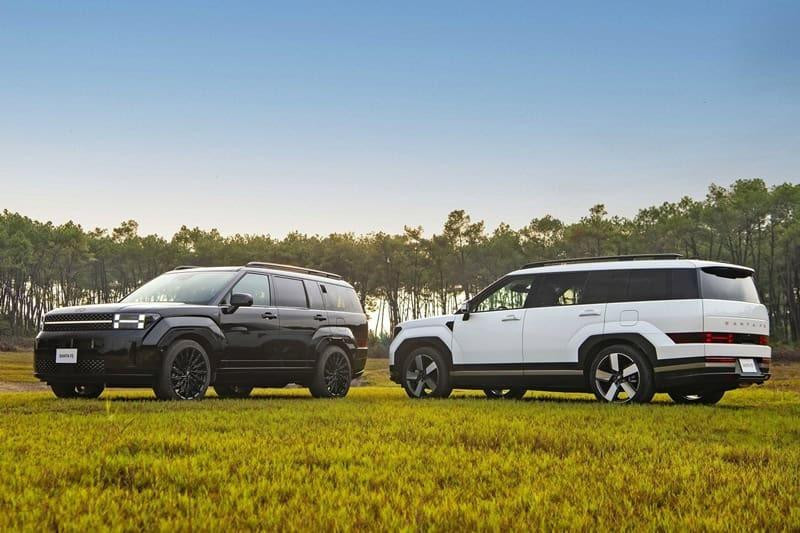
Korean brands were also competitive with Hyundai Santa Fe Hybrid, Kia Sorento Hybrid (both HEV and PHEV variants), and Kia Carnival HEV. The models stand out for refreshed designs, rich equipment packages, and more competitive pricing compared to Japanese rivals in the same segment.
Notably, 2025 saw a surge of Chinese brands, particularly plug-in hybrid (PHEV) models offering flexibility and extended driving range. Key newcomers included Jaecoo J7 PHEV, Lynk & Co 08, Geely Monjaro, BYD Sealion 6, BYD Seal 5 DM-i, Dongfeng Mage and Huge.
European automakers also stepped up participation, mainly in the premium segment, with models such as Volvo XC60 Recharge, Volvo S90 Recharge, Mercedes-Benz GLE 400e, Mercedes-Benz E-Class, BMW X3, BMW 5 Series, and Volkswagen Golf. Their strengths lie in performance, body control, build quality, and advanced driver-assistance systems.
Vietnam’s hybrid market in 2025 was shaped by three key factors: consumer demand for cost savings, product diversity across price ranges, and strong adaptability to local infrastructure and driving conditions.
Potential hybrid boom in 2026
Experts assess that the acceleration of the hybrid vehicle line in 2025 not only shows the pragmatic choice of users but also creates a solid foundation for the Vietnamese automobile market to move faster into the electrification phase.
In 2026, the Vietnamese automobile market is predicted to witness an explosion of diverse hybrid models from mass-market to high-end segments.
In the first month of 2026, the market opened with the appearance of Honda CR-V e:HEV, a hybrid model produced and assembled domestically by Honda Vietnam and introduced in two versions, RS and L. Previously, this hybrid model only had a single version, the e:HEV RS, imported from Thailand.
A few names expected to be introduced to Vietnamese customers in just the first half of 2026 include the Hyundai Palisade Hybrid, Omoda C5 SHS-H, Mazda CX-60 and CX-90, or the hybrid version of the Subaru Forester. The Vietnamese car manufacturer VinFast may develop additional hybrid versions on some existing electric vehicle lines.
In 2026, an important factor affecting the car consumption trends of Vietnamese people is the new special consumption tax policy for hybrid vehicles. According to regulations effective from January 1, 2026, both self-charging hybrids and plug-in hybrids, if meeting fuel consumption conditions, are entitled to a special consumption tax rate equal to 70 percent compared to gasoline cars of the same type.
This policy has quickly impacted the market. Many hybrid models have been repriced, with reductions commonly ranging from several tens of millions of Vietnam dong. As a result, the price gap between hybrids and traditional gasoline vehicles has narrowed significantly, making hybrids more accessible to mass-market buyers.
Despite expectations that hybrids could lead the market and surge in 2026, experts believe they will not replace or significantly erode the market share of BEVs in the near term.
Marketing expert Nguyen Van Phuong noted that each vehicle type has its own advantages. Hybrids are viewed as an optimal transitional solution, helping consumers reduce costs while gradually adopting green technology. In the long term, however, full electrification remains the ultimate destination as charging infrastructure, policies, and battery costs continue to improve.
Hoang Hiep
.svg)
