 Vietnamnet.vn

 Podcast



With a remarkably strong start across key global markets, the 6.9-inch flagship is expected to maintain its momentum throughout the year.
Yet therein lies a paradox. This very success is raising concerns among users. If the Galaxy S26 Ultra continues to sell well, Samsung may see little reason to shift its strategy, increasing the likelihood that the Galaxy S27 Ultra will arrive as a modest, incremental upgrade.
When users fail to apply pressure
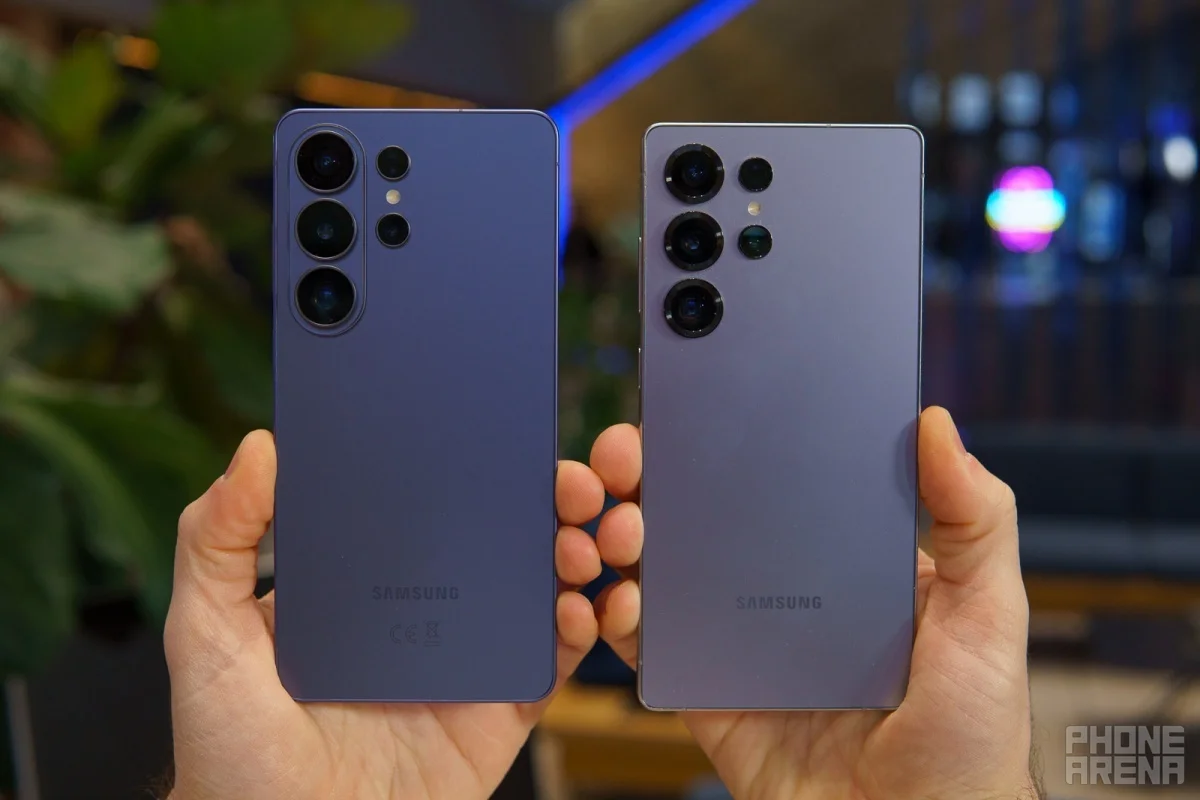
It must be acknowledged that the Galaxy S26 Ultra outperforming its predecessor in early sales, particularly in major markets like the US, is disappointing for those hoping for a breakthrough.
This sentiment does not stem from dissatisfaction with Samsung, but rather from high expectations placed on one of the world’s leading smartphone manufacturers.
In recent years, Samsung has often been criticized for its cautious approach, with flagship devices lacking bold innovation.
While the Galaxy S26 Ultra is far from the most uninspired product the company has released in the past decade, it still reflects compromises in key areas such as battery capacity, camera technology, charging speed and even overall design.
The fact that users are willing to accept incremental upgrades - such as a privacy-focused display, a charging boost from 45W to 60W, or unchanged pricing - may unintentionally send the wrong signal to Samsung.
It gives the company more reason to delay truly transformative advancements that it is technically capable of delivering.
Many experts had expected the Galaxy S26 Ultra to act as a transitional device, paving the way for more significant innovations to compete directly with the next generation of high-end iPhones.
These anticipated upgrades included a battery around 6,000mAh, 100W fast charging, and a new-generation 200MP camera sensor.
In reality, the device remains at a 5,000mAh battery, 60W charging, and continues to rely on the Isocell HP2 sensor introduced with the Galaxy S23 Ultra.
If such specifications can still drive strong sales, what would stop Samsung from postponing major upgrades for another year or more? Competitive pressure from Apple might play a role, but even that is far from guaranteed.
As the iPhone approaches its 20th anniversary, expectations for major breakthroughs are rising, yet a dramatic leap within a single year remains uncertain.
If both tech giants choose to play it safe, consumers may find themselves facing a Galaxy S27 Ultra that lacks defining features.
Galaxy S27 Ultra: realistic expectations or growing pessimism?
Looking ahead to 2027, some predictions suggest Samsung may retain 60W wired charging for its flagship.
Historically, the company rarely increases charging speeds in consecutive generations, which explains the frustration among those who had hoped for a stronger reaction from consumers toward the Galaxy S26 Ultra.
Not long ago, many users claimed they would wait for the Galaxy S27 Ultra. Yet within weeks of the S26 Ultra’s release, that sentiment appears to have shifted, leaving observers puzzled.
On the battery front, expectations of surpassing the 5,000mAh threshold - unchanged since the Galaxy S20 Ultra in 2020 - may again fall short. The Galaxy S27 Ultra is more likely to see only a modest increase to around 5,200 or 5,300mAh to avoid making the device too bulky.
Advanced silicon-carbon battery technology, already adopted by some competitors, could remain out of reach for now.
Similarly, more radical changes such as a truly bezel-less design or a Face ID-like biometric system are unlikely to arrive soon.
Samsung may refine the device’s appearance, but if changes are limited to camera placement without meaningful improvements in image quality, disappointment will be hard to avoid.
Although data from market research firms such as Counterpoint Research and Samsung’s own reports point to a strong start for the Galaxy S26 Ultra, many questions remain unanswered.
For instance, performance in Europe - where consumers often favor more affordable devices - has yet to be clearly detailed.
It is entirely possible that the Galaxy S26 Ultra may not outperform its predecessor in regions outside the US and South Korea.
If that scenario unfolds, there is still hope that Samsung will take note and deliver a more revolutionary Galaxy S27 Ultra. Such a move may be necessary to compete with a potentially game-changing iPhone generation in the near future.
The Galaxy S26 Ultra may prove to be a commercial success, but it also raises important questions about Samsung’s long-term strategy. As long as users continue to accept incremental upgrades, the company’s incentive to innovate may weaken.
In an increasingly saturated market, where true breakthroughs are becoming rare, it is ultimately consumers who will determine whether tech companies remain stagnant or are pushed to evolve.
The Galaxy S27 Ultra, therefore, is not just Samsung’s story. It is a test of expectations across the entire premium smartphone market.
Hai Phong
.svg)
