 Vietnamnet.vn

 Podcast



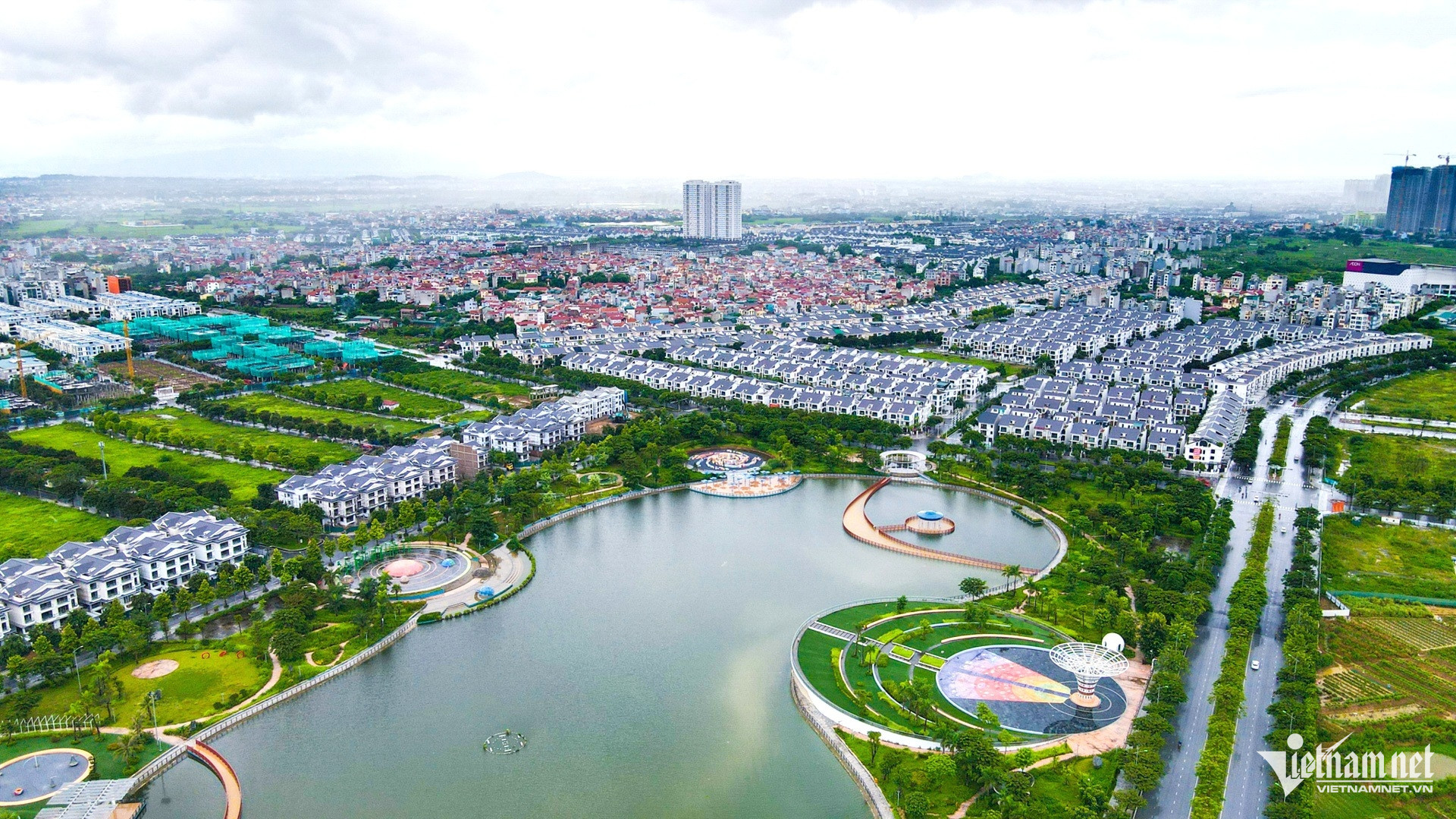
A wave of mega urban projects has been launched across the country by Vietnam’s real estate giants.
About seven years ago, Vingroup drew attention by proposing a series of super-sized urban complexes: Vinhomes Grand Park in Ho Chi Minh City (271 hectares), Vinhomes Ocean Park in Gia Lam (420 hectares), and Vinhomes Smart City in Tay Mo, Hanoi (280 hectares).
The expansion continued with suburban developments around Hanoi such as Vinhomes Ocean Park 2 (nearly 460 hectares), Ocean Park 3 (294 hectares), Vinhomes Global Gate (385 hectares), and Vinhomes Dan Phuong (133 hectares).
In the southern region, beyond its Can Gio project, Vingroup is developing large urban areas in former Long An - now Tay Ninh - including Phuoc Vinh Tay (nearly 1,090 hectares) and Duc Hoa – Hau Nghia (about 200 hectares).
Since 2024, Sun Group has joined the race with the 1,690-hectare Sun Mega City in Ninh Binh (formerly Ha Nam). In Hanoi, the group won a bid to develop a premium township in Me Linh, Quang Minh commune, covering 205 hectares with an estimated investment of VND 15 trillion (approx. USD 598 million).
Elsewhere, the developer has proposed a 296-hectare project in Tien Du commune and another 19-hectare site in Tam Son ward, both in Bac Ninh.
According to Dr. Le Xuan Nghia, an economist and former Vice Chairman of the National Financial Supervisory Commission, the increasing number of super-sized projects - from 500 hectares to thousands - is a natural trend.
He explained that land in central urban areas is becoming scarce and fragmented, making it unfeasible for large-scale development. As a result, developers are shifting outward to more affordable and expansive land banks.
In these outer zones, projects are required to build comprehensive infrastructure systems - from transport, power, water, EV charging stations, and parking, to hospitals, schools, entertainment, and commercial services.
Only in these locations, he noted, can developers access vast, cost-effective land to construct fully integrated cities that offer not just homes, but environments for living, working, studying, and leisure. This is why mega urban areas often emerge on the fringes of major cities.
Nghia also highlighted that major developers like Vingroup, Ecopark, and Sun Group are pushing the boundaries of urban development with elevated standards for design, architecture, environment, and infrastructure.
On that foundation, they are investing in smart city models that prioritize safety, energy efficiency, green spaces, and convenience for education, healthcare, and shopping.
With growing financial strength, domestic developers now have the capital to pursue projects spanning hundreds or even thousands of hectares. Still, large-scale urban zones take time to be absorbed by the market. These projects only succeed when accompanied by employment opportunities and well-connected transport infrastructure. For example, Vingroup has proactively invested in bridges linking its townships with urban cores.
Dr. Nghia sees the mega urban trend as a positive sign - helping reduce pressure on population density, housing, jobs, and traffic congestion in city centers. Once Vietnam’s high-speed North-South railway is implemented - with 23 stations planned - an estimated 15 to 20 large cities could emerge along the route.
The need for coordinated development
Echoing the call for comprehensive planning, Dr. Tran Xuan Luong, Deputy Director of the Vietnam Real Estate Market Research Institute, stressed that mega urban projects must be aligned with real housing demand and accessible price points.
He emphasized that urban areas must serve clearly defined user groups and be linked with industrial zones to generate jobs. Moreover, synchronized technical and social infrastructure is vital for forming sustainable living environments.
Developers with strong financial capacity should follow approved zoning and contribute to diversified market supply while aligning with national socio-economic goals.
Luong added that mega city projects must be approached methodically and with long-term vision. Priority should be given to transport infrastructure, utilities, schools, healthcare facilities, and inter-regional highways, including underground systems, to create a solid foundation for these projects.
Without coordinated planning, the market risks facing unintended consequences. Therefore, now is the time for developers to raise the bar in urban planning - balancing commercial success with long-term sustainability.
Nguyen Le
.svg)
