 Vietnamnet.vn

 Podcast



The world is entering a period of profound transition. If the past three decades were defined by globalization - where efficiency and low costs were paramount - a new order is now taking shape, characterized by fragmentation, strategic competition and higher costs as the “new normal.”
At the center of this shift is the rivalry between major powers, particularly the US and China. This is no longer merely a trade dispute, but a comprehensive competition spanning technology, supply chains and geopolitical influence. As a result, trade is becoming increasingly politicized, supply chains are being restructured, and global costs are rising.
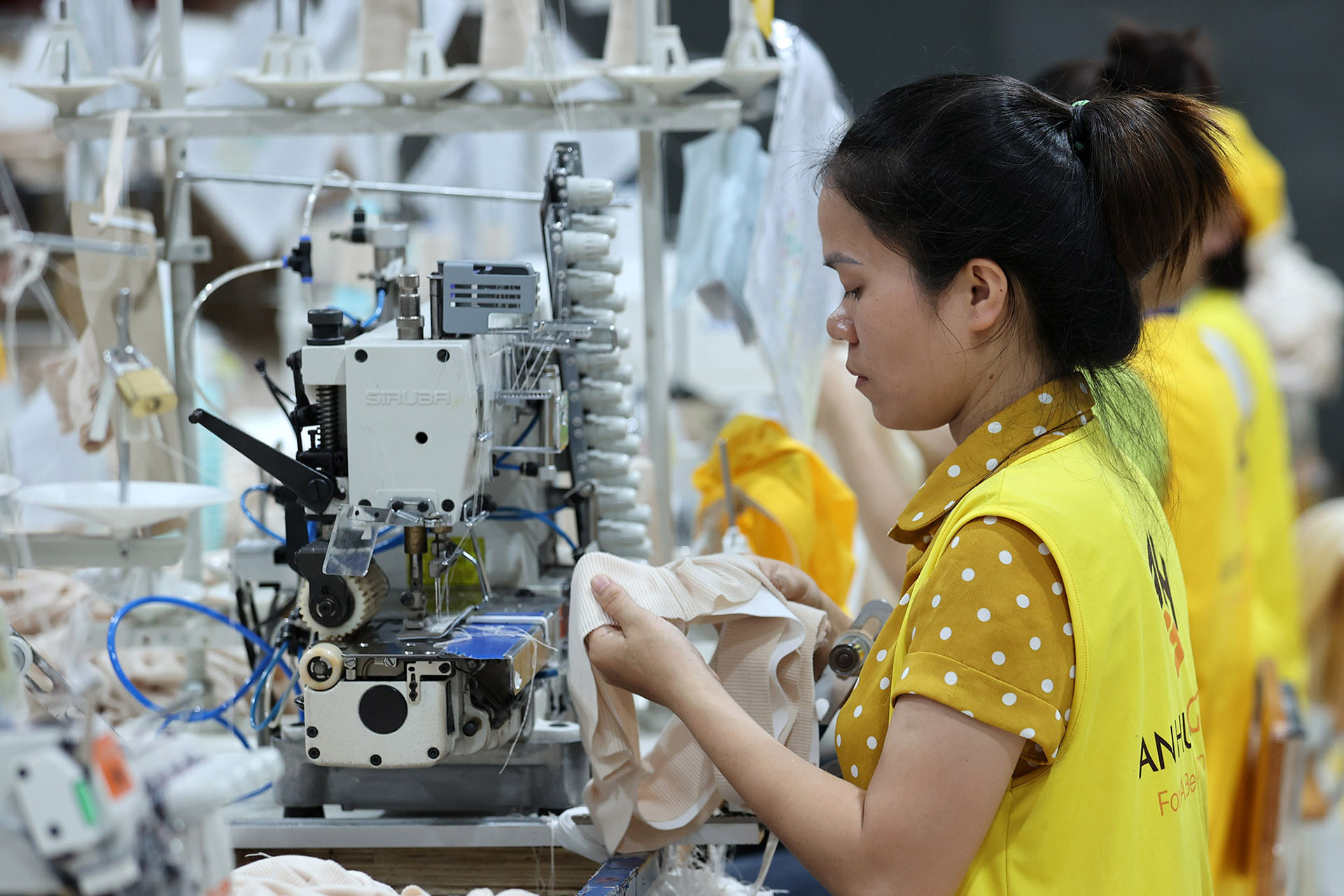
Businesses need to shift from a “for-hire” mindset to one centered on value creation. Photo: Hoang Ha
One fundamental change lies in how supply chains are perceived. The focus has shifted from “maximum efficiency” to “security and resilience,” with redundancy replacing optimization. This transition inevitably drives up costs and sustains inflationary pressure.
In this context, Vietnam finds itself both benefiting from and directly exposed to these changes. Success stories have emerged: Samsung has brought hundreds of Vietnamese firms into its supply chain; Viettel has expanded into more than 10 international markets; VinFast and Thaco are striving to move deeper into global value chains.
Yet the other side of the picture is equally instructive.
Between 2022 and 2024, Vietnam’s real estate and corporate bond markets underwent a sharp correction. Major developers such as Novaland and Phat Dat faced significant liquidity challenges as capital flows tightened. Growth models reliant on high leverage and short-term financing revealed their vulnerabilities when market conditions reversed.
In manufacturing, textile firms like Vinatex and many wood exporters were forced to cut working hours or scale down operations in 2023 as orders from the US and Europe declined sharply. Dependence on a limited number of major markets left these businesses highly exposed to global demand shocks.
Even more adaptive companies in the retail sector, such as The Gioi Di Dong, had to undergo significant restructuring during this period, closing stores and optimizing costs to preserve cash flow amid weakening consumer demand.
These cases are not isolated failures. They reflect a structural issue: growth models based on low costs, high leverage and open markets are becoming increasingly obsolete.
In the current environment, the central question is no longer “How to grow quickly,” but rather “How to survive and go further.”
First, businesses must place cash flow at the core of their strategy. In an environment of high capital costs and volatility, liquidity determines survival.
Second, flexibility is essential. This means diversifying markets, partners and supply chains, and avoiding dependence on a single customer or region.
Third, firms must invest seriously in internal capabilities - governance, technology and human capital. These are decisive factors in moving up the value chain.
Fourth, there must be a shift from a “contract manufacturing” mindset to one focused on value creation, with deeper participation in design, branding and distribution - where the greatest value is generated.
Ultimately, the most critical factor is understanding the nature of the game. The global economy no longer operates under its previous logic. Companies that continue to pursue growth at any cost will face heightened risks. In contrast, those that adapt strategically, invest for the long term and upgrade their capabilities will find opportunities to break through.
Global instability is no longer an exception; it is becoming the norm. In such a world, advantage will not belong to the largest companies, but to those that understand and adapt most quickly to the new rules of the game.
Tran Si Chuong
.svg)
