 Vietnamnet.vn

 Podcast


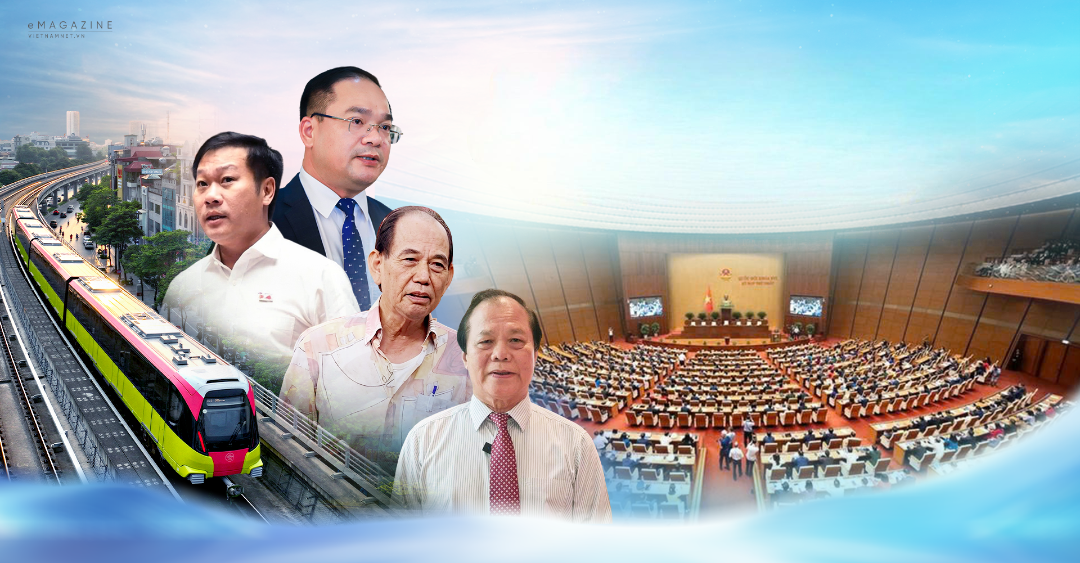
Delegate Nguyen Khanh Vu (Quang Tri Province NA delegation) said that the core innovation of the conclusion lies in shifting from managing personnel via organizational headcounts to governing and cultivating talent.
He said talent is identified primarily through practical capability and concrete contributions, rather than being equated with academic degrees, titles, positions, or length of service.
Vu stressed that effective utilization is key, requiring agencies to assign tasks that match ability while retaining talent through supportive work environments, creative opportunities, and meaningful recognition.
Delegate Nguyen Ngoc Viet (Hanoi delegation) noted that the Party's attraction and utilization of talent has “shifted from a mindset of seeking individuals who meet existing standards to finding people capable of solving pressing issues facing the country.”
He observed that many young people demonstrate creativity, boldness in thought and action, effective problem-solving skills, and public trust, yet might not possess a polished resume. Conversely, some individuals fulfill every paperwork requirement but fail to demonstrate corresponding capacity when assigned novel or complex tasks.
“Degrees deserve respect, but they should not become barriers denying talented individuals the opportunity to contribute,” Viet said.
Prof. Dr. Phan Trung Ly, former Chair of the National Assembly's Committee for Legal and Judicial Affairs, also highlighted shortcomings where diplomas, titles, or career longevity remain prioritized over creative capability and actual output.
He said attracting talent must be viewed as an integral part of the national development strategy and developmental institution-building. If policies only offer invitations without providing environments for talent to flourish, policy effectiveness will remain limited.
He concurred with transitioning from mere preferential policies for talent to constructing a talent utilization ecosystem: capable people receive major assignments, appropriate delegation of authority, protection when innovating for the common good, and fair evaluations.
Seek talent to solve concrete tasks
Vu agreed with commissioning strategic missions and major challenges as the foundation for talent selection.
“Only with concrete problems can we determine what skills are needed and evaluate how well an individual performs,” he noted.
When assigning and deploying personnel, missions must directly pair with the executor, authority, and resources, supported by clear targets, output deliverables, and deadlines. Execution results serve as the evaluation baseline; failure to meet requirements should lead to the prompt termination of the assignment.
Delegate Nguyen Ngoc Viet cited an example: if a locality faces bottlenecks in administrative reform, environmental management, or digital transformation, it should publicly state the challenge, expected outcomes, timelines, and resource guarantees.
Capable individuals would participate by proposing plans, presenting solutions, defending their approaches, and proving their execution capacity. The chosen individual need not have the thickest record of accomplishments, but must present a feasible plan, organizational execution capacity, and a willingness to take accountability for results.
For cases that fall short of certain formalistic standards, he proposed suitable mechanisms allowing their participation via expert contracts, specific tasks, or projects. Outdated regulations must be reviewed and amended according to authority, without arbitrarily ignoring mandatory legal conditions.
Prof. Dr. Phan Trung Ly proposed designing two parallel career tracks: leadership/management and technical/specialized expertise. A specialist need not become a manager to gain recognition. Scientists, tech experts, legal scholars, and economists should have opportunities to reach career stature, income, and influence commensurate with their skills without being forced into administrative posts.
This was also noted by Delegate Nguyen Khanh Vu regarding talent deployment: shifting a professional from a specialized role to management requires careful evaluation. Top specialists should be fully utilized and rewarded directly within their field of expertise.
Do not recruit talent only to leave them idle
Viet argued that young talent requires more than income or recognition. They want trust, opportunities to test themselves, and the assurance that their work benefits the community.
“Leaders need not only know how to find talented people, but must also possess the courage to use them, including young individuals who think differently, dare to debate, and propose novel approaches,” he emphasized.
He said one cannot expect talent to create breakthroughs while requiring every decision to go through multiple approval tiers, or assigning heavy responsibilities without providing the conditions to execute.
Thanh Hue - Thu Hang

