 Vietnamnet.vn

 Podcast



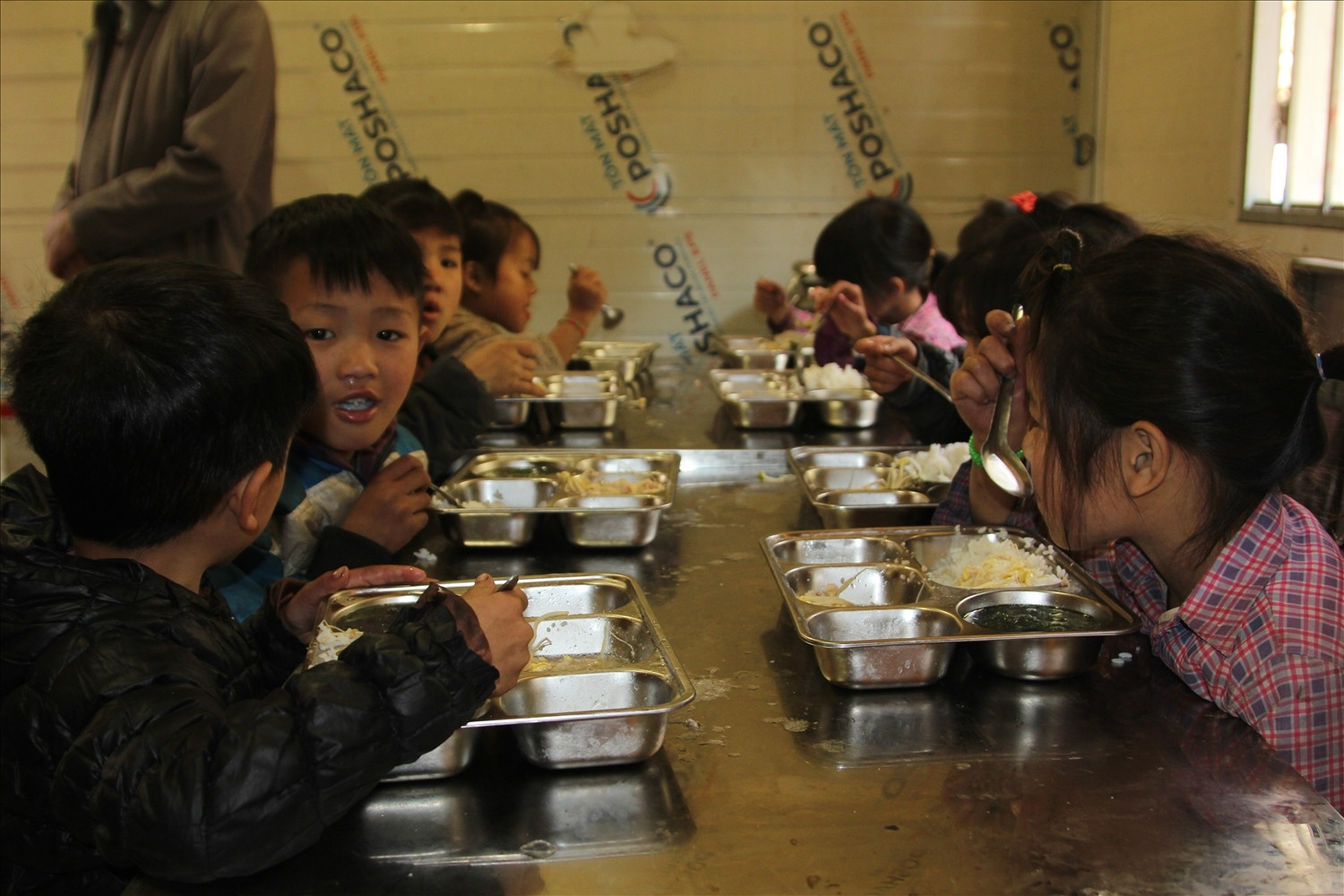
This has been crucial to improving human resource quality and creating a sustainable foundation for ethnic minority and mountainous regions.
In recent years, drawing on multiple investment sources for infrastructure and teaching equipment, ethnic minority boarding schools and semi-boarding schools expanded rapidly in scale, quantity and quality.
Nationwide, there are 316 ethnic minority general boarding schools in 31 provinces and cities, with a total of 115,333 students; and 1,213 ethnic minority semi-boarding schools in 20 provinces and cities. In addition, there are 2,145 general education schools with semi-boarding students in 26 provinces and cities, serving about 213,199 semi-boarding students.
Thai Van Tai, head of the Department of General Education under the Ministry of Education and Training, said the system of ethnic minority semi-boarding schools and schools with semi-boarding students has transformed education quality in ethnic minority and mountainous areas.
The rapid growth in scale, number and quality of these schools has helped to mobilize primary and lower secondary students of school age, and reduce dropout rates, irregular attendance and grade repetition.
In 2021-2025, under the National Target Program on Socio-Economic Development in ethnic minority and mountainous areas for 2021–2030, known as Program 1719, the boarding and semi-boarding school system has continued to be strengthened.
Through Subproject 1 of Project 5 under Program 1719, more than 5,500 classrooms, nearly 5,700 student dormitory rooms, 1,100 staff housing units for teachers, nearly 500 dining halls, many auxiliary facilities and nearly 1 million teaching devices have been built and equipped nationwide. These investments have improved teaching and learning conditions while expanding access to knowledge for students in disadvantaged areas.
A typical example is Thuan Chau Ethnic Minority Boarding Secondary and High School in Son La province. Using funding from Program 1719, the school invested in new classrooms, boarding facilities, and upgraded kitchens and teaching equipment, with total funding of VND20.4 billion.
Luong Thi Chuong, the school’s principal, said the facilities from the 2025–2026 school year have played an important role in improving learning and living conditions for nearly 500 boarding students.
To further develop education in ethnic minority areas, on July 18, 2025, the Politburo issued Notice No81-TB/TW on building integrated boarding schools at primary and lower secondary levels in 248 border communes. By early September 2025, 100 integrated boarding schools for primary and secondary education had been launched in disadvantaged border communes.
Speaking at the groundbreaking ceremony of the integrated boarding school in Long Sap commune in Son La province, Minister of Ethnic Affairs and Religion Dao Ngoc Dung affirmed that this policy carries deep humanitarian significance, reflects the spirit of “leaving no one behind,” and creates a foundation for ethnic minority children to study and develop in the best possible environment and integrate into society.
Specific policies
Alongside infrastructure investment, in recent years the Government has issued many targeted policies to support ethnic minority students, such as Decree No116/2016/ND-CP on support policies for students and general education schools in extremely disadvantaged communes and villages; Circular No03 dated February 6, 2023 on regulations on organization and operation of ethnic minority semi-boarding schools; and Circular No04 dated February 23, 2023 on regulations on organization and operation of ethnic minority boarding schools.
Notably, on March 12, 2025, the Government issued Decree No66/2025/ND-CP, which stipulates policies for nursery children, students and learners in ethnic minority and mountainous areas, coastal and island areas, and educational institutions with beneficiaries. The decree is assessed as having many breakthrough policy points for supporting ethnic minority students.
Under the decree, ethnic minority students studying at boarding schools, semi-boarding schools and specialized schools are entitled to support including rice, meal allowances, and additional support for electricity, water, sports equipment and medicine. The issuance of these support policies has created strong incentives for students to pursue education, contributing to improved educational attainment and the development of high-quality human resources in ethnic minority and mountainous areas.
Dinh Ngoc Linh, principal of the ethnic minority semi-boarding primary and lower secondary school in Bum To commune, Lai Chau province, shared that 100 percent of the school’s students are from the La Hu ethnic group, with most coming from poor households. Thanks to support policies under Decree 66 for semi-boarding students, children are better able to attend school regularly and maintain more stable learning.
Thuy Hong
.svg)
