 Vietnamnet.vn

 Podcast



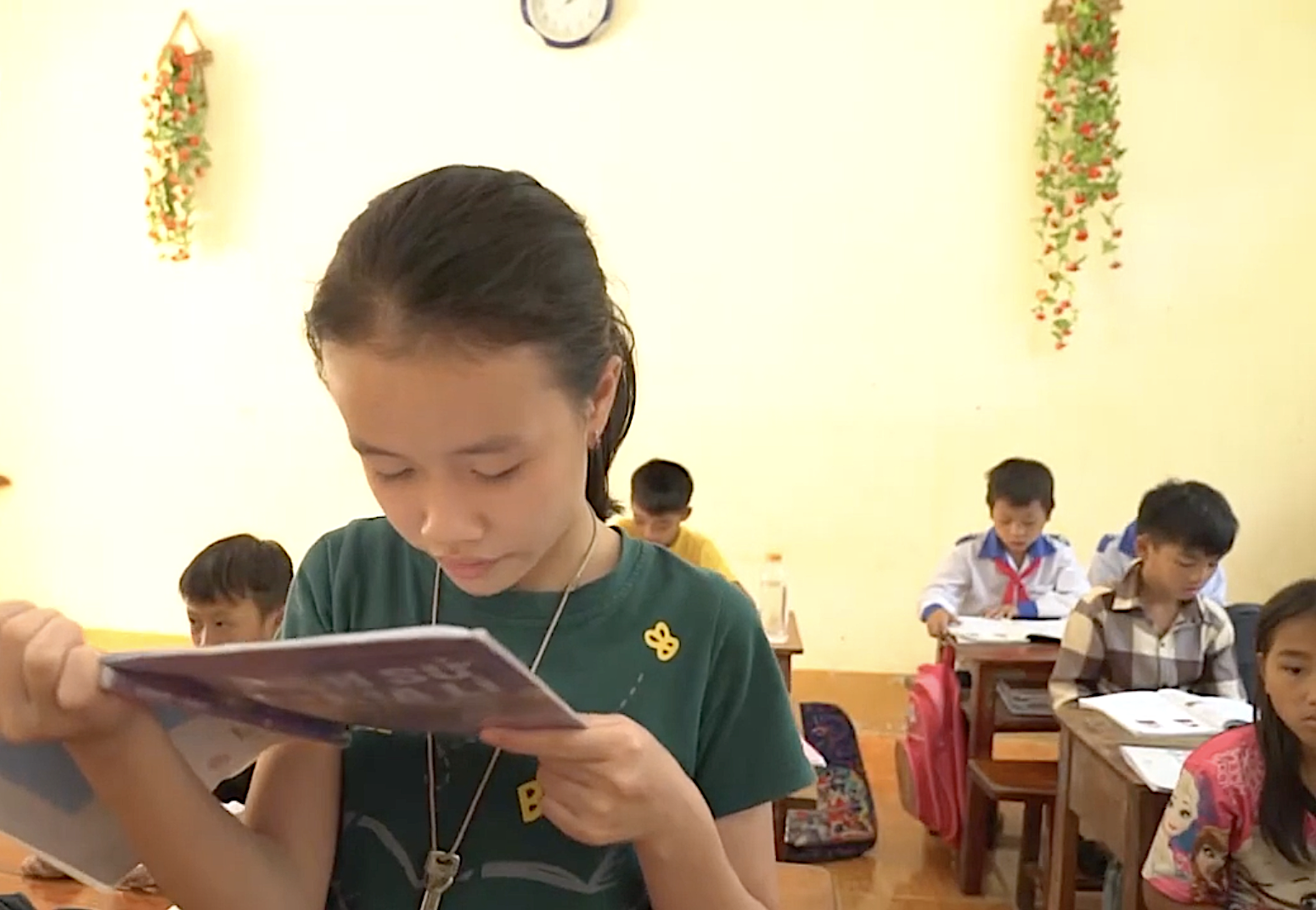
Although Vietnam remains a developing country facing economic challenges, international organizations consistently rank its educational achievements highly, especially in comparison to nations with similar income levels.
Since 2014, the government has introduced numerous policies to promote universal education and eradicate illiteracy, while also enhancing Vietnamese language skills among ethnic preschoolers and primary school students. These include regulations such as Decree No. 86/2015/ND-CP dated October 2, 2015, which outlines tuition fee management and grants a 70% tuition reduction for ethnic children in socioeconomically disadvantaged regions. Decree No. 116/2016/ND-CP issued on July 18, 2016, and Decree No. 57/2017/ND-CP dated May 9, 2017, detail targeted educational support for ethnic minority children across all levels, including preschool and higher education, with special provisions for the smallest ethnic groups.
In particular, the national action plan for implementing the 2030 Agenda for Sustainable Development - approved through Decision No. 622/QD-TTg on May 10, 2017 - outlines 17 key goals, many of which aim to comprehensively address educational shortcomings affecting ethnic minority and mountainous children.
Local governments have also introduced unique measures, including the teaching of ethnic languages and writing systems, literacy programs, and Vietnamese language enhancement initiatives. In recent years, six ethnic minority languages - H'Mong, Cham, Khmer, Gia Rai, Ba Na, and E De - have been incorporated into public school curricula across 22 provinces and cities.
As a result of these efforts, school attendance among ethnic minority children continues to improve. According to the 2024 survey of 53 ethnic groups, the gross enrollment rate at the primary level has reached 103.2%, while enrollment for lower secondary education is 91.2%, and upper secondary education stands at 53.8%. These figures reflect increasing access to education across all levels. Compared to 2015, enrollment at the primary level has risen by 4.6 percentage points, the lower secondary level by 7.3 points, and the upper secondary level by 12 points.
The proportion of children attending school at the appropriate age also shows positive trends. Among 53 ethnic groups, the correct-age attendance rate at the primary level is 96.3%, while it is 86.6% at the lower secondary level and 51.1% at the upper secondary level. These rates are higher than those reported in 2019, with a 0.5-point increase for lower secondary education and a 4.1-point increase for upper secondary education.
Dropout and repetition rates among ethnic minority students are also on the decline. The same 2024 survey reports that the proportion of school-age ethnic children not attending school has dropped by 1.8 percentage points, from 15.5% in 2019 to 13.7% in 2024.
These outcomes affirm Vietnam’s determined and consistent approach to eradicating illiteracy among ethnic minority and highland children. The ongoing effort ensures that even children from the most economically disadvantaged backgrounds are granted equal access to education and the opportunity to participate fully in society.
Binh An
.svg)
