 Vietnamnet.vn

 Podcast



From giant supermoons and dramatic eclipses to elegant moments when the crescent Moon stands beside brilliant planets, nearly every month of 2026 offers a reason to look up.
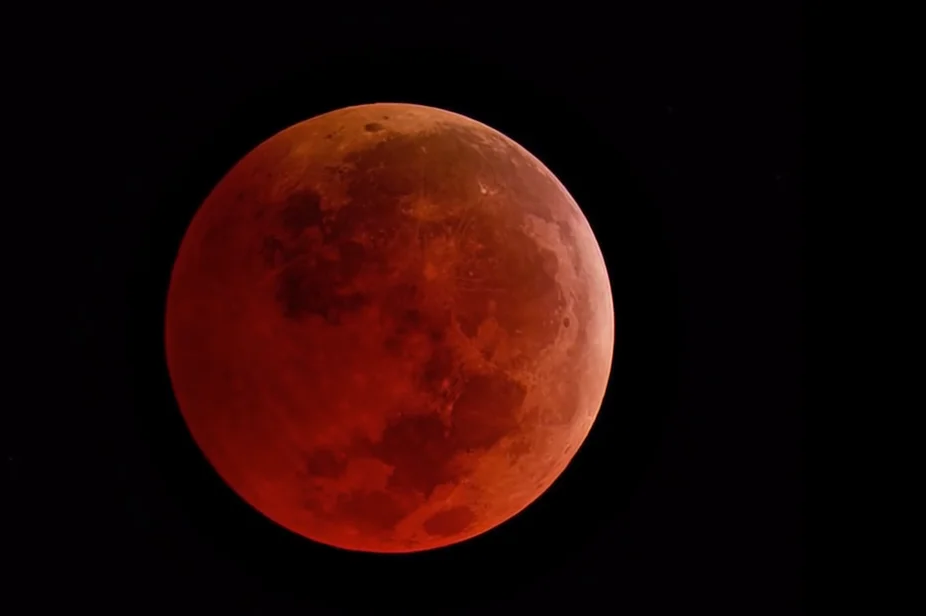
The year 2026 will witness a dense lineup of lunar events. Photo: NASA
The year will feature a dense lineup of supermoons, a gripping total solar eclipse, a total lunar eclipse known as a “blood moon,” and a series of beautiful encounters between the crescent Moon and bright planets.
Most of these events can be observed with the naked eye. With binoculars or a telescope, however, observers can appreciate finer details, from the Moon’s rugged surface to the subtle hues of distant planets.
So far, three lunar events have already passed: the first supermoon of the year on January 3, 2026; an annular “ring of fire” solar eclipse on February 17, 2026; and a crescent Moon meeting Mercury on February 18, 2026.
Here are the remaining lunar highlights of 2026.
Total lunar eclipse “blood moon”: night of March 2-3, 2026
Total lunar eclipses often occur in sequences of three. After two events in 2025, the final eclipse in this series will take place in early March 2026 and will be the last until 2029.
On the night of March 2 into the early hours of March 3, the full Worm Moon will pass deep into Earth’s shadow, turning a reddish-orange for about 58 minutes.
This “blood moon” will be visible from western North America, Australia, New Zealand, East Asia and across the Pacific region.
Crescent Moon and Venus: March 20, 2026
About 45 minutes after sunset on March 20, a familiar yet always enchanting sight will appear. A thin crescent Moon will hang close to brilliant Venus.
At that moment, the Moon will be illuminated by only about 5 percent and will hover just above Venus.
A clear western horizon and a pair of binoculars will enhance the experience.
Moon, Venus and the Pleiades: April 19, 2026
Roughly one hour after sunset on April 19, look west for a striking celestial tableau.
A waxing crescent Moon, about 9 percent illuminated, will approach the Pleiades star cluster, also known as the Seven Sisters, while Venus shines below.
All of this unfolds near the setting stars of Orion, creating a sky scene rich in astronomical character.
Total solar eclipse: August 12, 2026
On August 12, 2026, the Moon will perform its most dramatic act of the year by completely covering the Sun.
For up to 2 minutes and 18 seconds, the Moon’s shadow will fully obscure the solar disk, producing a total solar eclipse visible from eastern Greenland, western Iceland and northern Spain.
Much of Europe will witness a deep partial eclipse, while North America will see only a slight partial phase.
Partial lunar eclipse: night of August 27-28, 2026
The second lunar eclipse of 2026 will occur on the night of August 27-28 and will be visible from the Americas, Europe and Africa.
Although not as spectacular as the total eclipse in March, it remains a compelling sight.
About 96 percent of the Moon’s surface will pass into Earth’s central shadow, turning a dark reddish shade while a small edge remains bright.
The slow progression of the shadow’s boundary across the lunar surface always carries a sense of quiet grandeur.
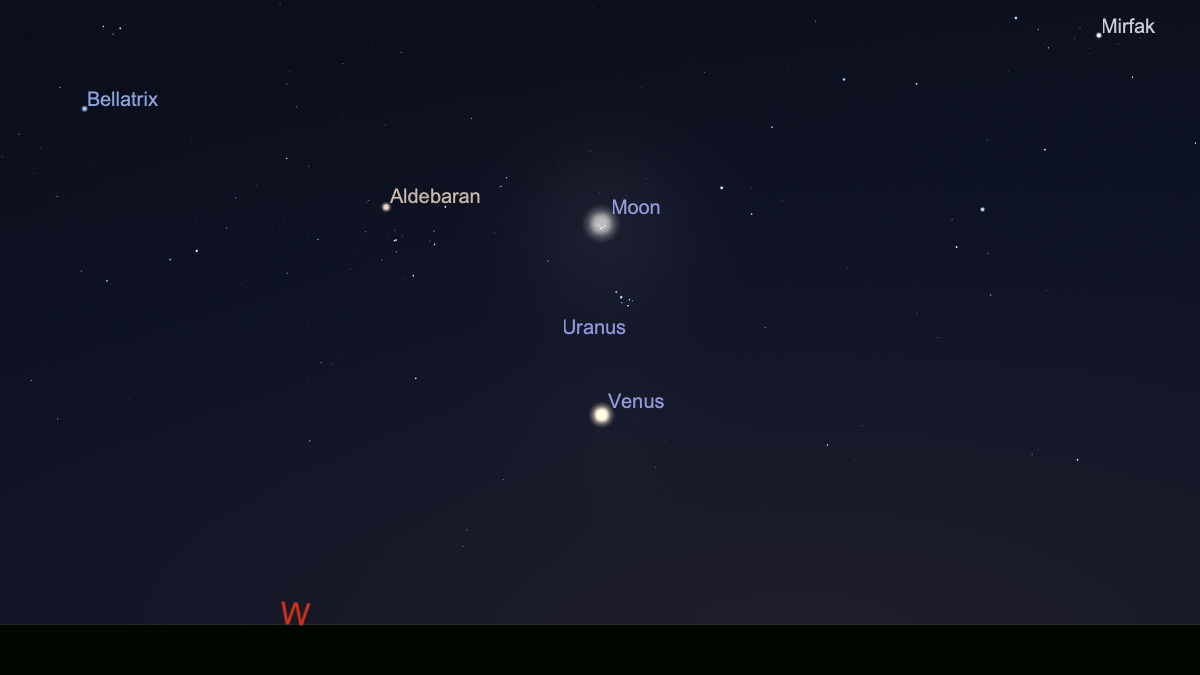
Observe the crescent Moon, Venus and the Pleiades on April 19, 20256. Photo: Stellarium
The Moon in the Beehive Cluster: September 8, 2026
About 45 minutes before dawn on September 8, look east to find a waning crescent Moon, around 9 percent illuminated, resting just below the Beehive Cluster (M44).
This cluster contains roughly 1,000 stars and lies about 600 light-years from the Solar System. Binoculars are essential to clearly resolve M44.
Moon and Saturn: September 26, 2026
Toward the end of 2026, Saturn will stand out prominently in the night sky.
The most notable moment comes on the evening of September 26, just before full Moon, when the Moon draws close to the ringed planet.
Looking east after sunset, observers will see a harmonious pairing between the Moon and the “lord of the rings.”
Crescent Moon and Jupiter: October 6, 2026
One of the rarest events of the year will occur before dawn on October 6, when the Moon and Jupiter come within just about 10 arcseconds of each other - an exceptionally small separation in the sky.
The best time to observe is about 90 minutes before sunrise in the eastern sky. The Moon will be about 20 percent illuminated, and Earthshine will softly reveal the darker portion of its disk.
Moon, Mars and Jupiter: November 2, 2026
Mars will not be prominent in the first half of 2026, but it will gradually return to the night sky toward the end of the year.
Before dawn on November 2, a waning crescent Moon, about 43 percent illuminated, will visit the Red Planet, with Jupiter positioned just below, forming an impressive Moon-planet triangle.
Closest supermoon since 2019: December 23, 2026
There are three supermoons in 2026 - on January 3, November 24 and December 23 - but the final one stands out.
On the evening of December 23, the full Moon will be just 356,740 kilometers from Earth, making it the closest full Moon since 2019.
It will even be about 100 kilometers closer than the February 19, 2019 supermoon, making it the largest and brightest full Moon in nearly eight years. Even so, supermoons in February 2028 and March 2029 will come even closer.
With such a dense and varied lineup of celestial events, 2026 is truly an ideal year to keep a lunar observation journal.
Whether you are a beginner or already familiar with the night sky, each glance at the Moon this year may offer an experience that is at once scientific and deeply emotional.
Hai Phong
.svg)
