 Vietnamnet.vn

 Podcast



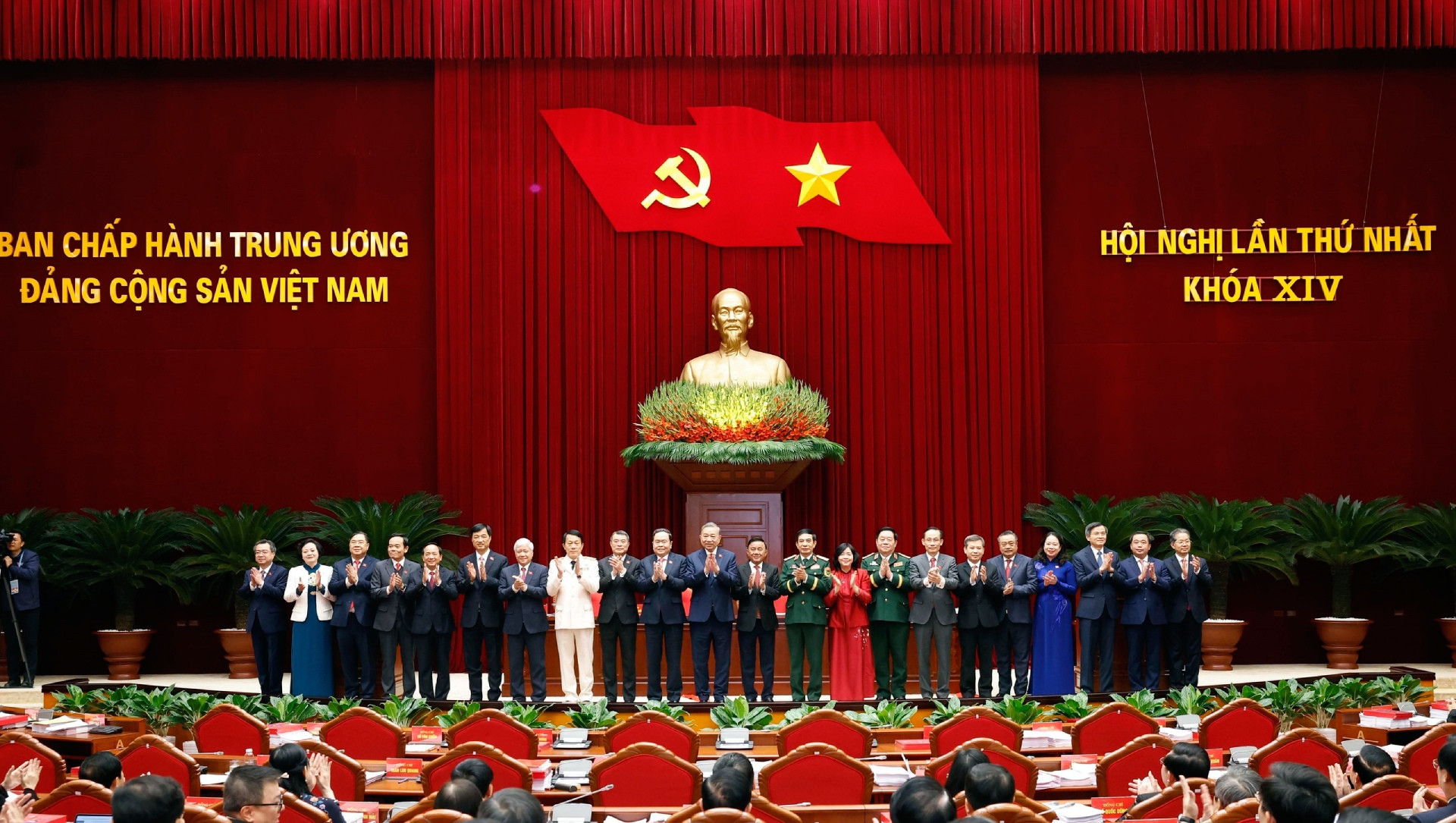
The Politburo has decided to assign the following 10 members:
General Secretary To Lam, Secretary of the Central Military Commission.
Tran Cam Tu, Executive Secretary of the Secretariat, Secretary of the Party Committee of Central Party Agencies.
Le Minh Hung, Head of the Party Central Committee’s Organization Commission.
Bui Thi Minh Hoai, Secretary of the Party Committee of the Vietnam Fatherland Front and mass organizations, and President of the Vietnam Fatherland Front Central Committee.
General Nguyen Trong Nghia, Standing Member of the Central Military Commission and Director of the General Department of Politics of the Vietnam People’s Army.
Trinh Van Quyet, Head of the Party Central Committee’s Commission for Publicity and Mass Mobilization.
Le Minh Tri, Head of the Party Central Committee’s Commission for Internal Affairs.
Pham Gia Tuc, Chief of the Party Central Office.
Tran Sy Thanh, Chairman of the Central Inspection Commission.
Nguyen Thanh Nghi, Head of the Party Central Committee’s Commission for Policy and Strategy.
Earlier, on January 23, the 14th Party Central Committee approved the structure of the Secretariat, including 13 members. Of these, 10 were assigned from the Politburo, as per the Party’s structure.
Three others were elected at the first meeting of the 14th Party Central Committee: Vo Thi Anh Xuan (Party Central Committee member and Vice President), Pham Thi Thanh Tra (Party Central Committee member, member of the Standing Committee of the Government Party Committee, and Deputy Prime Minister), and Nguyen Van Quang (Party Central Committee member, Party Secretary, and Chief Justice of the Supreme People’s Court).
The Secretariat holds authority over the assessment, planning, training, placement, assignment, nomination, re-nomination, designation, rotation, and secondment of senior officials. It also decides on promotion, demotion, rank removal of military officers, temporary suspension or dismissal from positions, and other personnel-related matters such as commendation, discipline, and retirement policies.
The Secretariat is authorized by the Politburo to supervise and inspect personnel work and reports regularly to the Politburo on cadres under its management.
Additionally, the Secretariat delegates authority to the State President, Prime Minister, National Assembly Chair, and Executive Secretary to decide on personnel appointments and nominations within their jurisdiction -especially for dual-role positions in Party committees across the Central Party Agencies, the Government, National Assembly, Fatherland Front, central-level mass organizations, and other political and social bodies.
The Secretariat is also authorized to approve reappointments and manage retirement arrangements, including the extension of terms for overseas ambassadors (up to 12 months) under its jurisdiction, excluding age-limit extensions.
Tran Thuong
.svg)
