 Vietnamnet.vn

 Podcast



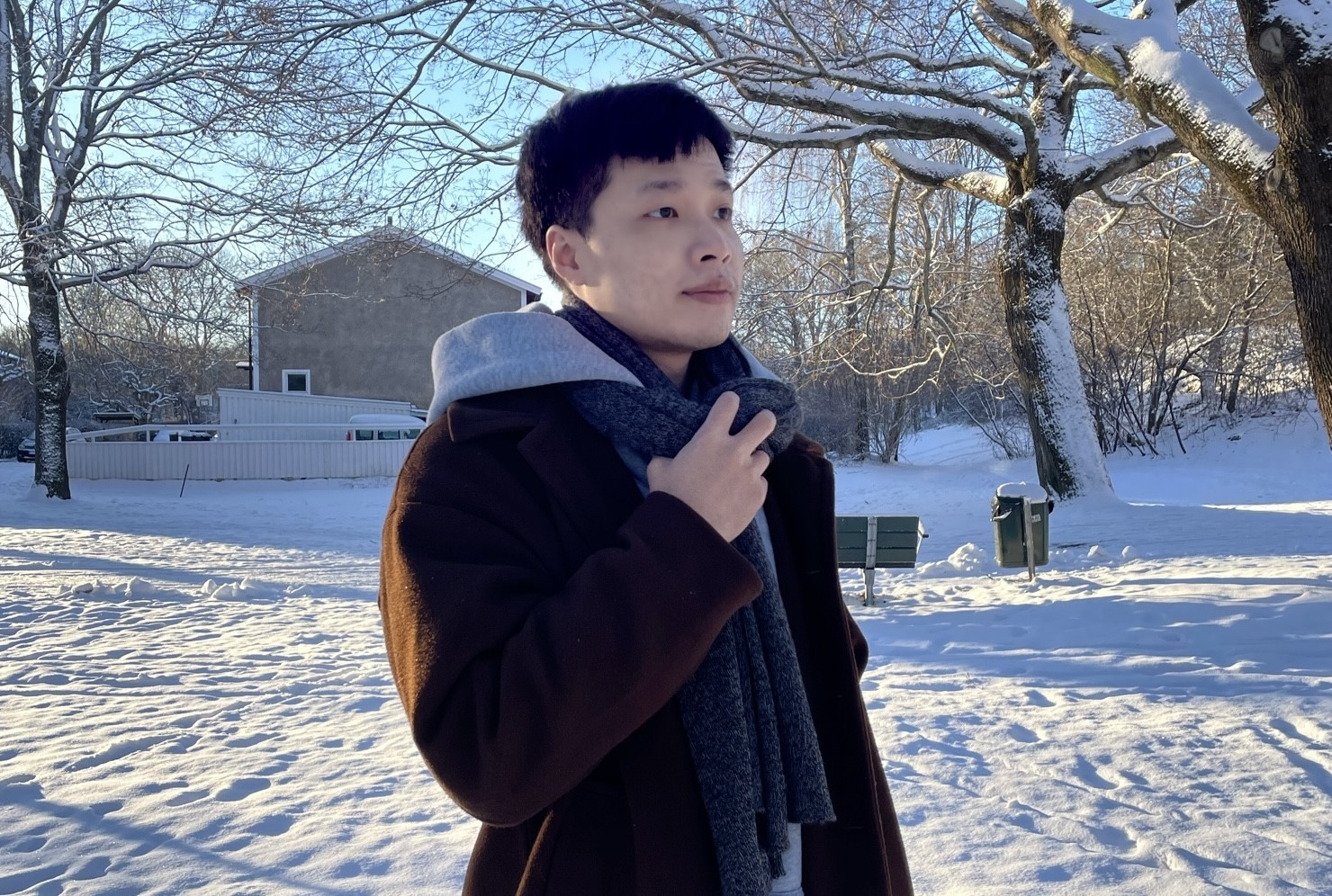
On the first day of the Lunar New Year 2026, Phong, from Hai Phong, received news that he had been admitted to a PhD program at University of Tokyo, one of Japan’s top universities. Phong considers this a “memorable milestone,” as it required a decade-long journey of sustained effort.
“Surviving” Russia’s exams
Phong is a former math major student at Tran Phu High School for the Gifted. Before graduating from high school, he secured a full scholarship under the Vietnam–Russia intergovernmental agreement.
“Given my family’s circumstances at the time, self-funded study abroad was simply not an option. This scholarship gave me the chance to touch my dream,” Phong recalled.
Even so, the early days were far from easy. Arriving in Russia with virtually no Russian language skills, Phong entered an intensive preparatory year to catch up with the curriculum in semiconductor physics at Peter the Great St Petersburg Polytechnic University.
Once officially enrolled, his first shock came from oral examinations. “In Russia, final exams often combine problem-solving with oral defense. Students draw a question, solve it, then professors probe the solution and expand into related topics. I had to ‘survive’ those exams in a language I had learned for just one year,” Phong said.
The language barrier made his first year especially stressful. At one point, during a physics exam, he failed to answer a single question simply because he could not understand what the professor was asking.
"That moment made me tear up out of helplessness," Phong said. Afterward, he became determined to improve his Russian, actively seeking out Russian classmates to practice communication. Thanks to that, when he had the chance to retake the exam, Phong prepared thoroughly and achieved a perfect score in this subject.
Although the academic environment was somewhat strict, these experiences also trained Phong in critical thinking, problem-solving skills, perseverance, and resilience under pressure.
European education and the doctoral turning point in Japan
After graduation, realizing that what he had learned was just theory, Phong decided to return to Vietnam to work as a research engineer at LG from late 2021. The corporate environment helped Phong access professional working methods, learn how to optimize processes, and solve problems in real-world contexts.
Phong applied for the Erasmus Mundus QuanTEEM master’s program, a joint program run by three universities in France, Germany, and Denmark.
Balancing work with applications and writing an essay on applying AI in his professional experience, Phong won a full Erasmus Mundus scholarship in 2023, including a monthly stipend of 1,400 euros.
Eager to experience different education systems, he chose to study in all three countries. Phong observed that in France, programs emphasize heavy calculations and written exams with dense course loads; in Germany, students enjoy greater autonomy, with oral exams focusing on depth of understanding and knowledge integration; and in Denmark, learning centers on presentations, teamwork, and defending viewpoints.
These diverse European experiences helped Phong develop flexible thinking, clear presentation skills, and confidence before academic panels.
In late September 2025, after completing his master’s thesis in France, Phong applied for a PhD at the University of Tokyo. After a document screening round and two preliminary interviews, he traveled to Japan for a written exam and a panel interview with six professors.
“Experience with written exams in countries like France and Russia, combined with interview and presentation experience from Germany and Denmark, helped me manage the pressure and stay calm before the panel,” Phong said.
On the first day of the Lunar New Year, he received his PhD admission letter from the University of Tokyo and is set to begin his program in April 2026.
Looking back on a decade spanning Russia, France, Germany, Denmark, and Japan, Phong believes perseverance, not one’s starting point, is the most important factor. “The early years in Russia were anything but rosy. But if I had given up, I certainly would not have had the opportunities that came later,” he said.
Even so, Phong does not see this as an endpoint, but as a chance to pursue scientific research seriously and to its fullest extent.
Thuy Nga
.svg)
