 Vietnamnet.vn

 Podcast



Once an assistant doing odd jobs in his brother-in-law’s painting studio, Do Viet Duong of Thanh Hoa Province spent years experimenting and enduring hundreds of failed attempts before learning how to transform ordinary lotus leaves into one-of-a-kind works of art, opening a new path for a distinctly Vietnamese material.
Finding inspiration in his brother-in-law’s studio
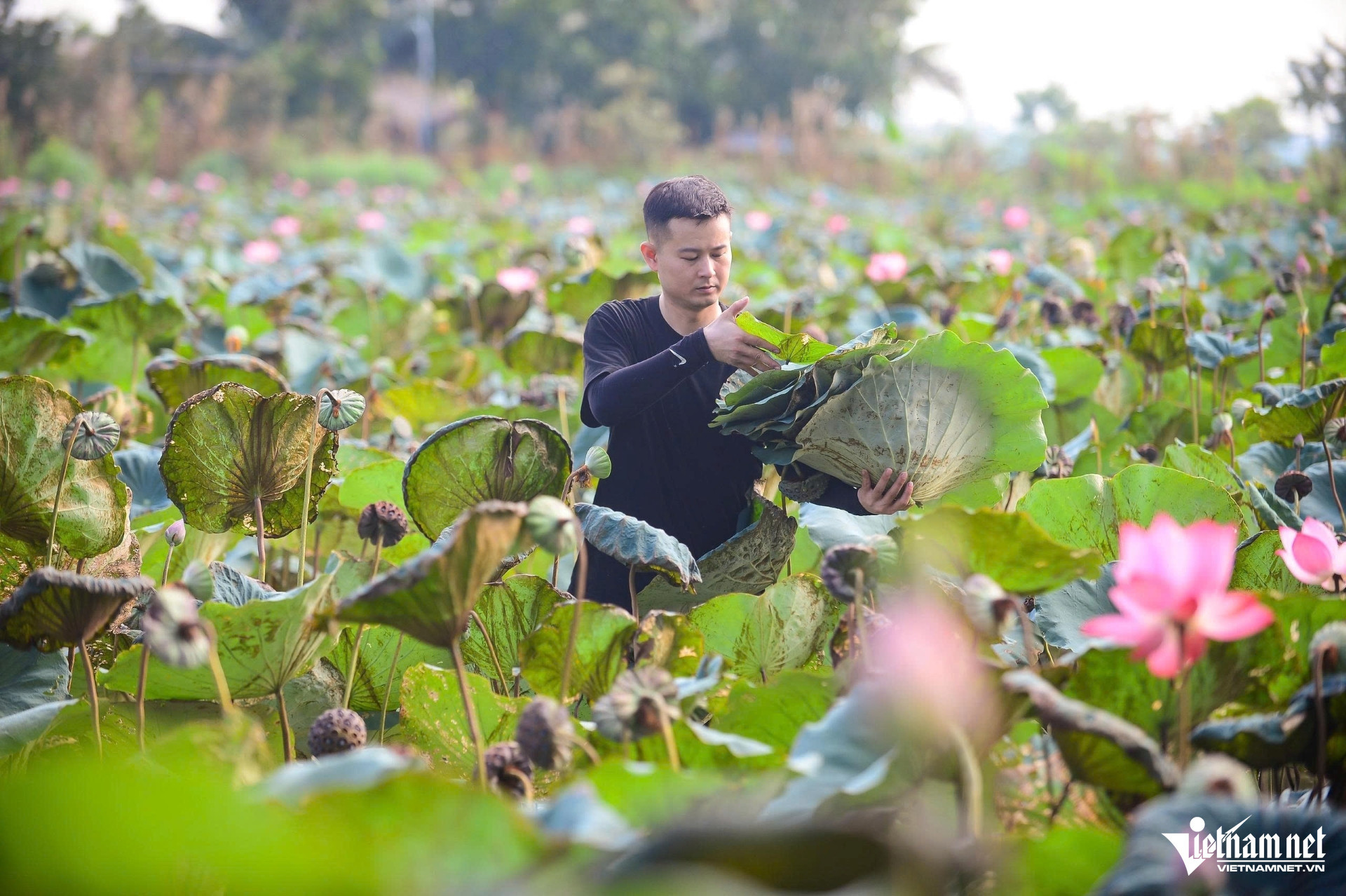
Duong heads to lotus fields early in the morning to select the finest leaves. Photo: Le Duong
After a business venture failed, Do Viet Duong, born in 1992 and living in Thieu Van, Dong Tien Ward, Thanh Hoa Province, went through a difficult period, uncertain where or how to begin again.
Duong said he finished school after Grade 12 and had worked a variety of jobs to make a living. His turning point came when he began regularly visiting the studio of his brother-in-law, painter Hoang Tuyen, helping with odd jobs around the workshop.
Surrounded by the smell of paint, brushes and canvases gradually coming to life, Duong found himself increasingly drawn to art. He went from simply watching to learning how to mix colors and create forms, gradually developing an ambition to make something with a distinctive identity of his own.
“After my business failed, I almost completely lost my sense of direction,” Duong said. “At first, I went to help at my brother-in-law’s studio simply because I needed something to do and wanted to learn. But the more time I spent around painting, the more I realized that I genuinely loved creating things.”
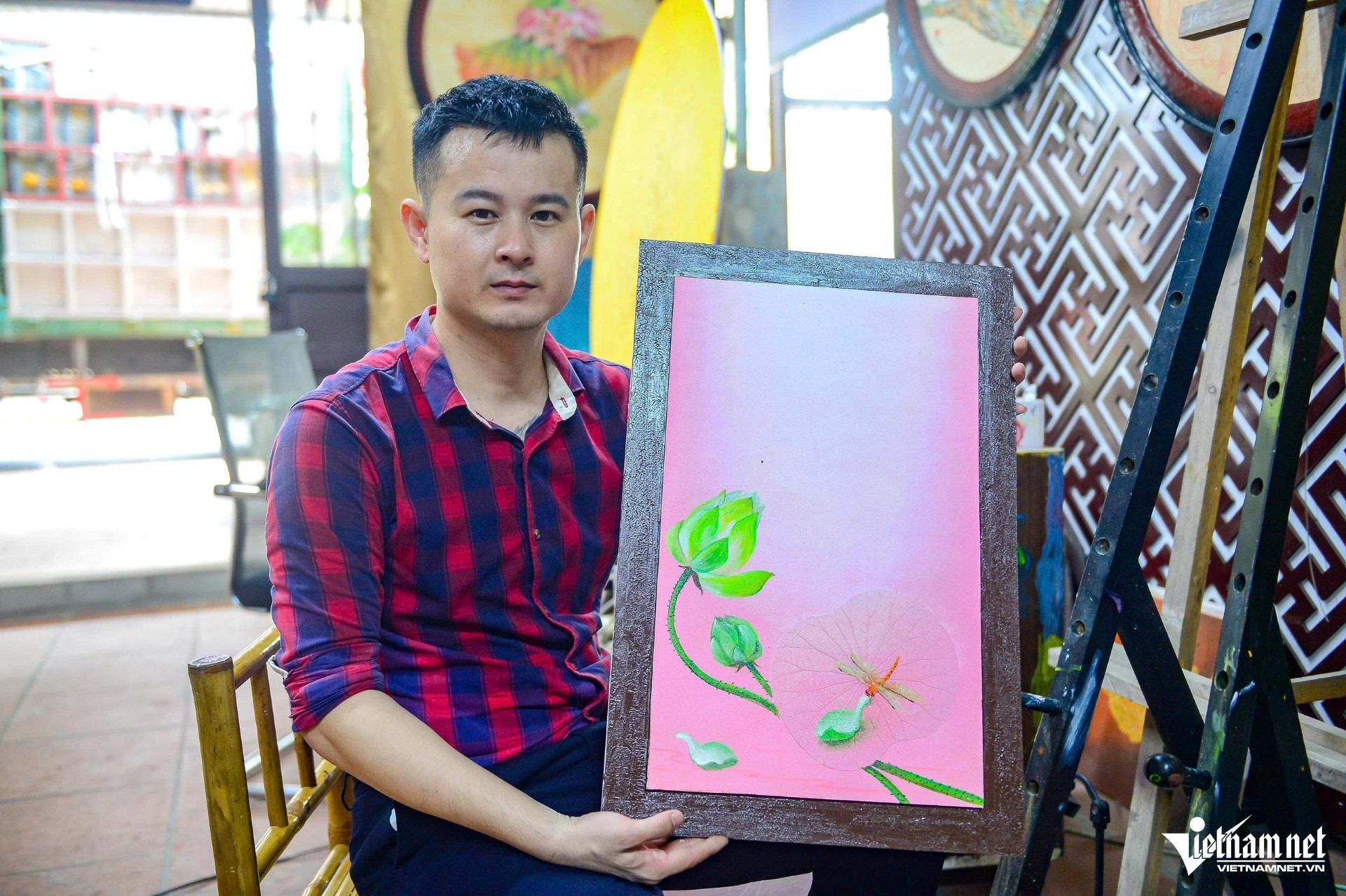
Without formal artistic training, Duong kept wondering how he could create something deeply rooted in Vietnamese identity through his own sensibilities.
Whenever he saw lotus ponds bloom spectacularly before quickly fading, he felt a sense of regret at how fleeting their beauty was. One question stayed with him: “Why couldn’t it be preserved in another way?”
That was how the idea of making art from lotus leaves began.
In late 2020, Duong started researching lotus leaves as an artistic material. At first, he experimented with both flowers and leaves, but soon discovered that lotus blossoms were extremely difficult to process for long-term preservation. After repeated trials, he decided to focus exclusively on the leaves.
To find the finest material, Duong would wake at around 4am almost every day and travel between lotus ponds in and beyond his local area.
According to him, the ideal moment comes just after the morning dew begins to disappear, when the leaves are still firm, fresh and at their most beautiful.
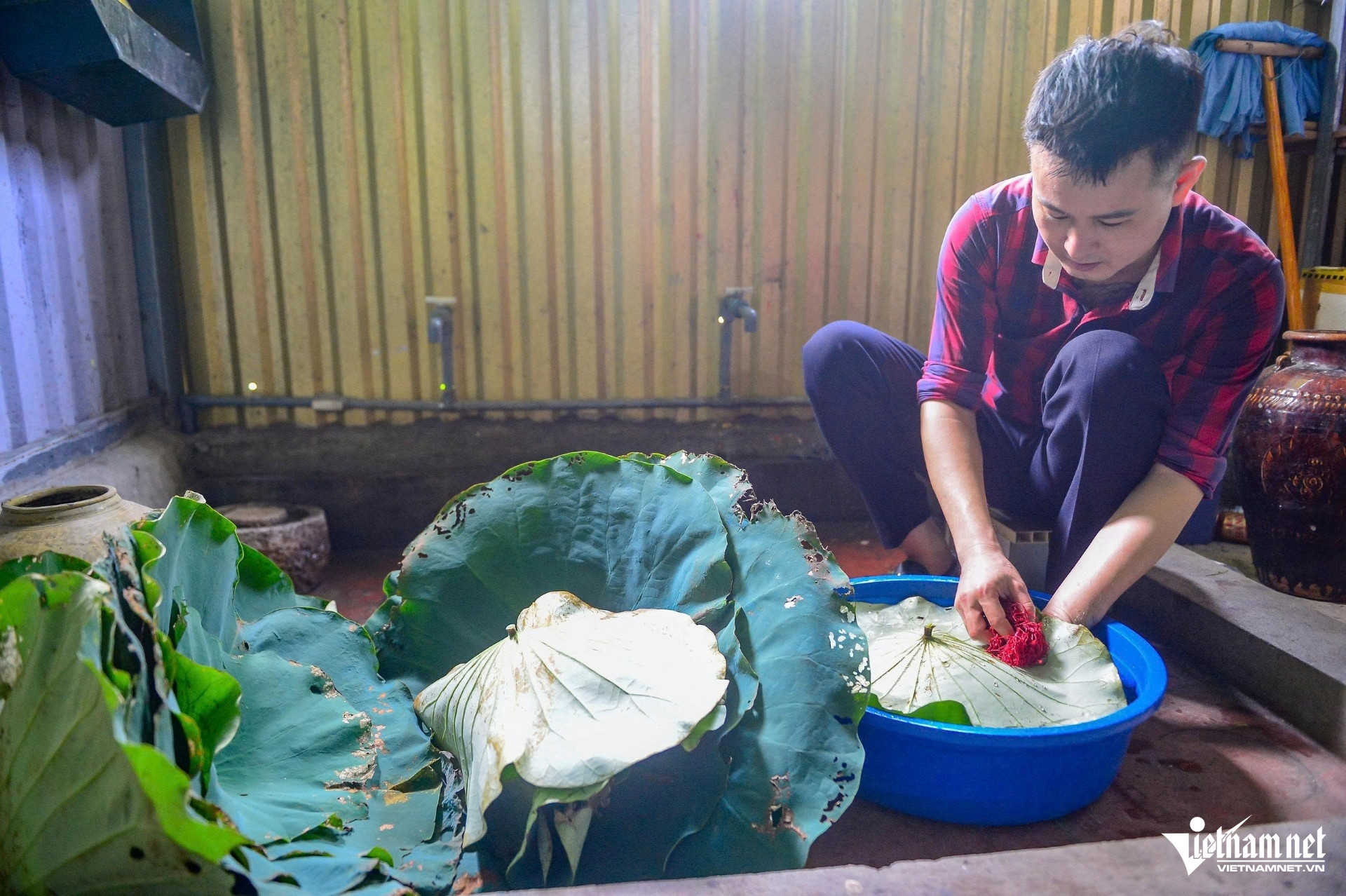
Turning something so delicate into a work of art capable of lasting over time proved far more difficult.
Once cut from their stems, lotus leaves are highly susceptible to moisture, mold, decay and discoloration. Duong’s earliest pieces began peeling and blistering after only a few weeks, wiping out much of the work he had put into them.
“Almost none of my early pieces succeeded,” he recalled. “Within weeks of being treated, the leaves would develop mold, change color or peel. There were times when I thought I had chosen an impossible material.”
Yet failure only made him more determined to find an answer.
“Some entire batches of leaves had to be thrown away. It was painful to lose both the effort and the money,” Duong said. “But every failure taught me a little more about the characteristics of lotus leaves and gave me another reason to continue.”
Mastering the lotus leaf
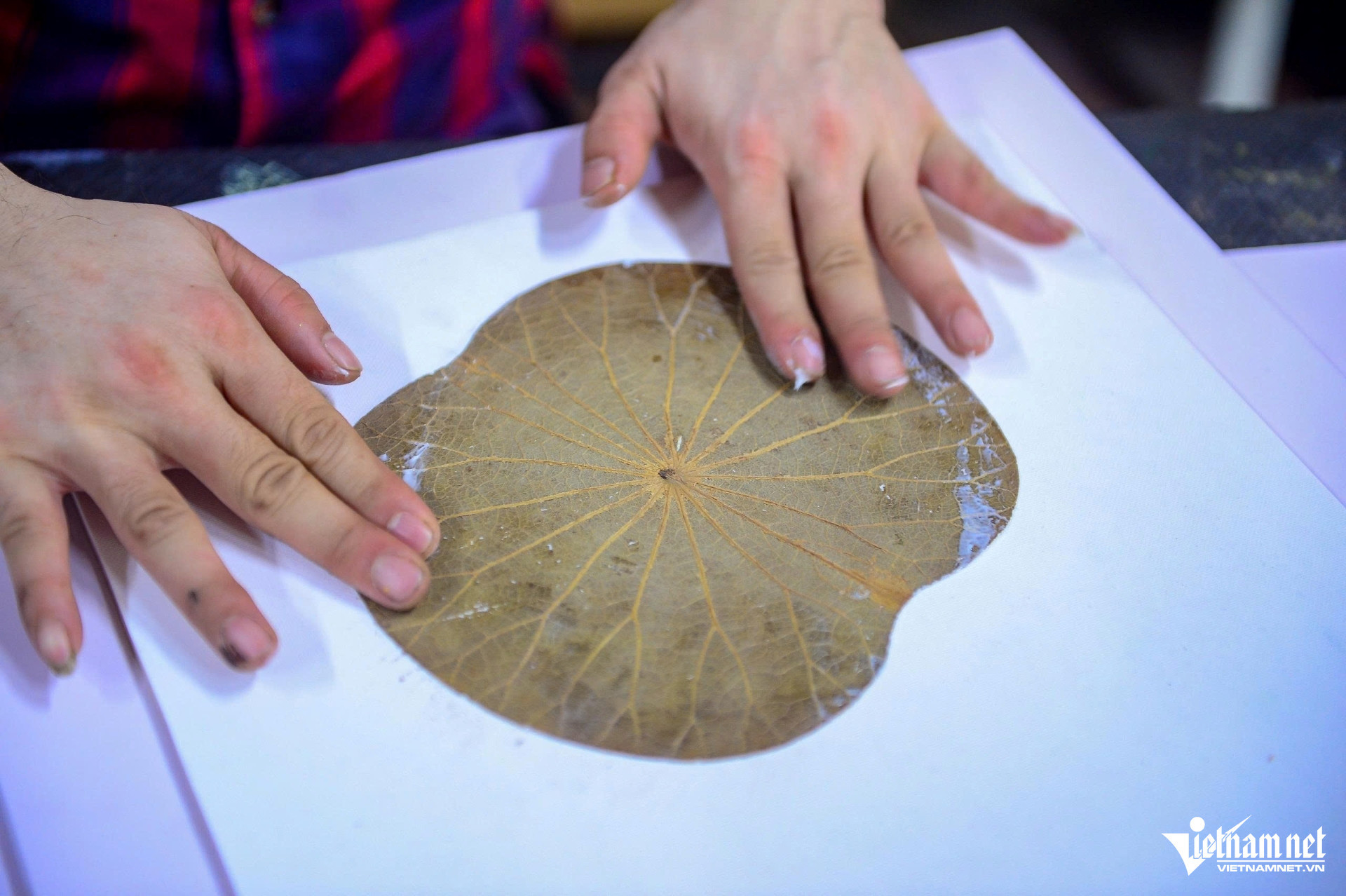
It took nearly two years and hundreds of experiments before Duong developed a treatment process that worked.
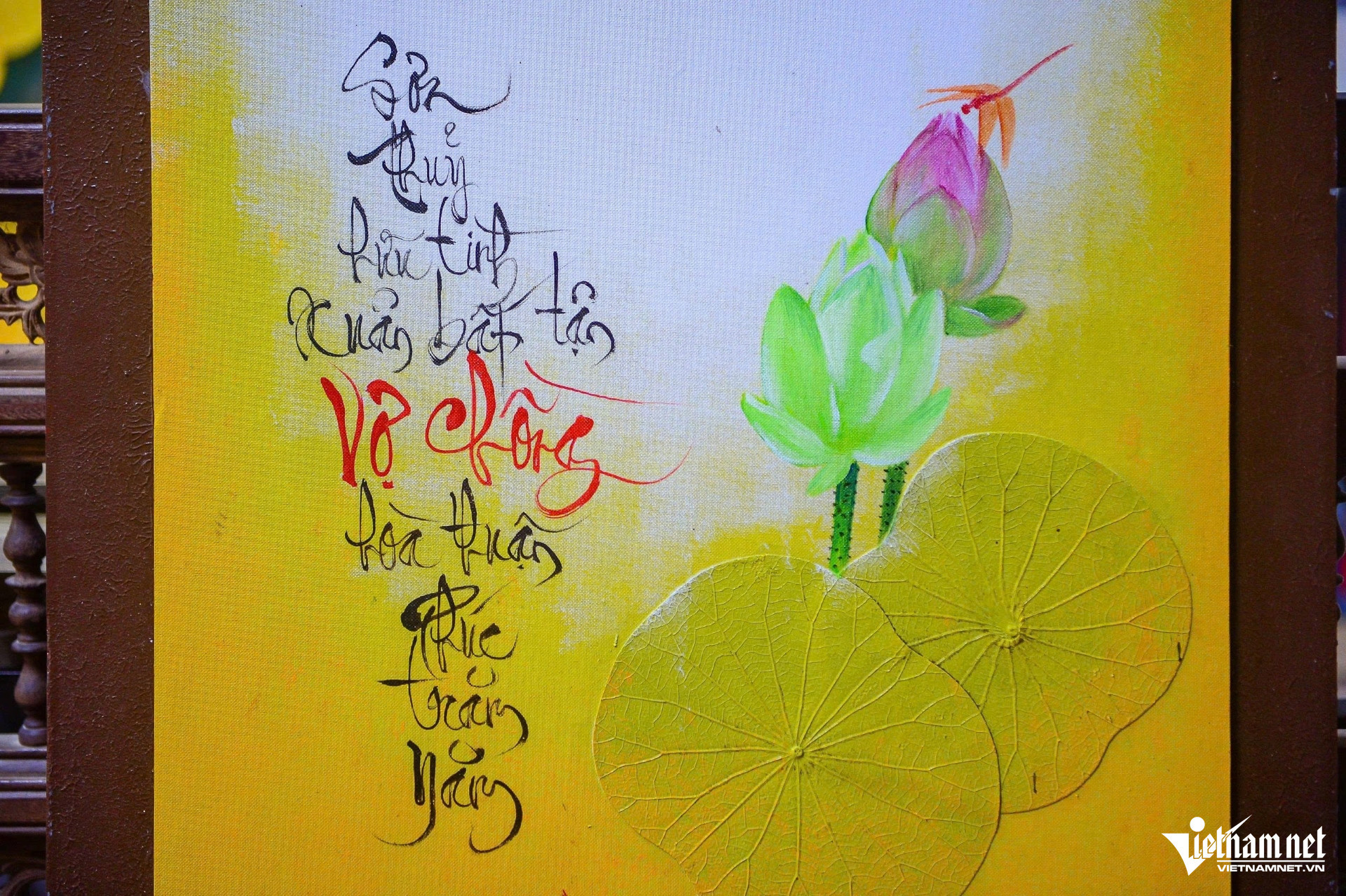
After harvesting, the lotus leaves are thoroughly cleaned of mud and dirt before undergoing several stages of anti-mold treatment, eventually becoming unusual natural “canvases” for his artwork.
What makes the material distinctive is that the leaf’s entire network of veins remains intact. Every lotus leaf has its own structure and pattern, creating a natural uniqueness that no other material can replicate.
“The day I held a fully treated lotus leaf in my hands, with its color and veins still intact, I was genuinely emotional,” Duong recalled. “It felt as though I had managed to preserve a piece of nature’s beauty that everyone had previously assumed would simply disappear with time.”
Once Duong had mastered the material, he and painter Hoang Tuyen began creating finished works.
Rather than simply pressing and drying the leaves for decoration, as seen in many products on the market, the pair chose to combine Vietnamese calligraphy with illustrated details, giving their work a distinctive identity.
According to Tuyen, the lotus embodies elegance and purity, meaning every brushstroke and detail must convey that spirit.
Each piece is created either around an individual customer’s idea or from the artist’s own inspiration, ensuring that no two works are identical.
Once completed, each artwork receives a specialized protective coating before being framed, helping preserve its quality for years.
Duong has also moved beyond conventional artworks, continuing to experiment with techniques that allow lotus leaves to transmit light.
By carefully removing the fleshy parts of the leaf while preserving its natural vein structure, he creates decorative lamps that cast a gentle glow and highlight the delicate architecture of the lotus leaf.
“What I want to create is not merely a beautiful picture, but a sense of peace when someone looks at it,” Duong said. “Every lotus leaf has a different shape and pattern of veins, just as every person has a different story. That is why I always try to make every piece truly one of a kind.”
Duong plans to broaden the use of lotus leaves in handicrafts, including non la, Vietnam’s traditional conical hats, as well as souvenirs and decorative products for homes, hotels, restaurants and homestays.
His ambition ultimately reaches beyond individual works of art.
“In the longer term, I hope products made from lotus leaves can become gifts carrying a Vietnamese identity,” Duong said. “So when people think of the lotus, they will remember not only a season of flowers, but also values and beauty that can be preserved long after that season has passed.”
Le Duong
.svg)
