 Vietnamnet.vn

 Podcast


From a childhood love of singing to a career in percussion
At the 2026 National Competition for Traditional Musical Instrument Solo and Ensemble Performances, artist Truong Thi Thu Ha, known professionally as Solo Trong - Thu Ha, impressed audiences with two original compositions: Tieng trong khai hoan (Triumphant Drums) and Thanh am trong Viet (Sounds of Vietnamese Drums).
She won second prize in the traditional percussion solo category, while Triumphant Drums received an Excellence Award from the Vietnam Musicians' Association.
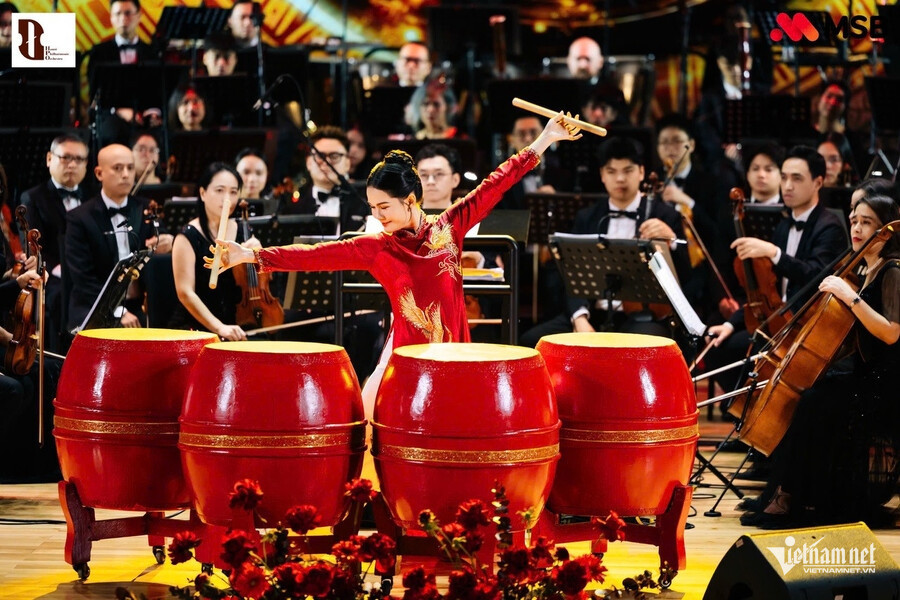
Percussionist Thu Ha hopes to continue sharing her love of traditional music and inspiring creativity among young artists. Photo courtesy of the artist.
Both compositions reflect the artistic direction she has pursued for years: taking drums beyond their familiar role of keeping rhythm and transforming them into solo instruments capable of conveying emotions and telling musical stories.
While Sounds of Vietnamese Drums draws on rhythmic percussion patterns from Cheo (Vietnamese traditional opera), combined with drumming techniques from Tuong (classical Vietnamese theater), Triumphant Drums builds on traditional ceremonial drumming, featuring a polyphonic structure and a musical dialogue between the solo part and other percussion instruments.
Few people know that Ha's journey into percussion began in a music talent class in the northern mountainous province of Lao Cai.
Born into a family with no artistic background, with a father serving in the military and a mother working in a local government office, Ha developed a love of singing at an early age. At 11, she successfully passed the province's entrance examination for gifted arts students.
After approximately 18 months of studying locally, she gained admission to the Hanoi Conservatory of Music, now the Vietnam National Academy of Music.
There, Meritorious Artist Nguyen Hong Thai recognized her musical talent and encouraged her to specialize in traditional drums. His advice opened an unexpected path for a young girl who had always imagined pursuing a career in singing.
At 13, Ha began studying drums at the intermediate level. However, after graduation, she was forced to switch to the tam thap luc, a traditional 36-string hammered dulcimer, because no university-level traditional percussion program existed at the time.
Her passion for drums, however, never faded.
After completing her studies, she was invited to remain at the academy as an intermediate-level percussion instructor, embarking on a journey that combined teaching and research to explore new possibilities for traditional percussion.
Fourteen years of pioneering traditional percussion education
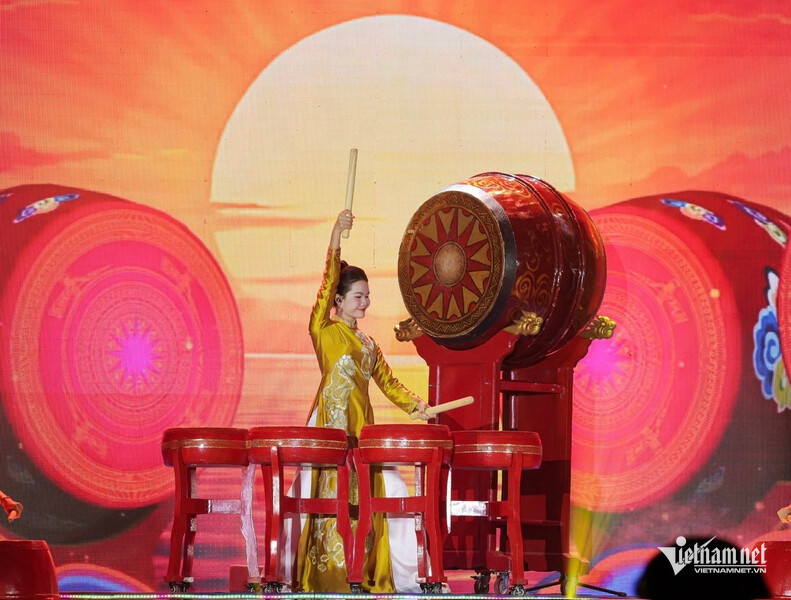
Percussionist Thu Ha showcases the diverse expressive qualities of Vietnamese traditional drums. Photo courtesy of the artist.
Ha faced considerable challenges during her early years as a teacher. She was young and a woman pursuing an instrument traditionally associated with men. At the time, she had just one student majoring in percussion and two others studying it as a secondary specialization.
What concerned her most was not the small number of students but the limited educational opportunities available to them.
With formal drum training available only at the intermediate level, students wishing to pursue a university degree had to switch to another instrument. Having experienced this herself, Ha understood the disadvantages they faced.
Determined to prevent her students from encountering the same obstacles, she began researching and developing teaching curricula and specialized educational materials.
Ha sought out traditional music practitioners to record and document established repertoires and drumming techniques. At the same time, she studied Western percussion techniques, composed new works and developed exercises for students.
After 14 years of dedicated teaching, research and composition, 2025 marked a major turning point in her career.
With guidance and support from the leadership of the Vietnam National Academy of Music and its Faculty of Traditional Music, Ha helped develop and successfully launch Vietnam's first university-level traditional percussion program.
Her efforts extended beyond the classroom, as she actively sought to create opportunities for students to gain practical experience.
In 2012, she founded the Trong Dong (Bronze Drum) Ensemble with five members, all of whom were her students.
Her initial ambition was simple: to give them more opportunities to practice, perform and gain stage experience.
From its original five members, the ensemble has grown to nearly 20 performers, participating in numerous artistic programs, cultural festivals, major domestic events and several international activities.
Bringing Vietnamese drums from heritage to the modern stage
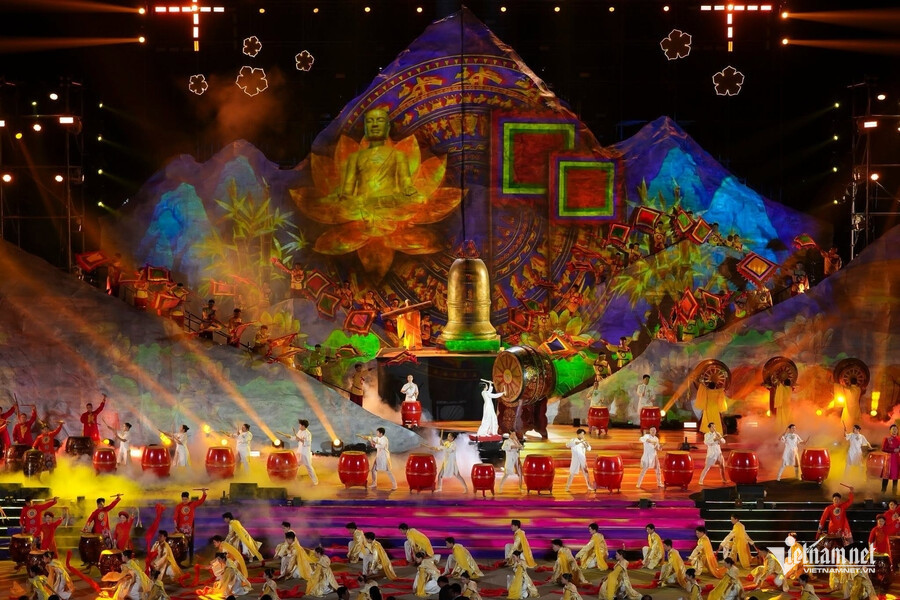
For Thu Ha, the greatest happiness comes from pursuing her passion, performing on stage and bringing the sounds of Vietnamese drums to domestic and international audiences. Photo courtesy of the artist.
For Ha, drums are more than musical instruments. They carry the cultural memories of the Vietnamese people.
From village communal houses, festivals and religious rituals to traditional Cheo and Tuong theater and water puppetry performances, each type of drum has its own function, playing techniques and expressive qualities.
Preserving traditional percussion, therefore, involves more than safeguarding instruments and age-old compositions. It also means protecting the techniques, musical language and cultural spirit passed down through generations.
However, Ha believes preservation does not mean confining traditional art to established performance formats. Artists must develop a deep understanding of their cultural identity to discover new forms of expression without losing its essential values.
This philosophy is reflected in her compositions and performances. She focuses on creating new works for traditional percussion, exploring the versatility of rhythm, tonal colors and emotional expression.
One particularly memorable experience was combining Vietnamese traditional drums with a symphony orchestra in Song Dakrong mua xuan ve (Spring Returns to the Dakrong River), performed at the Ho Guom Opera in Hanoi.
Ha has also observed that young people have not turned their backs on traditional music. When presented with high-quality programs, engaging productions and opportunities for hands-on experiences, many show genuine curiosity and enthusiasm.
She hopes cultural authorities, educational institutions, performing arts organizations and communities will work together to encourage composition, research and the training of young artists, while harnessing digital platforms to promote traditional music to domestic and international audiences.
Today, Ha remains committed to three main areas of her career: teaching, performing and composing. She continues to expand the repertoire and develop specialized teaching materials while creating opportunities for her students to participate in competitions and major artistic programs.
"Don't think of tradition as something that belongs to the past. Tradition is the foundation on which we build our future," she said.
Viet Ha

