 Vietnamnet.vn

 Podcast



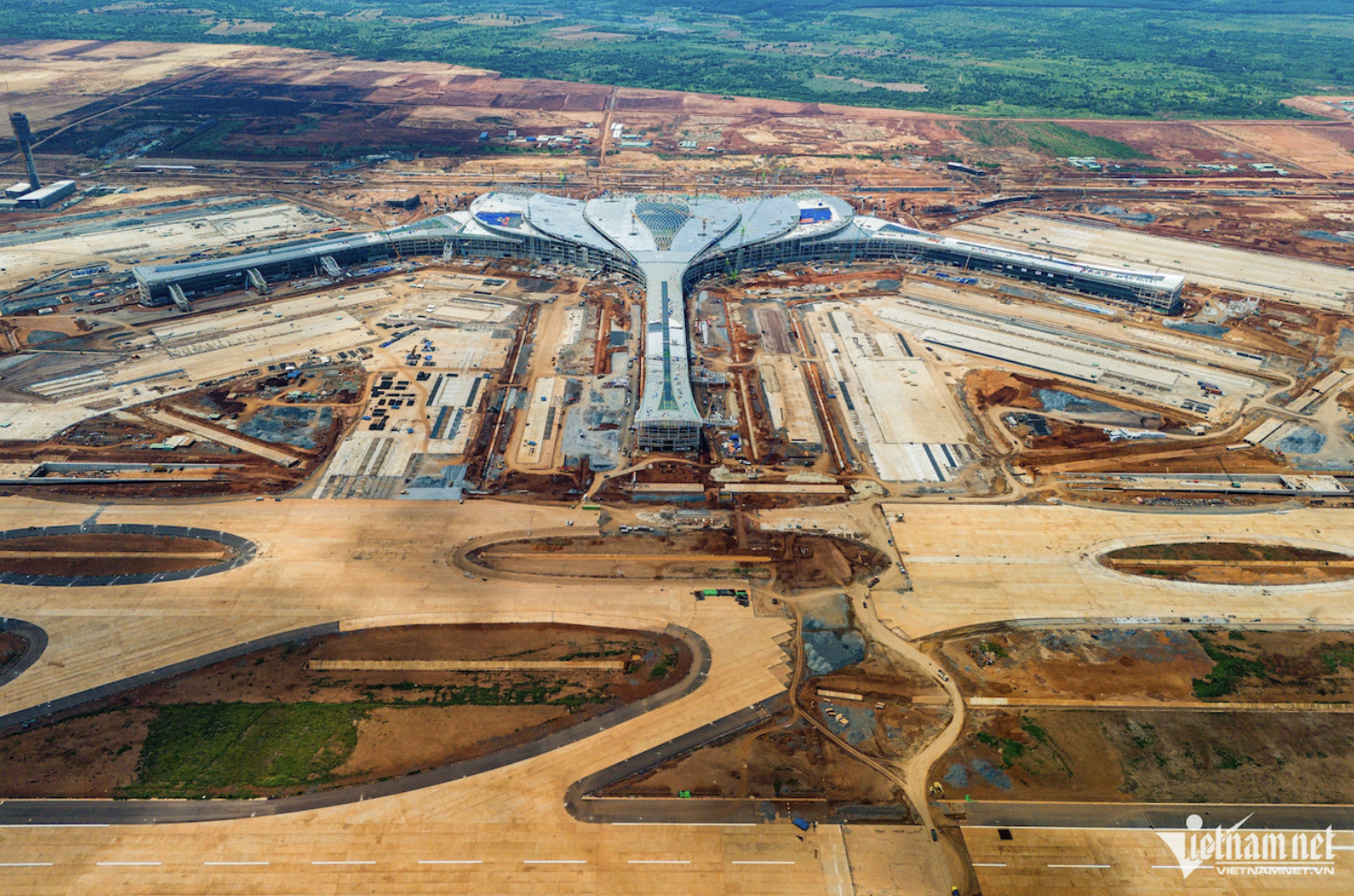
The global aviation industry is undergoing profound structural transformation. Modern airports are no longer merely transit points but have evolved into complex ecosystems known as “airport cities,” serving as engines of economic growth for entire regions and nations.
Within this context, human resources emerge as a decisive factor for Long Thanh. With tens of thousands of jobs to be filled, recruitment now demands a vision that goes beyond traditional human resource management.
The scale of workforce demand for Long Thanh is unprecedented in Vietnam’s civil aviation history. It is estimated that the first phase alone will require around 14,000 workers. Recently, the Airports Corporation of Vietnam (ACV) launched a recruitment drive targeting approximately 3,000 positions, including about 1,400 core roles directly under ACV.
The recruitment criteria are highly specialized, with strict age limits - typically under 30 or 35 depending on the position. This reflects a preference for a young, physically fit workforce adaptable to digital technologies.
However, from a risk management perspective, such constraints narrow the talent pool and may lead to underutilization of experienced workers currently serving at Tan Son Nhat airport.
Another major barrier lies in geography. The airport’s distance from existing urban centers presents significant challenges, including long commuting times, limited nearby urban amenities, and high transportation costs between central Ho Chi Minh City and Dong Nai province.
Costly lessons from global airports
The global aviation industry offers numerous cautionary examples where workforce challenges were underestimated.
In the US, Denver International Airport provides a classic case. In the 1990s, the airport implemented a fully automated baggage handling system but failed to adequately train ground technical staff to operate it. The result was a budget overrun of US$560 million and daily losses of about US$1.1 million for the city.
Even today, with a workforce of 40,000, Denver continues to struggle with its remote location. Traffic congestion has discouraged employees, forcing the airport to invest US$1.2 million in a transportation demand management plan and subsidized public transit for staff.
In Europe, post-Covid disruptions exposed similar vulnerabilities. Major airports such as Manchester and Heathrow faced prolonged chaos after laying off tens of thousands of workers during the pandemic. When demand rebounded, they were unable to rehire quickly due to background check requirements and low starting salaries, around £16,000 per year.
Cost-cutting through workforce reduction ultimately created systemic weaknesses. When technical systems malfunctioned, operations were severely disrupted due to a lack of backup personnel capable of manual intervention.
Meanwhile, South Africa’s aviation sector has suffered from a “brain drain,” as air traffic control experts are recruited by Gulf airports such as Dubai and Doha, attracted by tax-free salaries, housing support of up to 30 percent of base pay, and superior transportation benefits.
Airport city solutions and local integration
In contrast, successful models worldwide share a common approach: treating human resources not as operational costs but as strategic partners, supported through housing, transport, and integration with local communities.
Beijing Daxing International Airport stands out as a leading example. Located 46km from central Beijing, instead of displacing 20,000 rural residents, authorities developed large-scale social housing, offering subsidized apartments of up to 115 square meters. A comprehensive training program transformed more than 11,439 farmers into airport workers, ensuring a stable workforce without the strain of long commutes.
In Australia, Western Sydney International Airport established a legal requirement from the outset that at least 30 percent of construction workers must be recruited locally. In practice, the figure exceeded 50 percent. Early partnerships with vocational institutions enabled the airport to train and employ local labor, rather than relying on workers from distant urban centers.
Closer to home, Singapore’s Changi Airport has redefined transport as a corporate responsibility rather than a burden on employees. Ground service companies collaborate with digital bus platforms to provide door-to-door transport, ensuring safety and convenience for workers on late-night shifts.
What is the solution for Long Thanh?
Drawing from both domestic experience and international precedents, attracting 14,000 workers to Long Thanh requires a fundamental shift from “mechanical recruitment” to a comprehensive workforce ecosystem strategy.
First, eliminate transportation barriers. ACV should remove all parking fees for airport staff, regardless of employer, and implement high-quality shuttle bus services operating 24/7 from Ho Chi Minh City and Bien Hoa, free of charge.
Second, prioritize social housing. Dong Nai is already developing large-scale social housing projects in Long Thanh and Nhon Trach districts. Local authorities should allocate a dedicated “aviation housing quota” within these projects for airport employees, combined with rental support or low-interest home loans.
Third, build a local workforce ecosystem. Instead of relying on labor from Ho Chi Minh City, ACV and other aviation entities such as the Vietnam Air Traffic Management Corporation, Vietnam Airlines, and Vietjet should collaborate with educational institutions in Dong Nai to establish a regional aviation training center, preparing technical personnel from an early stage.
At the same time, to offset the lack of experience among younger workers, a structured rotation program should bring seasoned experts from Tan Son Nhat to mentor new staff, ensuring operational safety during the initial years.
Clearly, Long Thanh International Airport marks a new chapter in Vietnam’s infrastructure development. Yet runways and digital systems cannot operate on their own.
Recruitment for an airport located far from the urban core demands a vision that transcends traditional human resource management. Removing mobility barriers, adopting the airport city model, and ensuring housing, transport, and clear career pathways for workers are essential.
Only when employees are truly treated as strategic partners can Long Thanh take off safely and sustainably in Vietnam’s new era of growth.
Nguyen Phuoc Thang (Hoa Binh University)
.svg)
