 Vietnamnet.vn

 Podcast



Vietnam is focusing heavily on what many consider the biggest bottleneck in food safety management: a fragmented oversight model divided among three ministries. But looking deeper, the number of agencies involved is only the surface of a far more complex problem.
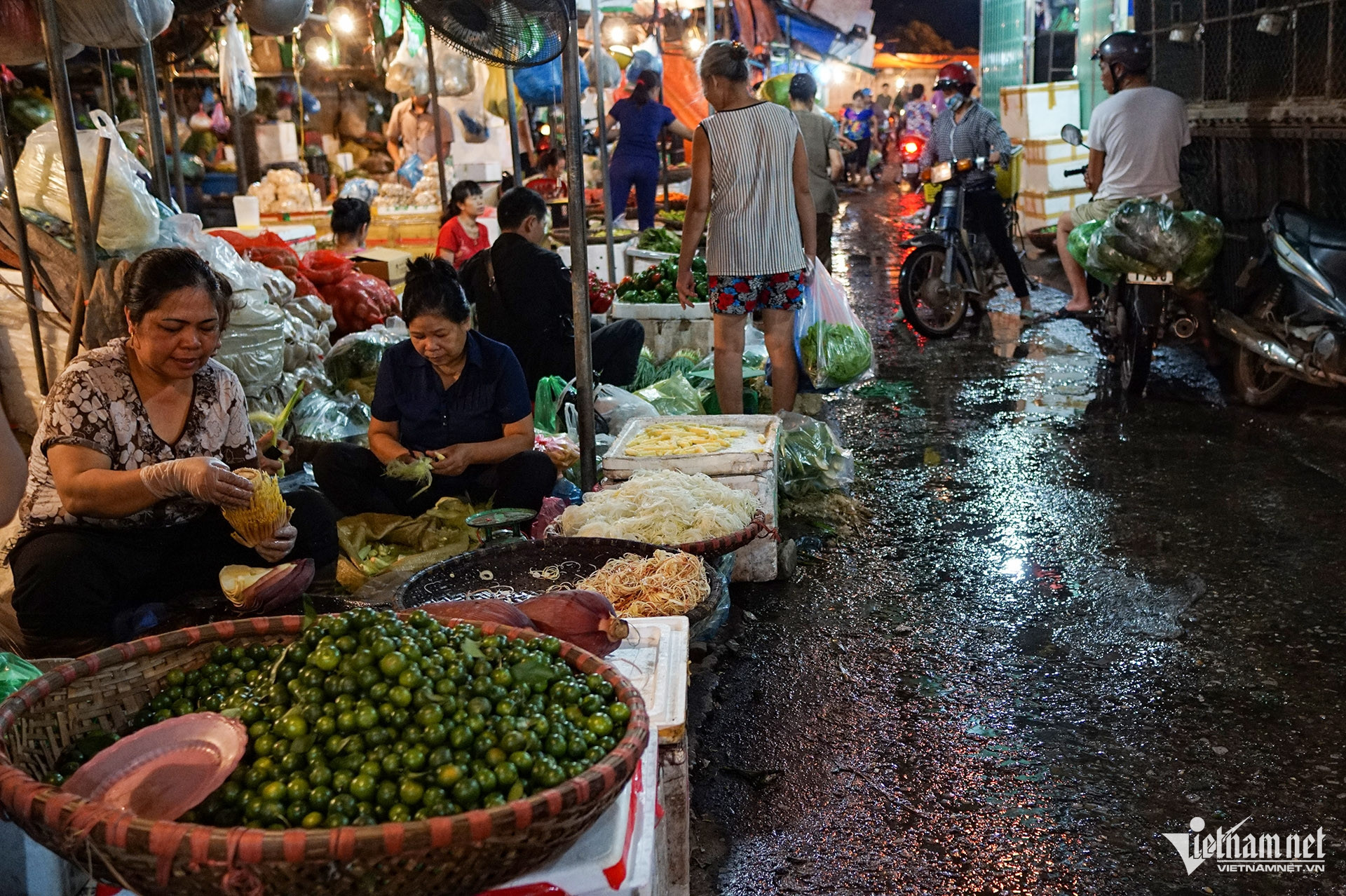
Illustrative photo: Le Anh Dung
More than a century ago, Ivan Pavlov’s famous experiment demonstrated a classic conditioned reflex: simply seeing or smelling delicious food could trigger digestive responses in anticipation of eating. Today, however, that instinctive sense of pleasure is increasingly replaced by anxiety.
Faced with an appealing meal, many people no longer think first about taste, but instead wonder whether the meat contains pathogens or whether the vegetables carry chemical residues.
Statistics from the first quarter of 2026 in Vietnam paint a troubling picture. The country recorded 36 food poisoning incidents, including nine large-scale cases affecting more than 30 people each. Weaknesses in supply chain control have become increasingly visible.
The need for a single authority
According to the Food and Agriculture Organization of the United Nations (FAO) and the World Health Organization (WHO), fragmented multi-sector management often leads to overlapping inspections, divided authority and regulatory gaps, where some businesses face repeated checks while others escape oversight entirely.
By contrast, a unified food safety authority can react much faster, issuing immediate product recalls or quarantines without bureaucratic delays between ministries.
Singapore’s Food Agency (SFA) is often cited as a successful example. Despite importing around 90% of its food supply from 170 countries, Singapore has maintained tight supply chain control through its “three food baskets” strategy.
International experience suggests consolidating authority can improve effectiveness. But New Zealand’s handling of the 2013 Fonterra false botulism contamination crisis also offers a cautionary lesson.
The deeper issue emerged after New Zealand merged its food safety agency into a larger ministry tasked with promoting agricultural production and exports. When the crisis erupted, the agency faced criticism for appearing more concerned with protecting commercial reputation than prioritising public health.
The lesson for Vietnam is clear: creating a new institution is only the outer shell. The real challenge lies in maintaining complete independence in health risk assessment, free from economic growth pressures or export targets.
A unified authority should therefore function as an independent food safety agency rather than an extension of industrial or trade policy.
The problem of unrealistic standards
Even if Vietnam establishes a single specialised food safety authority, the system will remain ineffective if the informal economy is left largely unmanaged.
Current regulations still struggle to effectively supervise millions of household businesses, small-scale producers, street vendors and market traders. In many cases, food safety “commitments” signed by businesses are little more than paperwork stored in drawers without meaningful oversight.
This problem is not unique to Vietnam.
Research by the FAO in African and Latin American countries found that food safety systems often fail when governments attempt to impose Western-style hygiene and technology standards onto traditional markets.
When standards become excessively high and compliance costs too expensive, small traders are pushed underground, creating illegal operations and increasing opportunities for bribery.
Rather than criminalising informal businesses or imposing rigid standards immediately, experts suggest adopting a gradual compliance roadmap.
Local officials should shift from acting purely as inspectors to becoming support providers who guide vendors through practical manuals and simple hygiene measures, such as separating raw and cooked food preparation tools.
At the same time, governments must invest in improving sanitation infrastructure at traditional markets.
Moving from licensing to digital traceability
Another major weakness lies in Vietnam’s overreliance on initial licensing procedures while post-inspection enforcement remains relatively weak.
This has allowed legal certificates to become a “shield” behind which contaminated meat or unsafe food products can still enter schools and markets.
In developed countries, post-market surveillance forms the backbone of quality control systems.
The key to effective oversight is data. Without reliable supply chain data, traceability becomes impossible.
When transactions at wholesale markets or school suppliers still rely heavily on handwritten records without electronic documentation, tracing the source of contamination during an incident becomes nearly impossible.
Vietnam could learn from the European Union’s Regulation 178/2002, which established the “one step back, one step forward” principle as a mandatory legal obligation for all businesses, regardless of size.
Companies must accurately record where raw materials come from and where products are sold. Digital invoice systems, crop area identification codes and blockchain technology could become critical tools in protecting consumers from unsafe food.
If border control systems fail to receive electronic risk analysis certificates from exporters, customs clearance should automatically be suspended.
No law works without clean enforcement
Brazil’s 2017 “rotten meat” scandal, in which major meat corporations bribed inspectors to export spoiled products, demonstrated that no legal framework can function if enforcement agencies themselves become compromised.
Any new food safety law in Vietnam therefore requires strict cross-monitoring mechanisms and mandatory staff rotation in sensitive inspection positions throughout the supply chain.
At the same time, food safety culture will only truly change when governments create economic incentives that reward compliance and severely punish violations.
China’s system allowing consumers to sue companies and claim compensation up to 10 times product value has effectively turned millions of citizens into unpaid food safety inspectors, creating enormous pressure on businesses to comply.
Singapore’s demerit-point system and permanent licence revocation for hygiene violations have similarly created strong deterrence. Food businesses are required to publicly display hygiene ratings at storefronts, allowing consumers to directly influence business survival through their purchasing choices.
Vietnam has the capacity to build an effective food safety system through a specialised independent authority, stronger oversight of informal supply chains, digital traceability and tougher anti-corruption measures.
Only by controlling the supply chain can society truly safeguard public health and the well-being of future generations.
Nguyen Phuoc Thang (Hoa Binh University)
.svg)
