 Vietnamnet.vn

 Podcast



On the occasion of the 101st anniversary of Vietnam Revolutionary Press Day (June 21, 1925 - June 21, 2026), VietNamNet respectfully introduces an article by Party General Secretary and State President To Lam titled "Vietnam’s Revolutionary Press in the Digital Age."

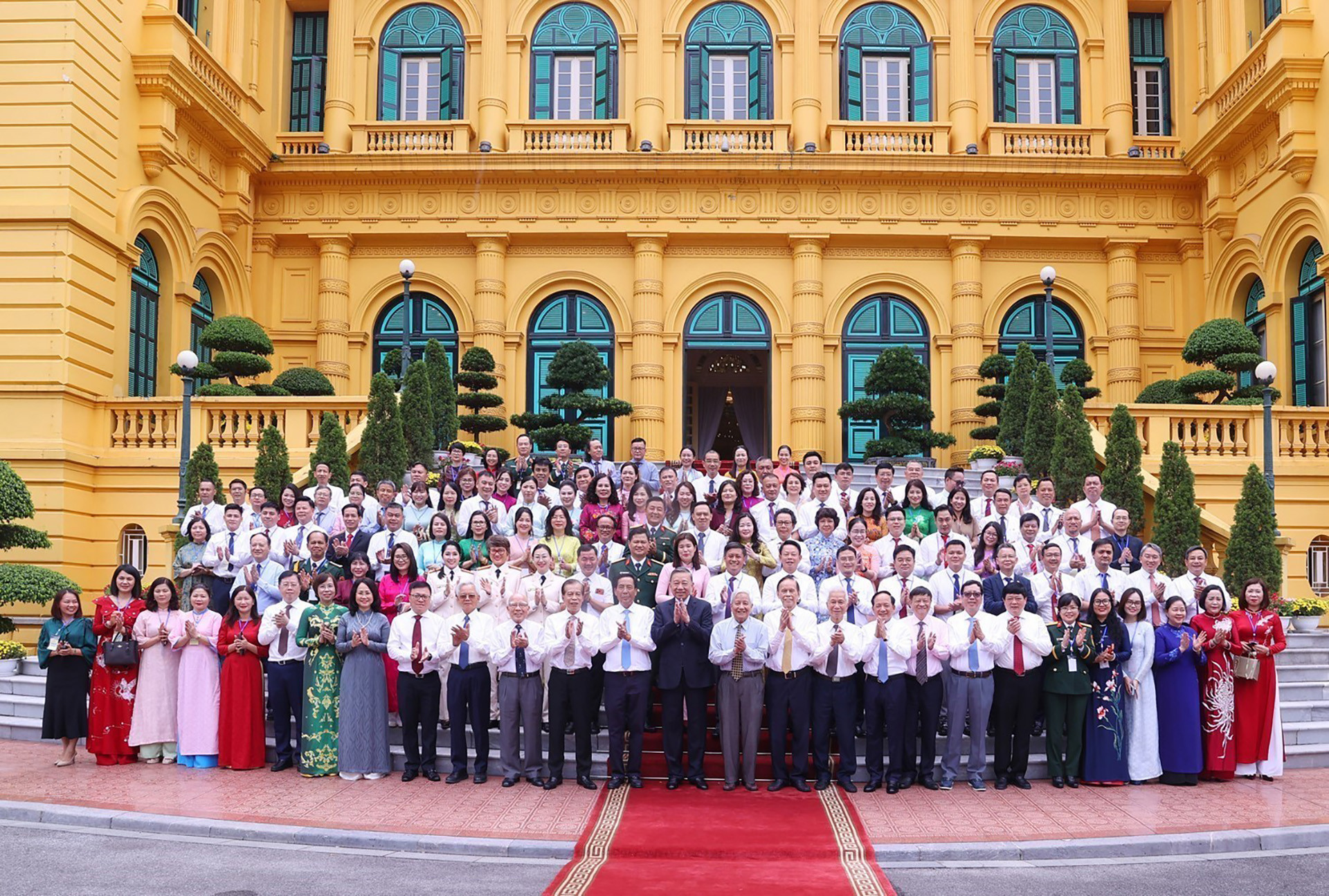
Party General Secretary and State President To Lam speaks during a meeting with outstanding journalists on June 16. Photo: VNA
More than a century after accompanying the nation through its development journey, Vietnam’s revolutionary press is entering a fundamentally new stage, marked by profound changes across nearly every aspect of its operation.
Digital space has become an essential part of everyday life. Digital technologies, big data, artificial intelligence, social media and cross-border communication platforms have transformed the way information is created, distributed, consumed and verified.
Today, people study, work, communicate, trade, entertain themselves, express opinions and engage in social issues through online platforms. The rapid and diverse flow of information creates tremendous opportunities for knowledge dissemination, social democracy and innovation.
Major Party policies, new government initiatives and positive developments can reach tens of millions of people simultaneously through multiple channels and formats. Technology has brought journalism closer to the public while enabling faster feedback.
However, the online environment has also made the information ecosystem more complex, increasingly vulnerable to emotional reactions, misinformation, algorithmic manipulation and deliberate information campaigns.
Fake news, half-truths, misleading content, fabricated images and audio recordings, AI-generated materials, copyright violations, cyberattacks and data theft are becoming increasingly sophisticated. False information can spread widely before the truth has time to be verified.
Manipulated or selectively edited statements can damage the reputation of individuals and organizations and may even undermine public confidence in Party and State policies.
Digital transformation must be a comprehensive revolution
In the new communications order, journalism no longer enjoys a near-monopoly on news distribution.
By the end of 2025, Vietnam had approximately 85.6 million internet users, equivalent to 84.2% of the population, along with around 79 million social media user identities. According to the latest statistics, Vietnamese users maintain roughly 110 million accounts on domestic social media platforms and approximately 203 million accounts on foreign platforms.
This digital environment offers journalism an unprecedented opportunity to reach wider audiences while simultaneously forcing it to compete directly with an enormous volume of content produced every hour by platforms and individual users.
In digital space, almost anyone can publish information. Social media accounts can influence specific communities and audiences.
Yet this transformation does not diminish the role of revolutionary journalism. On the contrary, when information becomes overwhelming, society increasingly needs trustworthy institutions capable of determining what is true, what remains unverified and what reflects little more than collective emotions or deliberate manipulation.
This requires professionalism, serious commitment to journalistic standards and resilience under pressure. Journalism must remain the place people turn to when they need reliable verification, not an institution chasing trends.
Society needs trusted sources to understand the truth. Citizens need to know what happened, why it happened, who is affected, where responsibility lies and which solutions are grounded in evidence.
Digital space also requires journalism rich in data, diverse in content, innovative in presentation and deep in policy analysis.
Many contemporary issues - from digital transformation and green transition to administrative reform, social welfare policies and global economic shifts - cannot be fully understood through fragmented news updates alone.
Therefore, journalism’s responsibility is not merely to be faster, but first and foremost to be more accurate, more insightful and more useful.
Against this backdrop, digital transformation in journalism cannot simply mean launching additional websites, opening social media accounts or purchasing modern equipment.
It must represent a comprehensive transformation encompassing leadership thinking, newsroom structures, production processes, data governance, content distribution, audience measurement, media economics and professional culture.
Digital journalism is not traditional journalism placed on a new platform. It is a fundamentally different way of organizing and operating in a new environment.
Within the newsroom, every piece of journalism should be viewed as an information product with clearly defined objectives. Every format must adhere to the same standards: accuracy, humanity, verification and responsibility.
News organizations should avoid being rigorous on their main platforms while becoming careless on secondary channels. The more platforms journalism occupies, the more consistent its standards must be.
In the digital era, data has become a pillar of journalism.
Data is not merely numbers. It is the foundation of verification and a tool for building and presenting more convincing and comprehensive journalism.
Major and reputable news organizations around the world invest heavily in data infrastructure and dedicate significant human resources to data operations.
When data is properly developed and managed, journalism becomes more persuasive and gains the ability to identify emerging issues at an earlier stage.
Another major challenge concerns maintaining autonomy in relation to cross-border platforms.
Journalism must reach audiences wherever they are present, but it cannot become dependent on external algorithms.
If news organizations focus solely on page views and recommendation systems, they risk losing audience data, distribution control, institutional identity and resilience when algorithms change.
Mastering digital space means leveraging global platforms while simultaneously building proprietary channels, loyal communities, independent datasets and trusted brands.
For this reason, national information sovereignty must be understood more comprehensively.
Revolutionary journalism must serve as a leading force in protecting that sovereignty.
Protecting information sovereignty does not mean isolation. Vietnam needs a strong digital international media presence that is multilingual, multimedia and capable of communicating Vietnam’s messages to the world through modern language while preserving national identity.
The country’s development achievements, cultural heritage and independent, self-reliant, peaceful and cooperative foreign policy should be presented through compelling and data-driven journalism.
To fulfill this mission, journalism requires sustainable resources.
Digital media economics is not incompatible with the objectives and principles of revolutionary journalism. A press sector lacking resources will struggle to invest in technology, protect copyrights, train personnel and retain talented professionals.
At the same time, media economics must serve journalism’s mission rather than driving sensationalism, clickbait, invasions of privacy or the commercialization of political and social information.
Journalism needs new revenue streams from digital subscriptions, licensing, data services and specialized content products.
Without a healthy digital business model, news organizations will find it difficult to sustain investments in quality reporting, investigative journalism, analysis, fact-checking and copyright protection.
Every journalist must transform revolutionary traditions into a driver of innovation
Copyright protection in both digital and AI environments must also be taken seriously.
Journalistic content is the product of creative work, reporting, verification, editing, financial investment and legal responsibility.
Unauthorized copying, editing, aggregation, exploitation and commercialization weaken the economic foundations of journalism.
Protecting copyright means protecting honest labor and the quality of information in society.
Ultimately, the decisive factor remains people.
Every strategy and policy depends on human capacity.
Journalists in the digital era must know how to work with data, digital tools, social media, open-source intelligence and information security standards.
The more tools available, the greater the need for professional judgment and integrity.
Journalists must avoid publishing before verifying facts or allowing social media to dictate editorial decisions.
No journalist should sacrifice credibility for higher traffic.
Before publishing any journalistic work, every journalist should ask three questions: Is it true? Is it necessary? Is it beneficial to society?
Newsroom leaders must also evolve.
Editors-in-chief in digital newsrooms are no longer merely content gatekeepers. They must shape strategies involving products, data, audiences, technology and human resources.
News organizations need a new workplace culture characterized by professionalism, rigorous verification, responsiveness, openness to innovation and willingness to experiment without compromising standards.
Continuous professional retraining must become a permanent responsibility, focusing on digital verification, data security, multi-platform journalism, AI ethics and compliance with intellectual property laws.
With the Journalism Law No. 126/2025/QH15 set to take effect on July 1, 2026, the development of a comprehensive legal framework for digital journalism has become increasingly important.
The regulatory environment must protect lawful reporting activities, encourage innovation and provide a framework for digital newsrooms, digital media economics, data journalism, copyright protection and responsible AI use.
At the same time, journalistic discipline must remain strict, with violations involving misinformation, ethical misconduct or abuse of journalism for personal gain addressed promptly.
An urgent task is the development of national-scale fact-checking capabilities.
Stronger coordination is needed among regulators, leading news organizations, technology experts, educational institutions, platform companies and the broader community to identify, verify, warn against and rebut fake news, fabricated statements, counterfeit government communications and organized disinformation campaigns.
Such a network must operate quickly, follow clear procedures and rely on data and evidence to persuade the public.
Throughout this process of transformation, the public must remain at the center.
Today’s digital audiences do not simply consume information. They regularly respond, ask questions, conduct their own verification, offer feedback, contribute data and demand greater transparency from journalism.
News organizations must listen carefully without becoming captive to every passing emotion. They should respect debate while refusing to tolerate harmful information.
To engage younger audiences, journalism may adopt new languages, formats and platforms, but it must never lower professional standards.
Vietnam’s revolutionary press in the digital era must therefore harmonize political conviction with technological capability, revolutionary ideals with innovative thinking, determination with humanity, and national responsibility with global integration.
Mastering digital space cannot be achieved through slogans alone. It must begin within every newsroom, every verification process, every data repository, every journalistic product, every training program and every interaction between journalists and the public.
On the occasion of Vietnam Revolutionary Press Day, I hope every news organization and every journalist will transform the revolutionary tradition into a source of innovation.
News organizations should become modern digital newsrooms, centers of data and knowledge, and trusted institutions for the people.
Journalists should continue serving as soldiers on the ideological, cultural and digital information front, possessing strong political conviction, ethical integrity, humanistic values and technological expertise.
With this orientation, I firmly believe Vietnam’s revolutionary press will continue making worthy contributions to serving the nation and the people in the digital age.
.svg)
