 Vietnamnet.vn

 Podcast



Tran Tuyen
Perched in An Giang province at about 710 meters above sea level, Nui Cam - also known as Thien Cam Son - is the highest peak in the Seven Mountains range. This dramatic mountain ridge is one of the Mekong Delta’s rare highlands, drawing visitors with its natural beauty and spiritual significance.
Yet beyond its temples and treks, travelers who venture here often seek something unexpected - a local delicacy known simply as cua da nui, or mountain stone crab.
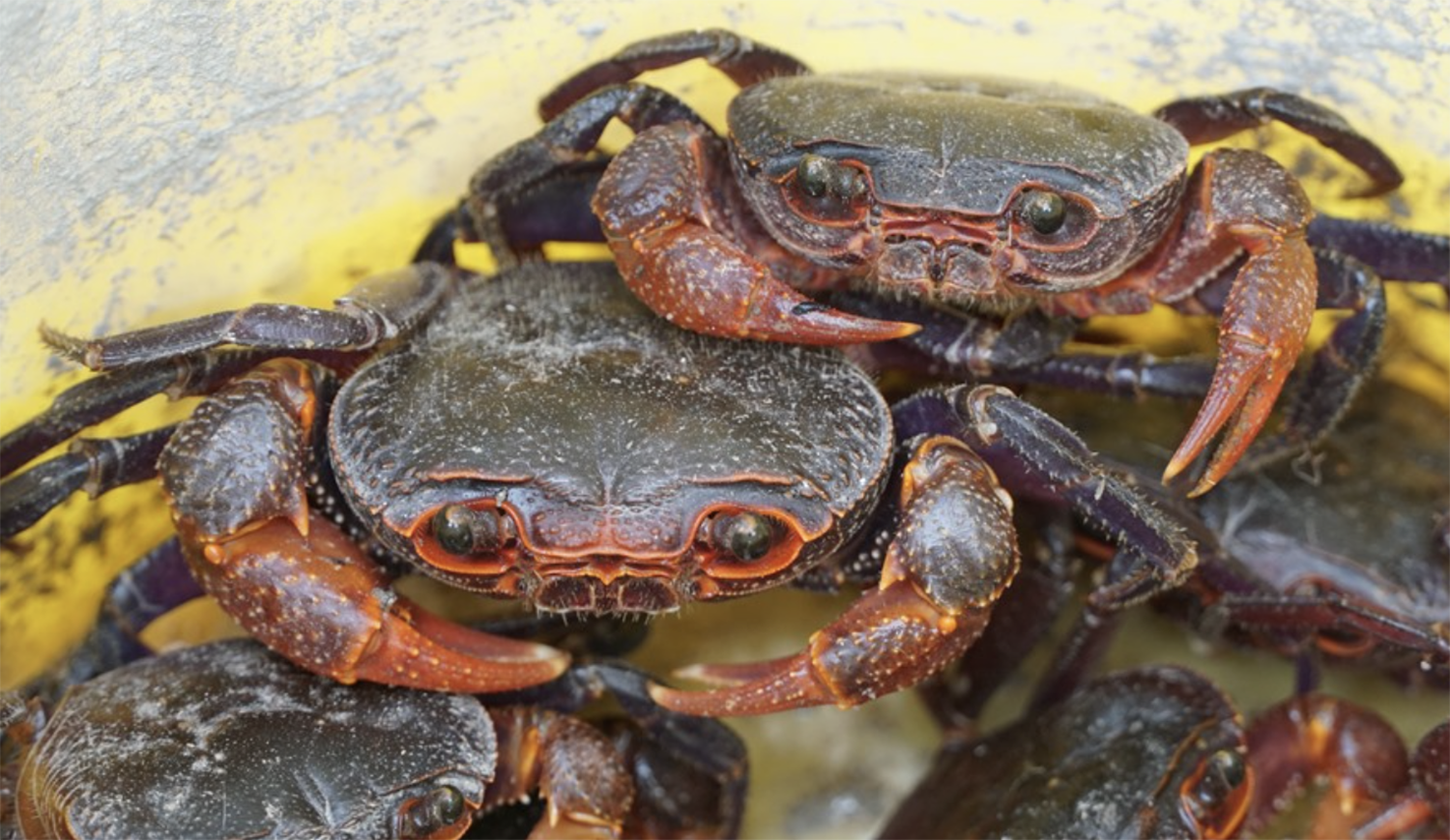
Unlike the more common rice field crabs, these mountain crabs are wild, agile, and notoriously hard to catch. With reddish-purple shells and a combative temperament, they live tucked inside stone crevices and along stream banks.
Locals say these crabs are quick, clever, and “always ready for a fight.”
According to Tran Van Sy, a 46-year-old resident of Tinh Bien ward, hunting these crabs is nothing like fishing or trapping.
“You can’t just grab them by hand,” he explained. “We use a special kind of rod - made from bamboo or thin rattan, about a meter long. At the tip, we tie a clump of elastic bands. That’s our bait.”
The key, Sy says, is the dance.
“You have to wiggle the rubber strands just right, near the mouth of the crab’s den. If you’re lucky, the crab thinks it’s a moving insect and grabs on. Then you give a slight tug - as if the prey is escaping - and the crab bites down harder. That’s when you strike, pulling it out in one quick move.”
It’s not just strength - it’s all about focus, timing, and technique.
And even then, success is never guaranteed.
The mountain crabs feed on forest leaves and insects, giving them a naturally sweet flavor unlike any other crustacean. They thrive in the rainy season, when the forest is rich and moist, and larger adults emerge with deep violet shells and distinctive tufts of fur.
In the past, crab hunting was a modest but reliable source of income for villagers living along the mountain's base. A good day could yield 3 to 5 kilograms - enough to earn several million dong.
Today, however, crab numbers have dropped sharply, forcing prices to rise.
Buyers now pay anywhere between 200,000 to 300,000 VND per kilogram (about $8–12), depending on size and freshness. But even with cash in hand, the crabs aren’t always available.
“In most cases, customers have to place orders in advance,” Sy said. “We only go up when there are requests - and we still might not find enough.”
What makes these mountain crabs special isn’t just their rarity or flavor - it’s the traditional methods used to catch them, passed down through generations. It’s a disappearing craft in a region changing fast.
And when they are caught, the culinary possibilities are endless.
The crabs can be steamed, stir-fried with tamarind, salted, or cooked with lemongrass. No matter the preparation, their tender meat and woodsy aroma leave a lasting impression.
For many visitors, one taste is enough to spark a lifelong craving.
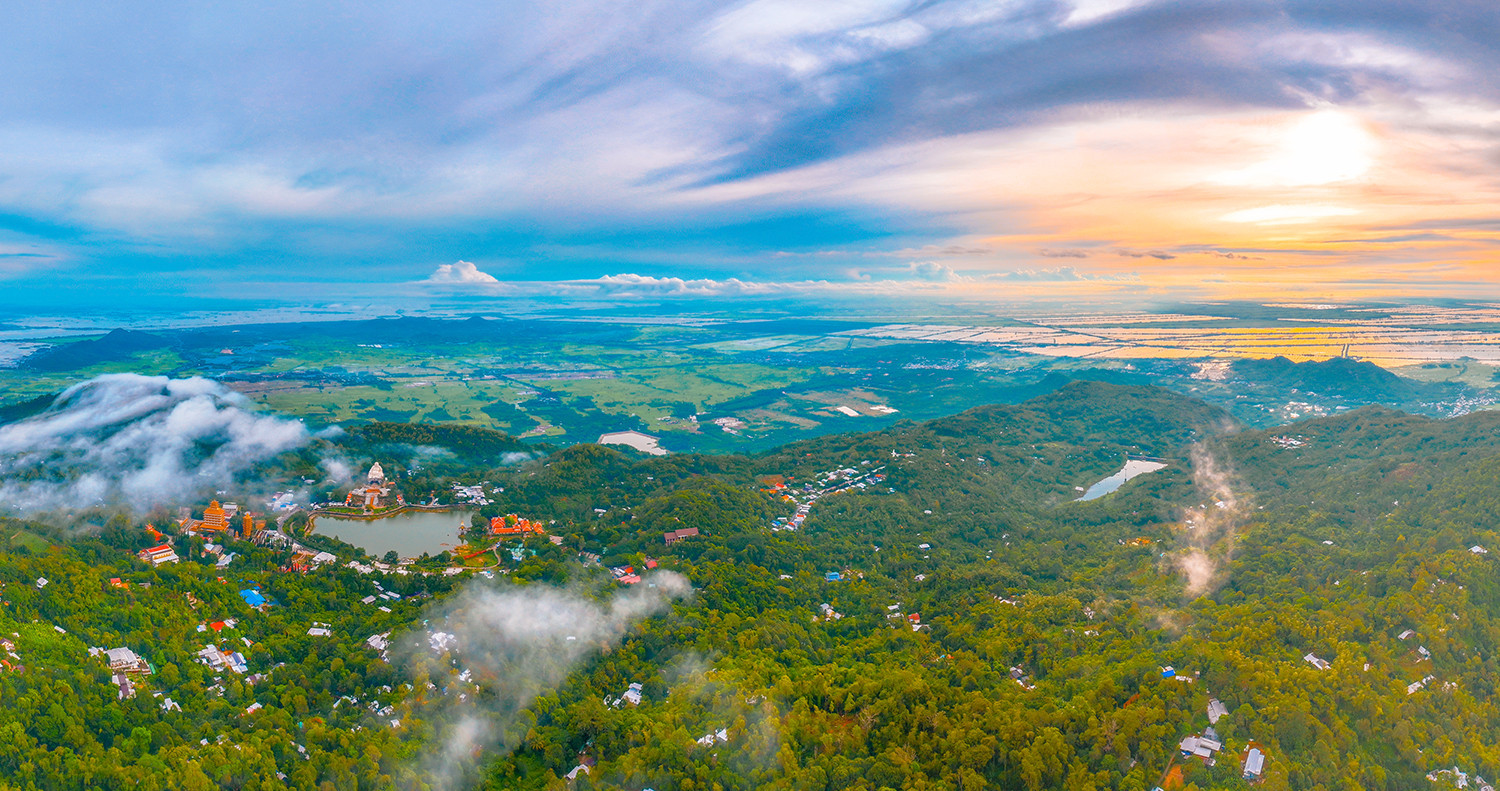
Nui Cam - also known as Thien Cam Son - is the highest peak in An Giang's Seven Mountains range. Photo: Phuong Vu
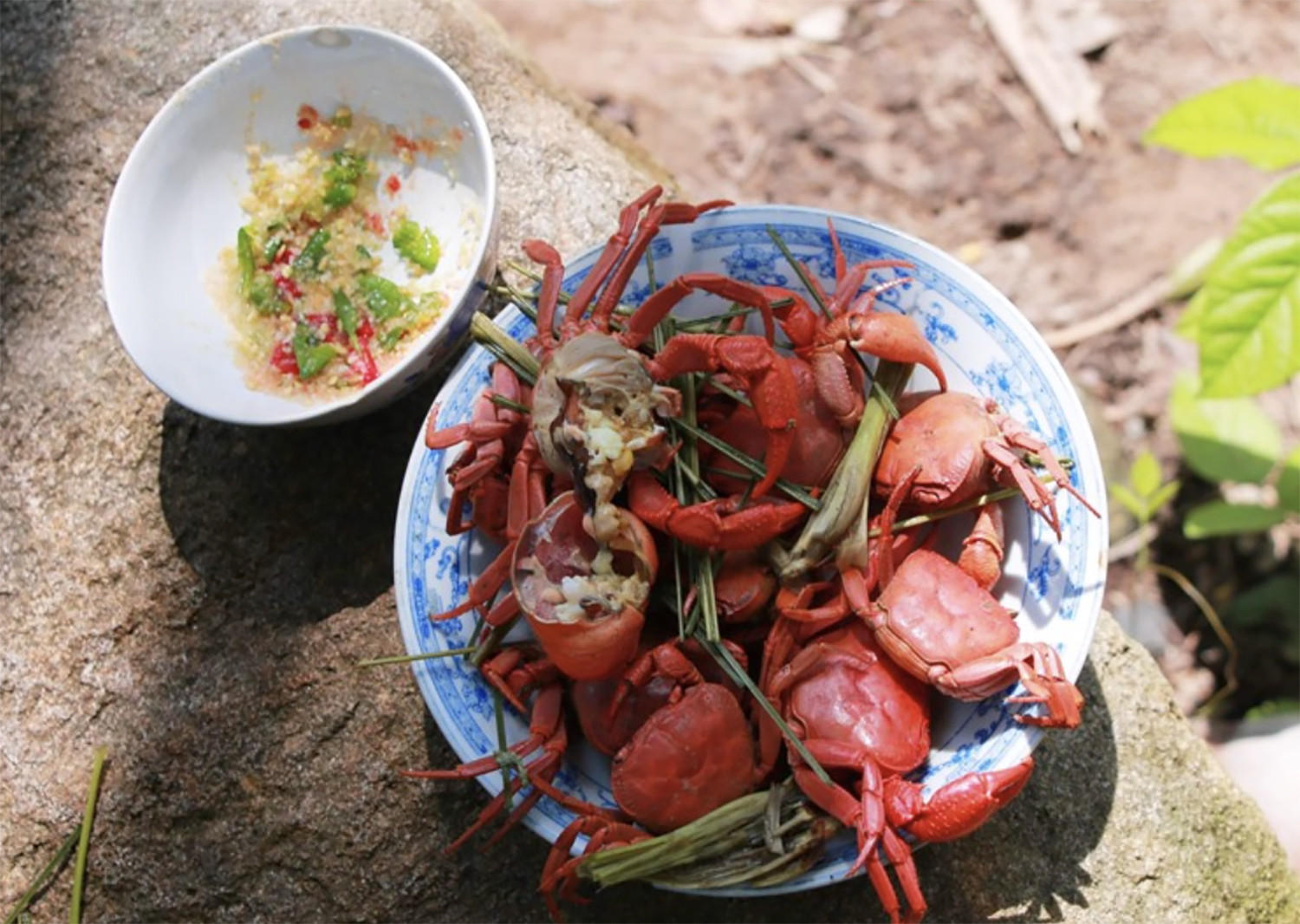
Crimson-hued and fierce, mountain crabs live in stone crevices near Nui Cam’s forest streams. Photo: T.Q
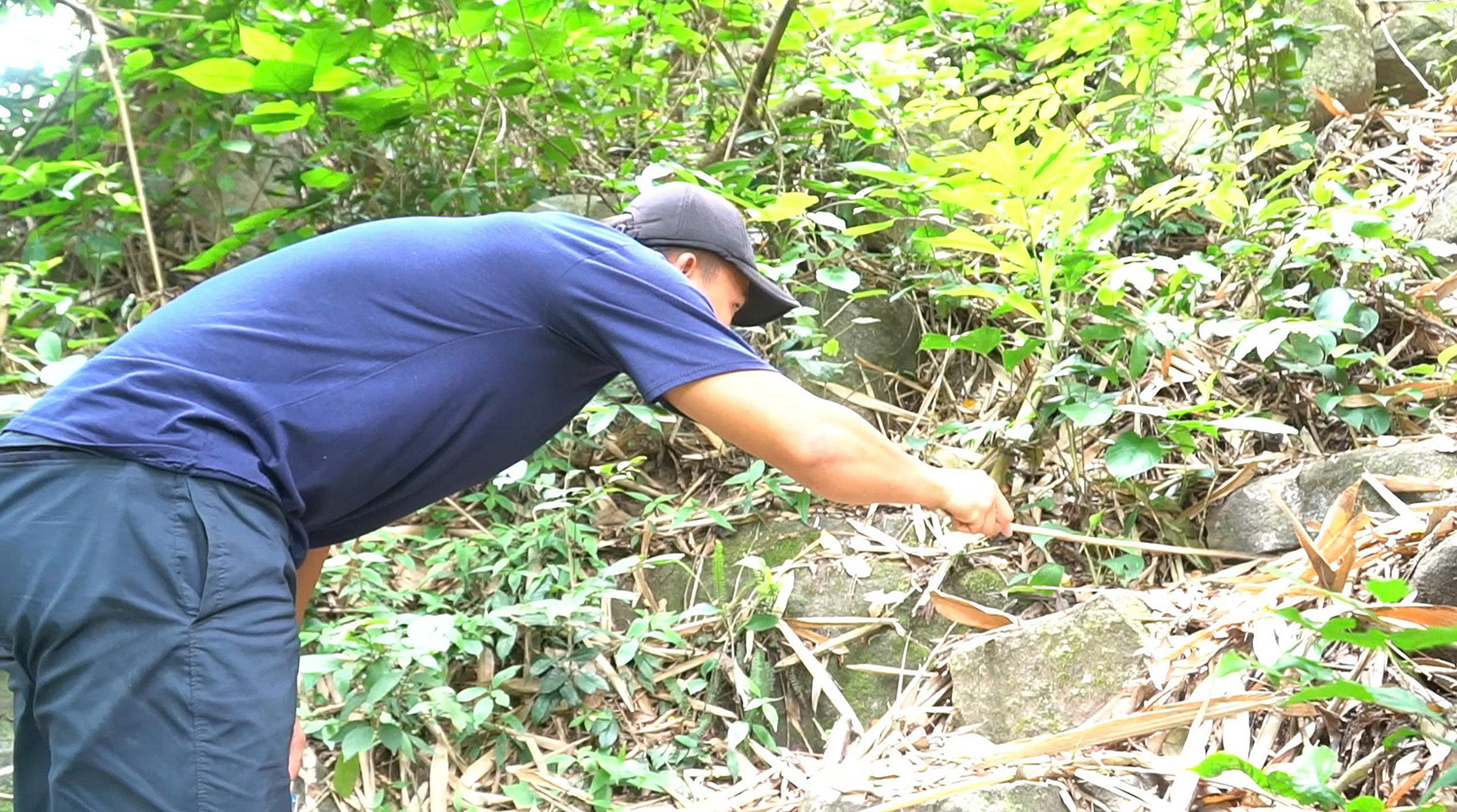
A crab-hunting rod made from bamboo and elastic bands is the key to success. Photo: T.Q
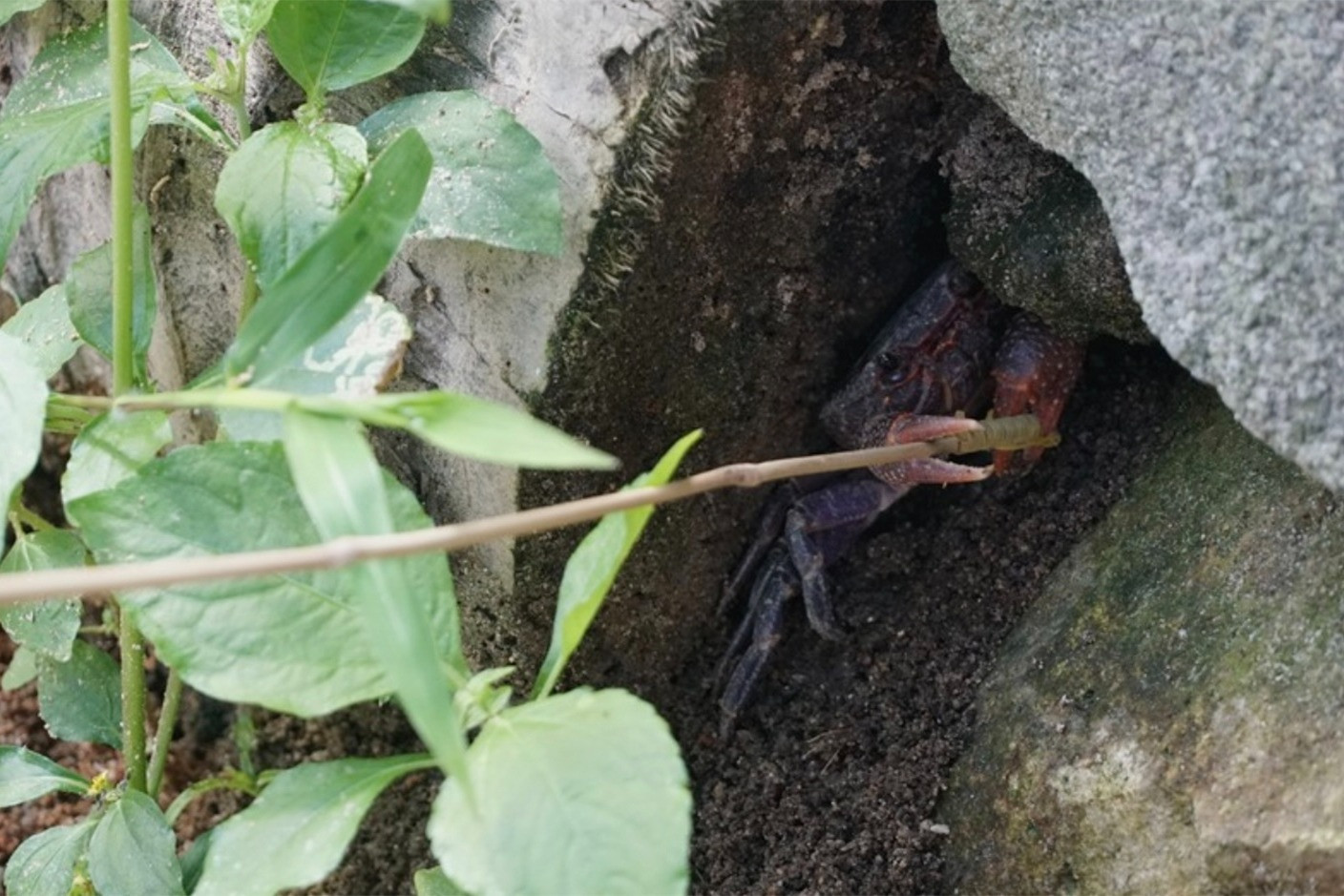

Pulling a crab out of its rocky den takes intense focus and precise timing. Photo: T.Q
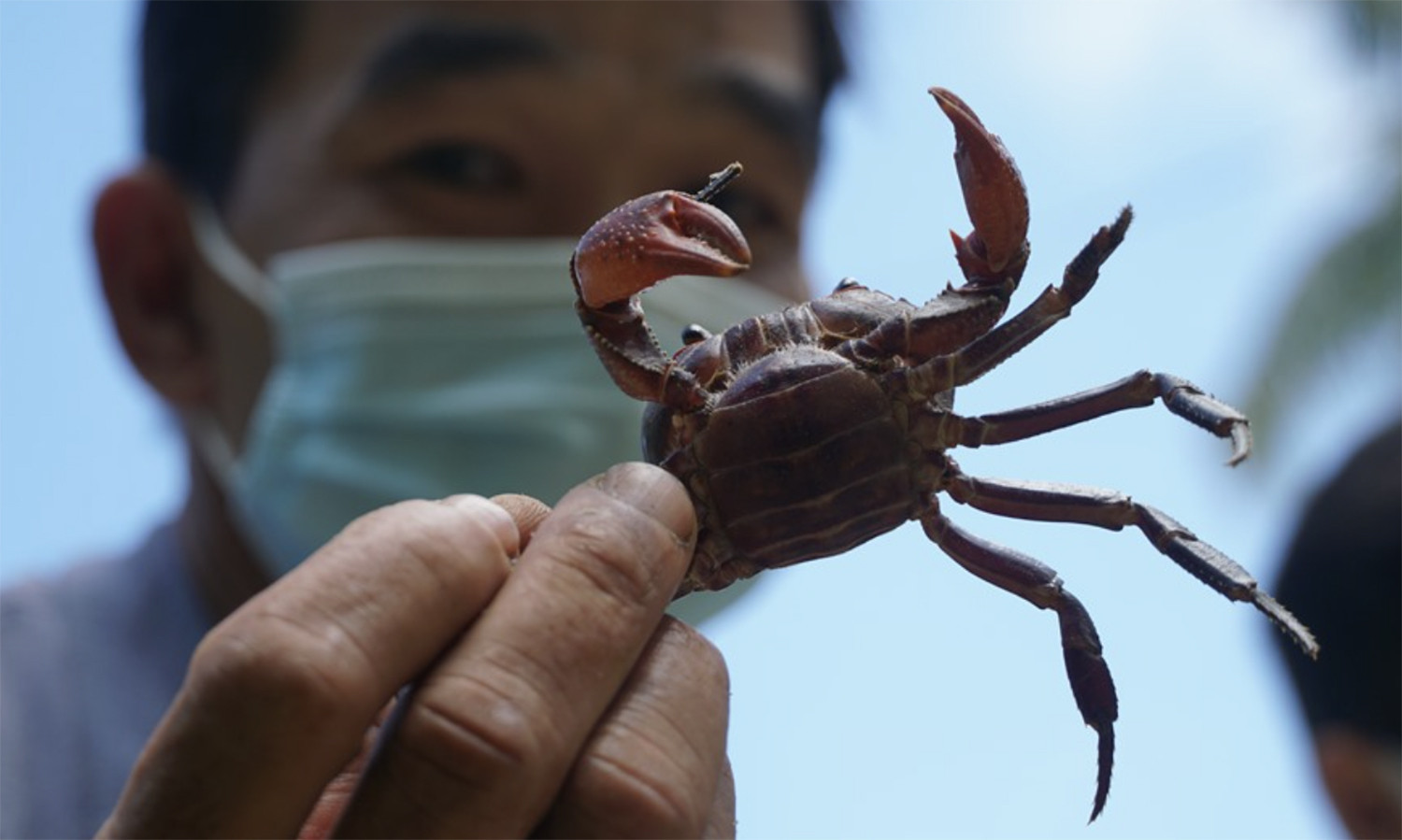
Locals say the crabs taste sweet thanks to their natural diet of leaves and insects. Photo: T.Q

Though rare, mountain crabs are considered a culinary treasure of Nui Cam. Photo: T.Q
.svg)
