 Vietnamnet.vn

 Podcast



The year 2025 marks one of the most extensive transformations in Vietnam’s administrative history, as the country embarked on a comprehensive restructuring of all levels of local government nationwide.
This reform goes beyond simply redrawing administrative boundaries or streamlining the state apparatus. It represents a strategic reallocation of economic space, a reassignment of power and responsibility, and a recalibration of how resources are distributed and combined for development.
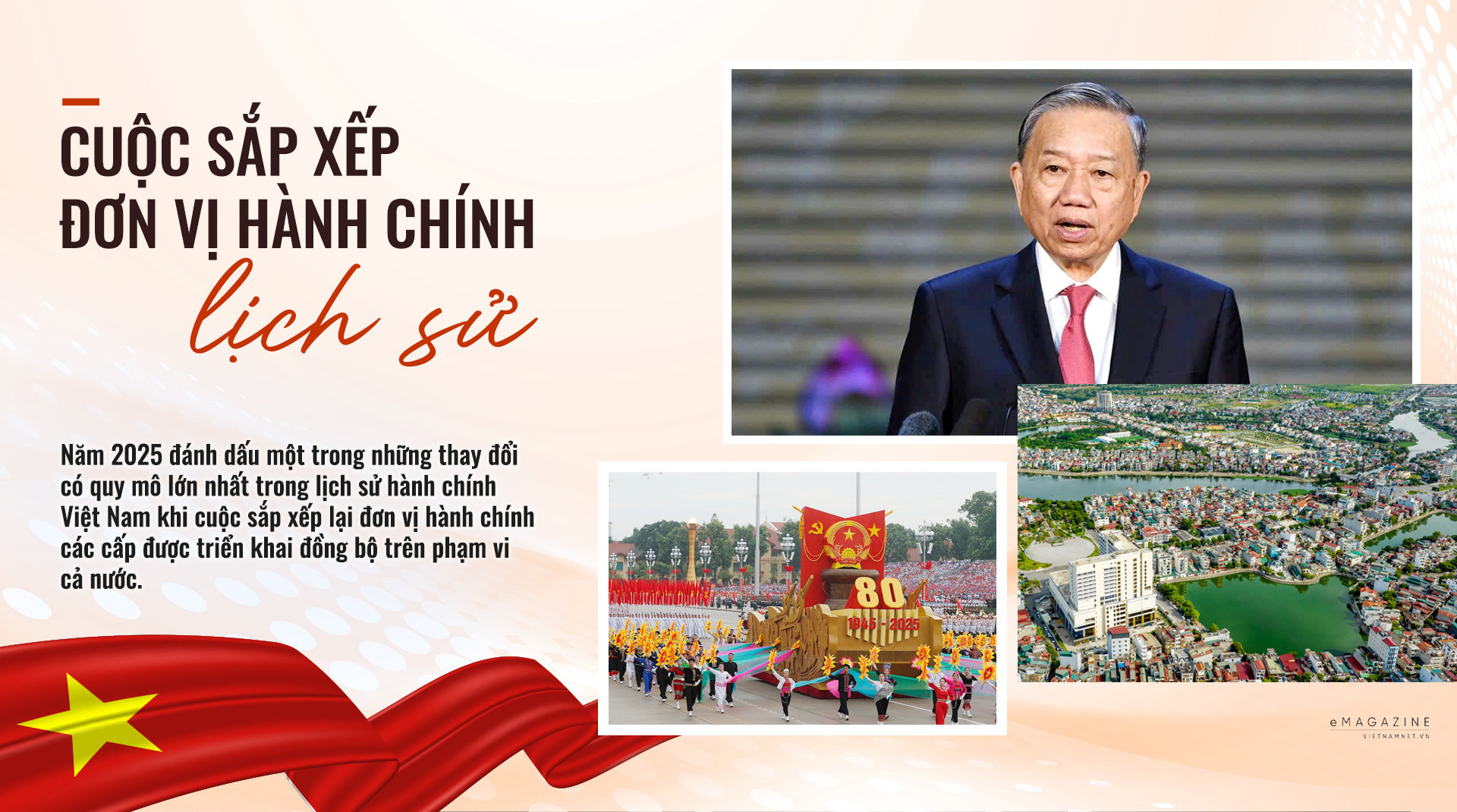
On June 12, 2025, during its ninth session, the 15th National Assembly passed a resolution to restructure the provincial-level administrative units. As a result, the total number of provincial units has been reduced from 63 to 34-comprising 28 provinces and 6 centrally governed cities. Among them, 19 provinces and 4 cities were newly formed through mergers, while 11 remained unchanged.
At the district level, 696 administrative units ceased operation, including 2 cities under central authority-Thu Duc (Ho Chi Minh City) and Thuy Nguyen (Hai Phong); 85 provincial cities; 52 towns; 49 urban districts; and 508 rural districts.
The number of commune-level units was also significantly reduced-from 10,035 down to just 3,321, marking a 67% reduction. Hanoi witnessed the highest reduction rate at over 77%.
Starting July 1, 2025, all 34 provinces and cities officially transitioned to a new two-tier local government model-comprising only provincial and commune levels.
Following the restructuring, 146,800 public officials and workers have retired under new policies and regulations applied to streamline the administrative apparatus. The reform has helped reduce regular expenditures, enabling greater investment in social welfare and public services.
Vietnam’s new governance approach now pivots from administrative control to citizen service and developmental leadership.
“Redrawing the national map” - a strategic turning point
General Secretary To Lam described the restructuring decision as a "historic step" with strategic significance in the long-term effort to perfect Vietnam’s administrative and state governance model.
According to him, reorganizing the administrative map and launching a new two-tier system is essential in the context of globalization, digital transformation, and the Fourth Industrial Revolution. It offers an opportunity to shift leadership mindsets, modernize management methods, and accelerate the adoption of science and technology to improve national governance and public service.
Prime Minister Pham Minh Chinh immediately called on all ministries, sectors, and localities to decisively implement the new two-tier model, stressing the need for determination, high effort, and discipline in execution.
Tangible improvements from the grassroots
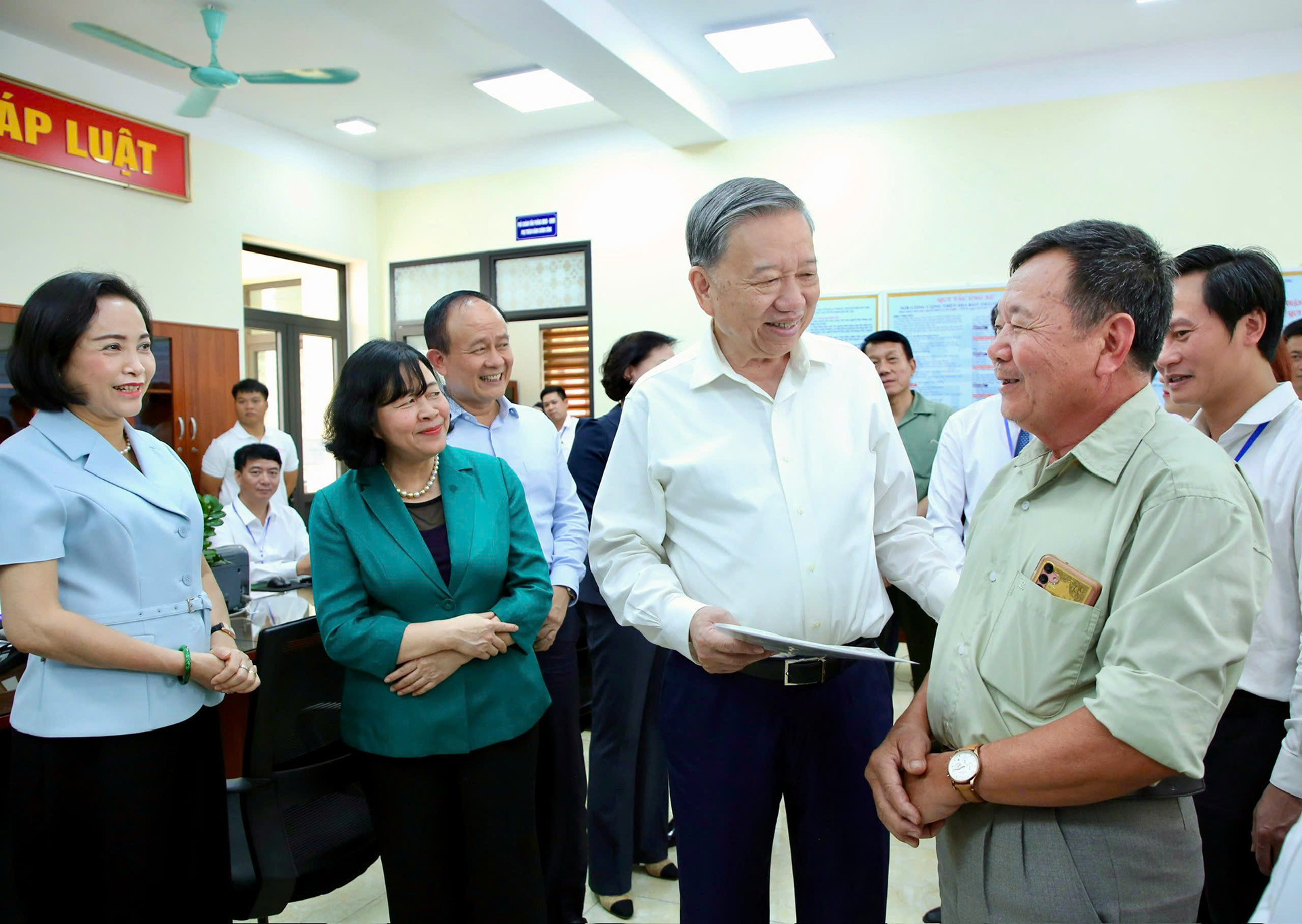
The rollout of the two-tier system has already begun to yield clear results in terms of management, administration, and citizen and business service delivery.
All 34 provinces and cities have completed the organizational restructuring and leadership appointments for local People’s Committees.
At the commune level, 3,321 units-including communes, wards, and special zones-have established public service entities to deliver multidisciplinary services in line with central guidance and local realities.
Public services go digital, efficiency rises
Between July 1 and November 30, the 34 newly restructured localities processed 21.8 million administrative records-an increase of 5.9 million from the previous month. Among these, 18.4 million records were submitted online, including 13.4 million at the commune level.
The rate of administrative records handled on time or ahead of schedule across provinces reached 92.78%.
In terms of infrastructure, 17,496 state-owned buildings and properties have been repurposed, while 9,056 others are in the process of being reallocated.
Challenges ahead, but momentum builds
Despite the significant progress, Minister of Home Affairs Do Thanh Binh acknowledged that the new governance model still faces considerable challenges.
There are currently 355 pending tasks awaiting implementation guidelines and 10 responsibilities requiring adjustments in jurisdiction.
The Government has tasked provincial and municipal leaders with promptly resolving all issues related to decentralization, delegation of authority, and jurisdictional clarity-setting a deadline for full resolution by the end of December.
Thanh Hue
.svg)
