 Vietnamnet.vn

 Podcast



In governing a multi-ethnic nation, the crucial question is not simply how the State supports minority communities. Equally important is whether the path to development respects families, communities, cultural identity and people’s right to participate in decisions that shape their lives.
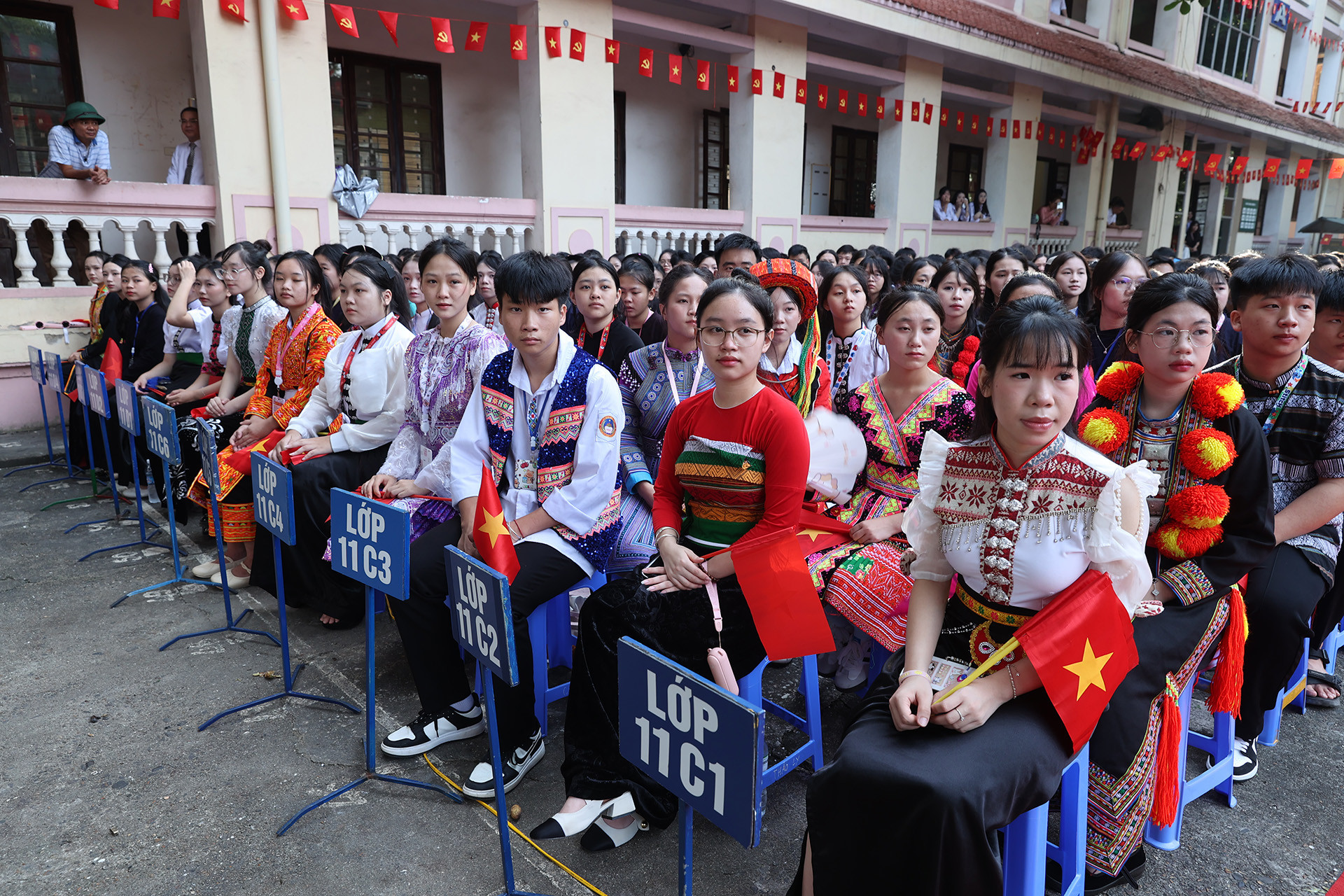
Experience from around the world shows that even policies once justified in the name of protection, education or integration can leave profound social consequences when they fail to understand local cultures, exclude communities from meaningful participation, or put assimilation ahead of the right to remain different.
Australia has made significant efforts to confront its history, advance reconciliation and gradually improve policies toward Aboriginal and Torres Strait Islander peoples. Yet the “Stolen Generations” remains a powerful cautionary chapter in the history of its Indigenous policies. Indigenous children were once removed from their families, communities and cultural environments, leaving lasting wounds to family ties, identity, language, collective memory and social relationships.
Having studied and conducted research at the Australian National University, I came to understand this issue not only through academic literature but also as a profound lesson about the limits of policy models when development is not grounded in respect for communities and cultural identity.
The lesson is not about condemning a particular country or policy. Rather, it invites deeper reflection on a principle with universal relevance: development is truly sustainable only when it does not weaken the foundations of family, community and cultural identity.
Australia’s efforts to reshape Indigenous policy
For much of the 20th century, several Australian state governments enforced so-called Aboriginal “protection” laws that allowed authorities to intervene extensively in the lives of Indigenous people. In that historical context, assimilation was seen as a way of integrating Indigenous communities into mainstream society.
Experience showed, however, that when “integration” effectively requires minority communities to abandon their ways of life, customs, languages and identities, policies can produce unintended consequences that are extraordinarily difficult to repair.
The removal of many Indigenous children from their families disrupted the transmission of languages and Indigenous knowledge, kinship relationships, connections to ancestral lands and traditional systems of care. The Bringing Them Home report later put forward numerous recommendations on healing, reconciliation, compensation, community support, truth-telling and measures to prevent such practices from recurring.
In 2008, the Australian Parliament formally apologized to Indigenous Australians, particularly members of the Stolen Generations, for past laws and policies that had inflicted profound suffering, loss and trauma.
This historical experience should be revisited in a spirit of learning rather than as a judgment on Australia’s former Indigenous policies. Australia has, in fact, made important efforts to acknowledge its past, advance reconciliation and develop policies that are increasingly sensitive to Indigenous cultures.
That is precisely why this experience is valuable. It illuminates a fundamental requirement of governance in a multi-ethnic society: policies for minority communities are truly humane only when they see people within the context of their communities, respect their identities, ensure their participation and enable them to become active agents in their own development.
Vietnam: Bringing development resources to communities
Viewed through this lens, the human-centered values underpinning Vietnam’s ethnic minority policies become particularly clear. At the political, legal and ethical levels, Vietnam has consistently upheld the principle that all ethnic groups within the Vietnamese nation are equal, united, respectful of one another and mutually supportive in development.
This is more than a political principle. It is also a philosophy of development: development does not mean assimilation; progress does not require abandoning identity; and integration does not have to come at the expense of cultural diversity.
A notable feature of Vietnam’s approach is that ethnic minority communities are not treated as groups that must “leave behind” their cultures in order to develop. Instead, cultural identity, language, positive customs, community institutions, living environments and the roles of village elders, community leaders and other respected figures are regarded as important resources for development.
This approach carries profound human value because it recognizes that every community has its own history, knowledge, values and internal capacity.
The first defining strength of Vietnam’s ethnic minority policies is their inclusiveness. They extend beyond poverty reduction, livelihood assistance and infrastructure investment to encompass education, healthcare, housing, clean water, culture, personnel training, gender equality, child protection and community capacity building.
This reflects an understanding that development in ethnic minority and mountainous areas is not simply a welfare program. It is a broader strategy for human development, regional development and the strengthening of national unity.
A second strength is that Vietnam does not seek to remove people from their communities in the name of “development.” Instead, it brings development resources to where communities live.
Major State programs and policies, particularly the National Target Program for Socio-Economic Development in Ethnic Minority and Mountainous Areas, seek to improve living conditions within local communities by building roads, schools, healthcare facilities, clean-water systems and electricity infrastructure, while supporting production, creating livelihoods, preserving culture and improving human resources.
This approach matters because sustainable development cannot be built upon the disruption of families, communities and cultural identities.
A third defining feature is the close connection between Vietnam’s ethnic minority policies and the goal of national unity. In Vietnam, ethnic affairs are not viewed solely as a social issue or a question of regional development. They are also considered strategically important to political stability, national defense, security and the country’s sustainable development.
Many ethnic minority and mountainous communities live in border and forest areas that are strategically important for natural resources, the environment, water security and national sovereignty. Improving the lives of these communities therefore also strengthens the country’s social, political and cultural foundations.
A fourth important feature is the gradual shift in Vietnam’s ethnic minority policies from providing assistance toward empowerment and capacity building.
International experience shows that one of the major weaknesses of minority policies can emerge when governments or outside institutions make decisions on behalf of communities rather than with them.
For Vietnam, the task now is to further strengthen the role of ethnic minority people themselves in designing, implementing, monitoring and benefiting from policies. People should not simply be recipients of assistance; they must become agents of development. Communities should not merely be places where projects are implemented; they should be spaces where the success of those policies is ultimately determined.
There are, of course, challenges that Vietnam’s ethnic minority policies must continue to address. Significant development gaps remain between ethnic minority and mountainous areas and the national average. In some places, education, healthcare, livelihoods and infrastructure have yet to meet development needs. Some policies remain fragmented, place too much emphasis on initial assistance and have yet to build sufficient capacity for communities to sustain their own development.
What matters is that these shortcomings should be understood as a call to improve implementation, use resources more effectively and further strengthen the role of communities themselves—not as a reason to abandon the human-centered foundations of the policy framework.
International experience with Indigenous policies offers Vietnam an important lesson: the country must remain committed to inclusive development, respect for identity and a people-centered approach.
Development models should not be imposed from outside while meaningful community participation is overlooked. Nor should the success of a policy be measured simply by how much funding has been allocated or how many projects have been completed. The true measure should be tangible improvements in people’s lives, capabilities, confidence and standing within society.
The human value of Vietnam’s ethnic minority policies lies in placing people within their communities, development within their cultural identities, and the interests of ethnic minority people within the broader national interest.
It is an approach that is at once humane and strategic, while remaining rooted in Vietnam’s long tradition of national solidarity.
As Vietnam enters a new stage of development, the task is not to change these foundations, but to make policies more substantive, deepen empowerment and give ethnic minority and mountainous communities greater capacity to sustain their own development.
Dr. Ha Viet Quan
.svg)
