 Vietnamnet.vn

 Podcast



In this era of deep globalization and soft power competition, a country’s image is no longer shaped primarily through propaganda or traditional diplomacy. Increasingly, it is crafted, amplified, and redefined through cultural products, services, and the ecosystems of creative industries.
For Vietnam, as the national strategy to develop cultural industries enters a new phase, the goal is no longer solely economic growth. It’s about actively and professionally taking part in the governance of the nation’s image in both regional and global arenas.
On December 19, I attended an international conference on cultural industries as a foundation for sustainable development. The event brought together policymakers, scholars, artists, and creative businesses from home and abroad. But for me, its significance went beyond an exchange of professional ideas.
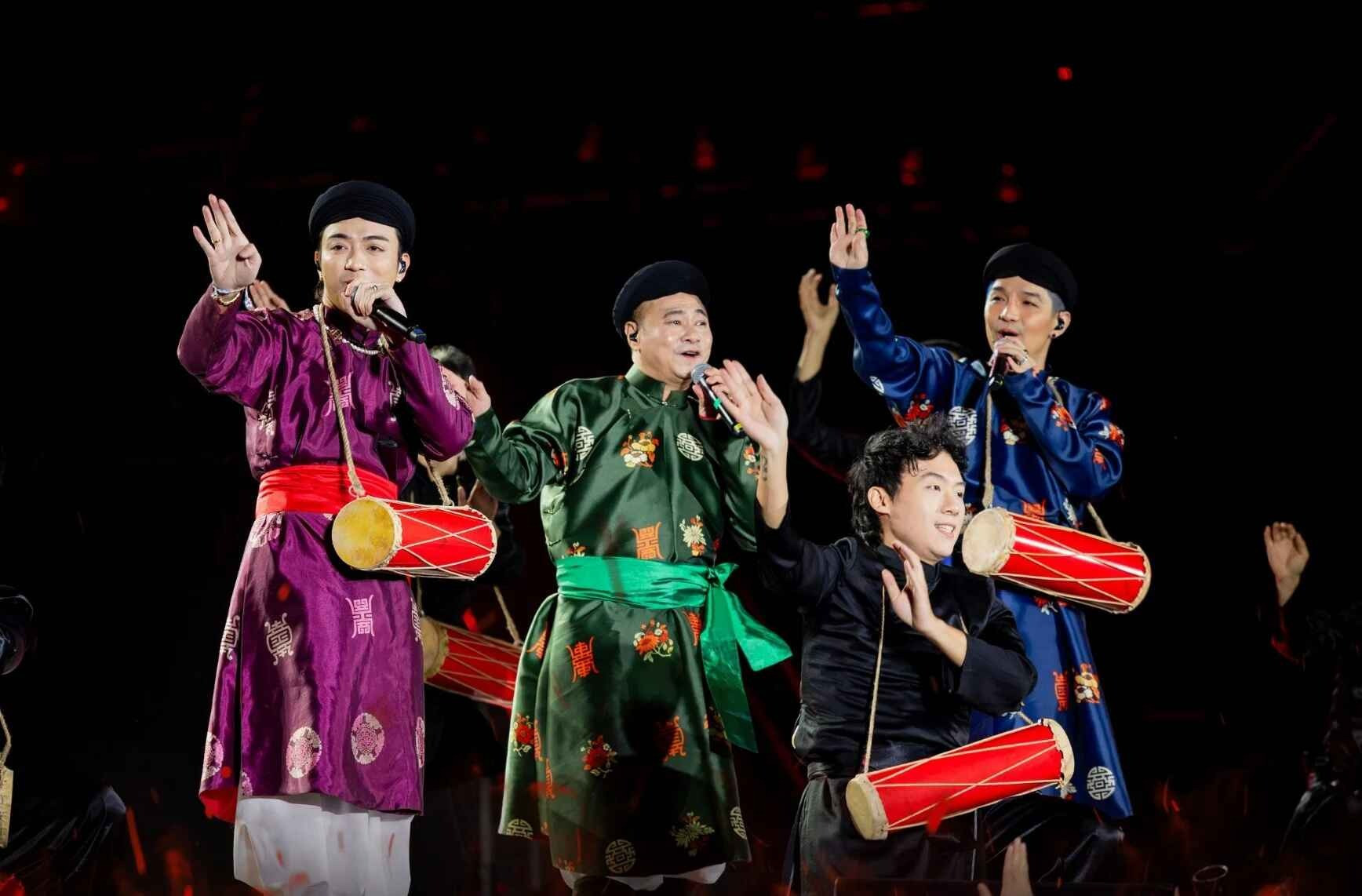
“Anh Trai Vuot Ngan Chong Gai" (Call Me By Fire): A recent television show that stirred strong cultural resonance. Photo: Archives.
It marked a pivotal moment - the closing of nearly a decade under Strategy 1755 and the launch of a new chapter under Strategy 2486. This new framework is designed with a longer-term, more ambitious vision that places culture at the heart of national development in this new era. Amid the energetic discussions, I felt we were standing at the threshold of something vital: the governance of national image through cultural industry.
One comment lingered with me long after the event. Indian film director Rahul Bali noted that cinema, at its core, is not just about storytelling. It is a potent tool for shaping a nation’s image in a dynamic, enduring, and compelling way.
He said a successful film can stir a deep desire in international audiences to visit the land depicted on screen, to touch the cultural spaces that moved them. From such very human yearnings come waves of tourism, deeper engagement with the country, and eventually, long-term interest from investors and other industries. In this way, cinema becomes a tireless, silent ambassador for a nation.
Listening to him, I realized how often we talk about soft power and promoting our national image, yet we remain tethered to old ways of thinking - treating this as the domain of diplomacy, foreign media, or time-bound PR campaigns. In contrast, cinema and other cultural sectors are doing this work more organically - without slogans, without fanfare.
A beautifully filmed scene, a layered character, a well-told story in a modern cinematic language can leave a lasting impression on global audiences - far more enduring than any promotional message. It evokes emotion, and emotion is the most durable foundation for memory and goodwill.
These thoughts were reinforced at another event held on December 17, which honored outstanding tourism videos. There, as Vietnam celebrated a milestone of 20 million international visitors, Deputy Minister of Culture, Sports and Tourism Ho An Phong emphasized that tourism is not an isolated industry. It radiates impact across at least 15 other economic sectors.
The 20 million figure is commendable, especially in a volatile global landscape. Yet more importantly, as Mr. Ho highlighted, each visitor carries away stories, impressions, and perspectives on Vietnam - and shares them with the world.
When I connect these two stories - one from cinema, one from tourism - a common thread becomes clear: national image is emerging as a “nodal point” linking multiple areas of development. Cinema inspires dreams. Tourism turns dreams into experience. And from those experiences, trust, goodwill, and partnerships are born.
In this chain, cultural industries are not peripheral. They are central - both storyteller and architect of experience, linking culture with commerce, emotion with economic decision-making.
This perspective makes me reflect deeply on the concept of “national image governance.” Governance here does not mean embellishment or control, but rather a strategic, long-term, proactive effort to tell the world who we are - using the languages of our time. In the digital age, where images, stories, and videos spread with unprecedented speed, lacking a coherent strategy risks fragmenting our national image - sometimes vivid, sometimes faded, too often reactive to random events rather than guided by consistent vision.
Vietnam enters this new phase of cultural industry development with clear advantages. We possess a rich heritage, diverse nature, deep history, and an increasingly open and vibrant society. But to convert these into a powerful, lasting national image, we need new thinking. Culture must be given a bigger, more proactive role.
Films aren’t just for entertainment. Music isn’t just for listening. Fashion isn’t just for wearing. Cuisine isn’t just about taste. Every creative product, when embedded in a holistic strategy, can become a puzzle piece in the larger mosaic of national image.
Looking back at Strategy 1755, we see progress - especially in recognizing the economic potential of cultural industries and laying foundational policy, awareness, and market structures. But Strategy 2486 demands more.
It asks: how do we want the world to remember Vietnam in 10, 20, or 30 years? As a top tourist destination? A hub for creative content? A land of heritage and innovation? Or a harmonious blend of all these?
These questions can’t be answered on paper alone. They must be embodied in films that travel globally, in professionally staged festivals, in creative spaces that weave into urban life, in cultural digital products that compete on international platforms.
Above all, it requires tight coordination between government, business, artists, and the creative community - so that every step strengthens our national image in a positive, unified direction.
When I think of those 20 million visitors, I don’t just picture busy airports or popular landmarks. I think of millions of eyes looking at Vietnam - each carrying hopes, comparisons, and even preconceptions.
National image governance, therefore, is about managing those expectations through real experiences - through quality, kindness, professionalism, and attention to detail. That’s why national image cannot be built solely onstage or through campaigns. It must grow from how we live - in how we treat each other, our guests, our environment, and our future.
In this new era, where happiness, quality of life, and sustainability matter more than sheer growth, a livable nation has as much, if not more, appeal than a fast-growing one.
Vietnam has a golden opportunity - not just to be known as a beautiful destination, but as a place where people feel welcome, respected, and inspired. That is an image of smiles, of kindness, of creativity, and of a sustainable ambition.
These reflections stayed with me throughout the conference. I realized that the new mission of Vietnam’s cultural industries is not just to create products. It is to join in a greater endeavor: governing our national image in a world shaped by emotion, experience, and human values.
When culture is rightly positioned, it not only fuels the economy - it elevates Vietnam’s credibility, stature, and trust on the global stage.
This is how Vietnam, in the new era, can be known not just as a scenic country or a film backdrop, but as a nation of smiles, happiness, and balanced development.
A Vietnam worth visiting, worth living in, and worth staying connected to - not through flowery words, but through the living force of its culture and a thoughtfully, compassionately, and sustainably managed national image.
Bui Hoai Son
.svg)
