 Vietnamnet.vn

 Podcast



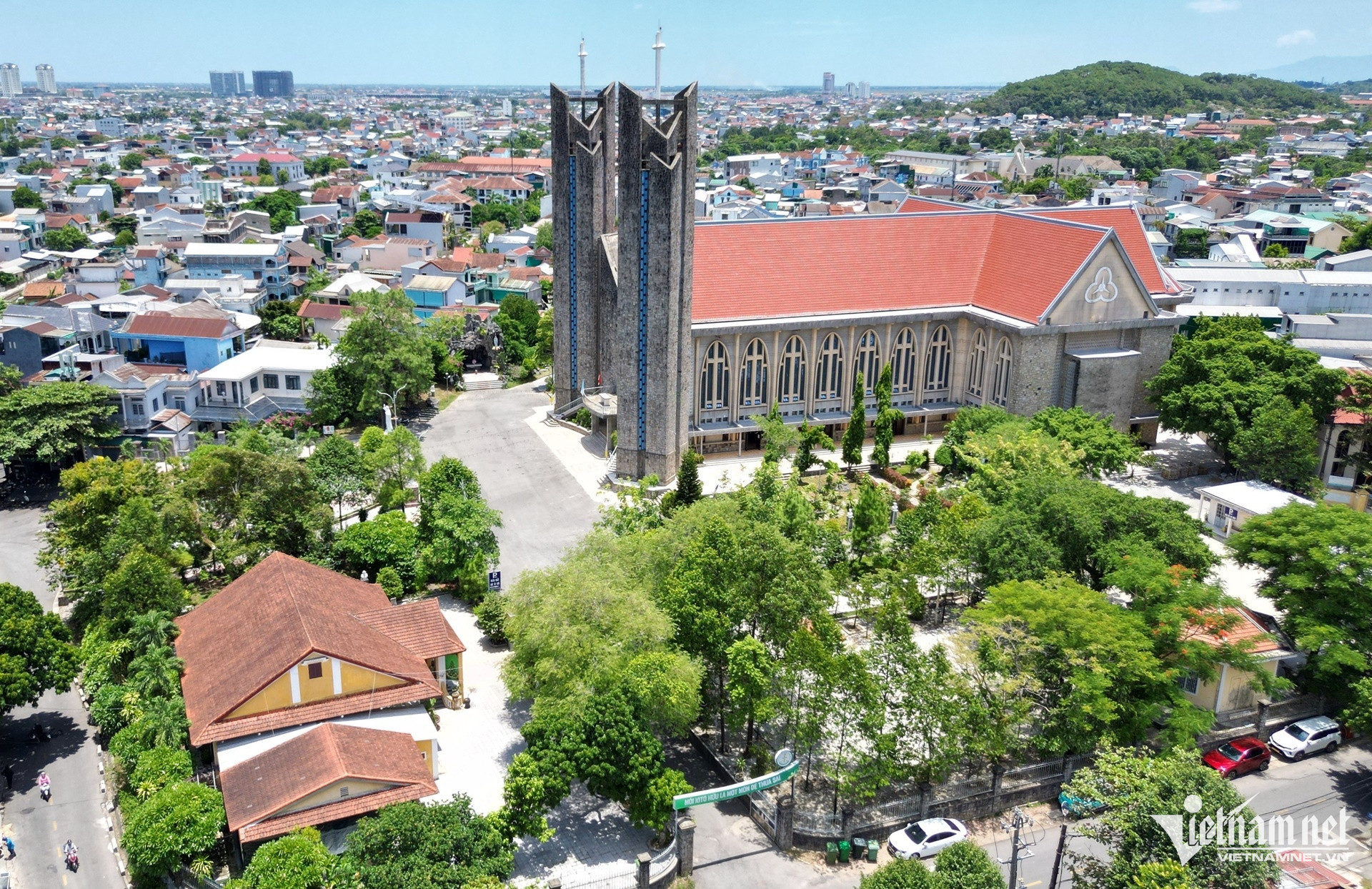
Phu Cam Cathedral is the cathedral of the Archdiocese of Hue, standing on Phuoc Qua Hill in Thuan Hoa Ward. One of Hue’s oldest, largest and best-known churches, it bears a distinctive modernist character and was designed by Vietnamese architect Ngo Viet Thu.
The history of Phu Cam dates to 1682, when a small chapel was established on the site. After several rounds of construction and changes in appearance over the centuries, work on the present cathedral began in 1963.
Construction proceeded in several phases and was interrupted for periods of time. The main structure was largely completed by 1995, while the entire architectural work and decoration were not finished until May 2000.
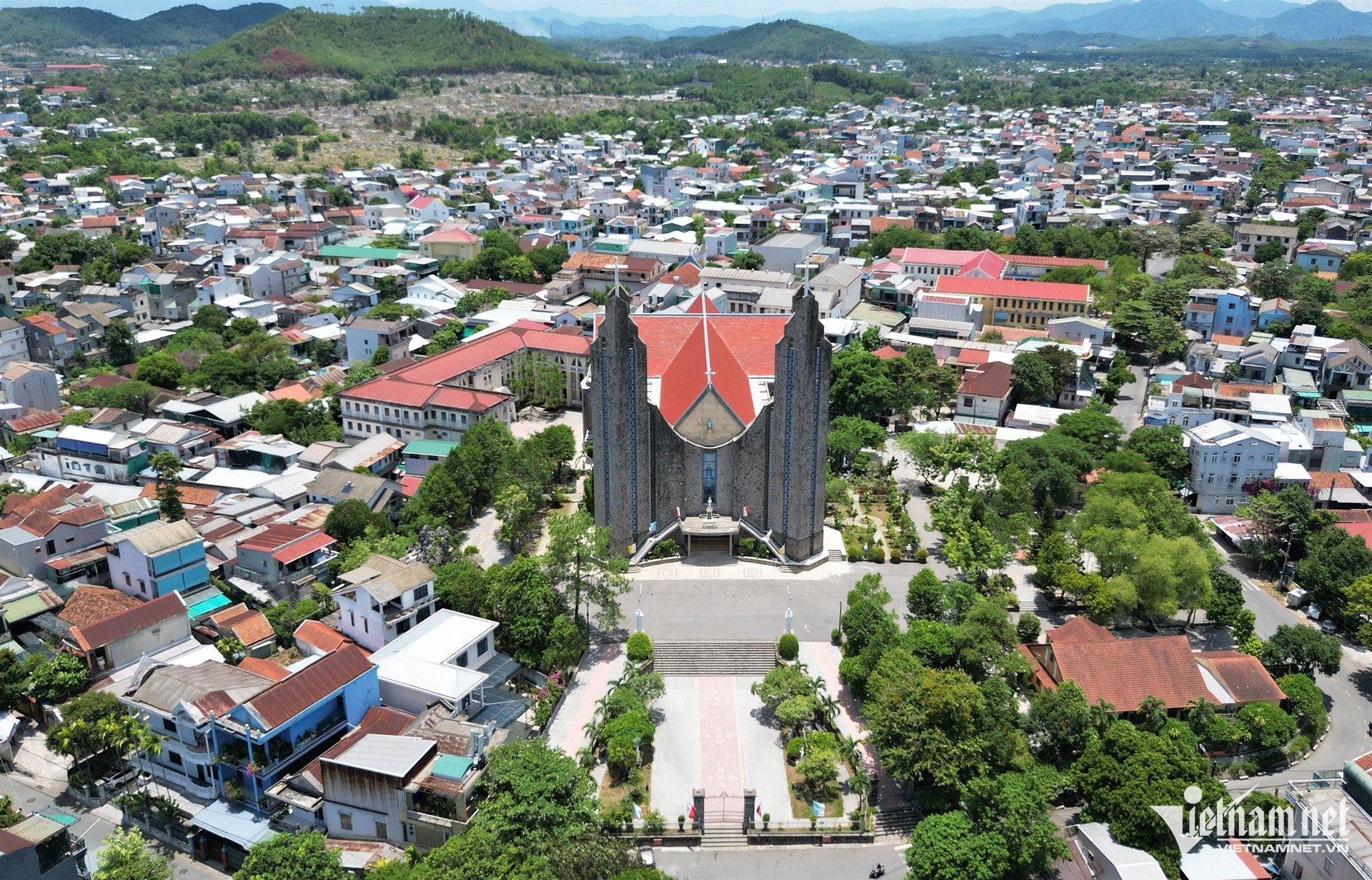
Phu Cam Cathedral stands on Phuoc Qua Hill amid a residential neighborhood, creating a distinctive architectural presence in Hue’s urban landscape.
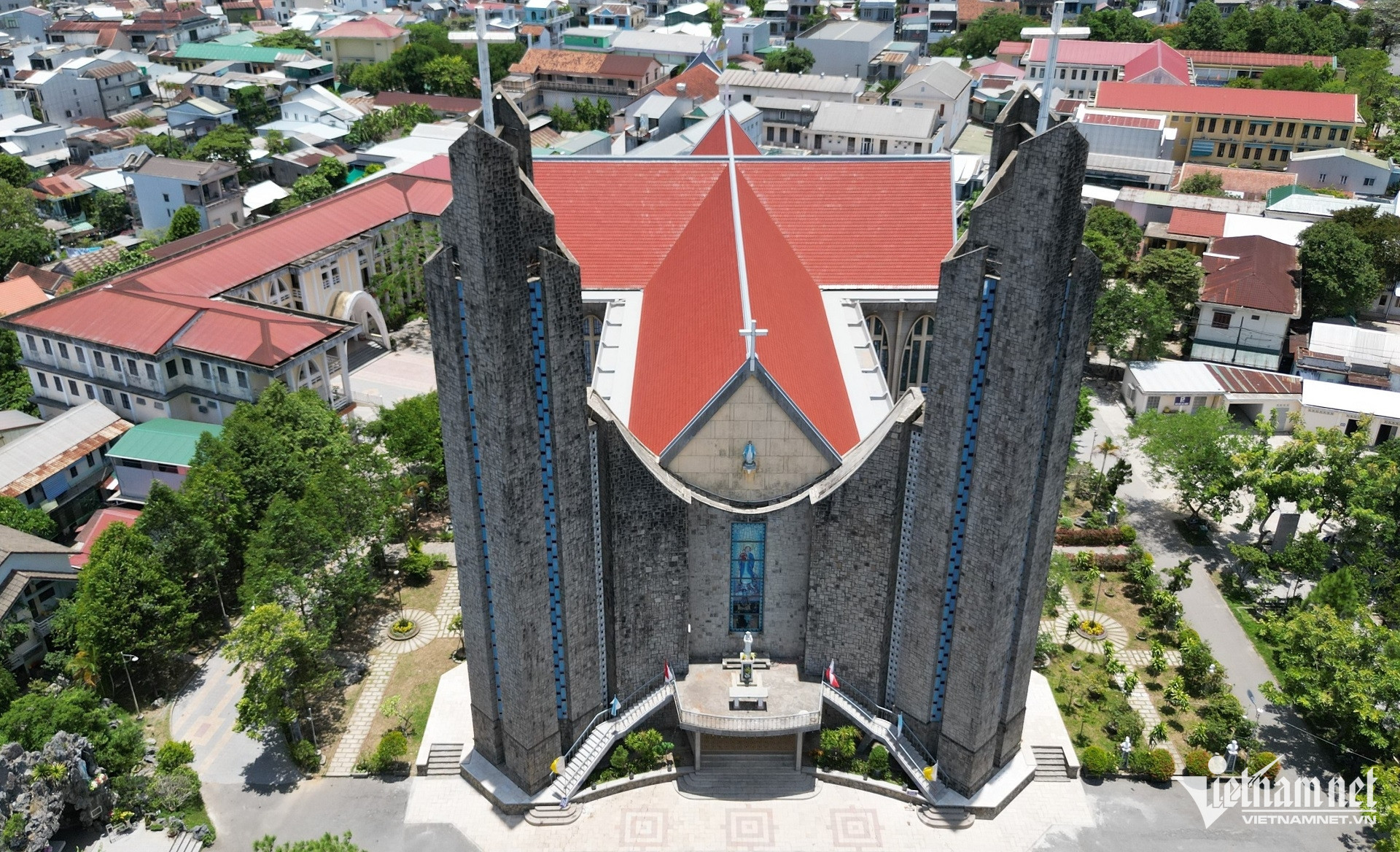
Its symmetrical main facade is framed by two 43.5-meter bell towers rising on either side of the central structure. The cathedral is 80 meters long and 24 meters wide, while sweeping stone curves at the entrance soften the monumental facade.
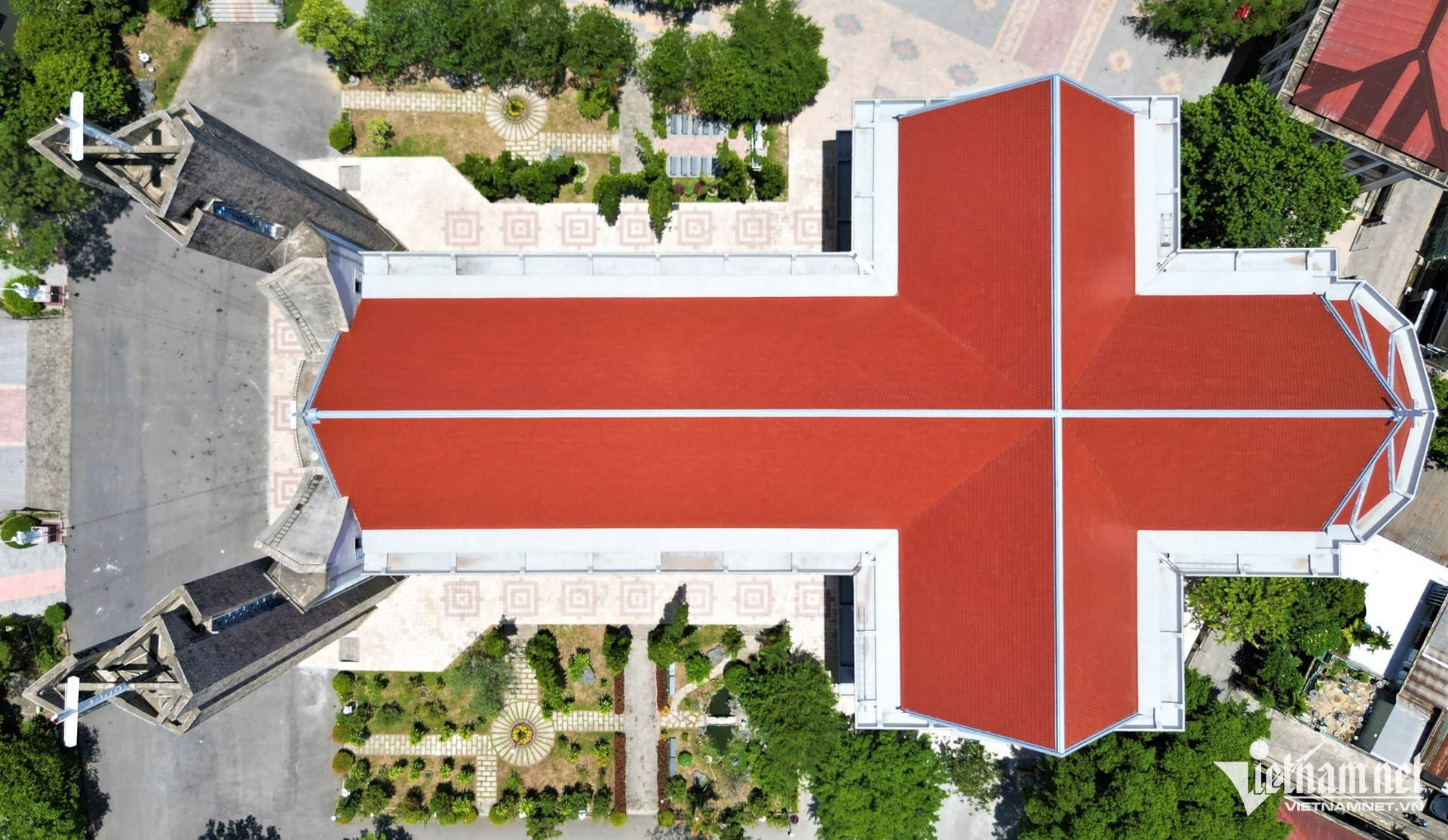
From above, the cathedral’s cruciform plan is clearly visible, with a long central axis intersected by two wings. Their intersection forms the heart of the church.
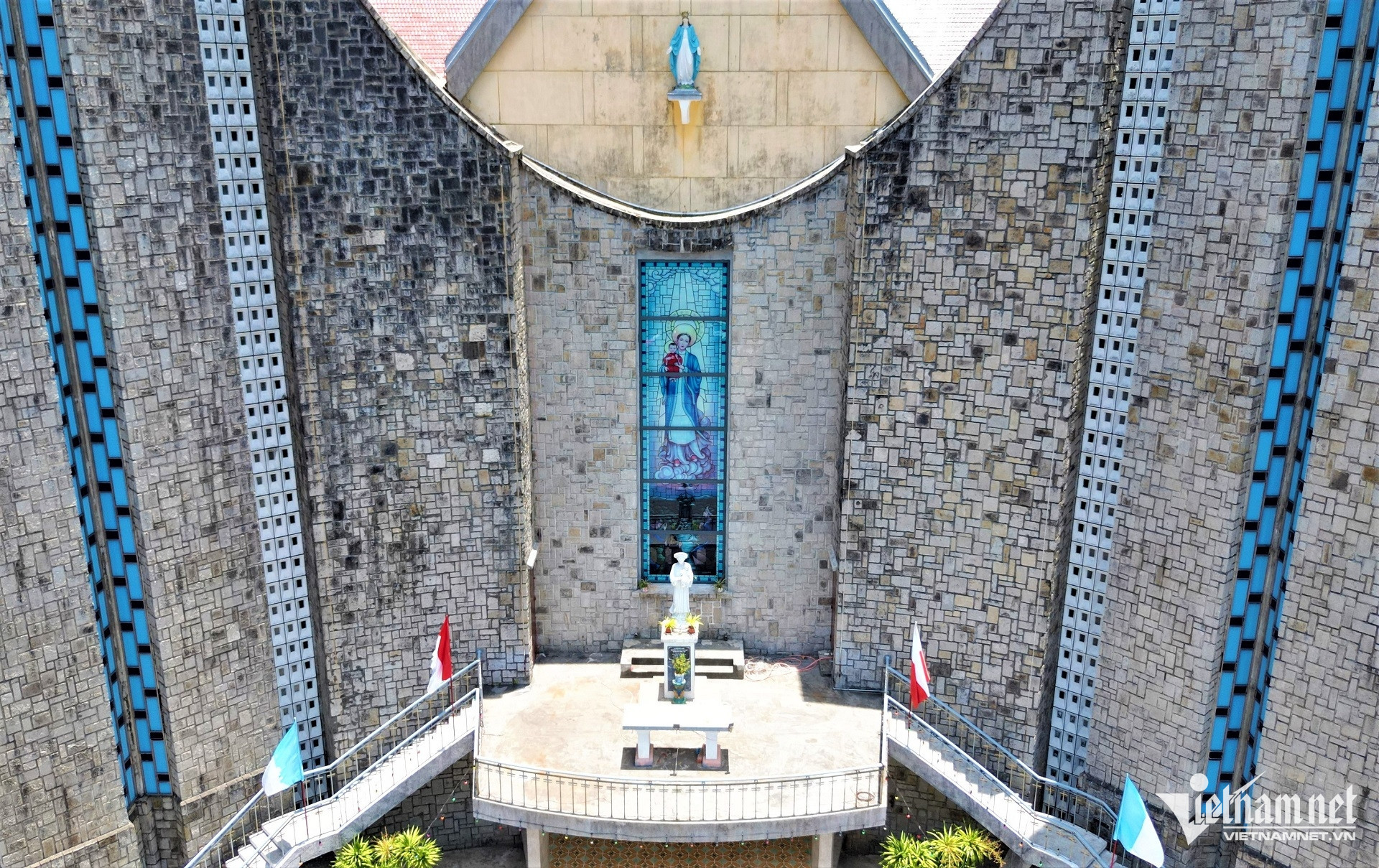
At the center of the facade, a tall vertical strip of colored glass is set between broad stone surfaces and the two distinctive curves of the entrance.
Stone, glass and reinforced concrete come together to create a harmonious modern architectural composition.
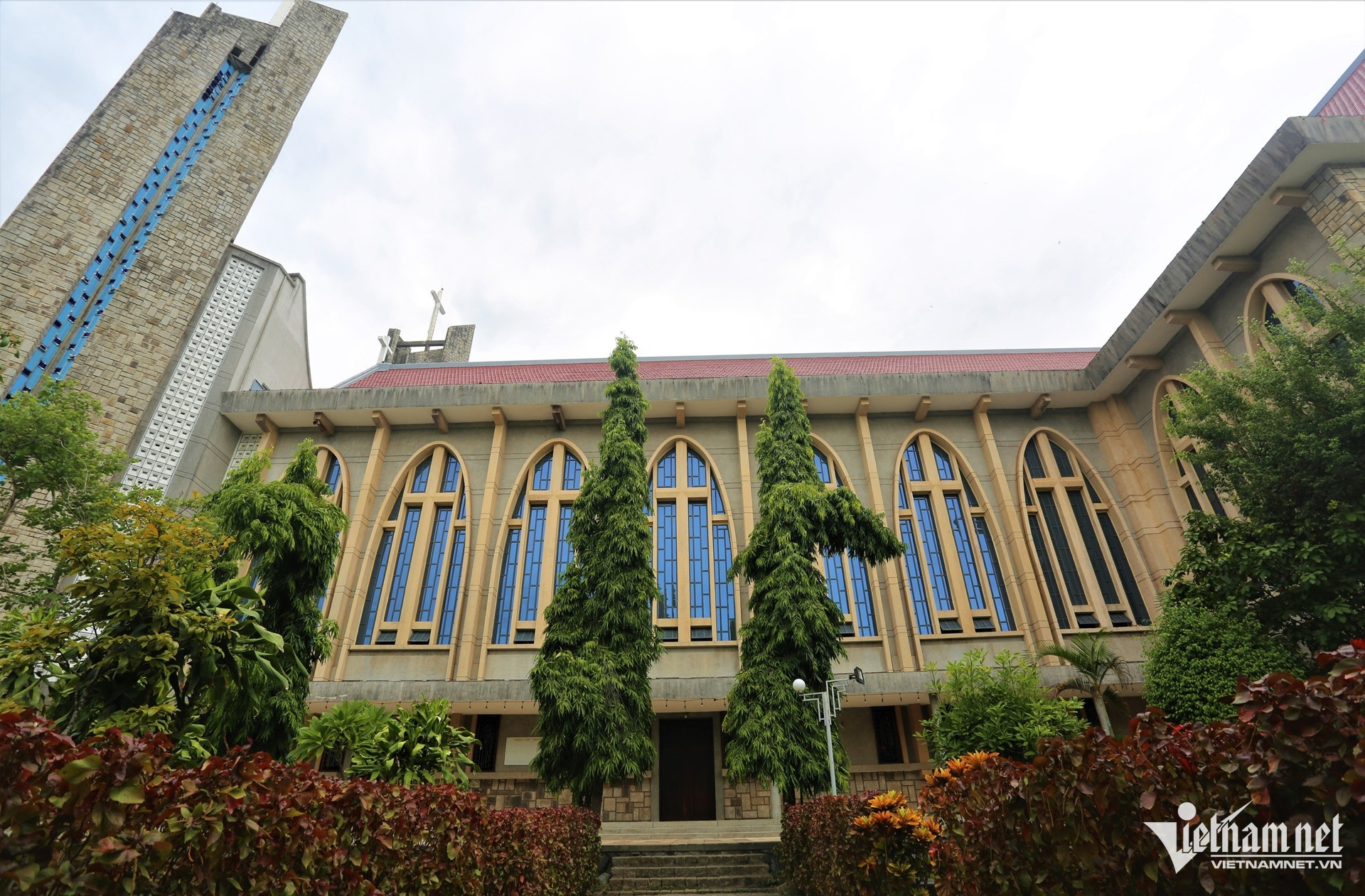
The side elevations are divided into a regular rhythm of tall arched windows, with stone-clad walls below.
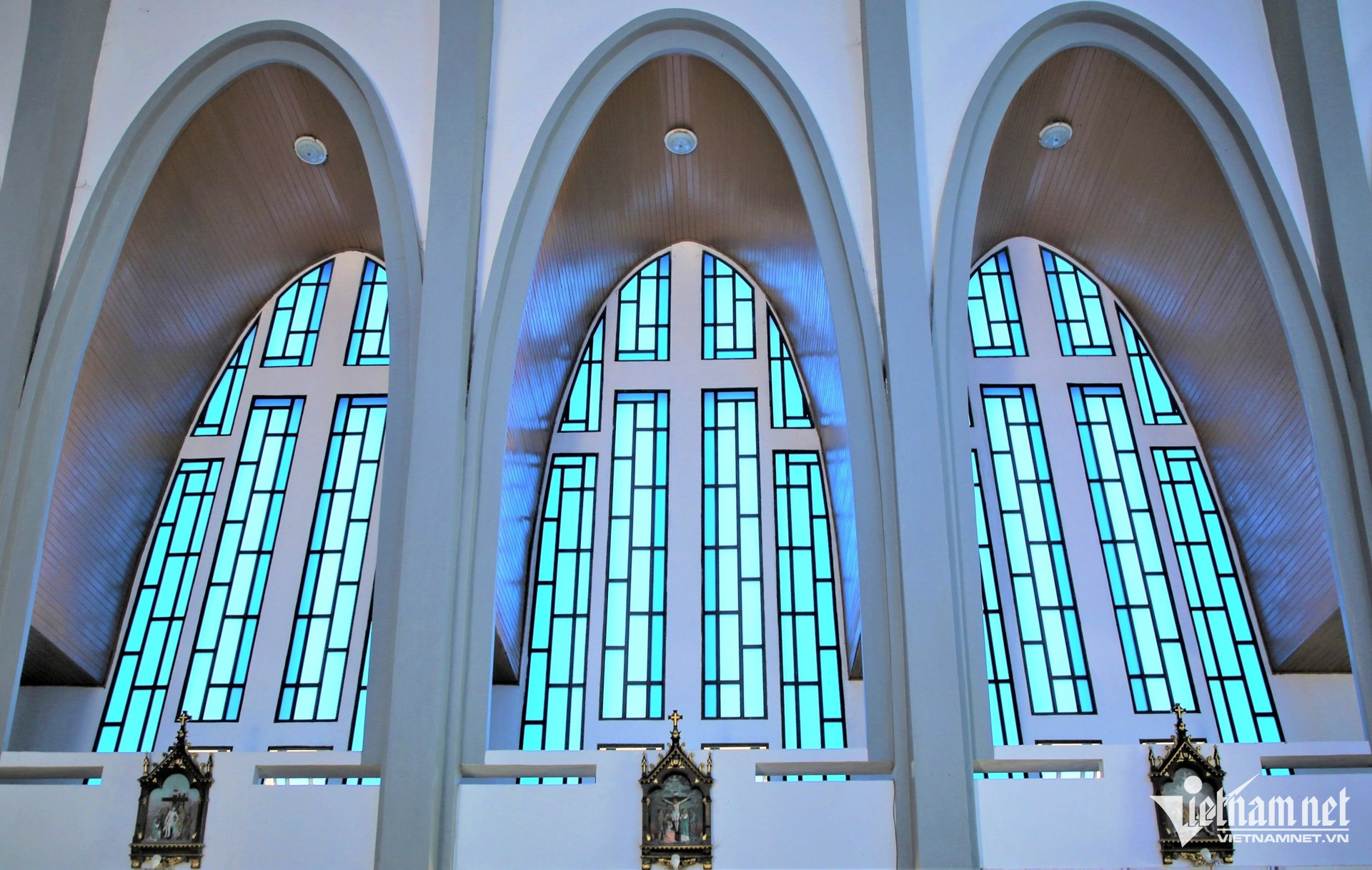
Windows along the outer walls combine arches with cross motifs, creating visual rhythm across the facade while allowing natural light and ventilation into the building.
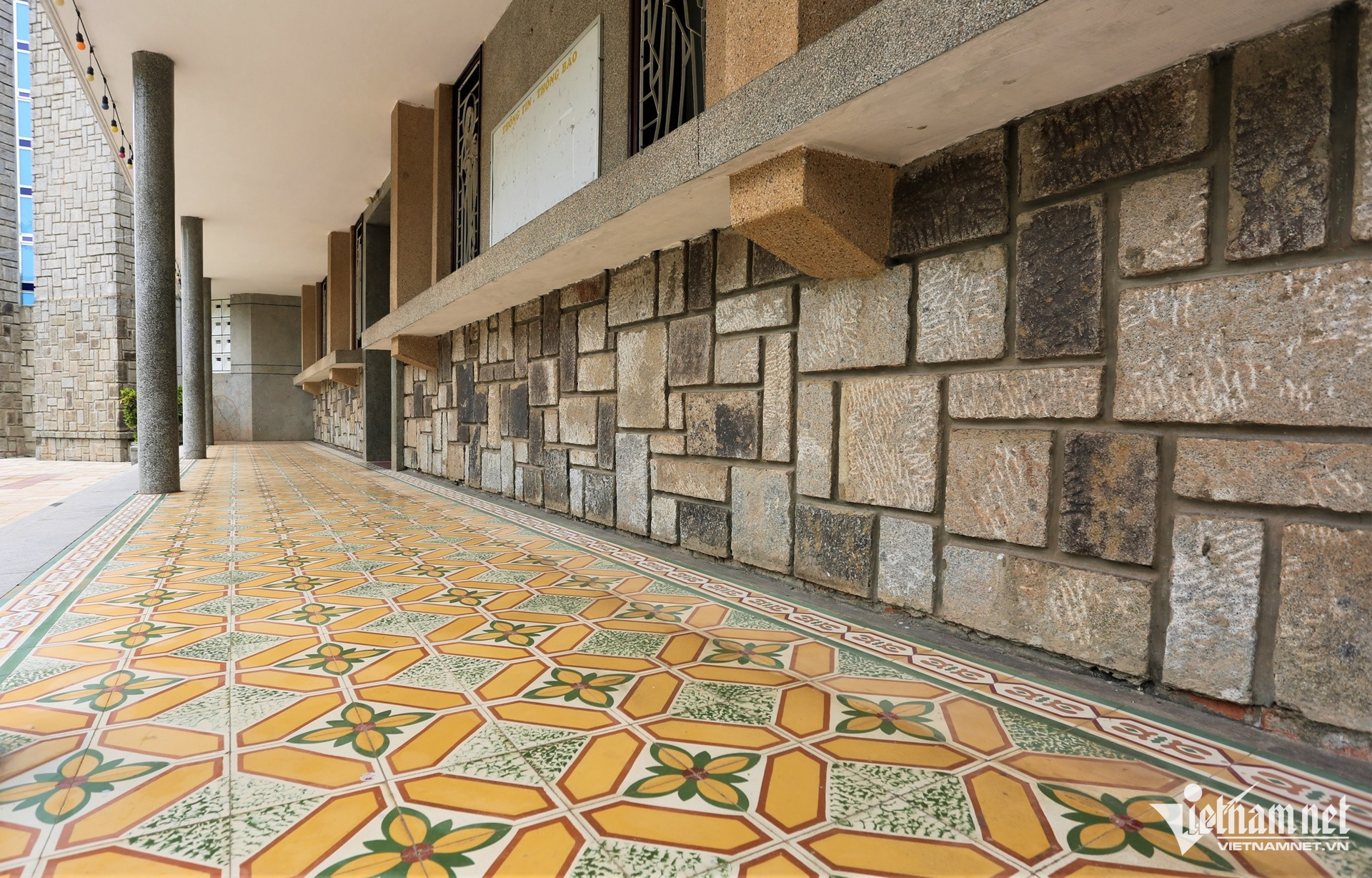
Patterned tile floors, stone walls and columns lining the corridors demonstrate the cathedral’s varied use of materials. Alongside reinforced concrete, the building incorporates stone, wood and terracotta roof tiles.
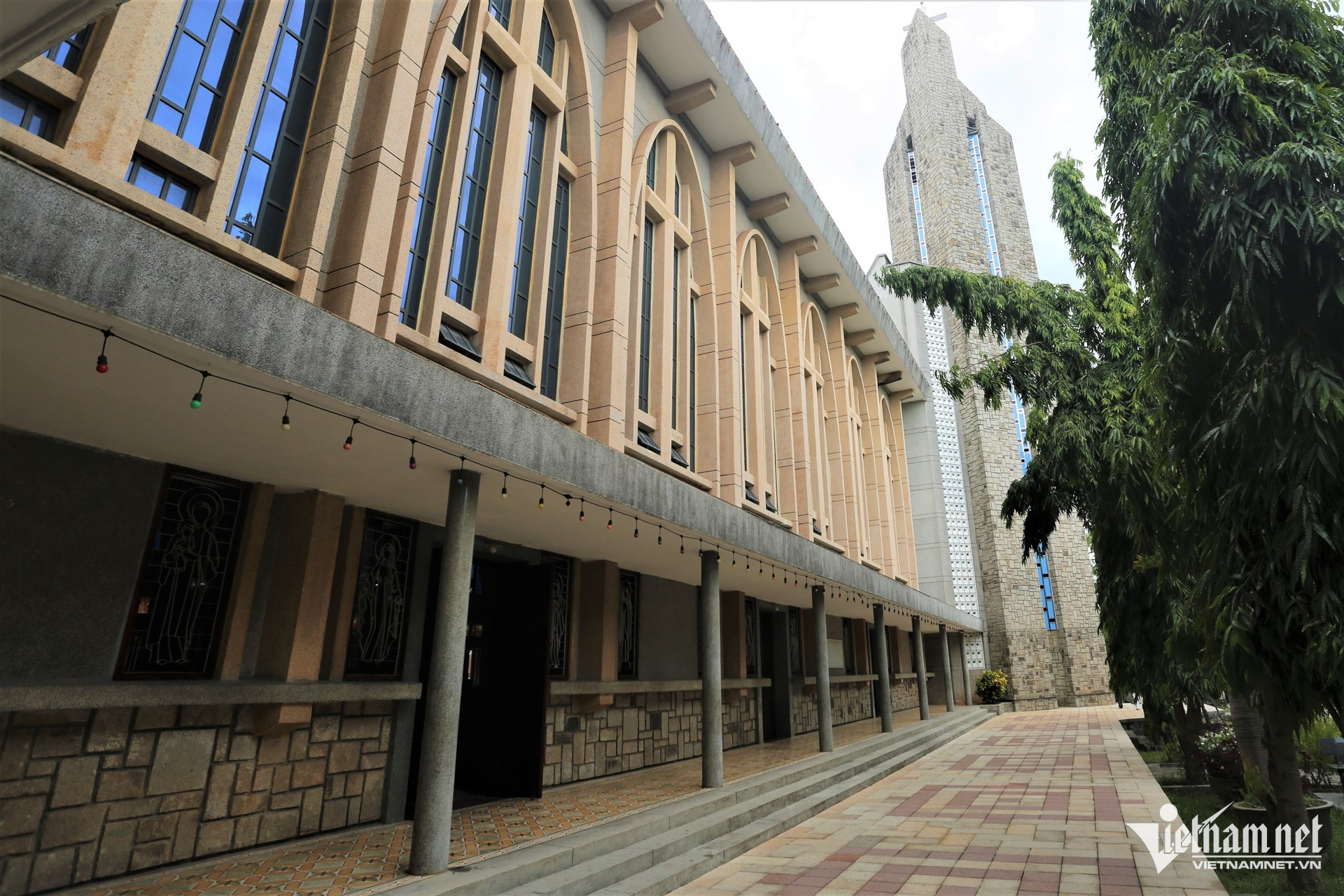
A succession of arches and eaves extends along the corridor, drawing the eye toward the tower at the far end of the cathedral. Deep overhangs provide shade while helping protect the interior from direct sun and wind-driven rain.
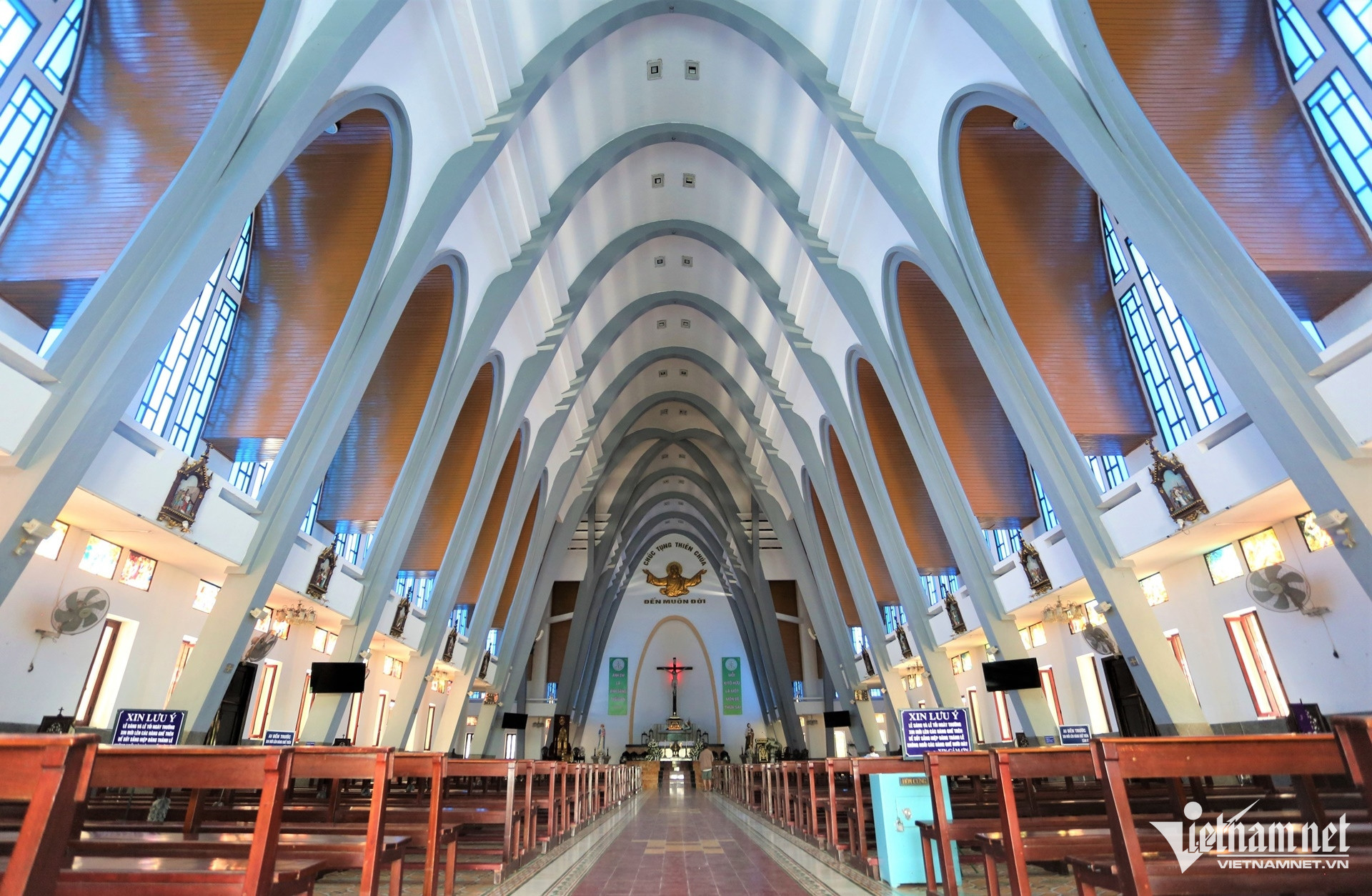
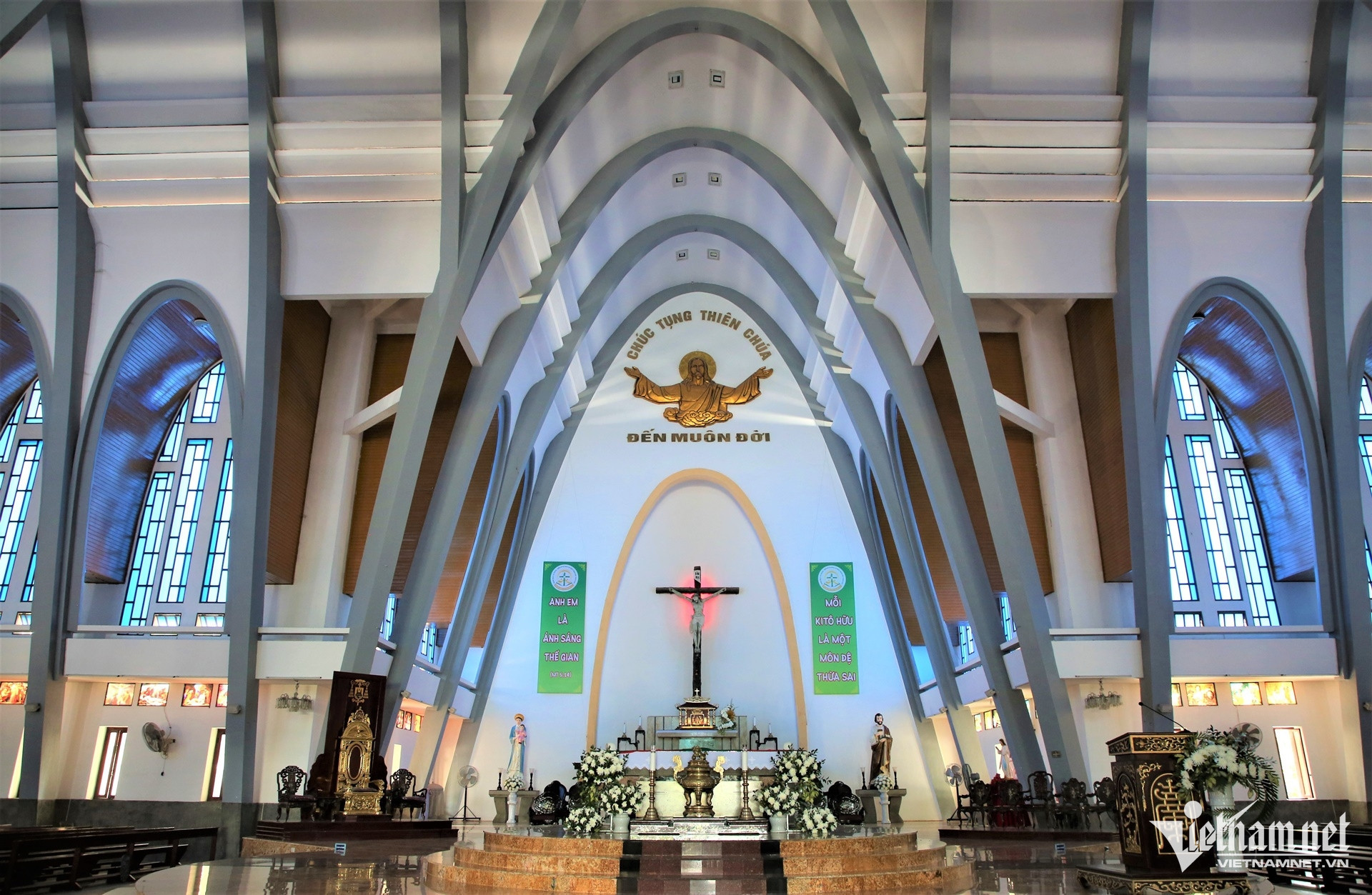
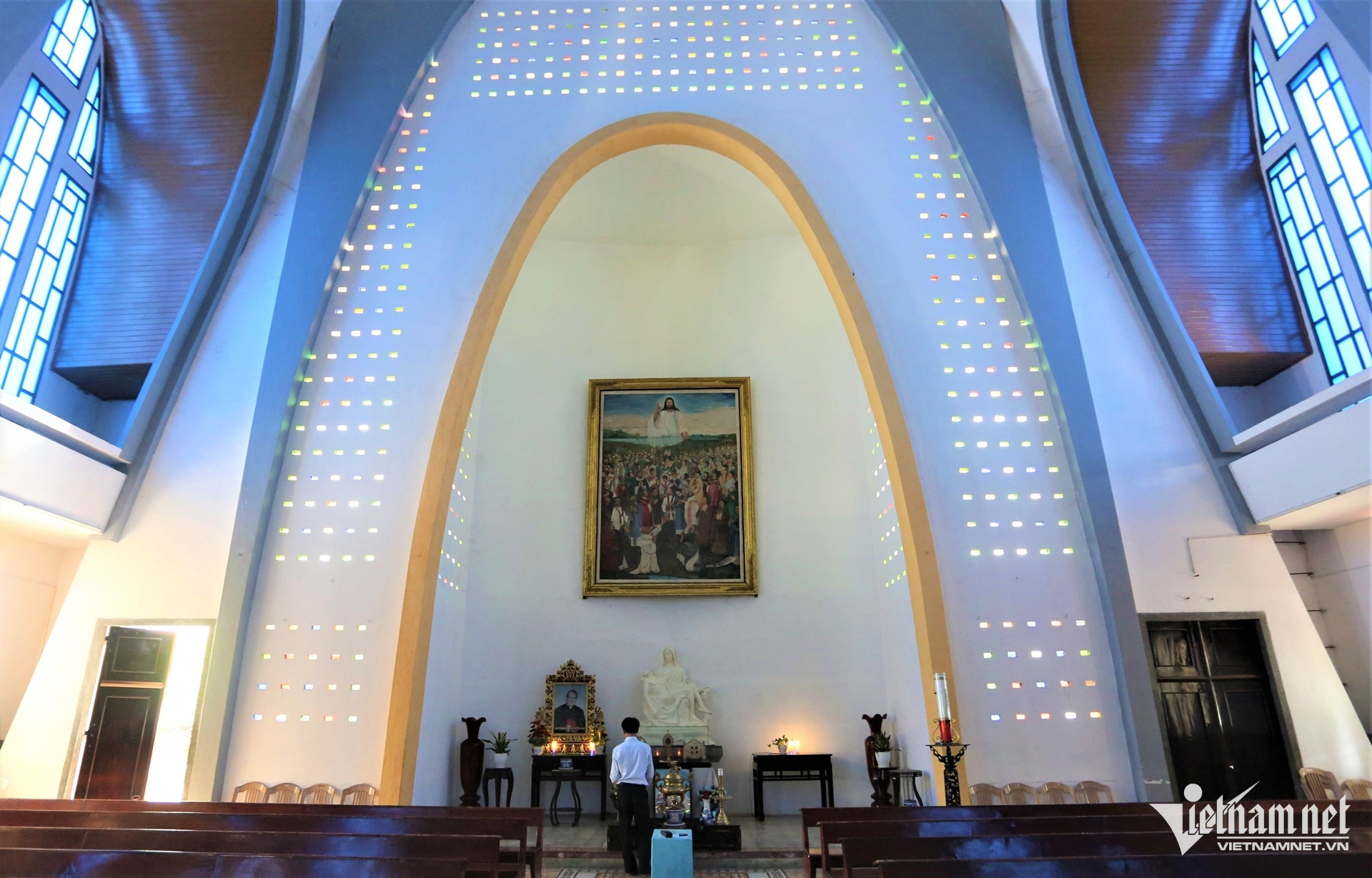
Inside the cathedral, reinforced-concrete pillars stand close to the walls before curving upward and joining to form soaring roof arches, often likened to two hands pressed together in prayer.
The pillars serve both a structural purpose and as one of the defining visual features of Phu Cam’s interior.
The sanctuary sits at the intersection of the cathedral’s cruciform plan. Circular in form, it is approached by a series of steps.
The main altar, carved from a single block of marble, stands on a raised platform near the recessed rear section of the church, forming the focal point of the sanctuary.
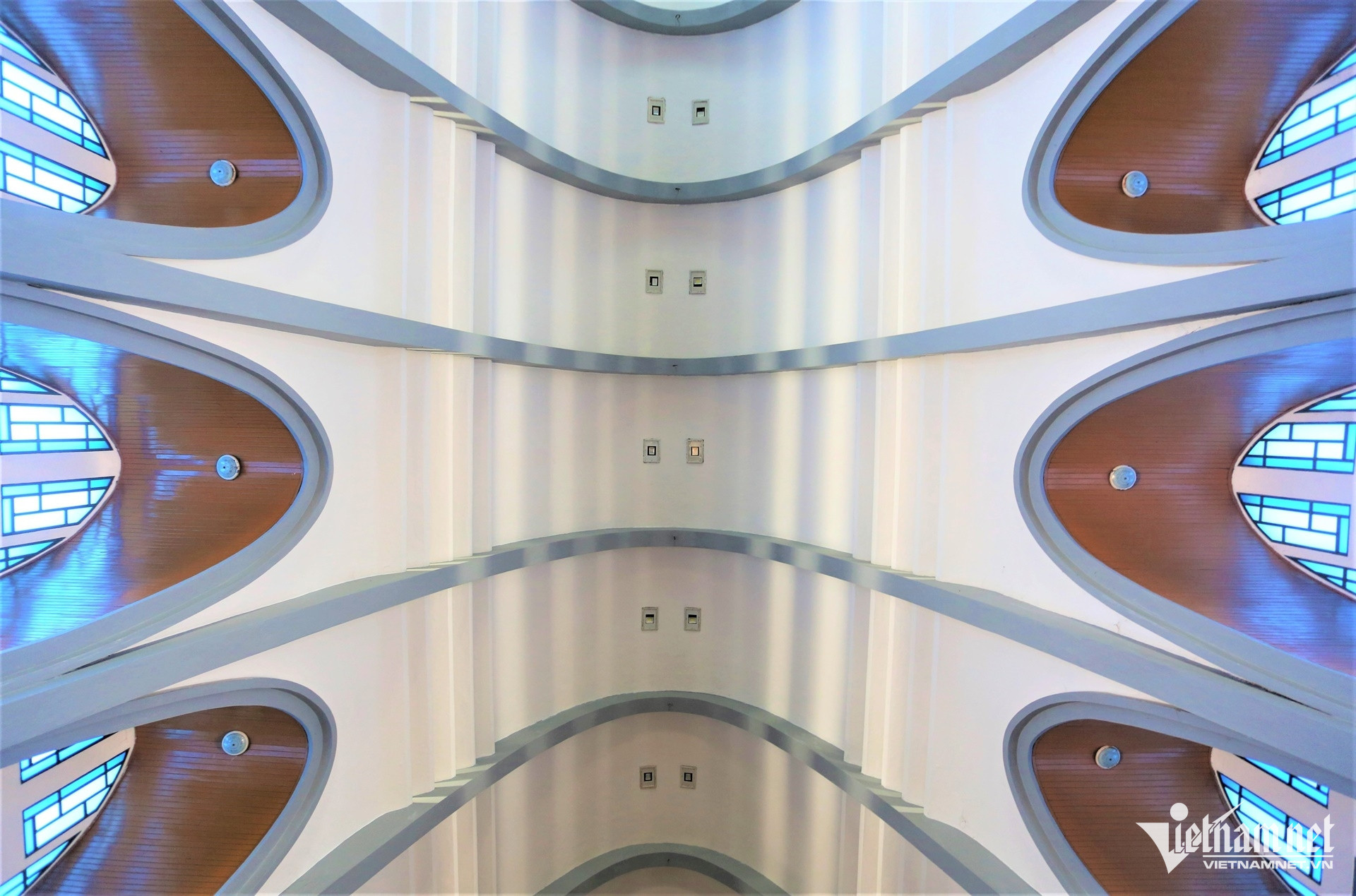
The curved pillars continue upward and intersect in an almost symmetrical composition across the ceiling. The vaulted structure rises to 21.5 meters, with its sweeping curves serving both structural and visual purposes.
Tall arched windows repeat along the walls, combining blue-colored glass with cross motifs. Sunlight passing through the glass casts shifting tones across the interior surfaces.
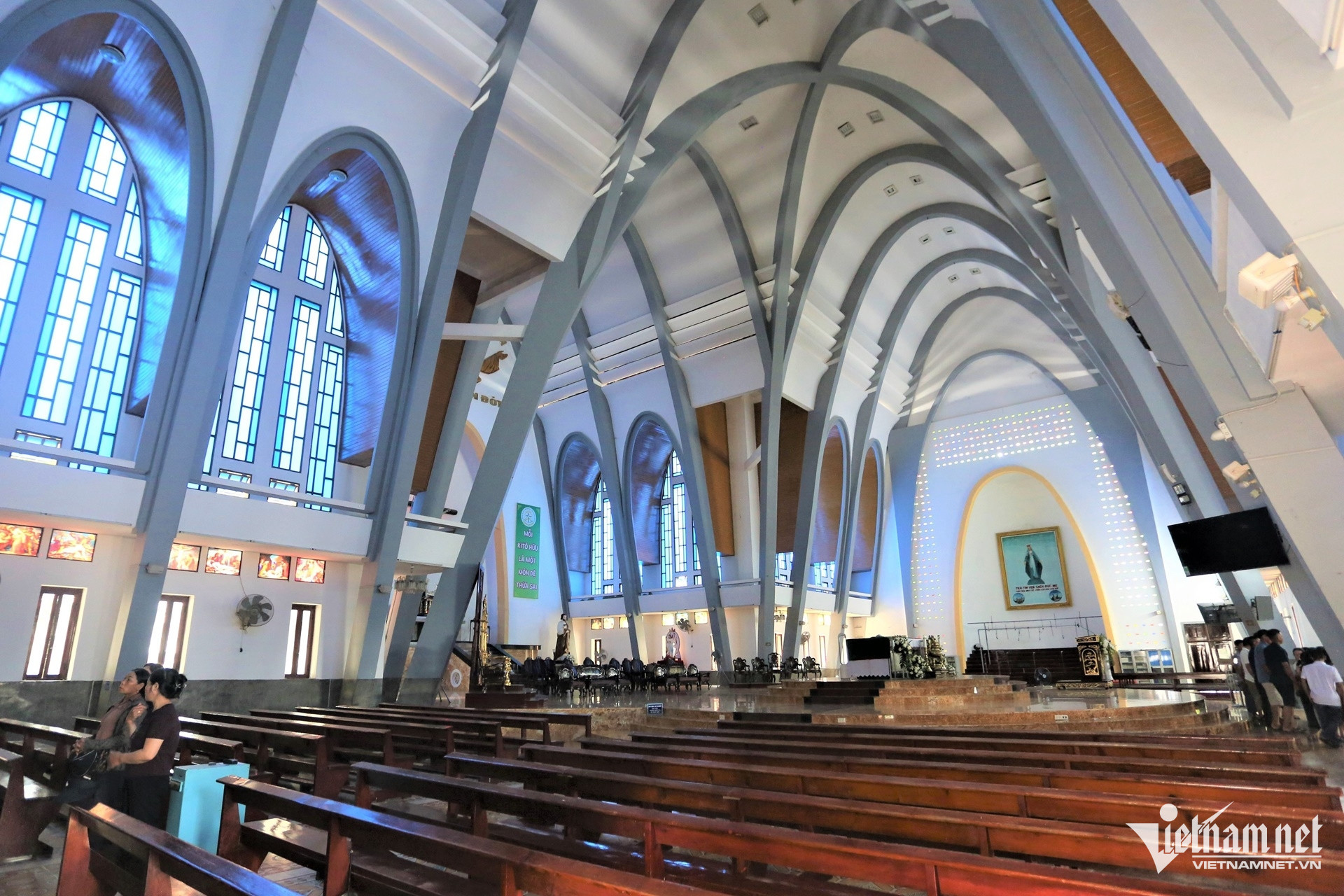
Rows of pillars, arches, windows and pews emphasize the depth and scale of the cathedral, whose interior can accommodate around 2,500 people.
The walls on either side are decorated with wood-framed artworks depicting stages in the life of Jesus Christ.
Numerous small openings high in the vaulted structure create spots of color as natural light filters through. The effect brings movement and texture to the cathedral’s vast surfaces and arches.
Phu Cam Cathedral hosts many of the religious activities of the Archdiocese of Hue and also welcomes groups of Catholic pilgrims.
Amid the rhythms of modern city life, Phu Cam Cathedral retains its distinctive presence, standing out across Hue while remaining a familiar part of the landscape of Vietnam’s former imperial capital.
Today, the cathedral serves both as an active place of worship and a popular destination for visitors.
Inside, reinforced-concrete pillars curve upward into soaring arches, a form often likened to hands pressed together in prayer.
Ha Nam
.svg)
