 Vietnamnet.vn

 Podcast



Dam Vac, a natural freshwater lake formed from an expanded branch of the Canh River, is located across Vinh Yen and Vinh Phuc wards in Phu Tho province (following recent administrative consolidation). This lake is the origin of tep dau - an unassuming yet iconic ingredient of local cuisine.

Locals describe tep dau as a native fish, small and translucent, typically 5–7 cm long with bodies as narrow as a bamboo leaf. Despite its size, the fish has a distinctly rich, oily flesh - hence its name, which loosely translates to "oil shrimp."
Though found in various northern rivers and lakes, tep dau is most abundant in Son La’s hydropower lake and Dam Vac.
According to Ms. Le Ngoc, a resident of Vinh Phuc ward, the best season for tep dau is late summer to early autumn, from August to October. This is when the fish are full of roe, enhancing both flavor and richness.
“Unlike other small fish, tep dau is firm and sweet thanks to its natural freshwater habitat,” Ngoc said.
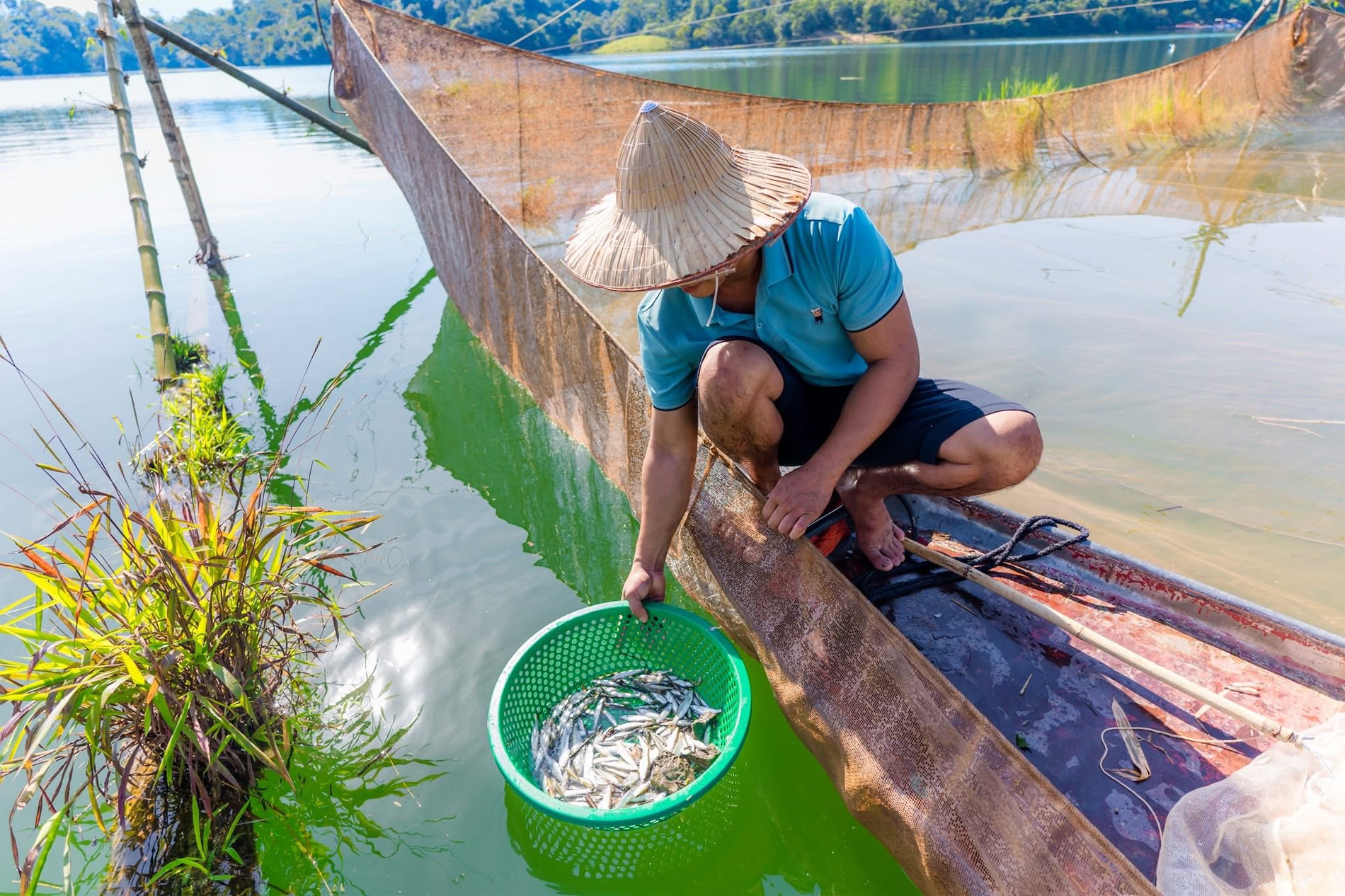
During the final rains of summer, tep dau appear in greater numbers. Locals take advantage of this brief season to set traps and cast nets, especially the traditional multi-compartment "bat quai" traps. As the fish swim in schools during spawning, they tend to hide in these traps - making for easier collection.
Tep dau are known for their soft bones and minimal scaling. At maturity, they’re about the width of a finger, with firm bodies and roe-filled bellies. Once cooked, they release a rich, distinctive aroma and flavor - particularly when braised in fermented soy.
“Catching tep dau isn’t hard,” Ngoc shared, “but untangling them from the nets is extremely time-consuming and delicate work.”
In local cuisine, tep dau stars in several beloved dishes, the most popular being crispy fried and soy-braised versions.
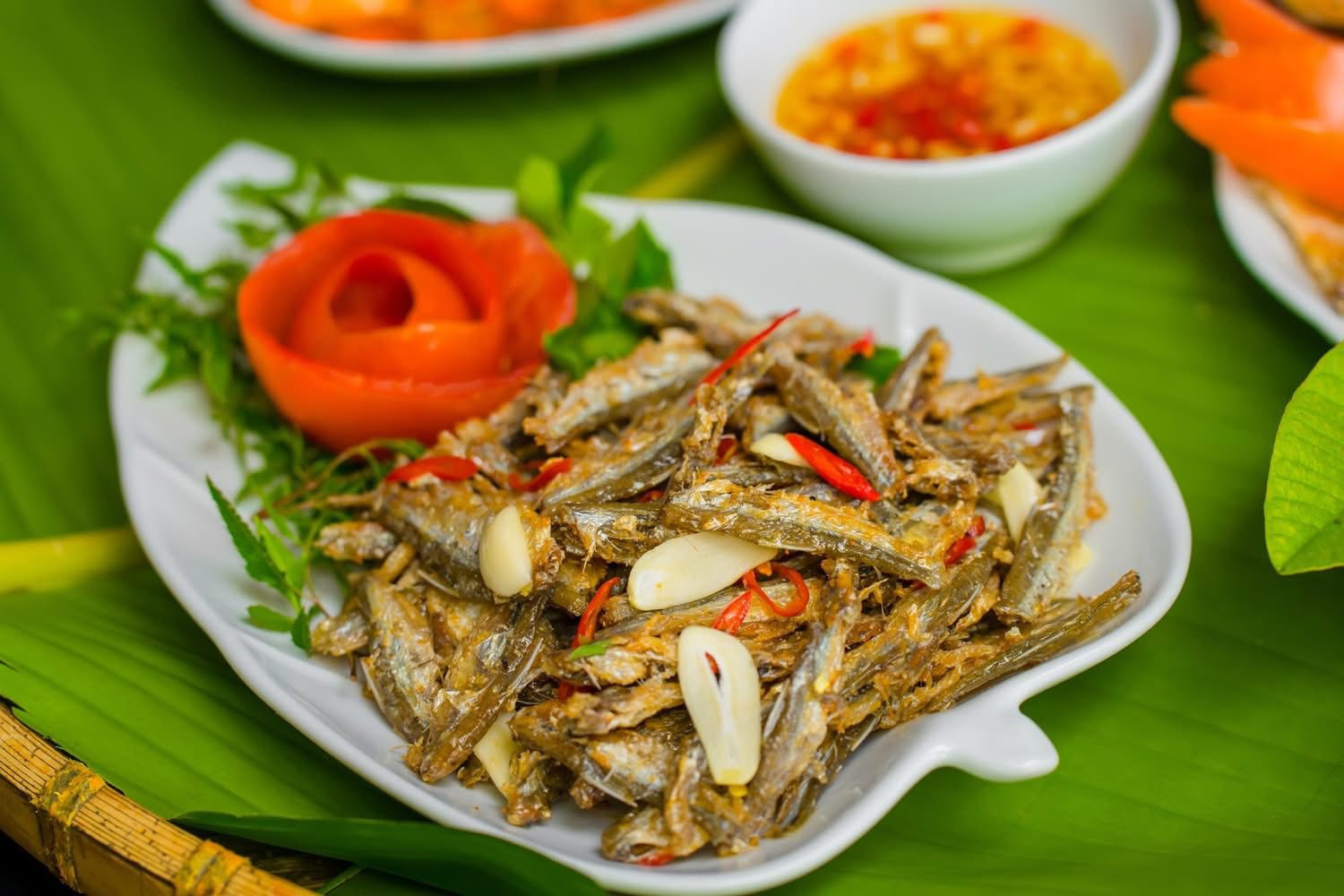
When freshly caught, the fish are gutted (with roe retained), then lightly salted and immediately fried. Thanks to their natural oil content, they require little additional fat to become crisp and golden. The result is a dish that’s both rich and fragrant, yet not greasy.
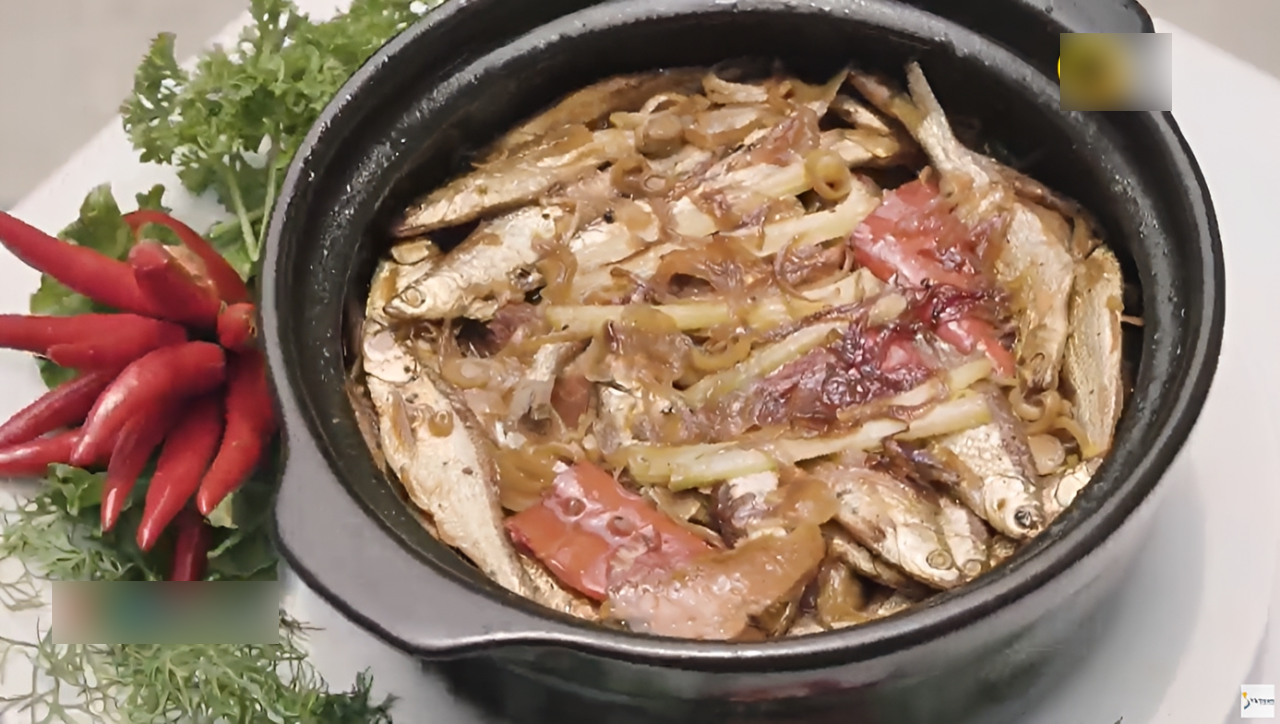
For the braised version, the cleaned fish are salted to firm them up, then simmered slowly with soy sauce. Each household has its own twist, but the classic version uses ginger and dark caramel (nuoc hang) for both flavor and color.
The best method is slow braising in clay pots or cast-iron pans over a wood fire - imparting depth and smokiness. Importantly, the fish are left undisturbed during cooking to preserve their shape and texture.
“Tep dau has a naturally sweet, buttery taste that doesn’t tire the palate. The bones are so small, you can eat the entire fish,” Ngoc noted.
Over time, tep dau has transcended the home kitchen to appear on menus of local restaurants throughout Phu Tho. Its culinary versatility continues to grow.
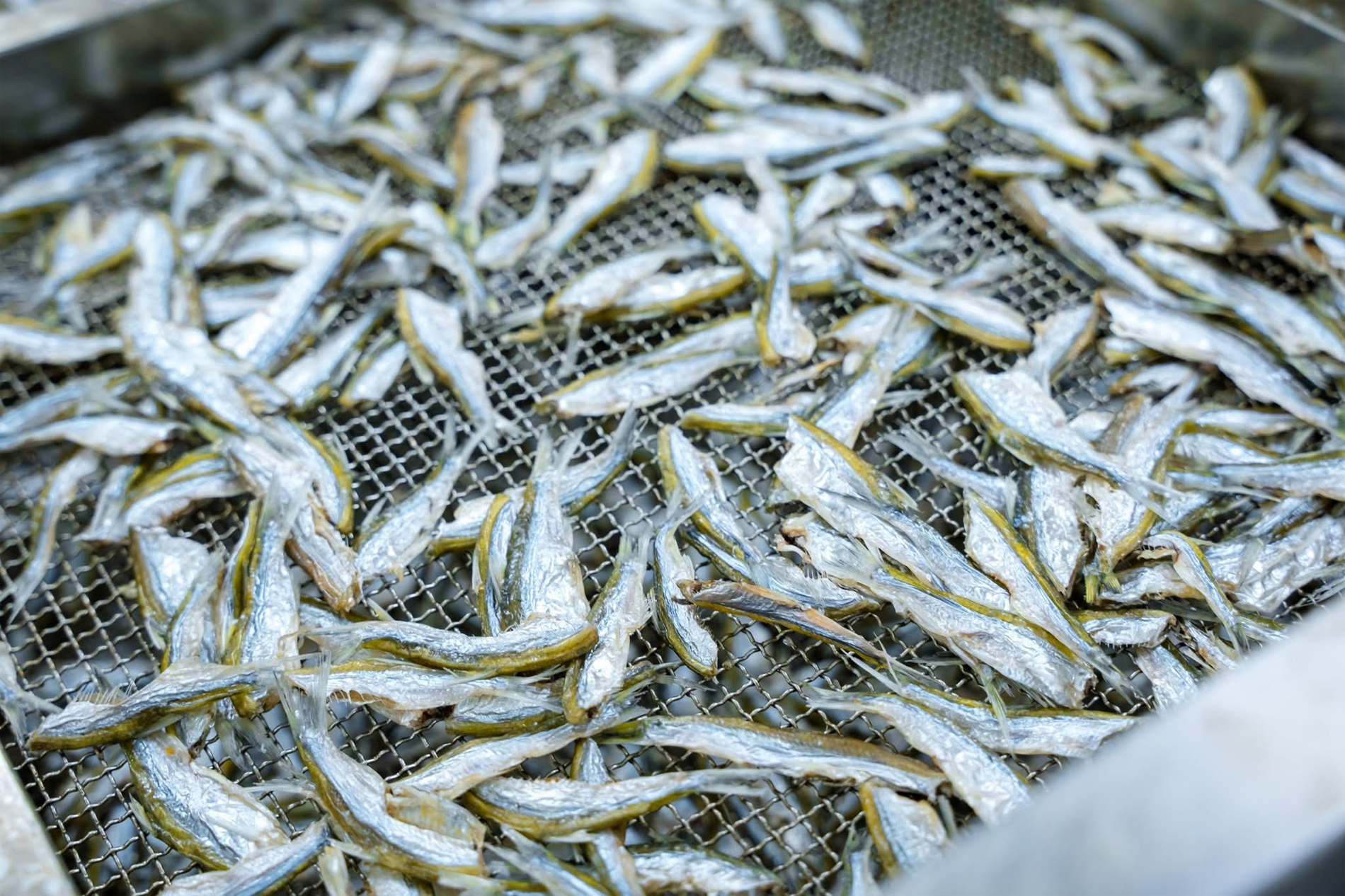
Beyond frying and braising, Dam Vac’s tep dau is also sun-dried, made into soup with cassava leaves, fried with tamarind and lime leaves, or minced and mixed with lean pork to create a rustic fish cake.
Each dish highlights a different nuance - enough to charm even the most discerning diners.
For the locals, tep dau is more than a seasonal treat. It’s a part of their culinary memory, deeply embedded in the everyday culture and shared meals of generations.
Thao Trinh
.svg)
