 Vietnamnet.vn

 Podcast



Hoai Thanh
During the durian harvest season in Can Tho, teams of skilled workers climb trees that rise dozens of meters above the ground, coordinating with remarkable precision to catch each fruit before it falls. The physically demanding job can earn workers between VND700,000 and VND2 million (approximately US$27–76) per day.
A job that looks simple but demands precision
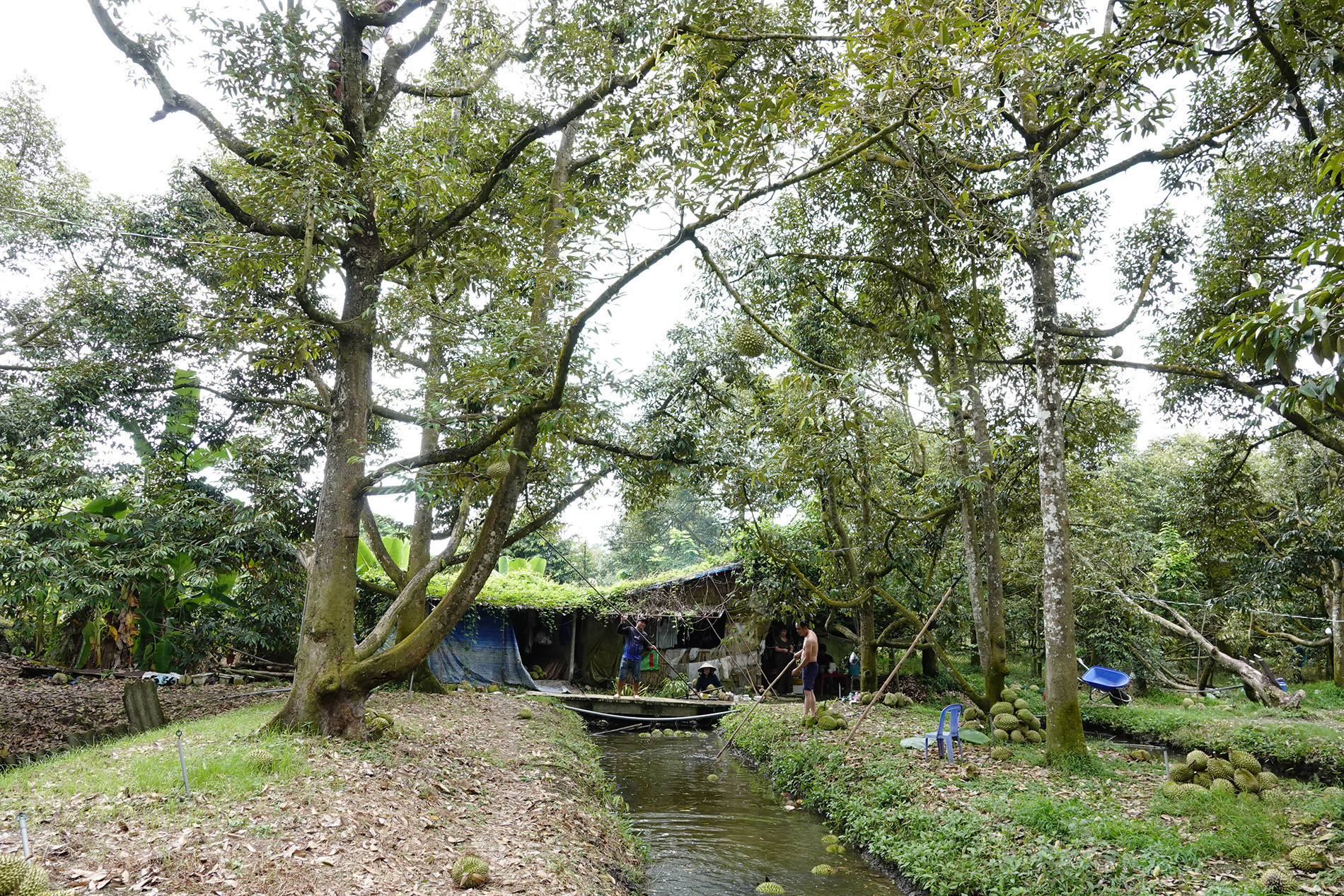
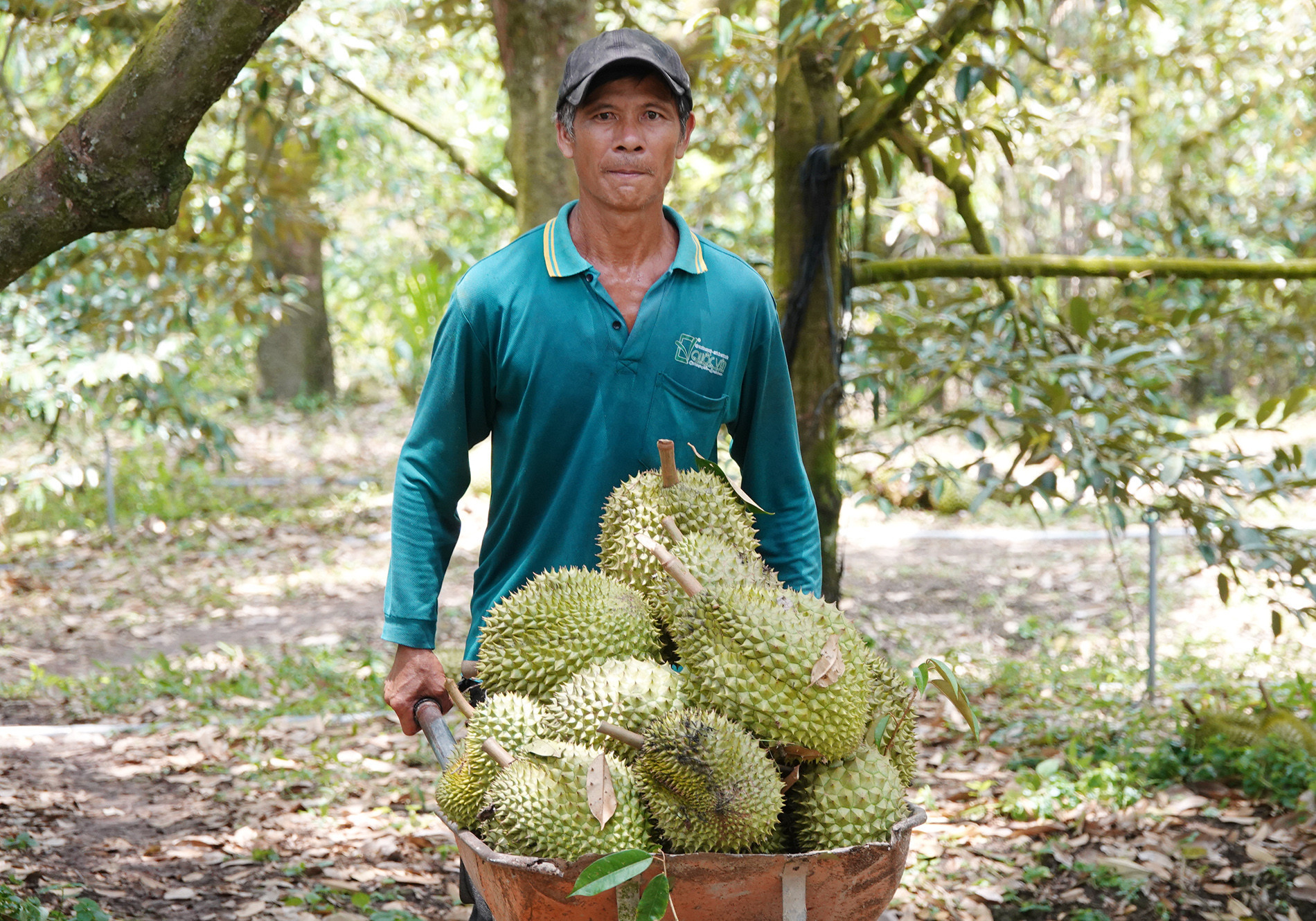
Under the blazing Mekong Delta sun, the orchard of more than 150 Ri6 durian trees - each nearly 30 years old - owned by Bay Nho in Phong Dien Commune, Can Tho, enters its busiest harvest season of the year.
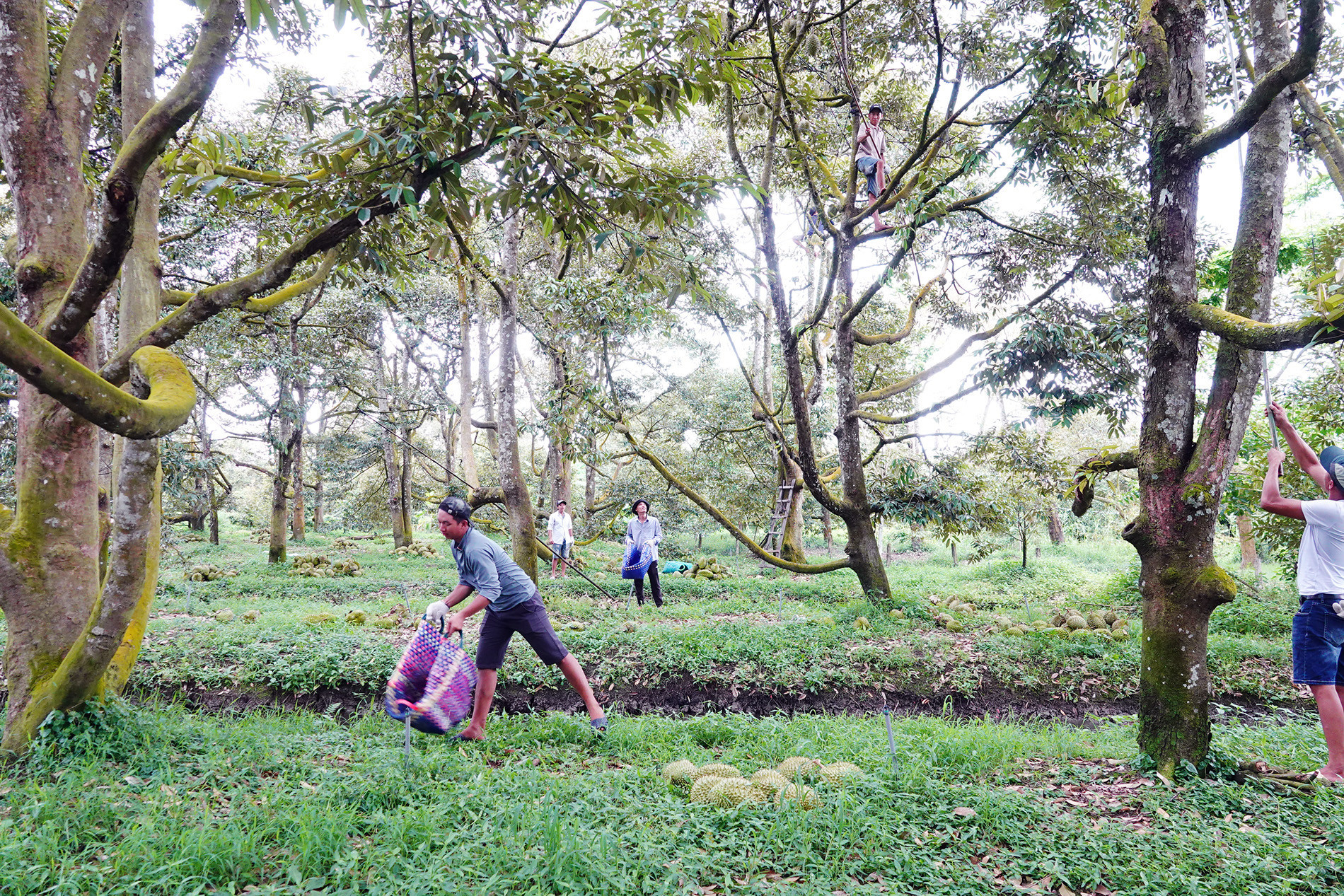
From early morning, the orchard comes alive with shouted instructions, the sound of bamboo poles striking branches and the thud of durians landing safely inside catching bags, as harvest teams work continuously until late afternoon to meet deliveries for fruit traders.
Harvesting mature durian trees has often been compared to an acrobatic performance, requiring split-second coordination between the cutter high in the tree and the catcher waiting below.
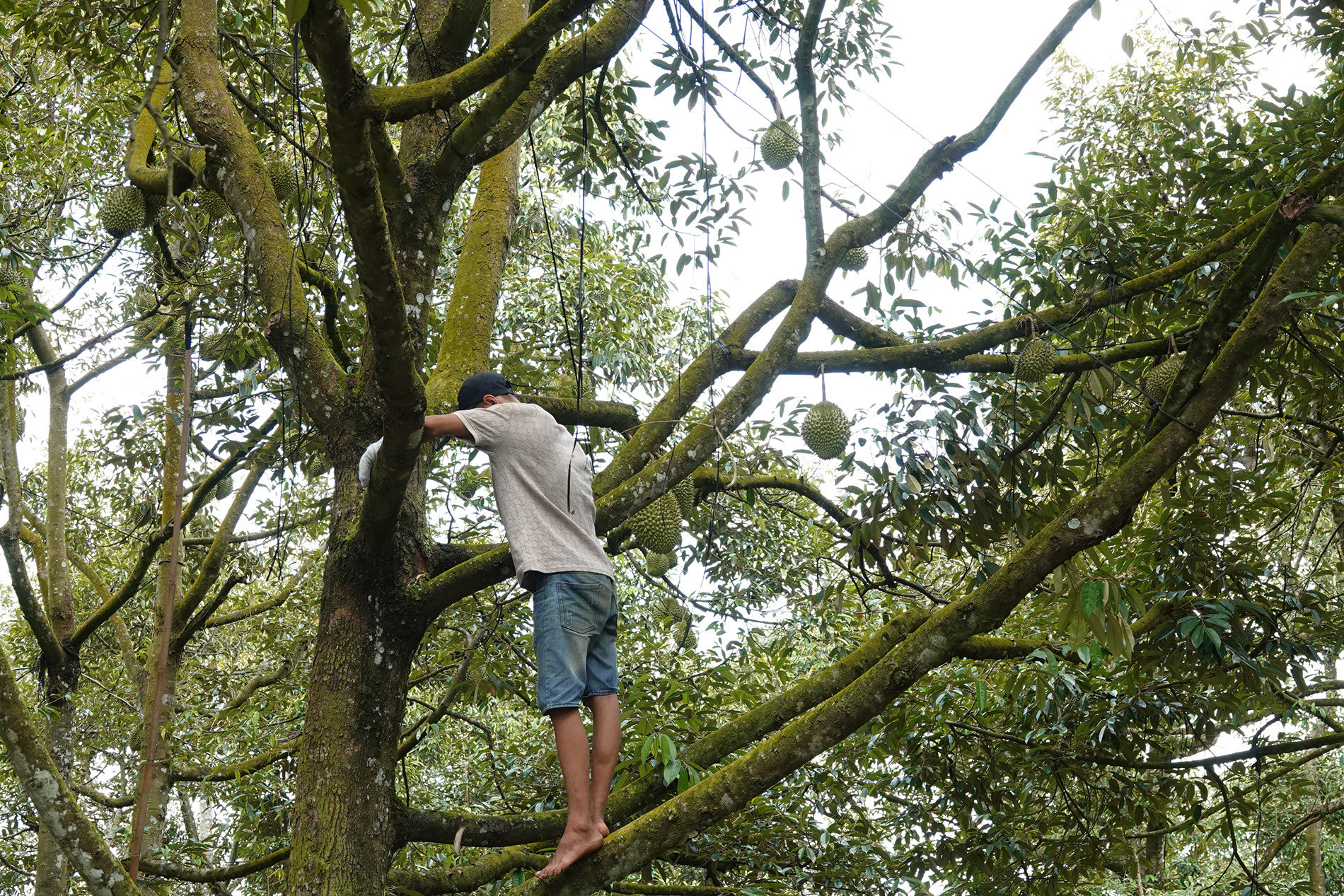
For first-time observers, one of the most nerve-racking sights is watching durians weighing between three and five kilograms - sometimes even heavier - being lowered from heights of several dozen meters without a single scratch or cracked shell.
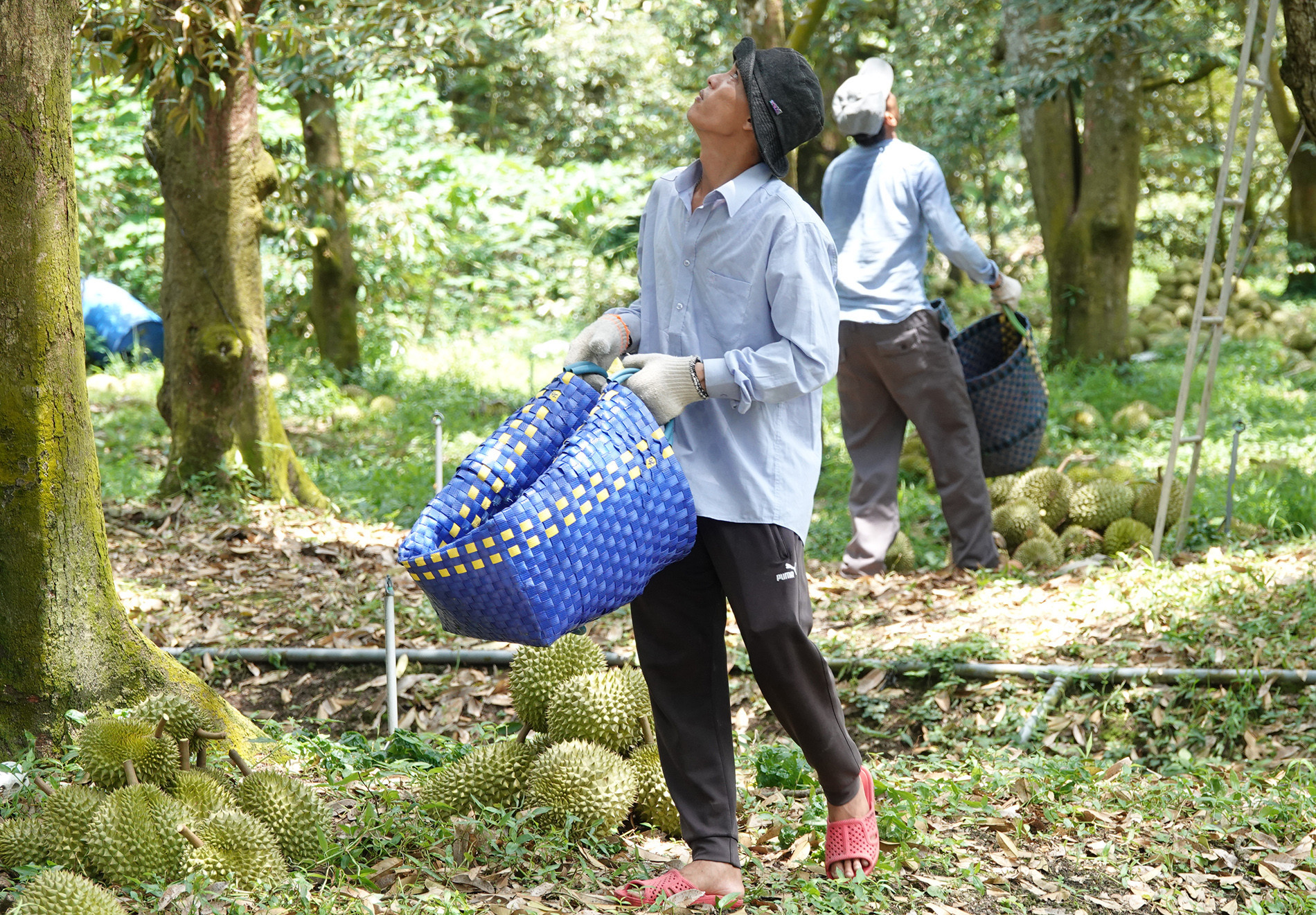
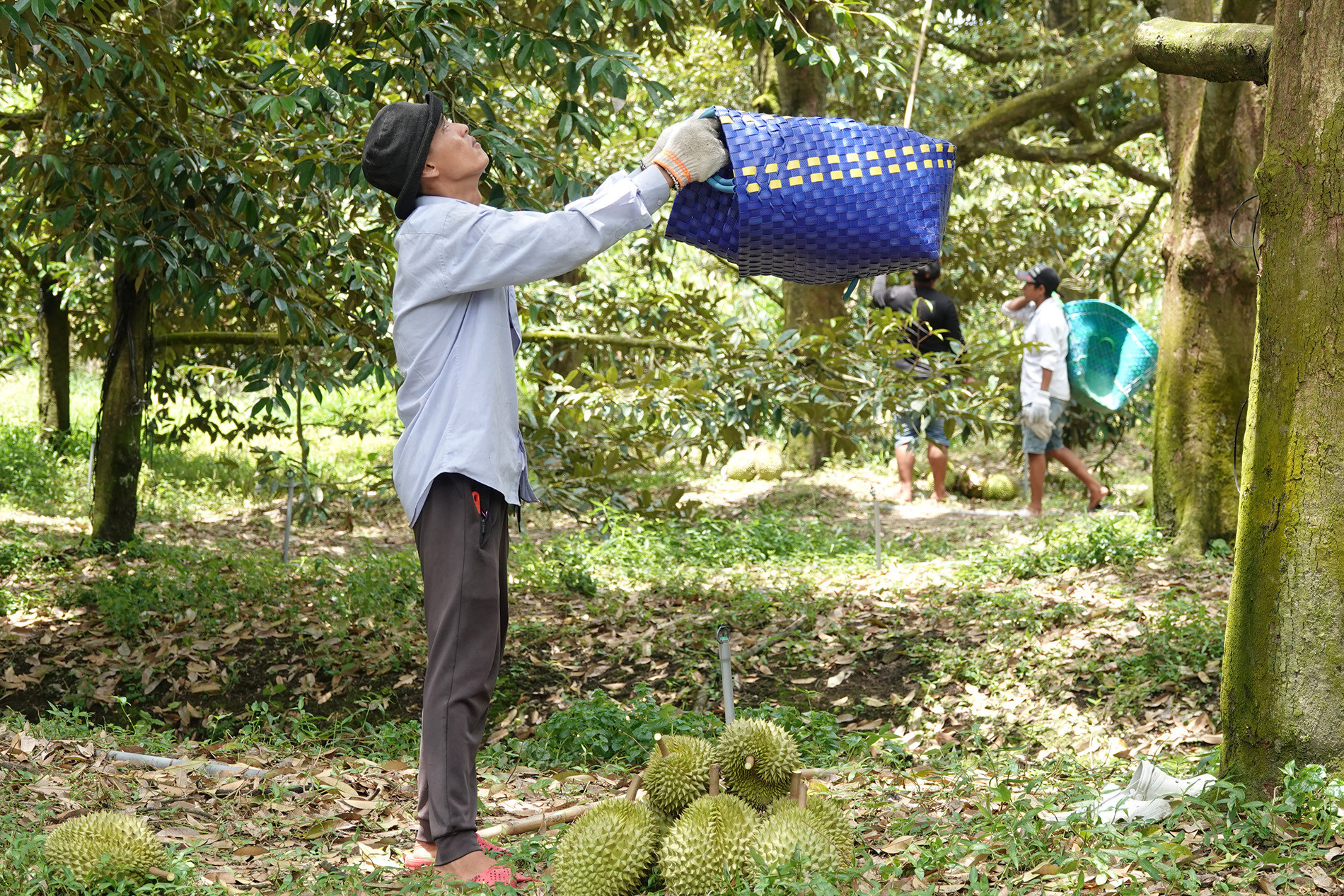
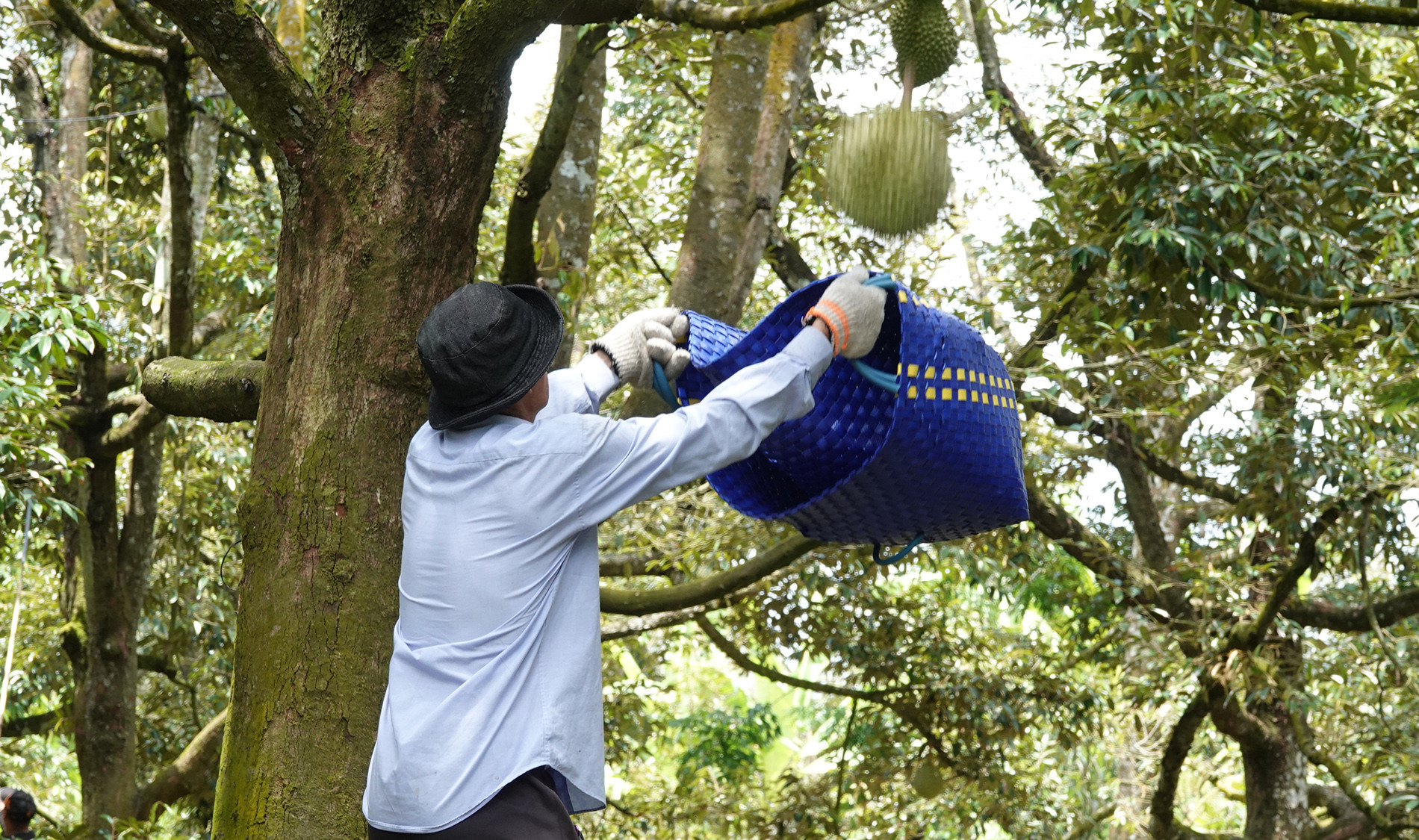
To achieve this, each tree is usually handled by a two-person team. One worker climbs into the canopy and uses a long bamboo pole to identify mature fruit before cutting the stem. On the ground, the second worker remains focused on the tree at all times, carefully positioning a large catching bag to match the fruit's trajectory.
A delay of only a few seconds or a slight misjudgment can send the fruit crashing onto the ground, bruising or cracking the shell and immediately reducing its market value.
Nguyen Anh Tuan, 30, who has worked as a durian harvester for many years, said the job appears straightforward but carries tremendous pressure.
"Every durian is valuable. If one falls too hard and cracks or loses its spikes, the orchard owner suffers a financial loss. That's why we have to work extremely carefully and coordinate perfectly," he said.
Fruit hanging above irrigation canals or deep inside dense branches requires even greater skill. After cutting the stem, harvesters must accurately calculate the fruit's direction of travel and sometimes use large netted baskets to guide it safely, preventing impact damage or accidental drops into the water.
The specialists who "knock" durians
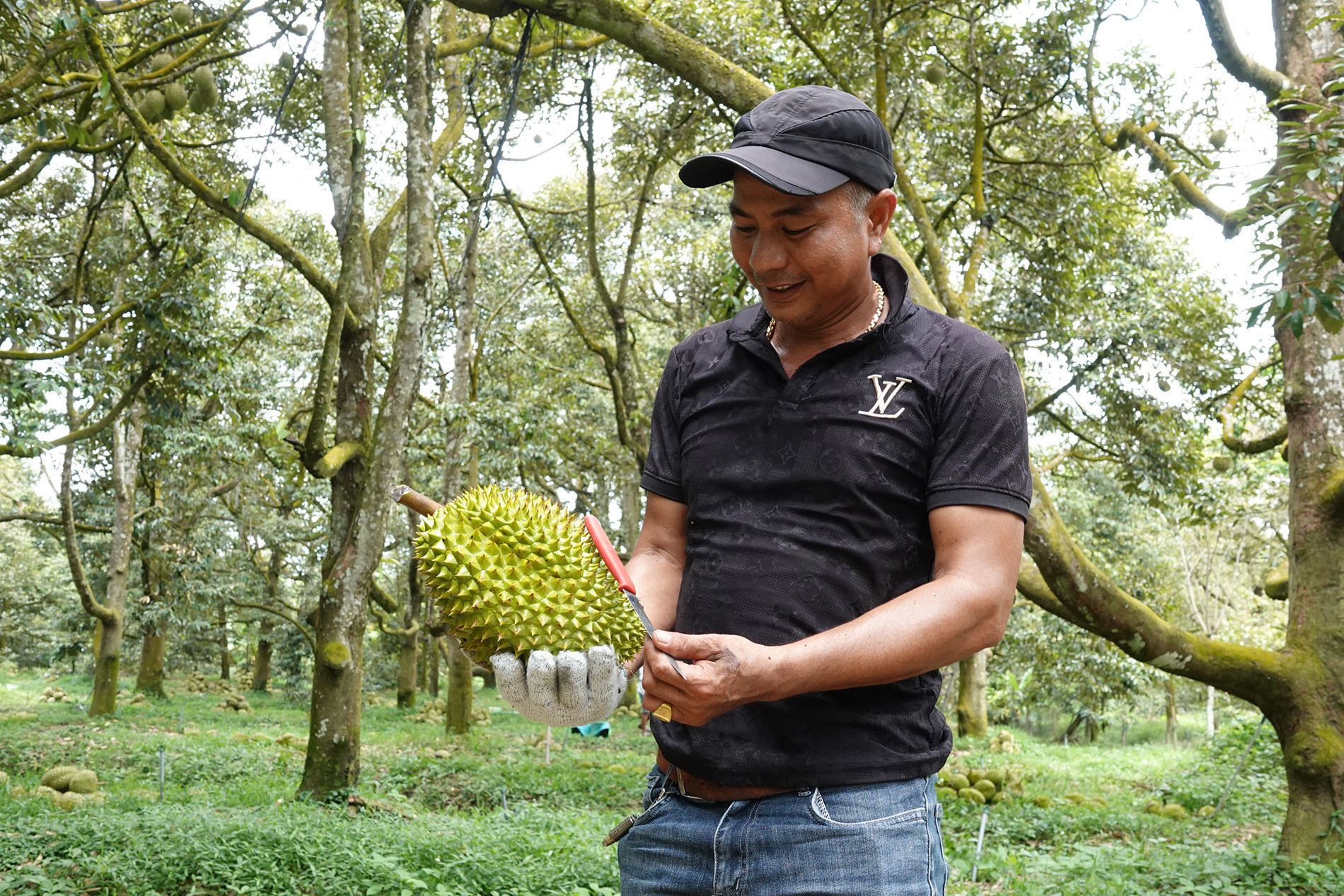
Alongside the harvesting crews, another group of specialists remains busy throughout the season. Known locally as "durian knockers," their role is not to pick fruit but to determine the precise harvest date.
The work requires years of experience because misjudging maturity by only a few days can significantly affect the fruit's quality after harvest.
Before inspecting a tree, workers usually ask the orchard owner how many days have passed since fruit set. Depending on the variety, some durians are harvested after around 90 days, while others require between 110 and 120 days.
They then examine the stem, shell color and spikes. Experienced workers say a darker shell and slightly wrinkled spikes are among the signs that the fruit has reached maturity.
The most important technique, however, is the tapping test. Using the handle of a knife or a small metal rod, the worker gently taps the shell. A hollow, muted sound indicates the fruit is mature, while a heavier, solid sound suggests it is still immature.
Thanh, an experienced durian maturity inspector from Can Tho, said distinguishing between ripe and unripe fruit is relatively easy, but accurately identifying fruit that is nearly mature requires far greater expertise.
"Some Ri6 orchards are especially difficult. A fruit may sound perfect when tapped, but after opening it, the flesh is still immature because the tree lacked water or lost too many leaves, changing its normal ripening pattern," he explained.
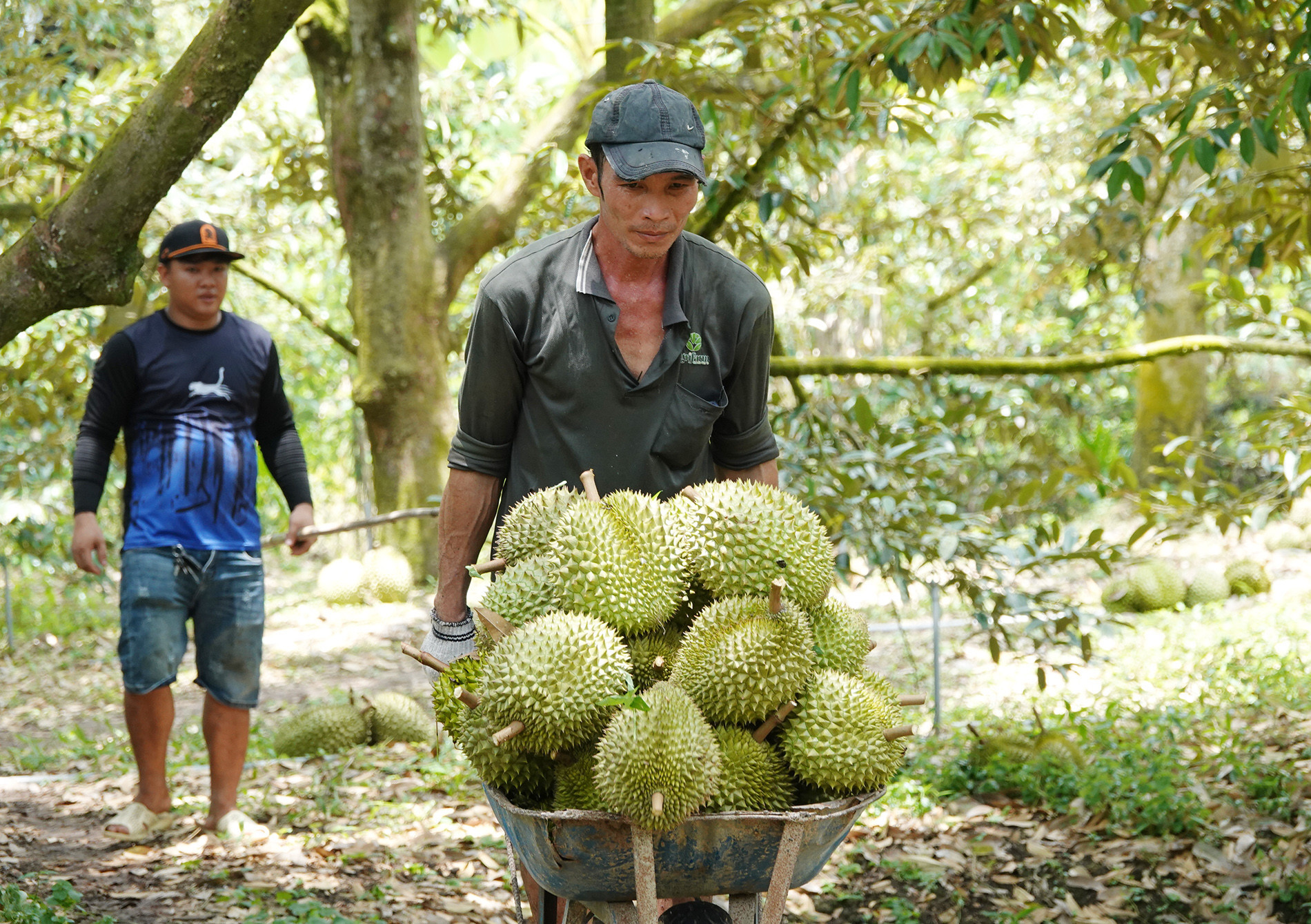
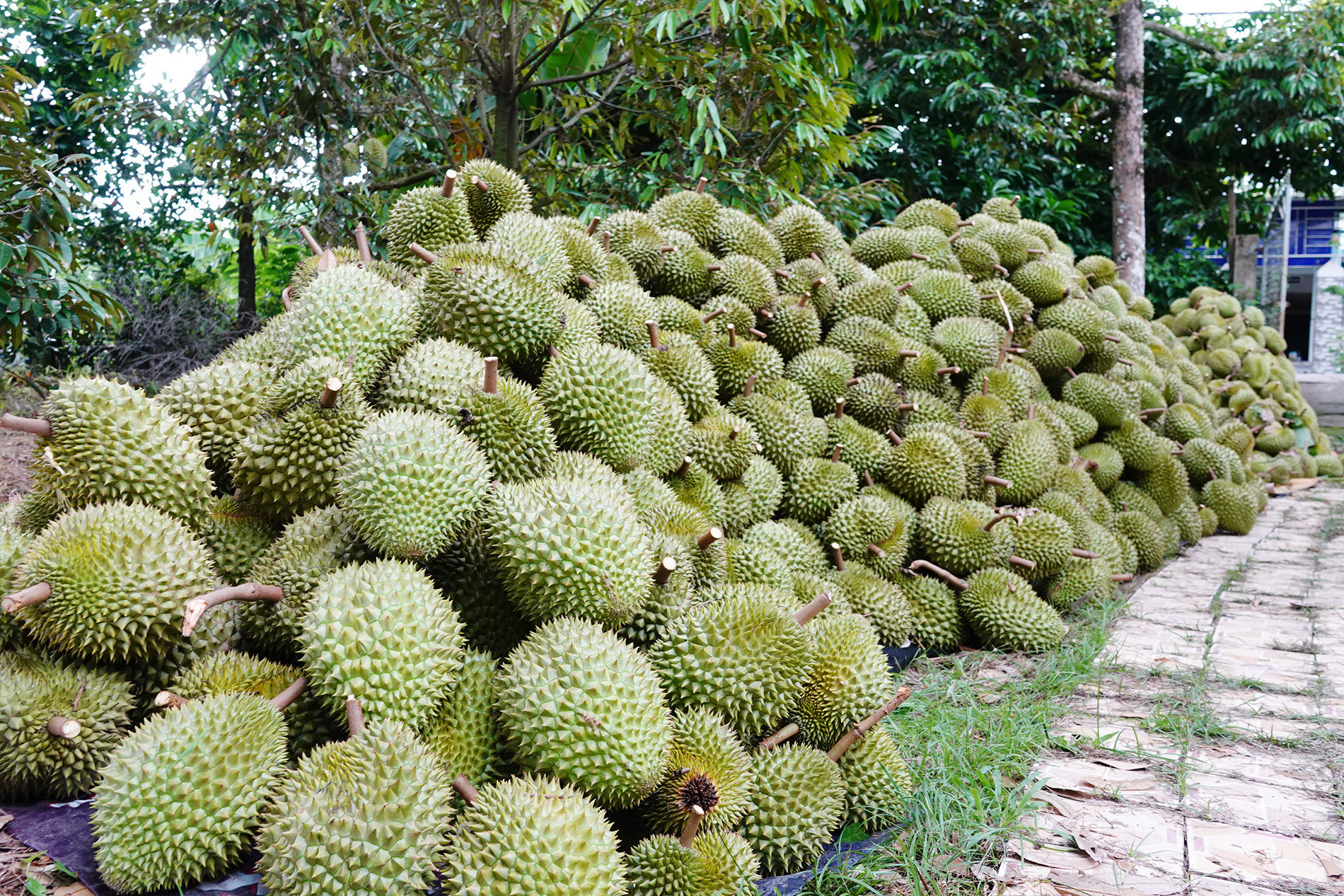
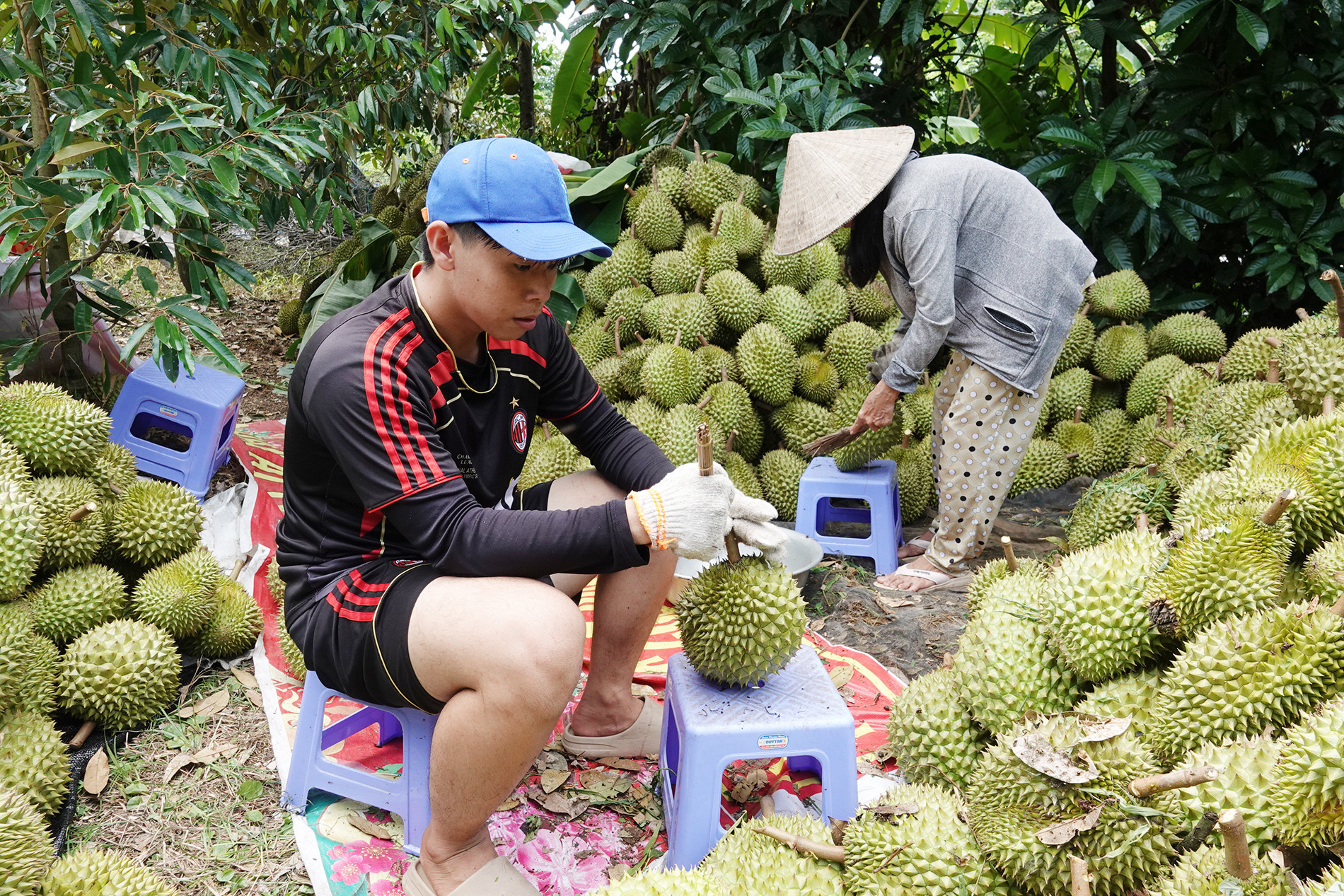
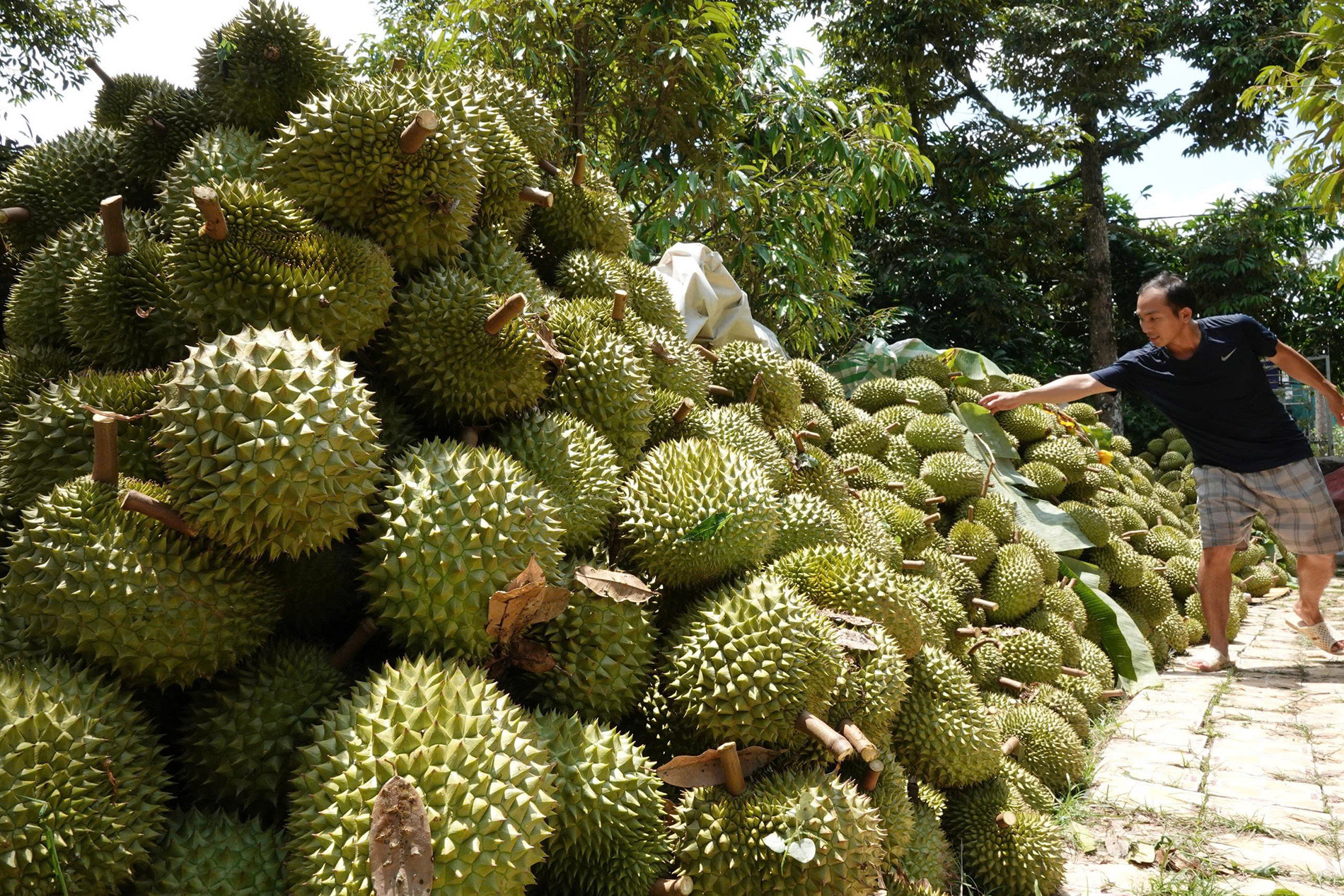
After harvesting, the durians are counted, sorted by size and loaded onto vehicles for transport to collection points.
During peak harvest days, work crews operate almost without breaks. Many begin before sunrise and continue until evening to fulfill orders.
The demanding work is rewarded with attractive earnings. Some orchard owners pay harvest teams according to output, while others hire workers on monthly contracts and offer bonuses for high productivity. On average, each worker earns between VND700,000 and VND2 million (US$27–76) per day.
Duong Dinh Tuyen, Bay Nho's nephew, said the family's orchard of more than 150 Ri6 durian trees has been cultivated for nearly three decades. Despite changing weather conditions over the years, the trees have continued to produce reliable harvests and remain the family's primary source of income.
"Every harvest season brings happiness when we see the trees full of fruit. The orchard not only supports our family but also creates jobs for many local workers throughout the season," Tuyen said.
Photos: Thien Chi
.svg)
