 Vietnamnet.vn

 Podcast



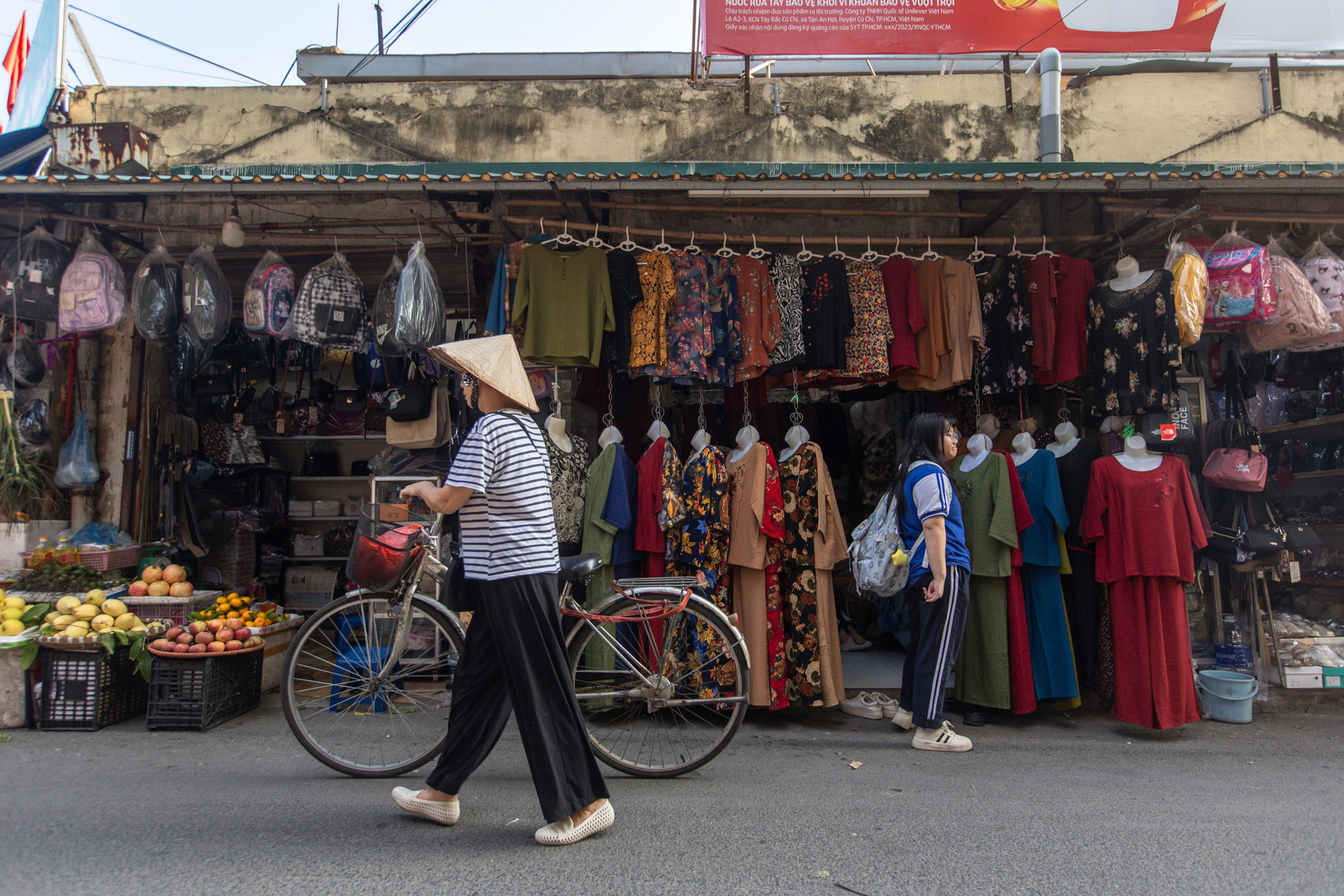
Meanwhile, a small manufacturing firm has paused its expansion plan as borrowing costs have changed. Rising interest rates have weakened its confidence to take on additional loans.
These two examples, when placed alongside positive growth figures, suggest a notable condition: Vietnam’s economy appears to be operating at two different tempos - stability at the macro level and greater caution at the micro level.
High growth indicators
Statistics show that the main drivers of the economy are still functioning well. In the first two months of the year, the industrial production index increased by 10.4 percent, with the processing and manufacturing industry alone increased by 11.5 percent.
Total import-export turnover reached $155.7 billion, an increase of 22.2 percent over the same period. State budget revenue increased by more than 13 percent. Public investment disbursement reached 9.4 percent of the annual plan, higher than the same period last year.
Prior to that, Vietnam experienced a year of very strong growth: GDP increased by 8.02 percent; processing and manufacturing increased by nearly 10 percent; and exports 16 percent. This is an important foundation helping the economy enter 2026 with a strong momentum.
The economy is still growing, but not every sector is growing at the same pace.
The micro sector
If looking from the perspective of businesses and people, the picture becomes different.
In the first two months of the year, there were 64,500 businesses entering and returning to the market, but as many as 77,000 withdrew. The number leaving was even higher than the number joining.
Back in 2025, the figure was even larger. About 227,200 businesses left the market – a significant number even in a high-growth year. At the same time, the number of dissolved businesses increased by more than 66 percent, showing that pressure had accumulated beforehand.
On the consumer side, total retail sales of goods and services increased by 7.9 percent, but if the price factor is excluded, the real increase was only about 4.5 percent. People are still spending, but clearly more cautiously.
The caution does not stem entirely from declining income. Surveys found that up to 95.5 percent of households said their income did not decrease or even increase compared to the same period. But actual consumption increased slowly, showing that the problem lies more in psychology.
When confidence is not strong enough, cash flow tends to seek safer assets instead of going into consumption or production investment.
The situation reflects a common state: the micro sector has not truly "warmed up" again, even though macro indicators are trending upward.
The problem lies in the growth structure itself.
In the first two months of 2026, the FDI sector accounted for 79.1 percent of export turnover. Meanwhile, exports from the domestic sector decreased. Conversely, the domestic sector saw a large trade deficit, while FDI continued to have a trade surplus.
From a supply chain perspective, 94.1 percent of import turnover was for production materials, while 89.8 percent of exports were processed industrial goods.
This shows that the economy is based heavily on the export-oriented manufacturing sector with a significant level of dependence on imported inputs. But on the other side, domestic demand has not kept pace. This is the bottleneck of the economy.
The supports for growth
Public investment is emerging as a clear pillar of growth. The disbursement progress, which is earlier and higher than the same period, shows that the State is compensating for part of the gap in domestic demand and private investment.
Meanwhile, in many localities, from Hanoi and HCMC to Quang Ninh to Khanh Hoa, mega-townships with scales of hundreds or even thousands of hectares is taking place at a very rapid speed.
According to a market research organization, there are currently about 27 mega-townships being implemented or prepared for implementation with total capital of up to $115 billion, equivalent to VND3 quadrillion.
Meanwhile, the Ministry of Construction reported that there are 3,297 real estate projects with total estimated investment capital of about VND7.42 quadrillion, or 65 percent of GDP.
At the macro level, the drivers remain stable. But at the micro level, the adjustment is taking place more slowly and clearly. This shows that the economy is entering a phase where quality and resilience are just as important as speed.
Tu Giang
.svg)
