 Vietnamnet.vn

 Podcast



Shaping each lion head by hand
Work has been brisk in the days before the festival at the workshop of Doan Thanh Tung, born in 1988. Tung leads the Long Nghia Duong lion and dragon dance troupe in Group 2, Phan Dinh Phung Ward, Thai Nguyen province. His artisans are finishing lion heads in time for the celebrations.
Behind the excitement of a lion dance lies a painstaking process. Using familiar materials such as rattan, paper and fabric, artisans build a frame, apply layers of paper, shape and dry the head, then paint and decorate each detail. Every finished head bears the mark of its maker.
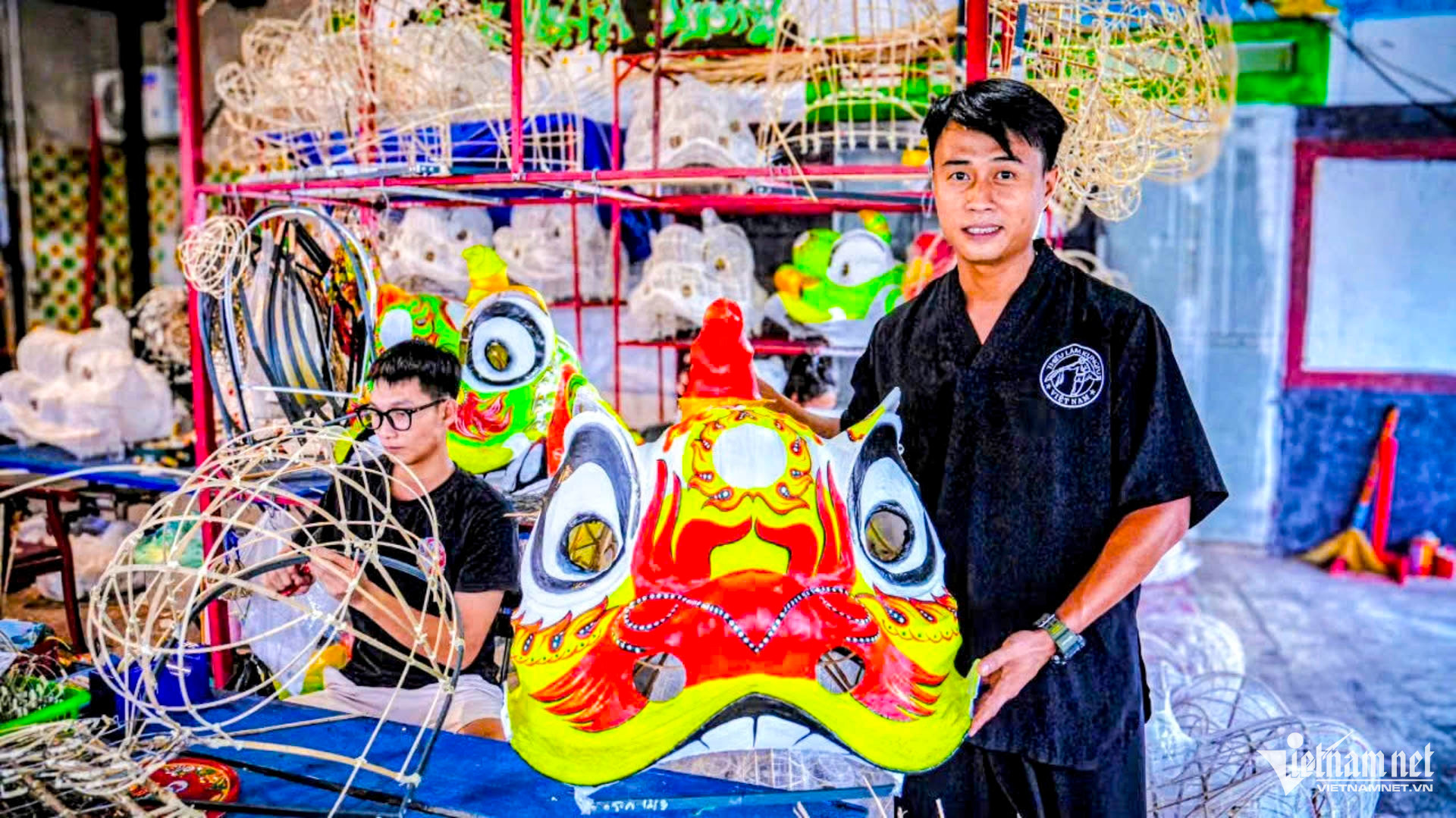
According to Tung, the first step is to bend rattan into the proportions and dimensions of the chosen design. The frame must be strong and balanced, with its defining lines clear from the outset.
Once the frame is complete, artisans use thin fabric and paper, applying multiple layers with glue to form the head. The traditional adhesive is made by cooking starch from rong tubers. Layering the paper takes care: it must adhere firmly, leave a smooth surface and retain the head’s shape.
The next stage is painting the lion’s features. Unlike painting on a flat sheet, artisans work across an uneven surface full of curves, a task that calls for experience and a steady hand.
Nguyen Ngoc Thuong, a member of the workshop, said every step demands patience and attention, from forming the mold, shaping and twisting the frame, weaving and attaching the paper to applying the base colors and painting patterns. The work calls not only for manual skill but also for an artist’s sense of form and color.
The eyes are especially difficult. According to Thuong, they give the lion much of its character. Their shape and colors can make it appear powerful and imposing, fierce or gentle.
Colors and patterns must also work together and suit each type of lion. A completed head combines features associated with the traditional four sacred creatures, including a dragon’s jaw, a lion’s nose, a phoenix’s brows and details evoking turtles and fish. Together, they give it a commanding presence that remains familiar within traditional imagery.
Keeping the craft alive
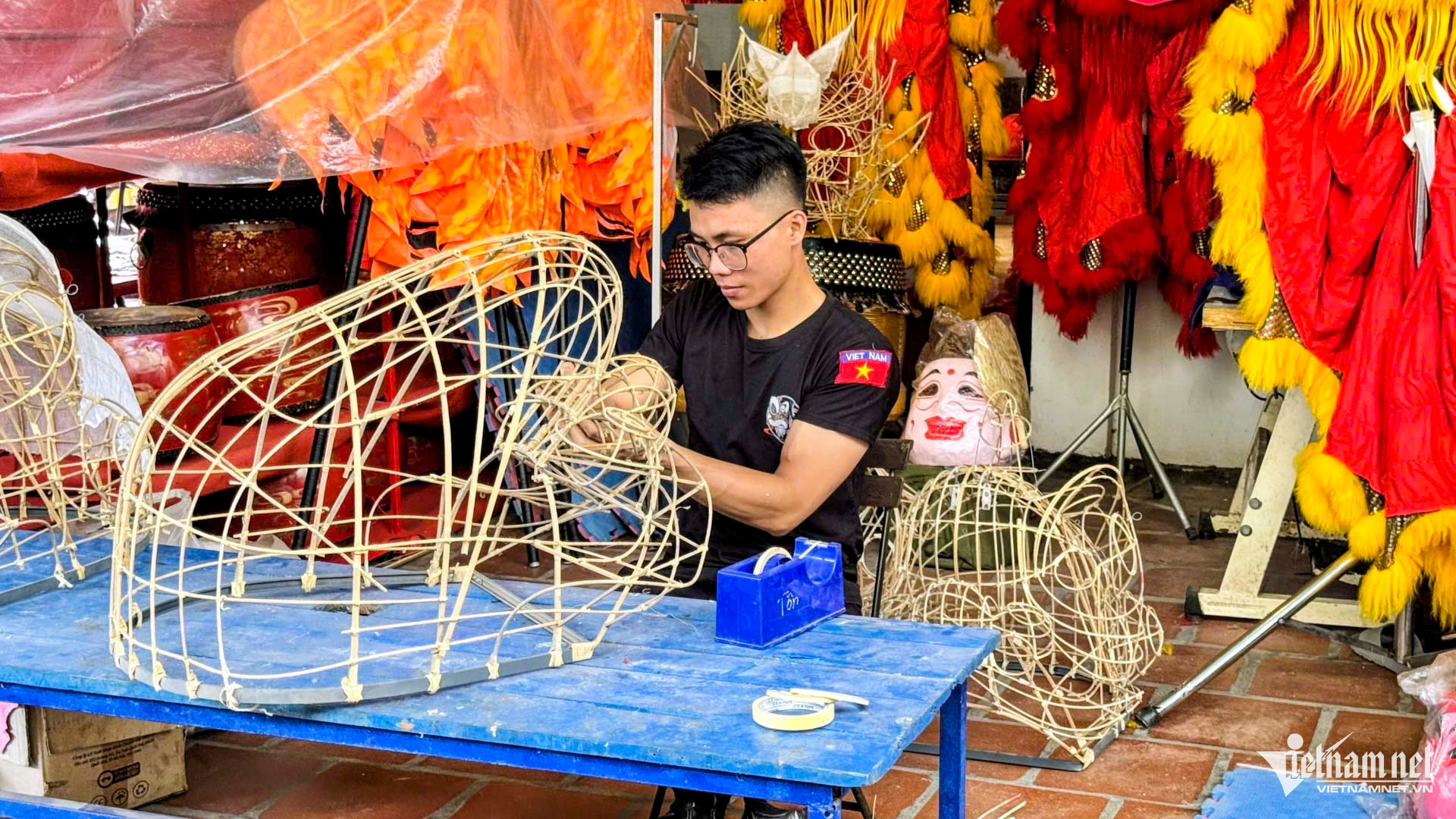
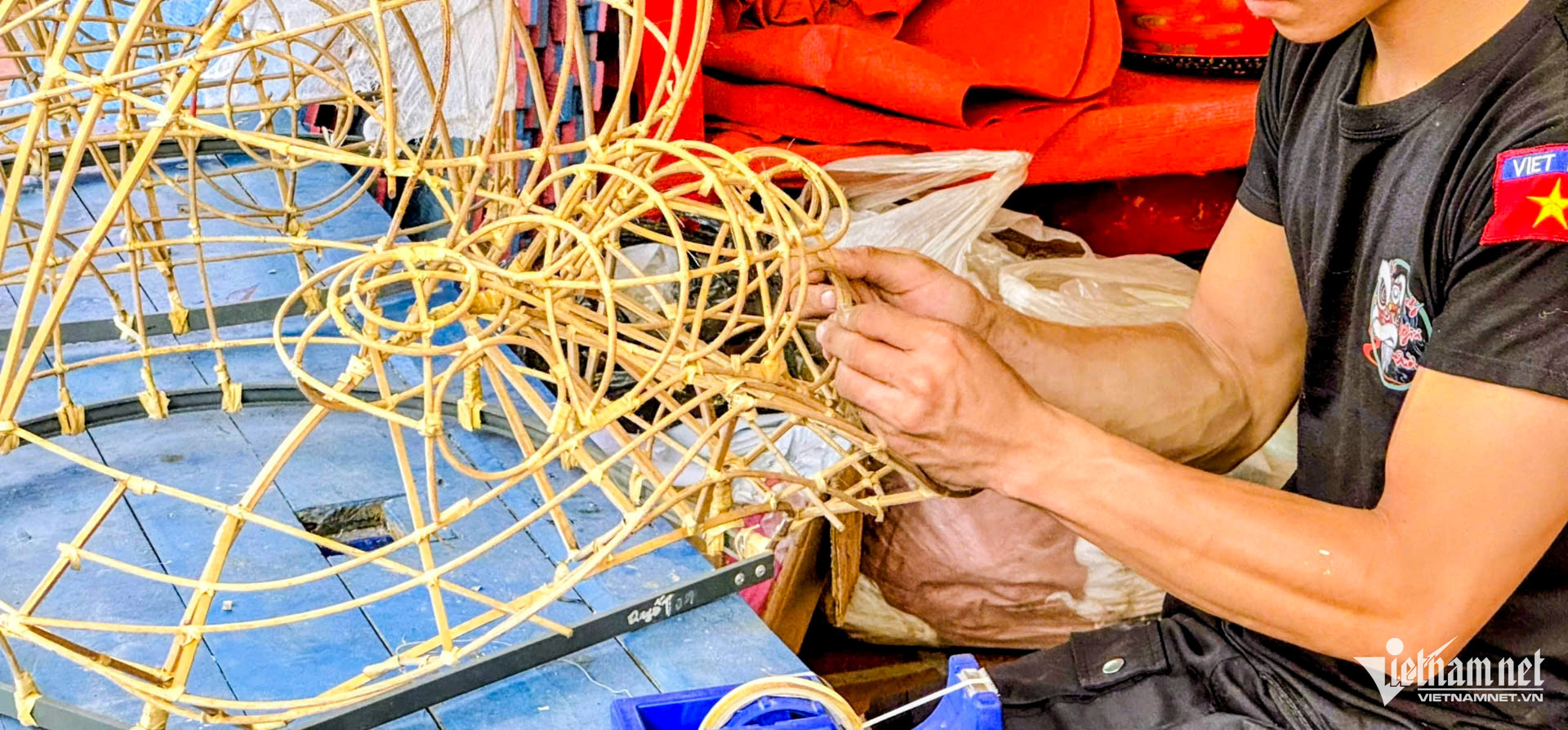
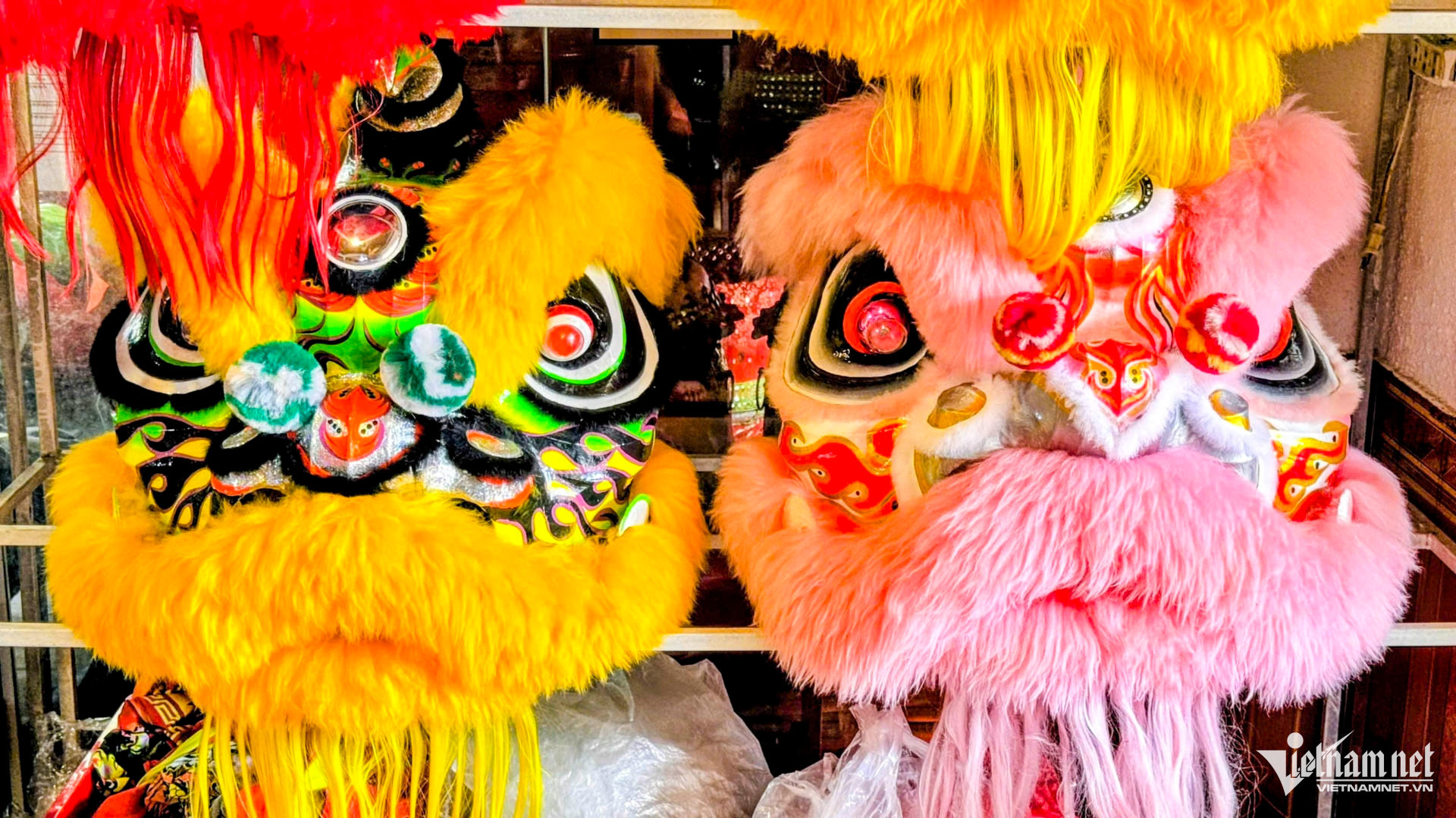
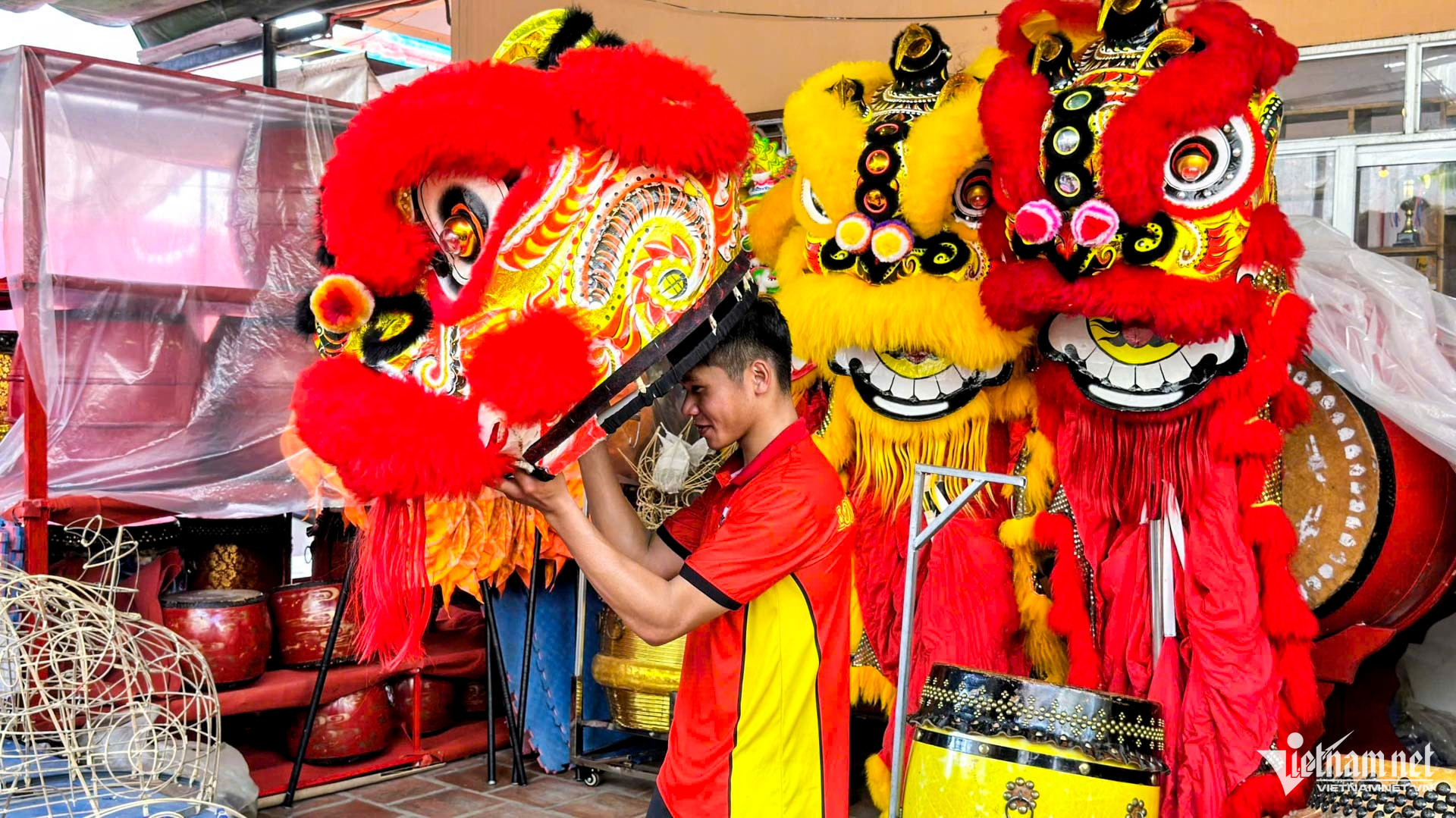
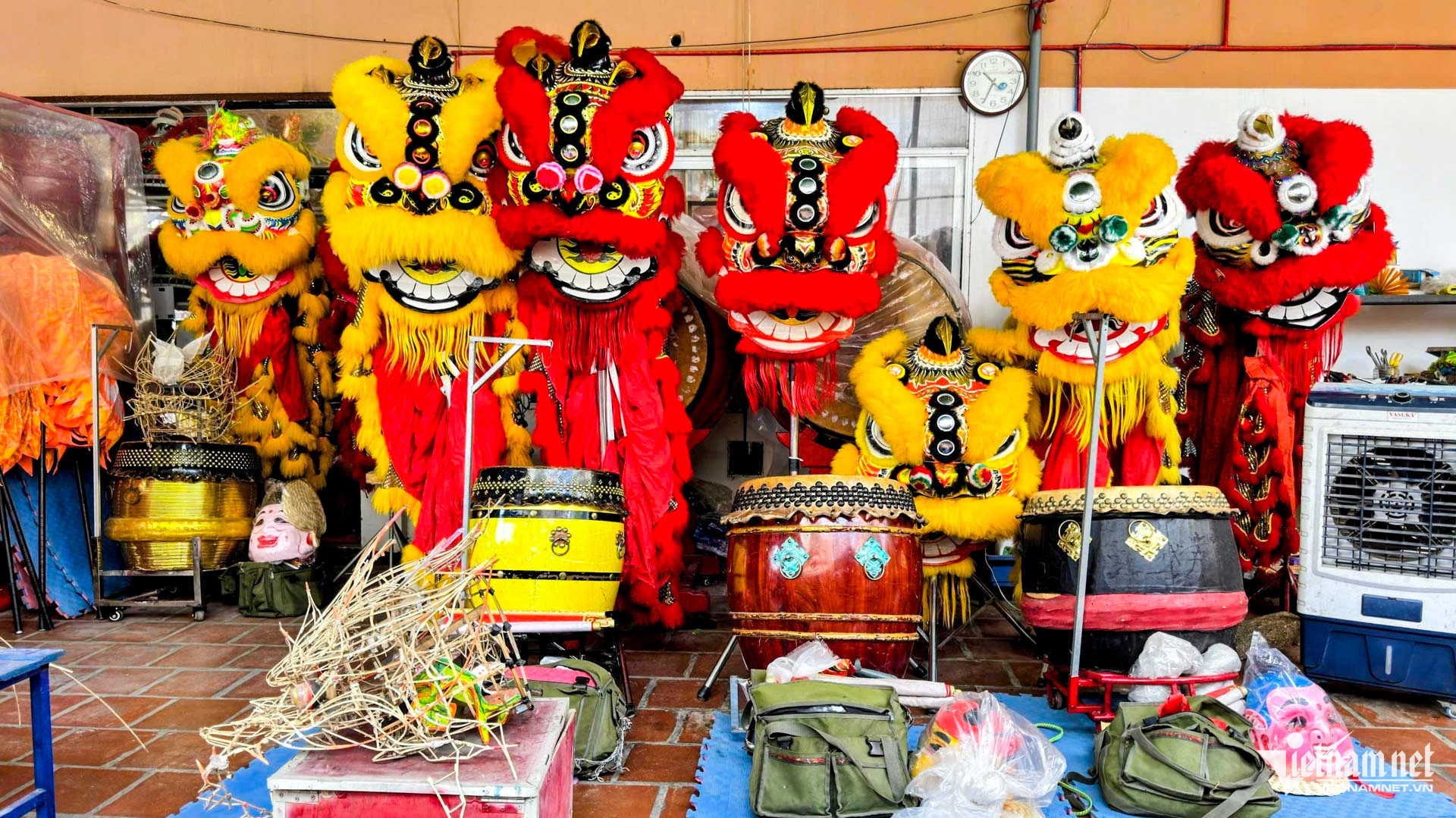
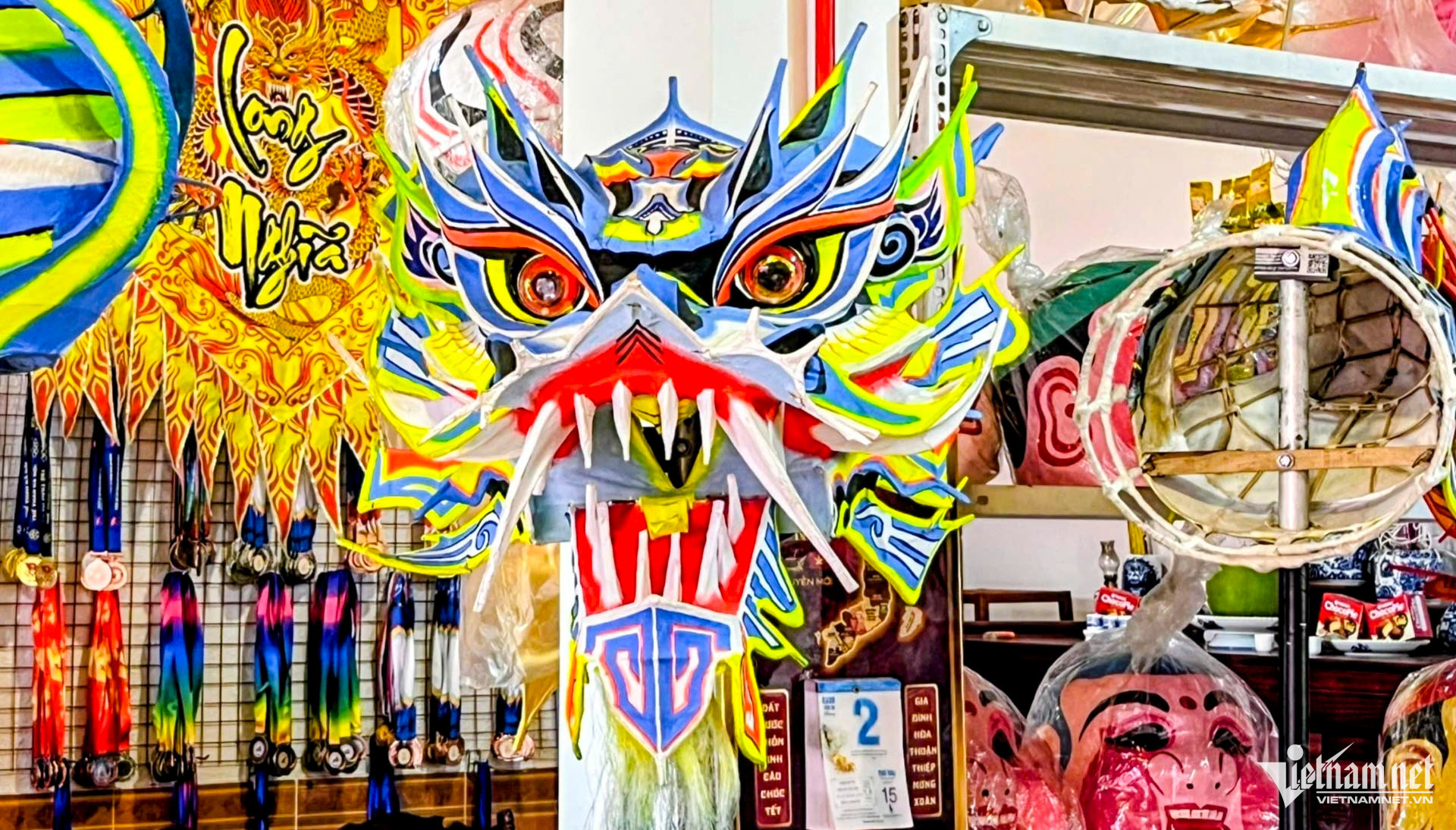
After more than 14 years making lion heads, Tung has seen many mass-produced versions appear on the market. His workshop continues to make them by hand because each one carries the effort, skill and experience of its maker.
“The most important thing about a lion is the spirit the artisans put into it with their own hands,” Tung said.
Handmaking lion heads presents difficulties amid modern life. Still, the artisans continue their work, applying each layer of paper, refining each line and passing their experience on to younger people.
For Tung, preserving the craft does not always begin with a grand undertaking. It can begin with an artisan patiently sitting beside a lion frame, correcting a detail and showing a young person how to make a finished head. Such everyday acts give the tradition a chance to continue through many Mid-Autumn Festivals to come.
Bao Khanh
.svg)
