 Vietnamnet.vn

 Podcast



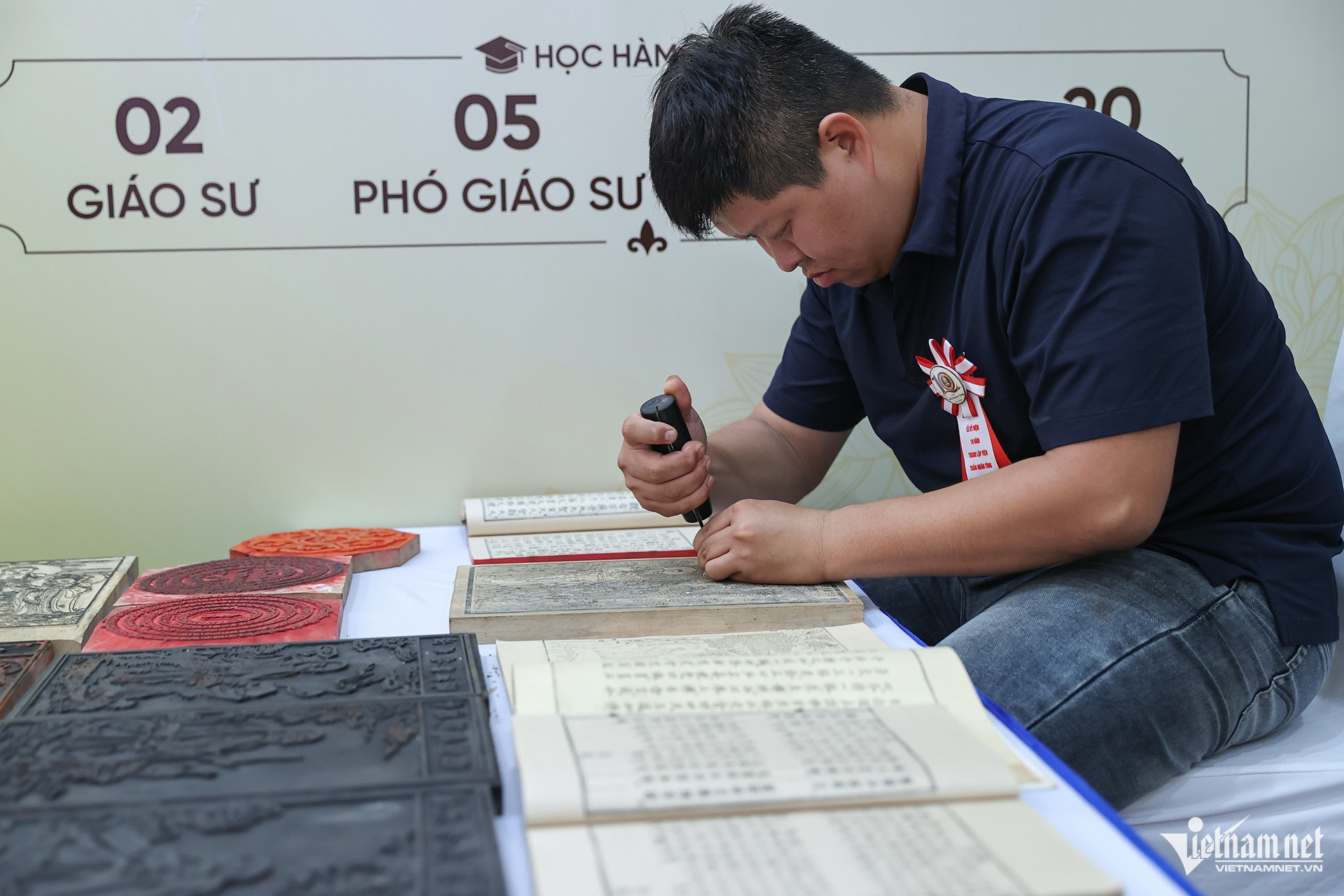
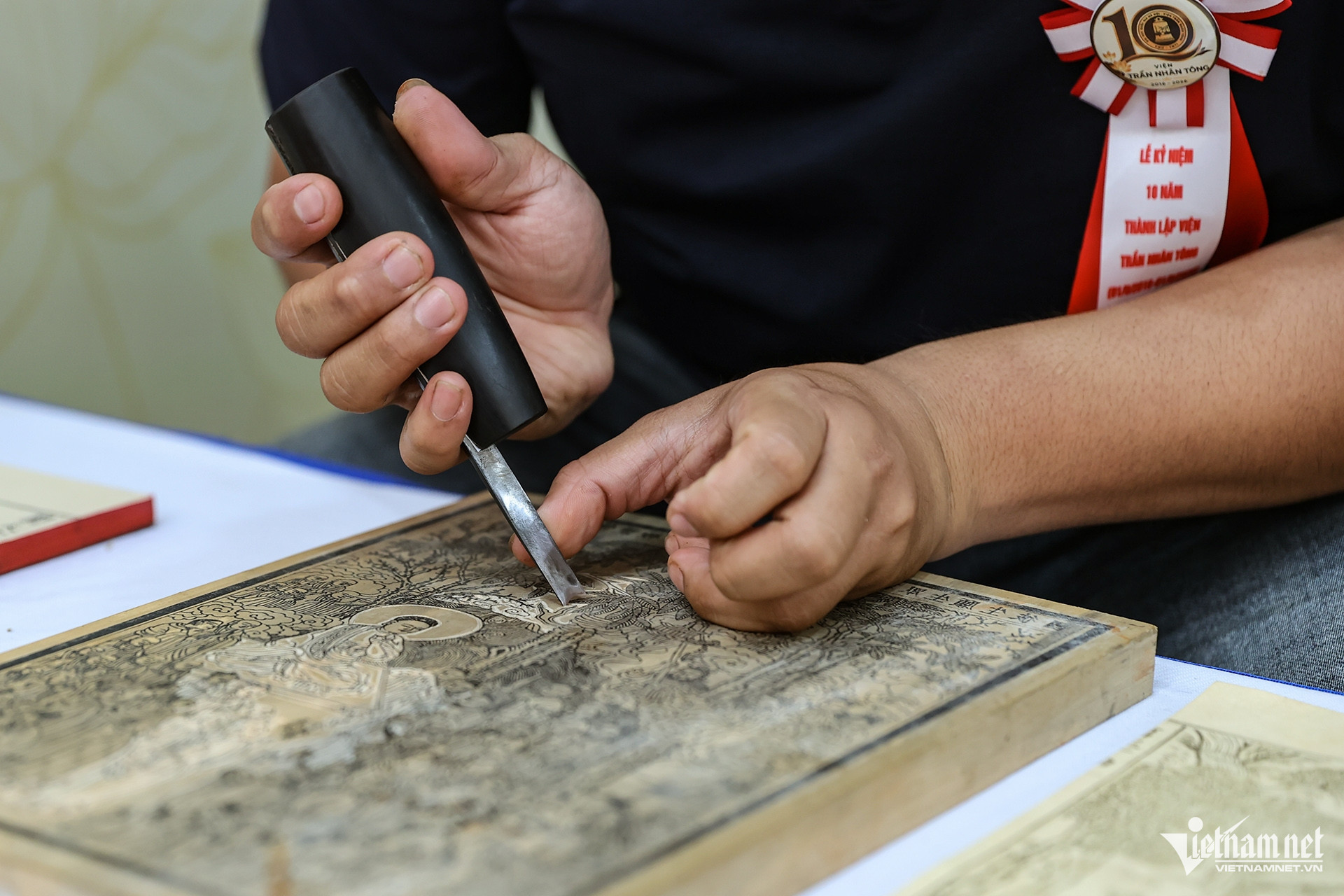
At a recent academic conference in Hanoi on Tran Nhan Tong, the Vietnamese king who became a Buddhist monk, a young man sat quietly at the edge of the gathering, bent over weathered wooden blocks as his hands carefully carved intricate lines into their surfaces.
He was Nguyen Cong Dat, born in 1992 and an artisan from Thanh Lieu, a village in Tan Hung, Hai Phong, renowned for its traditional woodblock carving and printing.
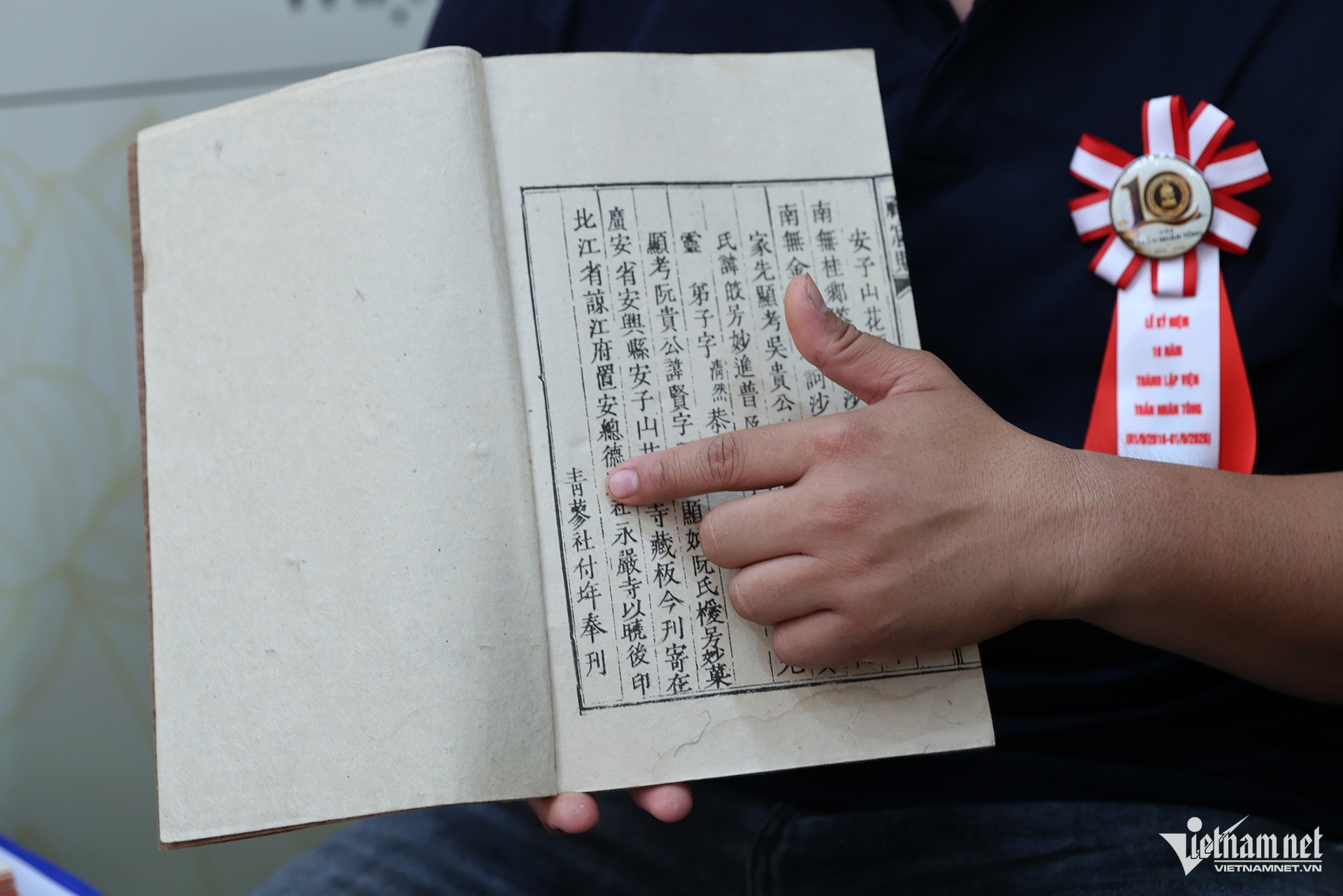
Slowly opening an old Buddhist scripture, Dat pointed to a detail that few readers would normally notice.
“People usually pay attention only to the content of the scriptures,” he said. “But if you look at the opening or closing pages - the preface, postscript or annotations - you can find the names of the Thanh Lieu craftsmen who carved them.”
Tradition holds that Thanh Lieu’s woodblock printing craft dates back nearly 600 years to Luong Nhu Hoc, a scholar who achieved high honors in the imperial examinations.
After succeeding in the examinations in 1442, he was sent by the king on two diplomatic missions to Ming China, in 1443 and 1459. There, he studied local printing techniques before returning home and combining what he had learned with Vietnamese traditions to develop the craft of woodblock carving and printing. He later passed the skills on to residents of what was then Hong Luc village, today known as Thanh Lieu.
Recognizing the value of printing in spreading knowledge, the imperial court entrusted Thanh Lieu craftsmen with carving and printing major historical works such as Dai Viet su ky toan thu, a comprehensive chronicle of Dai Viet, as well as legal texts including the Hong Duc Code.
But Thanh Lieu woodblocks were not confined to the affairs of the state. They became deeply intertwined with Vietnamese Buddhist life.
For centuries, Thanh Lieu craftsmen produced carved Buddhist scriptures preserved at major pagodas across northern Vietnam. They included Nhu Lai ung hien do and Thien tong ban hanh at Vinh Nghiem Pagoda; Khoa hu luc, written by King Tran Thai Tong and kept at Tram Gian Pagoda, which is now recognized as a National Treasure; and Dai bao tich kinh at Ba Da Pagoda.
Searching for forgotten masters - and mastering the ‘silk-hair’ technique
Behind the surviving scriptures lies Dat’s long and largely quiet effort to rediscover the craftsmen who created them.
Seeking evidence of Thanh Lieu’s historic role in the craft, he began traveling in 2010 to hundreds of old pagodas across Vietnam’s northern heritage regions, including Bo De, Ba Da and Lien Phai in Hanoi; Vinh Nghiem and Bo Da in the former Bac Giang Province; Du Hang in Hai Phong; and Tram Gian and Do Lam in the former Hai Duong Province.
“Buddhist scriptures are regarded as Dharma treasures, so they are usually carefully stored in scripture repositories,” Dat said. “You cannot always arrive at a pagoda and simply ask to see them. There were places I had to visit five or 10 times before I finally had the chance to meet the monks. But the most overwhelming moment comes when I turn those old pages, read the faded Chinese characters and find the exact names and hometowns of craftsmen from my own village.”
So far, Dat has identified more than 250 Thanh Lieu artisans who carved and printed Buddhist texts between 1698 and the years before 1945.
He himself represents the 17th generation of the Nguyen Cong family to continue the woodblock carving and printing tradition.
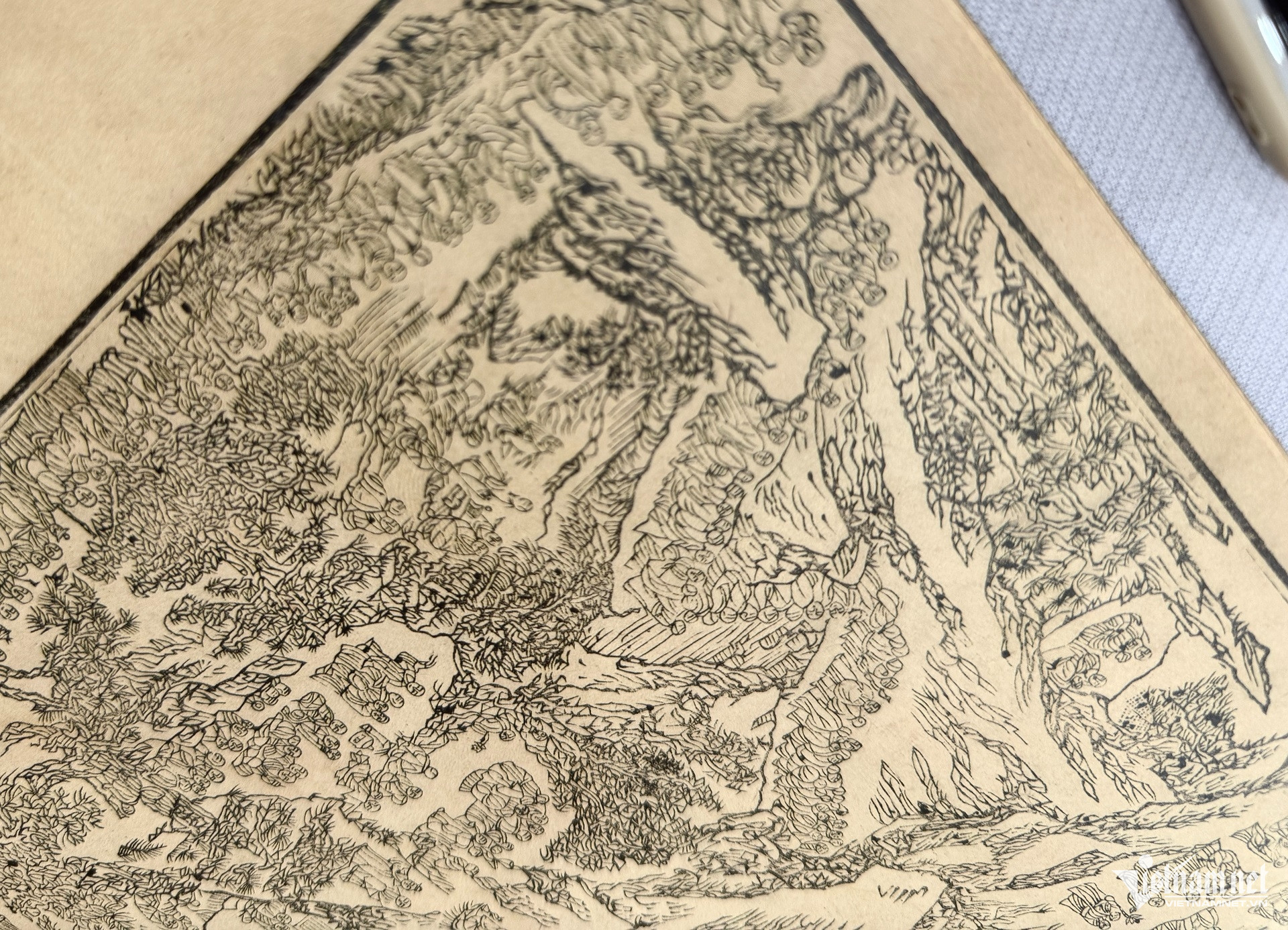
Among the craft’s most remarkable skills is a technique known as “silk-hair carving,” capable of producing lines as fine as strands of silk or human hair and capturing subtle expressions in Buddhist figures.
One notable example is the woodblock work Nhu Lai ung hien do, depicting the life of Shakyamuni Buddha alongside more than 500 arhats. An ancestor of Dat’s family carved the work in 1858 at Do Lam Pagoda in the former Hai Duong Province.
According to Dat, carving Buddhist scriptures differs fundamentally from making traditional folk prints such as those from the Hang Trong or Dong Ho traditions. Buddhist woodblocks require a rigorous spiritual process.
The woodblock is regarded as “the original of the original.” Before a blade touches the wood, a ceremony must be conducted by the Buddhist Sangha and the pagoda’s council. The artisan is expected to follow a vegetarian diet, recite Buddhist prayers, maintain a tranquil state of mind and dedicate the merit of the work before making the first cuts.
Once a scripture set is completed, another ceremony is held to present the finished work before the Buddha, sacred figures and heaven and earth.
Showing a carving of Nhu Lai ung hien do, created in 1858 during the reign of Emperor Tu Duc by his ancestor Nguyen Cong Thiep, Dat highlighted four core techniques: recessed carving, relief carving, hollowing and, most distinctively, silk-hair carving.
The last technique makes it possible to carve lines as delicate as silk threads. It was used to render the faces of more than 500 arhats and the subtle expressions of the Buddha.
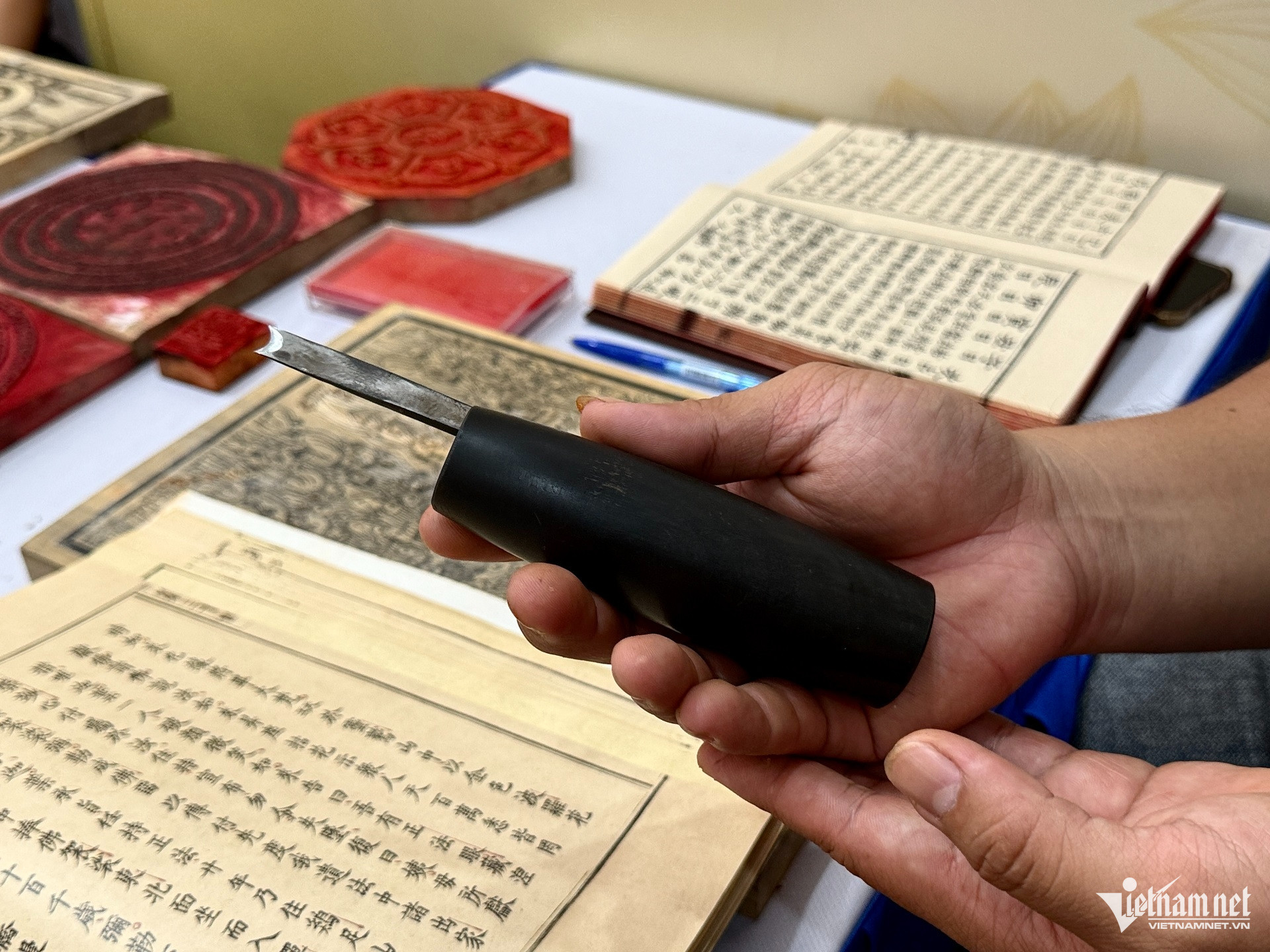
To achieve this precision, Thanh Lieu craftsmen use a distinctive horizontal carving knife traditionally attributed to Luong Nhu Hoc, rather than the angled knives used in Chinese, Japanese or Korean techniques.
As modern technology advances, some believe computer-controlled CNC machines can replace human hands. Dat disagrees when it comes to printing woodblocks.
“For woodblocks intended for printing, only Thanh Lieu’s manual technique using the horizontal knife can create those smooth, hair-thin lines,” he said. “With machine carving, the details would immediately break down when the block comes into contact with water and the pressure of printing.”
Keeping the heritage alive
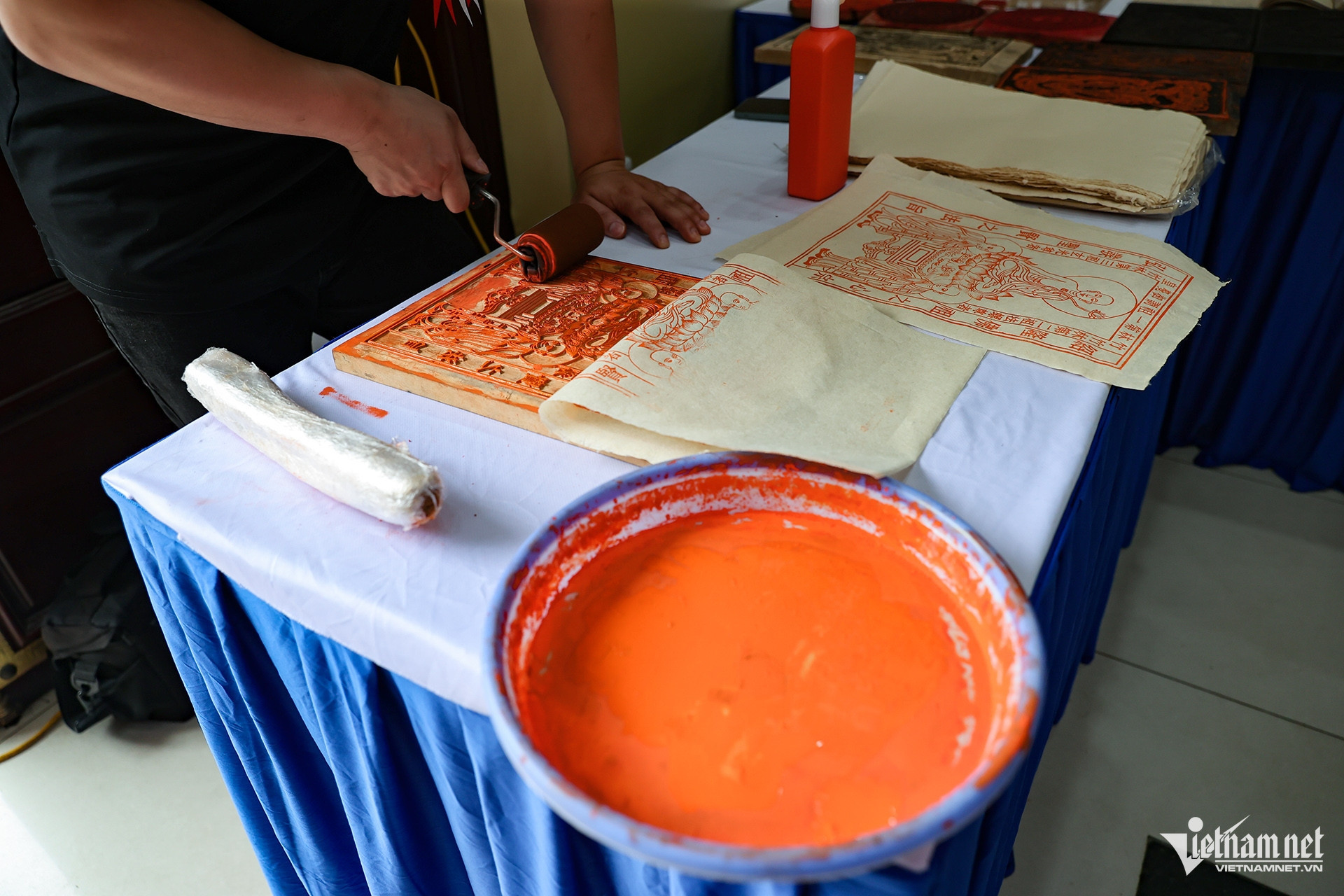
Dat graduated in Interior Design from Hanoi Open University and could have pursued any number of modern careers. Instead, he chose to remain with his village’s ancient craft.
Over the past 16 years, he has taught himself Han-Nom - the classical Chinese and Vietnamese scripts found in historic texts - searched for archival materials and worked with researchers to deepen his knowledge and restore old carvings.
Those efforts have produced tangible results.
Most recently, Dat and his 67-year-old uncle, artisan Nguyen Cong Trang, completed the carving and printing of the woodblock set Truc Lam dai si xuat son do, depicting the journey of Buddha King Tran Nhan Tong from Vu Lam royal retreat back to the imperial court.
“My uncle and I preserved every traditional ritual,” Dat said. “The first ceremonial cuts into the wood were made at Vinh Nghiem Pagoda. When the work was completed, it was presented before the Buddha King and the Three Patriarchs of Truc Lam.”
Yet alongside the satisfaction of reviving elements of his ancestors’ craft, Dat remains troubled by its gradual disappearance.
Time and war have damaged or destroyed many valuable collections of Buddhist woodblocks. At Dau Pagoda in Bac Ninh, for example, a collection that once numbered thousands of blocks has dwindled to fewer than 200.
Meanwhile, the number of people in Thanh Lieu who still possess the craft’s specialized carving and printing knowledge can now be counted on one hand.
“Heritage cannot simply be preserved behind glass or exist only through individual craftsmen,” Dat said. “Woodblocks were created to print, to transmit knowledge to the community. If this craft is going to survive, young people need to touch the heritage and experience it directly.”
In 2023, Dat and other artisans established the Thanh Lieu Village Woodblock Association and began promoting activities aimed at securing official recognition for Thanh Lieu as a traditional craft village.
Alongside a project with Han-Nom researchers to reprint ancient Buddhist texts, Dat and the association now organize free workshops to share their skills with younger generations.
He hopes woodblock experiences can eventually become part of heritage education at schools and tourism sites.
As the conversation drew to a close, Dat returned to the concern that has driven much of his 16-year journey: preserving the Buddhist canon and the cultural knowledge embodied in the craft will require more than the dedication of a handful of artisans.
For that heritage to continue from one generation to the next, he said, local authorities, researchers and the Vietnam Buddhist Sangha will need to work together.
Binh Minh
.svg)
