 Vietnamnet.vn

 Podcast



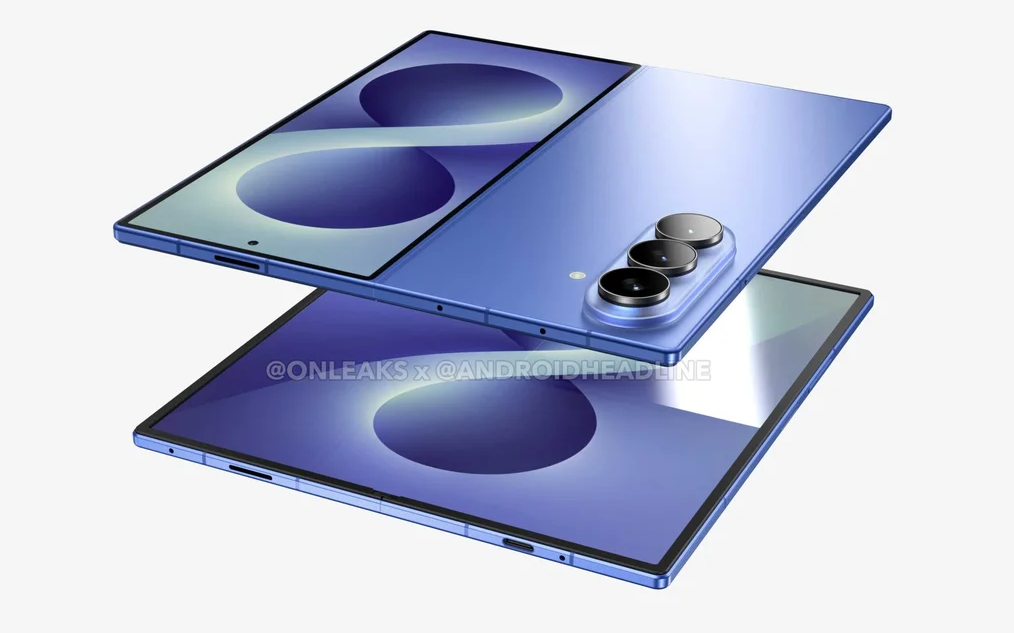
After years of near dominance in the book-style foldable segment, Samsung is now on the brink of unprecedented competition. Apple Inc. is widely expected to introduce its first foldable iPhone this September, while Motorola Mobility is preparing to launch the Razr Fold, another formidable contender.
At first glance, this may not seem like good news for the Galaxy Z Fold 8 lineup. Not only must Samsung surpass its already impressive Galaxy Z Fold 7, but it must also compete directly with two major players at a time when global supply chains remain unstable.
Yet this moment could also mark a turning point for Samsung to reaffirm its position as the leading expert in foldable devices. To turn the Galaxy Z Fold 8 into a commercial success, the company needs to focus on three critical factors.
Design: Small changes, meaningful impact
According to recent rumors, Samsung will equip both the Galaxy Z Fold 8 and Z Fold 8 Wide with a smaller selfie camera on the outer display. While this may seem like a minor tweak, for detail-oriented users, it could create a noticeable difference when comparing premium devices.
Many foldable smartphones today still rely on punch-hole designs or Dynamic Island-style cutouts that can be distracting. If Samsung manages to optimize display space more effectively, users may enjoy a more seamless viewing experience. With the right messaging, this could become a compelling selling point.
Another expected improvement is a shallower crease on the inner display. In reality, long-term users may not find the crease to be a major issue. But first impressions matter. When two devices are placed side by side - one with a visible crease and one where it is nearly invisible - the choice becomes almost instinctive.
These seemingly small refinements could help the Galaxy Z Fold 8 feel distinct enough from its predecessor, making a stronger impact at first glance.
S Pen: A strategic return
One of the most controversial changes in the Galaxy Z Fold 7 was the removal of S Pen support. However, recent leaks suggest Samsung may bring it back with the Z Fold 8 - a move that could prove highly strategic.
Not every user needs a stylus, but the S Pen has a loyal following, particularly on large-screen devices like the Fold series. Its ability to support note-taking, sketching and document editing makes it both a creative and productivity tool.
It is no coincidence that Motorola is also expected to support the Moto Pen Ultra for the Razr Fold, positioning it as a tool for both creativity and efficiency. Meanwhile, the first-generation iPhone Ultra is unlikely to support any stylus.
If leveraged effectively, this advantage could create a clear gap between Samsung and Apple in terms of advanced user experience.
Pricing: The ultimate deciding factor
The most critical - and most challenging - factor is pricing. Motorola is rumored to launch the Razr Fold starting at around US$1,899, while Apple could price the iPhone Ultra similarly to the Galaxy Z Fold 7, at approximately US$1,999.
Amid ongoing component shortages, especially memory, maintaining last year’s pricing will already be a significant challenge for Samsung. However, if the company wants to make book-style foldables more mainstream, it must not only stabilize prices but also introduce attractive pre-order incentives.
Strategies such as discounts, bundled accessories or trade-in programs will play a crucial role in persuading users to step into the foldable ecosystem.
Beyond these three pillars, Samsung still has room for improvement. Thermal management and battery life on the Z Fold 7 have not been outstanding, while charging speed and camera performance could still see meaningful upgrades.
That said, foldable smartphones are unlikely to become the primary revenue driver for manufacturers in the short term, as sales volumes remain far below traditional flagship devices. What they truly reshape, however, is a brand’s image of innovation.
If Samsung wants to maintain its reputation as a pioneer in technological advancement, this is not the moment to hesitate. Without decisive action, Apple and Motorola could overtake the foldable race - a space Samsung once dominated without rivals.
Hai Phong
.svg)
